
Reliable Gas Heat for Every Harrison Home.
From century-old brick rowhouses to the new waterfront condos near Red Bull Arena, gas delivers instant, low-maintenance heat that fits Harrison's tight lots. Find the right unit and get matched with a trusted local dealer.
Every Project Starts From One of These Five Situations
Instant heat that fits Harrison's tight rowhouse lots.
Harrison sits at just 28 feet of elevation on the Passaic River, directly across from Newark, in a climate zone (4A) that brings a solid stretch of cold winter weather each year and average winter lows around 25°F. That's noticeably milder than a place like Buffalo, NY, which faces roughly 37% more total winter heating demand most years—but it's still cold enough, especially in older brick rowhouses with single-pane windows and shared party walls, that a real supplemental heat source makes a meaningful dent in the gas bill.
Public Service Electric & Gas Co. (PSE&G) serves nearly every address in Harrison for both electric and natural gas, which means most homes already have a gas line somewhere in the building—a real advantage when it comes to installation cost. In the borough's older rowhouse stock, many original masonry fireplaces were built shallow and mostly decorative, never intended for serious wood-burning; a direct-vent gas insert turns that dead space into an actual heat source. In the newer mid-rise condo buildings going up near the waterfront, sidewall direct-vent units are common where there's no chimney at all. Air quality is not a local burn-ban concern here the way it is in parts of the West, so the main planning questions are venting path, gas line routing, and (for condo owners) HOA sign-off.
Three steps. No salesperson until you're ready.
Tell us about your project
Your zip code, your situation, and the fuel you're leaning toward—or let the answers point you to one.
See what's actually available
The brands dealers within 100 miles genuinely carry—real options, never a catalog mirage.
Get your dealer & Project Guide
A trusted local dealer, plus the free Project Guide & Parts List that names every component of the job.
Frequently Asked Questions
How much does a gas fireplace installation cost in Harrison?
Most gas fireplace and insert installations in Harrison run $5,000 to $12,000, with the spread driven by venting complexity and gas line work more than the unit itself. A direct-vent insert going into an existing rowhouse fireplace opening with a gas line already nearby tends to land on the lower end. Homes needing a new gas line run from the meter, or condo units requiring sidewall venting through a shared exterior wall, run higher. Labor rates in the Hudson County / NY metro market also run above the national average, which local installers will factor into any quote. A firm number requires an in-home (or in-unit) walkthrough.
Can I convert my rowhouse fireplace to gas?
Often, yes. Many of Harrison's older rowhouses have a shallow masonry firebox that was built more for looks than real wood heat—small, shared-wall construction and tight lots never made wood-burning practical here. Converting that opening to a gas insert with a liner run up the existing flue is one of the more common projects local hearth dealers handle in town, and it turns an unused decorative fireplace into a genuine heat source without touching the building's footprint. Cost typically falls in the $4,500 to $9,000 range depending on flue condition and whether a gas line already reaches the room.
Do I need natural gas, or is propane an option in Harrison?
Nearly every property in Harrison sits on PSE&G's natural gas distribution network, so propane is rarely necessary here—it mostly comes up for detached garages or accessory structures where running a gas line isn't practical. If your building already has gas service for a stove, water heater, or furnace, adding a fireplace is usually a matter of tapping an existing line rather than starting from scratch. Your installer will confirm line capacity before sizing the unit.
Will my gas fireplace still work if the power goes out?
Most direct-vent gas fireplaces with IPI (intermittent pilot ignition) include a battery backup—typically a few AA batteries built into the unit—that takes over automatically if PSE&G power drops. The fireplace still lights and runs normally on battery power until service is restored. Valor's lineup goes a step further: their pilot assembly generates its own electricity through the thermocouple, so there are no batteries to remember at all. For rowhouse and condo dwellers in an older grid-dependent part of Hudson County, that's worth asking about when comparing units.
Fireplace, insert, or stove—what fits a Harrison rowhouse or condo?
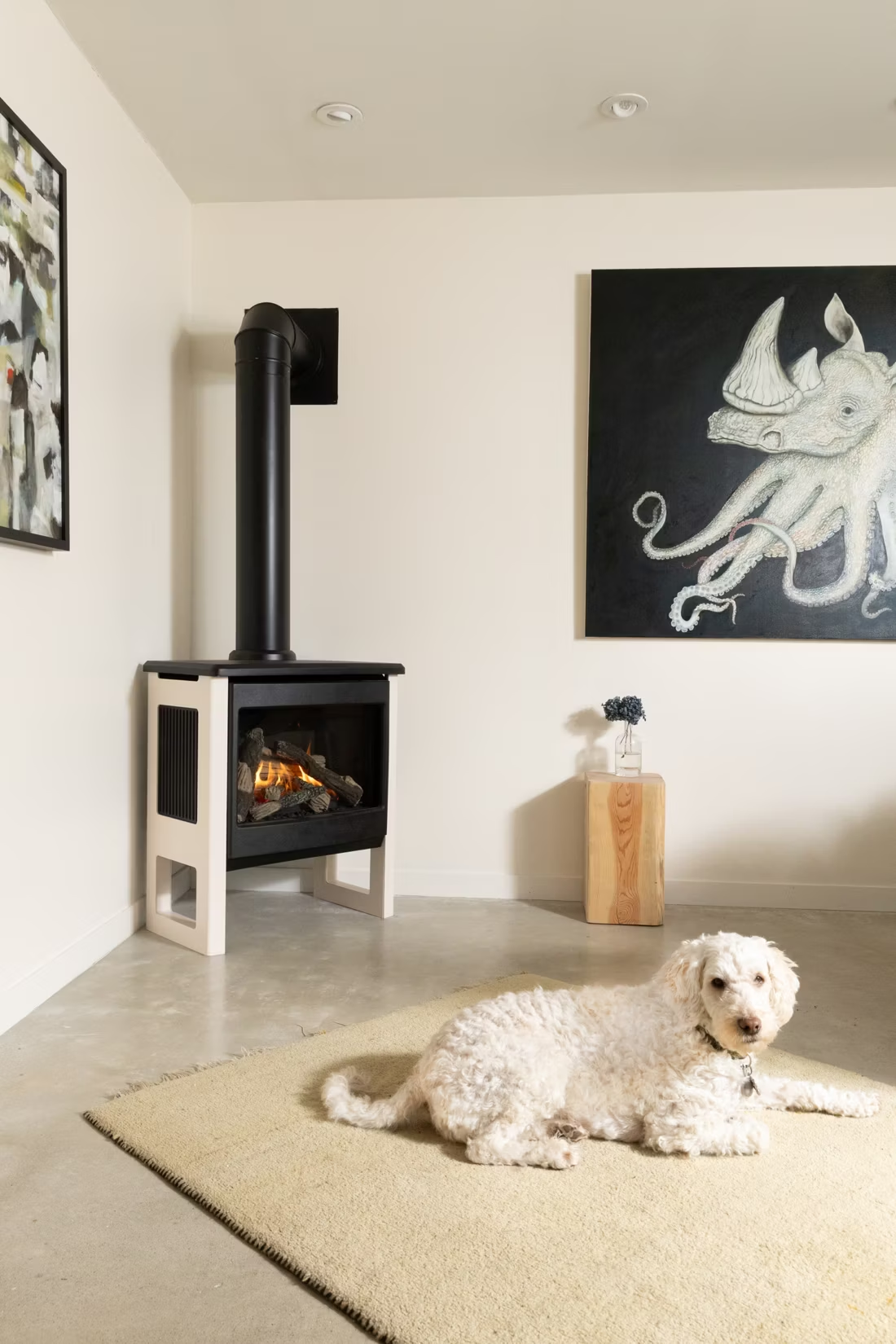
For rowhouses with an existing (even decorative) masonry fireplace, a gas insert is usually the simplest path—it uses the opening and flue you already have. For the newer condo and mid-rise construction near the waterfront, a direct-vent gas fireplace with sidewall venting is more common since there's no masonry chimney to work with, though HOA or building management approval is often required before any exterior penetration. A freestanding gas stove is less common in Harrison's tight floor plans but can work well in a converted basement or rear addition where floor space allows a hearth pad setup.
Do I need a permit to install a gas fireplace in Harrison?
Yes. The Town of Harrison requires a building permit and a separate gas line permit for new fireplace installations, and any gas work has to be done by a licensed NJ gas-fitter. Condo owners typically need building management or HOA sign-off in addition to the municipal permit, especially for anything involving a new exterior vent penetration. Most established hearth dealers coordinate the permitting and inspection scheduling as part of the install, which is one less thing to manage in a multi-unit building.
Are vent-free gas fireplaces allowed in Harrison?
Vent-free (unvented) gas units are permitted under New Jersey code in single-family construction, but they come with strict room-size and ventilation requirements, and many condo and multi-family buildings restrict or prohibit them outright through building management policy or shared-wall fire code concerns. Given Harrison's density—attached rowhouses and multi-unit condo buildings make up most of the housing stock—a sealed direct-vent unit is the more practical and more commonly installed choice. It's worth confirming with your installer and, if applicable, your building association before choosing a vent-free model.
How often does a gas fireplace need to be serviced?
Plan on an annual inspection, ideally before the heating season starts. A technician checks the burner, pilot assembly, gas connections, and venting, and cleans the glass and interior—a much quicker job than chimney sweeping for a wood unit. Local gas appliance service providers typically charge $150 to $250 for this visit. In a rowhouse with a liner running up an old flue, the annual check also confirms nothing has shifted or corroded in the shared chimney chase.
Gas vs. electric fireplace—which makes more sense in Harrison?
Gas delivers real, sustained BTU output and generally lower operating cost per hour of heat, which matters given PSE&G's residential electric rate of about $0.198 per kWh—noticeably above the national average. Gas is the better fit anywhere a gas line is accessible and venting is feasible. Electric fireplaces make the most sense in condo units or rental apartments where venting isn't an option at all, or where a landlord won't allow gas line or flue modifications—they plug into a standard outlet and need no permit for the unit itself, but they're best thought of as ambiance and light supplemental warmth rather than a real heat source on a 25°F night.
What's the difference between radiant and convective fireplace heat?
Most fireplaces are a thin metal box—they heat fine, but you rely on the fan to move the warmth into the room. Radiant models use a thick cast-ceramic firebox, about an inch and a quarter thick, that soaks up the fire's heat and radiates roughly 25–30% more warmth into the room with no fan running. If you watch TV in the same room or want heat in a power outage, radiant is worth asking about.
Is my gas fireplace wasting gas?
If it was installed more than 15 years ago, probably. Older gas fireplaces keep a standing pilot light burning all the time, and that little flame can cost a couple hundred dollars a year. Newer models use pilot-on-demand ignition—the pilot lights only when you use the fireplace and goes out when you turn it off.
What is an in-home preview and do I need one?
It's a visit where a hearth professional measures your space, confirms the model you picked actually works in your home, and walks the specs—framing, gas line, venting, finish work—before anything is ordered. Some details you just can't know until you see the house. Never make a down payment without one; it's the single most-skipped step that burns buyers.
How much should I budget for a fireplace?
For an average home—covering the fireplace, the vent pipe, and basic installation—a budget between $3,900 and $5,500 gives you a lot of options across wood, gas, and pellet. By the time you add finish work, gas line, and electrical, the average complete installation lands between $5,000 and $12,000 all-in. In a remodel or new build, a good rule is to put about 2.5% of the total project cost toward the fireplace.
Nearby Dealers
Hearth shops serving Harrison and the surrounding area. Every listing shows whether it is a WhyFire partner, a dealer we have verified as authorized for the brands we recommend, or a local business carrying hearth products. No manufacturer pays for placement. How we verify dealers →
Harris Hearth And Home
Hot Concepts Fireplaces
Fireplaces R Us
D & D Design Center
Big Apple Fireplaces
Fire Design
Flue Tech
Costello's Hearth & Spa - Bernardsville
Kjb Fireplaces
County Woodstoves Inc
Mcnamara Fireplace And Stove
All Shore Appliance
Find your gas fireplace in Harrison.
Tell us about your rowhouse, condo, or single-family home and we'll put together a free Project Guide & Parts List—the right gas fireplace, insert, or stove, the exact vent kit for your building, and a trusted local Harrison-area dealer to install it.
Find Your Fireplace →