
Pellet Heat Isn't the Norm in Winchester—Here's the Honest Read.
Winchester's desert winters rarely call for a pellet stove. If you're one of the exceptions, we'll help you find a local dealer who'll give you a straight answer and get it installed right.
Every Project Starts From One of These Five Situations
The Las Vegas Valley just doesn't need much heat.
Winchester sits inside the Las Vegas Valley at just under 2,000 feet elevation, in Clark County zip codes 89109, 89169, 89121, and 89199. Winters here average a low around 40°F, and the entire heating season adds up to only a light winter heating load a year—compare that to a cold-climate city like Fargo, ND, which has a heating load more than five times as heavy. That gap is the whole story: homes in Winchester need a heat source for a handful of chilly nights each winter, not a workhorse fuel appliance running around the clock from November through March.
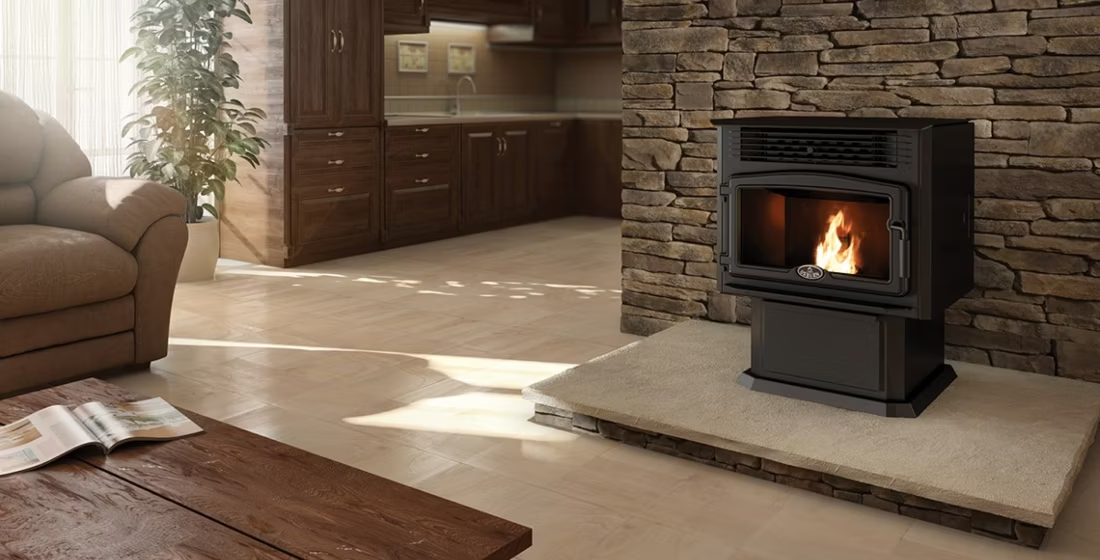
That's why pellet stoves are rated not-applicable for this market—they're built to burn steadily for hours through genuinely cold winters, and Winchester's climate almost never asks for that. Most homes here already lean on electric heat pumps and gas furnaces for the occasional cold snap. Add in Clark County's periodic wildfire-smoke air quality advisories, and there's little upside to adding another combustion appliance to the house. That said, pellet stoves do still show up here and there—in a Mount Charleston cabin at 7,000+ feet where winters are genuinely cold, in a remodel where a homeowner wants the look and ritual of a stove, or as a low-maintenance backup for the rare hard freeze. If that's you, a trusted local dealer can walk you through whether it's worth it for your specific situation.
Three steps. No salesperson until you're ready.
Tell us about your project
Your zip code, your situation, and the fuel you're leaning toward—or let the answers point you to one.
See what's actually available
The brands dealers within 100 miles genuinely carry—real options, never a catalog mirage.
Get your dealer & Project Guide
A trusted local dealer, plus the free Project Guide & Parts List that names every component of the job.
Frequently Asked Questions
Does a pellet stove actually make sense for a home in Winchester?
For most homes, no—not as a primary or even meaningful secondary heat source. With only a light winter heating load a year and average winter lows around 40°F, Winchester's heating season is short and mild compared to a place like Duluth, MN, where pellet stoves genuinely earn their keep burning multiple bags a day for months. Here, a pellet stove is more often a lifestyle or ambiance choice than a heating necessity. If you're weighing the investment purely on BTUs-per-dollar, gas or electric heat will almost always win in this climate.
Why is pellet fuel considered 'not applicable' for Winchester on this site?
We flag pellet as not-applicable here because the local climate doesn't create real demand for it the way it does in snowier, colder parts of the country. Clark County's mild winters mean most residents heat with electric heat pumps or gas furnaces already installed in the home, and adding a pellet appliance rarely pencils out against the cost of pellets, venting, and hopper maintenance for the handful of cold nights Winchester actually sees each year.
I still want a pellet stove for looks or backup heat—is that realistic?
It's realistic, just uncommon. Some Winchester homeowners install a pellet stove or insert purely for the visual warmth and ritual of it, especially in a remodel or a room without an existing fireplace. Others want a backup heat source that doesn't rely on the grid during the rare hard freeze. Both are legitimate reasons—just go in knowing you're installing it as a feature, not as your primary defense against winter. A local dealer can help you pick a unit sized appropriately for occasional use rather than one built for round-the-clock burning.
Where can I even buy pellets locally if I have a stove?
Regional brands like Bear Mountain, Lignetics, and Forest Energy are distributed through hardware stores and hearth retailers across the Southwest, and you can typically find bags at big-box home improvement stores in the Las Vegas Valley even though demand is low. Because turnover is slower here than in cold-climate markets, it's worth calling ahead in summer to confirm stock before burn season, rather than assuming a store keeps pellets on the shelf year-round.
What do most Winchester homes use for heat instead of pellet stoves?
The bulk of homes in the 89109, 89169, 89121, and 89199 zip codes rely on electric heat pumps or central gas furnaces, since Clark County's mild winters make that combination more than adequate. Depending on which part of Winchester you're in, your electric service comes from Nevada Power Co., Southern California Edison, or the Colorado River Commission of Nevada, with residential rates that vary by provider—roughly 15 cents per kWh on the Nevada Power side versus closer to 28 cents where SCE serves. That rate difference is worth checking before you assume electric resistance heat is your cheapest option.
Would a gas fireplace make more sense than a pellet stove in Winchester?
For most homes here, yes. Gas fireplace relevance is rated standard for Winchester, meaning it's a genuinely common, well-supported choice—instant heat, no fuel storage, no hopper to load, and it suits the occasional-use pattern of a desert winter far better than a pellet appliance designed for sustained burning. If you like the idea of a stove aesthetic without the pellet logistics, a gas stove insert is worth asking a local dealer about alongside any pellet option you're considering.
Does wildfire smoke or air quality affect burning a pellet stove in Winchester?
Clark County periodically issues air quality advisories tied to wildfire smoke drifting in from California and northern Nevada, usually during summer and early fall—outside of pellet-burning season, but it's a reminder that this region already deals with airborne particulate concerns. Pellet stoves burn cleaner than cordwood, but if you're sensitive to indoor air quality or live in a tightly sealed newer home, it's worth discussing venting and combustion air with your dealer regardless of the season.
If I already own a pellet stove, does Winchester's dry climate change maintenance?
The dry desert air is actually kind to the metal components and vent pipe—less corrosion risk than a humid climate. The bigger local factor is dust: fine desert dust and sand can work into hopper mechanisms and combustion blowers faster than in wetter regions, so more frequent cleaning of the auger and burn pot is worth building into your routine, even if you're only burning occasionally through the winter.
Pellet, gas, or electric—what's the real recommendation for a Winchester home?
For year-round practicality in this climate, gas or electric wins for the vast majority of homes—both are rated standard here because they match how little heating Winchester actually needs. Pellet is the right call only in specific cases: a cabin at higher elevation like Mount Charleston, a strong personal preference for the stove aesthetic, or a desire for non-electric backup heat. If none of those apply to you, a local dealer will likely steer you toward a gas insert or electric option—and that's honest advice, not a sales pitch.
Why is my open fireplace making my house colder?
Open fireplaces suck—literally. As the fire burns, it consumes air your furnace already paid to heat and pulls it out through the chimney, so the house is actually colder after the fire goes out than before you lit it. An insert fixes this: it seals the chimney, puts fixed glass across the front, and turns that hole in your house into a real heat source.
What's the difference between an insert and a zero-clearance fireplace?
An insert is a fireplace that slides into a pre-existing wood-burning fireplace—if you don't have one, there's nothing to insert it into. A zero-clearance fireplace is built into a framed wall, which makes it the answer for remodels and new construction. Simple test: existing masonry fireplace means insert; blank or framed wall means zero-clearance.
Can I install a fireplace myself?
If you're putting a fire in your house on purpose, it's best to work with an expert. Unless you're genuinely experienced in framing, gas line, vent pipe, and the national code on clearances to combustibles, have a professional do it—and ideally the same company that sells you the fireplace, so warranty, service, and liability all live under one roof.
What is an in-home preview and do I need one?
It's a visit where a hearth professional measures your space, confirms the model you picked actually works in your home, and walks the specs—framing, gas line, venting, finish work—before anything is ordered. Some details you just can't know until you see the house. Never make a down payment without one; it's the single most-skipped step that burns buyers.
Nearby Dealers
Hearth shops serving Winchester and the surrounding area. Every listing shows whether it is a WhyFire partner, a dealer we have verified as authorized for the brands we recommend, or a local business carrying hearth products. No manufacturer pays for placement. How we verify dealers →
Proficient Patios & Backyard Designs
Premier Bbq & Fire
Penguin Fireplace & Design
Silver State Specialties, LLC
Vista Bbq Outfitters
Sunshield Awning Co.
Southwest Plumbing Supply- Mesquite
Pellet Brands Stocked Around Winchester
Manufacturers will point you to the nearest stocking dealer.
See if a pellet stove actually fits your Winchester home.
Tell us about your home and how you'd use it, and we'll connect you with a trusted local dealer who'll give you a straight answer—plus a free Project Guide & Parts List if a pellet install genuinely makes sense for your project.
Find Your Fireplace →