
Add warmth and glow to Winchester's mild desert nights.
No venting, no gas line, no chimney—just ambiance and supplemental warmth for condos, high-rises, and homes along the Strip corridor. Find the right unit and connect with a trusted local dealer.
Every Project Starts From One of These Five Situations
Heat that fits high-rise, HOA-friendly living.
Winchester is an unincorporated Clark County community that wraps around and overlaps the Las Vegas Strip resort corridor—zip 89109 sits right in the middle of it. At 2,000 feet elevation with a winter low average around 40°F and only a short, mild heating season each year, this is a mild climate zone 3B pocket of desert. Compare that to Buffalo, NY, which has a long, harsh winter with nearly four times the heating demand in a typical year—Winchester homes simply don't carry a real heating load most of the season. What they do carry is a lot of condos, hotel-adjacent residences, and high-rise units where a fireplace is about atmosphere first and warmth second.
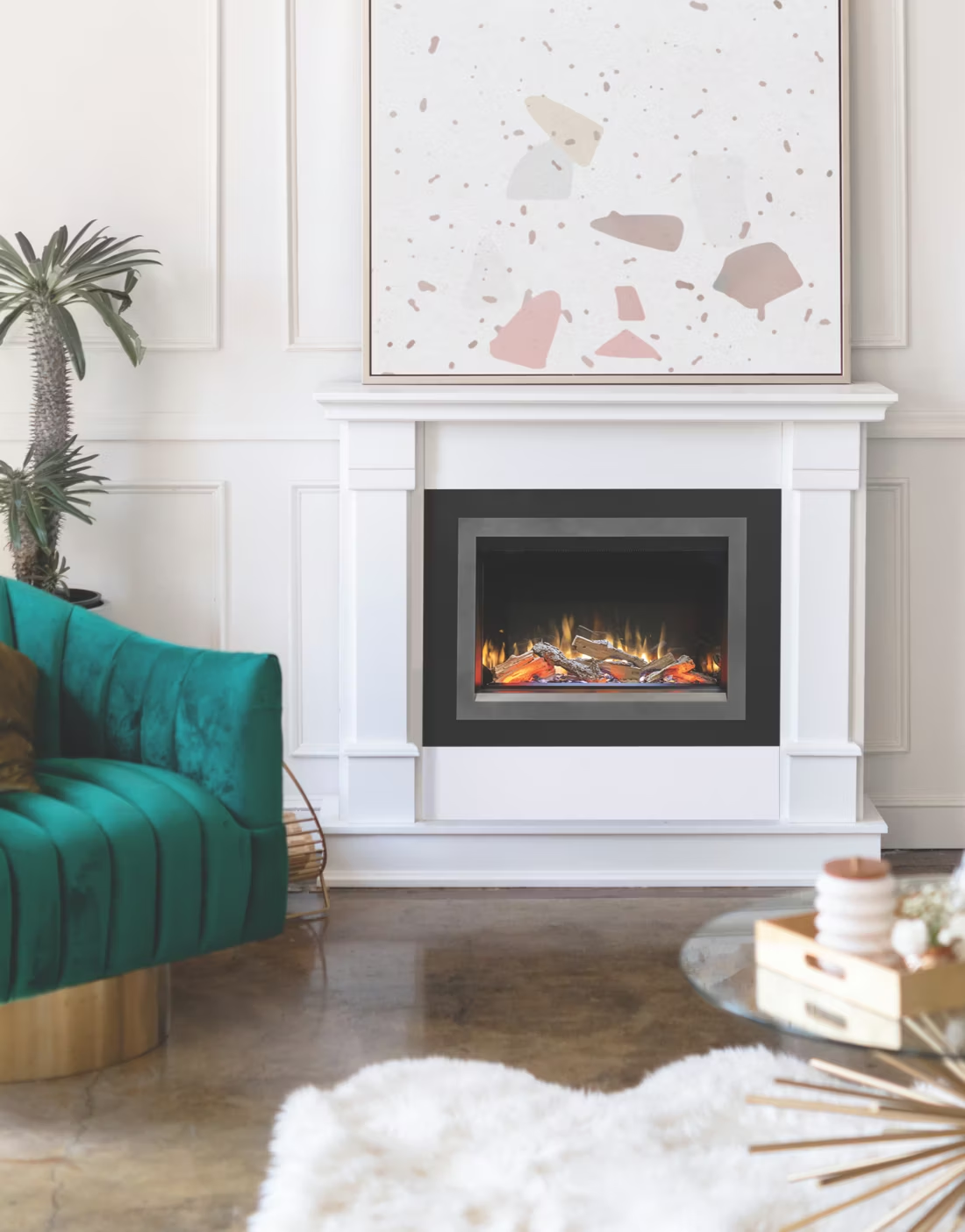
That's exactly the gap electric fireplaces fill here. There's no chimney to build, no gas line to run, and no venting to route through a shared wall or a 30th-floor unit—a wall-mounted or built-in electric fireplace plugs into a standard outlet or gets hardwired by a licensed electrician, and it's done. Nevada Power Co (NV Energy) serves most of Winchester, though a handful of Clark County addresses fall under Southern California Edison or the Colorado River Commission of Nevada depending on historical territory lines—and the residential rate difference is real, running anywhere from about 15.3 cents to 28.3 cents per kWh. On the occasional cold desert night when temperatures actually drop, a 1,500-watt electric insert adds genuine supplemental heat to a bedroom or living room without touching the thermostat for the rest of the house.
Three steps. No salesperson until you're ready.
Tell us about your project
Your zip code, your situation, and the fuel you're leaning toward—or let the answers point you to one.
See what's actually available
The brands dealers within 100 miles genuinely carry—real options, never a catalog mirage.
Get your dealer & Project Guide
A trusted local dealer, plus the free Project Guide & Parts List that names every component of the job.
Frequently Asked Questions
How much does an electric fireplace installation cost in Winchester?
Electric fireplaces are the least expensive hearth product to install because there's no venting or gas line involved. A plug-in freestanding unit or a simple insert into an existing mantel surround can run as little as $400 to $800 including basic setup. A built-in wall unit or a linear electric fireplace recessed into drywall—common in newer condos and Strip-adjacent high-rises—typically runs $1,200 to $2,500 once you factor in framing, a hardwired 240-volt circuit, and an electrician's time. Local dealers can walk the space and tell you within a few hundred dollars what your specific unit and wall will require.
Would a wood stove work better for a Winchester home?
For nearly all Winchester homes, no. This is a wood-not-applicable market: winters average a 40°F low and bring only a short, mild heating season, so there's rarely enough sustained cold to justify a wood-burning appliance. Pinyon, juniper, and sagebrush wood are available in the surrounding high desert and mountains, but hauling and storing cordwood makes little sense in a Strip-corridor condo or HOA community, and the Las Vegas Valley already deals with wildfire smoke impacting air quality most summers—adding wood smoke to that mix isn't something most local HOAs or homeowners want. If you love the idea of a real flame, a gas fireplace gets you closer to that experience without the smoke or the fuel storage.
Do I need a permit to install an electric fireplace in Winchester?
It depends on the install. A plug-in electric fireplace or insert that uses an existing standard outlet generally doesn't require a permit. A hardwired unit—especially a 240-volt built-in wall fireplace—typically needs an electrical permit through the Clark County Building Department, since Winchester is unincorporated Clark County territory. Your electrician or hearth installer will usually pull this for you. If you're in a condo or HOA community, also check your association's rules before cutting into a shared wall—some buildings restrict modifications even for low-voltage electric units.
Why do some Winchester homes have different electricity rates for the same fireplace?
Winchester sits in a patchwork utility territory. Most homes are served by Nevada Power Co (NV Energy), where the residential rate runs around 15.3 cents per kWh. A smaller number of Clark County addresses fall under Southern California Edison or the Colorado River Commission of Nevada, where rates can run closer to 28.3 cents per kWh—nearly double. That difference matters more for electric fireplaces than most appliances, since some households run them for ambiance for hours at a time in the evening. Check a recent utility bill before estimating your running cost, since two nearly identical condos a few blocks apart can have very different operating expenses.
What kind of electric fireplace makes sense for Winchester's climate?
Given how mild winters are here, most homeowners are choosing primarily for looks and secondarily for heat. A linear wall-mounted electric fireplace with a realistic LED flame effect works well in open-concept condos and Strip-view living rooms where you want the visual without much actual heat output. If you want it to double as supplemental warmth on the handful of genuinely chilly nights each winter, look for a unit with a 1,500-watt heater rated for roughly 400 square feet—enough to take the edge off a bedroom or den without running central heat for the whole unit.
Electric vs. gas fireplace—which is right for my Winchester home?
Gas is a standard, well-supported option in Winchester and delivers a real flame with genuine heat output, which some homeowners prefer for authenticity. But gas requires a vent path and gas line work, which can be difficult or impossible in a high-rise condo or a unit without existing gas service. Electric fireplaces skip all of that—no venting, no gas line, works in nearly any wall or room, and can be installed in an afternoon. For Strip-corridor condos and rental properties where heating demand is low and simplicity matters, electric is usually the more practical choice. For single-family homes with existing gas service who want a stronger heat source and a more traditional flame, gas is worth considering too.
Are pellet stoves an option in Winchester?
Not really—pellet is a not-applicable fuel category for this market. Regional pellet brands like Bear Mountain, Lignetics, and Forest Energy are sold across the broader Mountain West, but there's little local demand or delivery infrastructure in the Las Vegas Valley, and pellet stoves still require venting and a hopper you have to load and store bags for—a poor fit for a condo or high-rise unit. Between the mild, short-winter climate and the practical limits of Strip-corridor housing stock, electric covers the same ambiance-and-supplemental-heat need with none of the venting or fuel storage requirements.
How much maintenance does an electric fireplace need?
Very little, which is part of the appeal. There's no chimney to sweep, no gas line to inspect, and no combustion byproducts to worry about. Basic upkeep is dusting the unit, occasionally cleaning the glass front, and checking that the flame-effect LEDs and heater fan are running properly. Most units carry manufacturer warranties of two to five years on electronic components. If the heater fan stops blowing warm air but the flame effect still works, that's usually a simple heating element issue a local dealer or electrician can diagnose quickly.
What size electric fireplace do I need for my Winchester condo or home?
If you're after ambiance only—common in open Strip-view living rooms—sizing is mostly about matching the linear unit's width to your wall or media console, with heat output as a secondary concern. If you want real supplemental warmth, match the heater's BTU rating to the room: a standard 1,500-watt unit (about 5,100 BTU) comfortably supplements a 400-square-foot bedroom or den. Larger open-concept spaces common in newer Winchester builds may need a bigger built-in unit or simply shouldn't rely on electric heat as the primary source—central HVAC handles the rest of the home just fine given how few genuinely cold days this climate sees.
Can I put a TV above my fireplace?
Yes—with an asterisk. Fireplaces are hot and TVs don't like heat. Either put a mantel between them to deflect rising warmth, or choose a fireplace with heat-management technology that creates a cool zone on the wall above—the wall stays around 125 degrees, barely warm, while the room still gets full heat. If you like clean lines and don't want a mantel, heat management is the answer.
Do electric fireplaces actually produce heat?
Yes—most put out around 4,800–5,000 BTUs from a standard outlet, which comfortably warms a bedroom, office, or den as a comfort-zone heater. What they won't do is carry a whole house the way wood, gas, or pellet can. Think of electric as ambiance-first with honest supplemental heat: flames on with no heat in July, flames plus warmth in January.
Does a fireplace add value to my home?
On average, a fireplace adds back to the home about the same amount you spent installing it. Add the monthly savings from heating the rooms you actually use instead of the whole house—often hundreds of dollars a year—and the value case is strong before you even count what a fire does for how your family uses the room.
Can a fireplace actually lower my heating bill?
Yes—by creating a comfort zone. A furnace heats every square foot of the house just to warm the one room you're in; a gas fireplace on low burns roughly a sixth of the gas a typical furnace does. Set the furnace around 55–60 degrees as a baseline, then heat the rooms your family actually uses. Families who heat this way commonly save $20–$60 a month.
Nearby Dealers
Hearth shops serving Winchester and the surrounding area. Every listing shows whether it is a WhyFire partner, a dealer we have verified as authorized for the brands we recommend, or a local business carrying hearth products. No manufacturer pays for placement. How we verify dealers →
Proficient Patios & Backyard Designs
Premier Bbq & Fire
Penguin Fireplace & Design
Silver State Specialties, LLC
Vista Bbq Outfitters
Sunshield Awning Co.
Southwest Plumbing Supply- Mesquite
Electric Service in Winchester
An electric fireplace's heater draws about 1,500 watts—pennies per hour at local rates.
Southern California Edison Co
Nevada Power Co
Colorado River Comm Of Nevada
Find your electric fireplace in Winchester.
Tell us a bit about your home—condo, high-rise, or single-family—and we'll match you with the right electric fireplace or insert, plus a free Project Guide & Parts List and a trusted local dealer to install it.
Find Your Fireplace →