
Find the right fireplace for the Las Vegas Valley.
Fireplace resources for every city in Clark County—from Las Vegas and Henderson out to Boulder City, Mesquite, and Laughlin. Connect with a trusted local hearth retailer who knows what actually works in a desert valley climate.
Every Project Starts From One of These Five Situations
Mild winters, gas-first heating, in Clark County, Nevada.
Clark County has a mild, short winter heating season, with an average winter low near 39°F in the Las Vegas valley floor—a fraction of what a place like Duluth, Minnesota sees in a single January. That mild profile shapes the entire hearth market here. Wood stoves, common in colder pinyon-juniper country to the north, are essentially absent in Clark County homes: winters rarely get cold enough to justify a cordwood-fed heat source, and the region's periodic wildfire-smoke advisories make additional combustion smoke unwelcome on top of an already sensitive air basin. Pellet stoves follow the same logic—the demand for a standalone solid-fuel heater just isn't there when a 39°F low is a cold night. What Clark County homeowners actually install are gas fireplaces (running off Southwest Gas service through most of the valley) for reliable ambiance and shoulder-season warmth, and electric fireplaces for bedrooms, rentals, high-rise condos, and anywhere venting isn't practical.
What you'll find on this hub: gas and electric hearth retailers, service technicians, and fuel suppliers serving communities across Clark County—from the Las Vegas Strip corridor and Henderson's master-planned neighborhoods to Boulder City, Mesquite, Laughlin, and the smaller unincorporated communities scattered across the valley. Pick your fuel below for local dealers, realistic installation costs, and unit recommendations suited to a desert climate—this is the starting point whether you're finishing a new build in Summerlin or updating a fireplace in an older Henderson home.
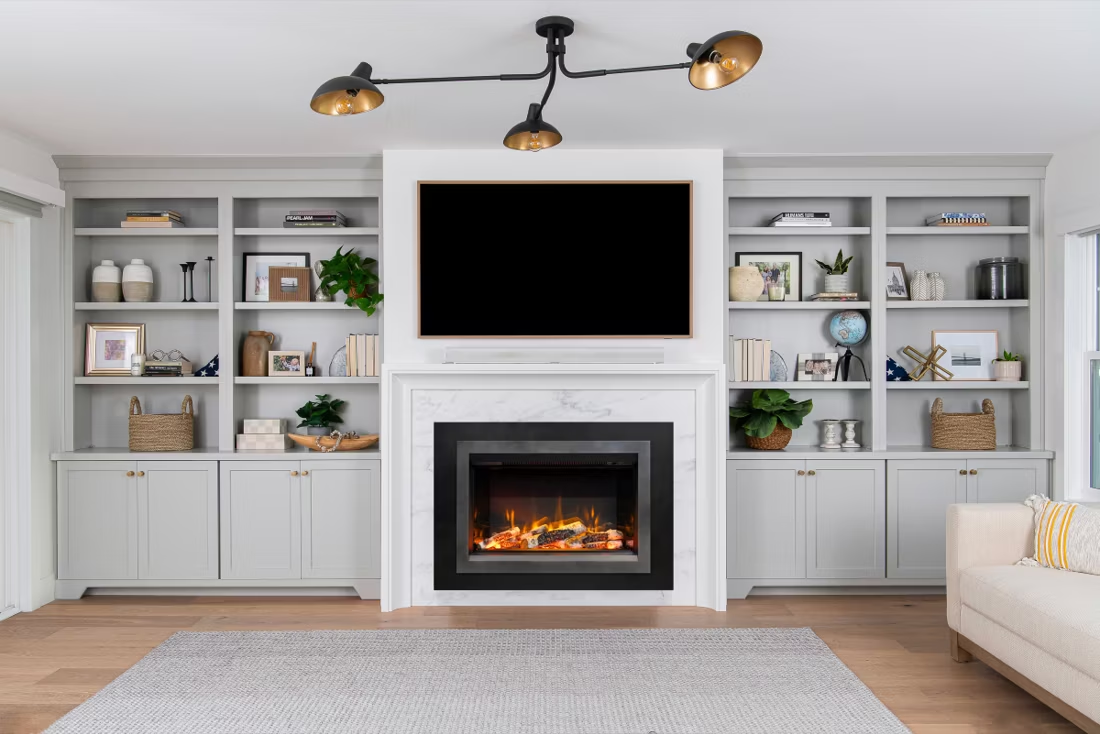
Four fuels. One honest answer for Clark County.
Three steps. No salesperson until you're ready.
Tell us about your project
Your zip code, your situation, and the fuel you're leaning toward—or let the answers point you to one.
See what's actually available
The brands dealers within 100 miles genuinely carry—real options, never a catalog mirage.
Get your dealer & Project Guide
A trusted local dealer, plus the free Project Guide & Parts List that names every component of the job.
Frequently Asked Questions
Which fuel works best in Clark County?
For nearly every home in Clark County, it comes down to gas or electric. Gas fireplaces are the go-to for homeowners who want a real flame with instant on/off control and no fuel to store—Southwest Gas service covers most of the valley, so a gas line hookup is usually straightforward. Electric fireplaces are the practical pick for condos, apartments, rentals, and rooms where venting a gas unit isn't feasible; NV Energy service is universal across the county, so installation is really just a matter of a dedicated circuit if you're going built-in. Wood stoves are essentially not a fit here—with an average winter low around 39°F and only a short, mild winter heating season each year, there's rarely a cold stretch that calls for a wood-fed heat source, and periodic wildfire-smoke advisories make homeowners and regulators alike wary of adding more combustion smoke to the air basin. Pellet stoves see the same lack of demand for the same climate reasons.
Do I need a permit to install a fireplace in Clark County?
Yes, in most cases. Gas fireplace and gas insert installations require a building permit plus a separate gas line permit, and the gas connection itself needs to be done by a licensed gas-fitter—this applies whether you're in unincorporated Clark County or inside Las Vegas, Henderson, North Las Vegas, or Boulder City, each of which runs its own building department. Electric fireplaces that plug into an existing outlet typically don't need a permit; built-in electric units that require new wiring or a dedicated circuit do, and that permit goes through the same city or county building department. Most local hearth retailers handle the permitting and gas-fitter coordination as part of the installation, so you're not usually pulling the permit yourself.
Are there air quality restrictions that affect fireplace choice in Clark County?
Indirectly, yes. Clark County deals with periodic wildfire-smoke events, particularly in summer and fall when fires burning in California, Arizona, and Nevada's own forested regions send smoke into the valley. There's no formal wood-burning curtailment program here the way there is in colder, wood-heavy counties, largely because there's so little residential wood burning to regulate in the first place. But the same air-quality sensitivity that drives smoke advisories is part of why gas and electric fireplaces dominate the local market—homeowners and retailers alike tend to steer toward flame options that don't add particulate load to an already smoke-affected basin during bad air days.
Can one local hearth retailer handle both gas and electric fireplaces?
Yes—most hearth retailers serving Clark County carry both gas and electric lines, since those are the two fuels that actually move here. A retailer with a Las Vegas or Henderson showroom will typically have working gas fireplace displays alongside a wall of electric units, which makes cross-shopping easy if you're deciding between a vented gas fireplace and a plug-in or built-in electric option for the same room. Some suppliers lean more heavily toward one fuel—a few specialize almost entirely in electric for the condo and high-rise market along the Strip—so it's worth confirming a dealer's gas installation experience if that's the route you're taking, particularly for anything requiring new gas line work.
How does fireplace service work across a county this large—Laughlin, Mesquite, Searchlight?
Clark County spans a huge amount of desert, and most gas and electric fireplace technicians are based in the Las Vegas valley—Las Vegas, Henderson, and North Las Vegas—and travel out to Boulder City, Mesquite, Laughlin, and smaller communities like Searchlight and Sandy Valley for service calls. Expect a trip fee for anything beyond about a 30-mile radius of the valley, and expect to book ahead for outlying towns since techs typically batch those trips rather than making a single-house run. For gas fireplace pilot or igniter issues in remote areas, it's worth asking your retailer whether they can walk you through basic troubleshooting by phone before scheduling an in-person visit—it can save a long drive for a simple fix.
What's the typical cost range for fireplace installation across fuel types in Clark County?
Gas fireplace, insert, or stove: roughly $4,000–$10,000 depending on whether new gas line work is needed, with retrofit conversions on existing gas service landing toward the lower end. Electric fireplace: $200–$1,500 for a plug-in unit with no installation cost beyond mounting hardware; built-in electric fireplaces requiring new wiring typically run $400–$1,200 in labor on top of the unit price. Because wood and pellet stoves are rarely installed in Clark County, cost data for those fuels is limited and generally reflects niche cases—cabins at higher elevation near Mount Charleston, for instance, rather than typical valley homes. For a cost breakdown matched to your specific project, the county + fuel pages above have more detail tied to local retailer pricing.
Can a fireplace actually lower my heating bill?
Yes—by creating a comfort zone. A furnace heats every square foot of the house just to warm the one room you're in; a gas fireplace on low burns roughly a sixth of the gas a typical furnace does. Set the furnace around 55–60 degrees as a baseline, then heat the rooms your family actually uses. Families who heat this way commonly save $20–$60 a month.
What is an in-home preview and do I need one?
It's a visit where a hearth professional measures your space, confirms the model you picked actually works in your home, and walks the specs—framing, gas line, venting, finish work—before anything is ordered. Some details you just can't know until you see the house. Never make a down payment without one; it's the single most-skipped step that burns buyers.
Wood, gas, pellet, or electric—how do I choose?
Match the fuel to your life, not the other way around. Wood: lowest fuel cost and total power-outage independence, but you're hauling and stacking. Gas: press a button, set a thermostat, no maintenance to speak of. Pellet: wood economics with automatic feeding, in exchange for weekly cleaning and a need for electricity. Electric: plugs in anywhere with honest supplemental heat. Nobody regrets the fuel that fits how they actually live.
Can I install a fireplace myself?
If you're putting a fire in your house on purpose, it's best to work with an expert. Unless you're genuinely experienced in framing, gas line, vent pipe, and the national code on clearances to combustibles, have a professional do it—and ideally the same company that sells you the fireplace, so warranty, service, and liability all live under one roof.
Stove and Fireplace Dealers in Clark County
Listings include WhyFire partner dealers, dealers we have verified as authorized for the brands we recommend, and established local businesses that carry hearth products. Every listing shows which one it is. The ones marked Preferred run on WhyFire's software, so they can show you real pricing and book your appointment right here. No manufacturer pays for placement. How we verify dealers →
Vista Bbq Outfitters
Premier Bbq & Fire
Proficient Patios & Backyard Designs
Penguin Fireplace & Design
Silver State Specialties, LLC
Sunshield Awning Co.
Southwest Plumbing Supply- Mesquite
Get matched with a Clark County hearth retailer.
Tell us about your gas or electric fireplace project and we'll send you a free Project Guide & Parts List—the exact parts, including the vent kit if you need one, plus our recommended local dealer for your home.
Find Your Fireplace →