
Electric heat that fits Clark County's mild desert winters.
From Summerlin high-rises to Henderson master-planned homes, electric fireplaces bring instant ambiance and zone warmth to the Las Vegas Valley without a chimney, gas line, or HOA fight. Find the right unit and connect with a trusted local dealer.
Every Project Starts From One of These Five Situations
Ambiance-first warmth built for a mild desert climate.
Clark County sits in climate zone 3B, with the Las Vegas Valley floor around 2,000 feet ringed by the Spring Mountains, Sheep Range, and McCullough Range. Winters here average a low of 39°F and add up to a short, mild heating season each year—a fraction of what a place like Bozeman, MT sees in a single hard winter. Wood stoves and pellet stoves are essentially not a factor across the valley: native pinyon, juniper, and sagebrush aren't harvested for home heating the way pine and fir are in forested climates, and wildfire smoke concerns already limit outdoor burning in the region. For the 3.8 million people spread across Las Vegas, Henderson, North Las Vegas, Boulder City, Mesquite, and unincorporated communities like Summerlin, Spring Valley, and Enterprise, heat isn't really the problem homeowners are solving—comfort, glow, and design are.
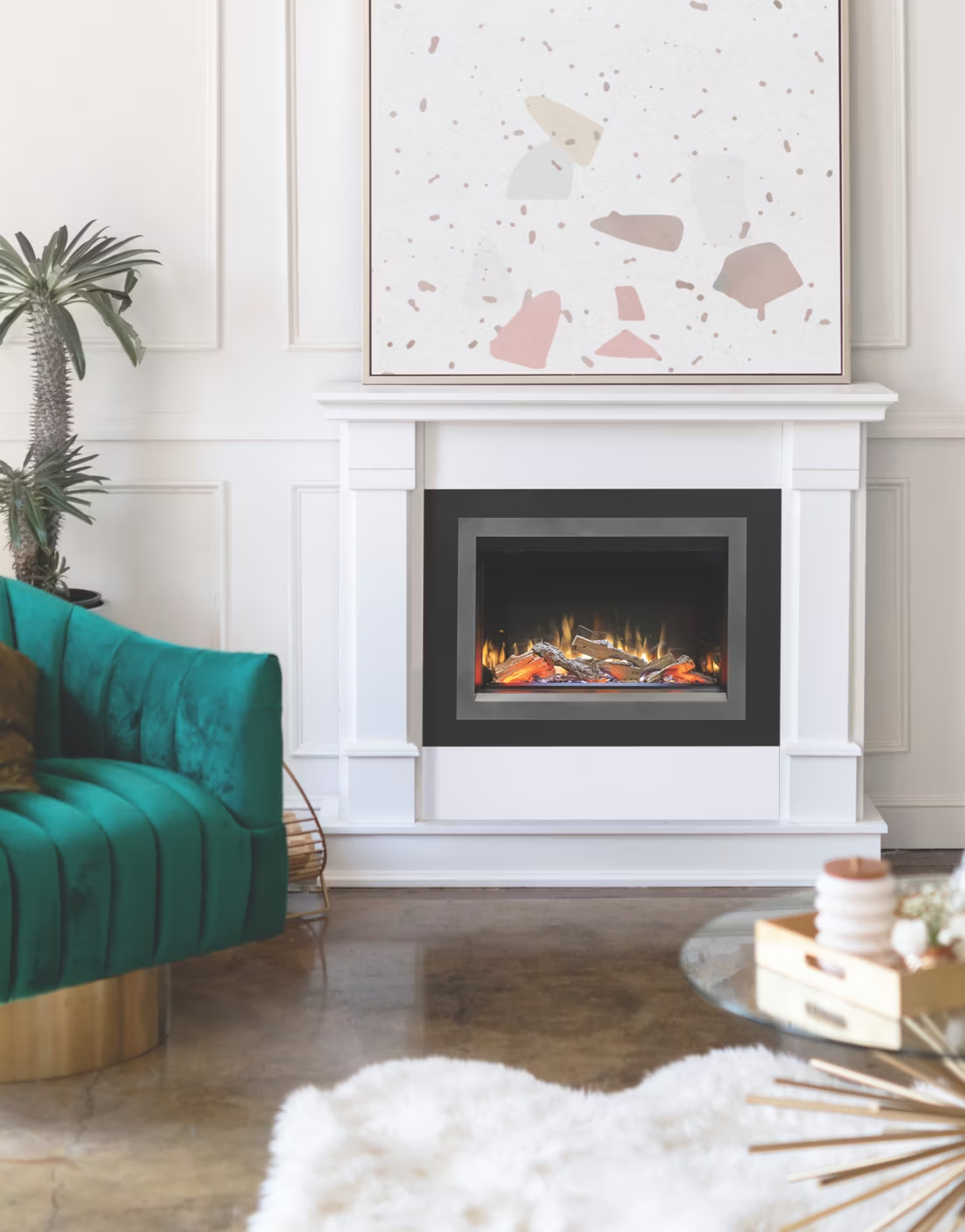
That's exactly where electric fireplaces fit. No venting, no gas line, no chimney—which matters in a county built heavily around HOA-governed master-planned communities (Summerlin, Green Valley, Anthem, Mountain's Edge, Inspirada) and high-rise condo towers where roof penetrations and flue runs simply aren't an option. Most electric units plug into standard 120V household circuits and run through NV Energy service without any special hookup, and built-in wall models can be sized to a linear living-room feature or a bedroom accent with a licensed electrician handling the circuit. For supplemental warmth on the valley's cooler nights, or a fireplace feature that never needs a cord of wood or a Southwest Gas line, electric is often the simplest project in the county to actually get installed correctly.
Three steps. No salesperson until you're ready.
Tell us about your project
Your zip code, your situation, and the fuel you're leaning toward—or let the answers point you to one.
See what's actually available
The brands dealers within 100 miles genuinely carry—real options, never a catalog mirage.
Get your dealer & Project Guide
A trusted local dealer, plus the free Project Guide & Parts List that names every component of the job.
Frequently Asked Questions
How much does an electric fireplace installation cost in Clark County?
Plug-in electric inserts and freestanding units are the least expensive hearth project you can do in Clark County—often installed in an afternoon with no permit required since there's no venting or gas line involved. Built-in wall units and linear electric fireplaces cost more, since they typically require a dedicated electrical circuit, some framing or drywall work, and an electrician to tie into the panel—a licensed local installer will quote this after seeing your wall and panel setup. Either way, electric is consistently the lowest-cost hearth option compared to gas or masonry work in this market, which is part of why it's popular in condos and newer Henderson and Summerlin builds where owners want the look without a major renovation.
What's the best electric fireplace for a Las Vegas Valley home?
Because Clark County winters rarely require serious heat output, most homeowners here are choosing electric fireplaces for ambiance and design first, supplemental warmth second. Linear wall-mounted units with realistic flame technology work well in open-concept great rooms common in Henderson and Summerlin builds, while smaller insert-style units fit nicely into existing fireplace openings in older Las Vegas and North Las Vegas homes that already have a masonry surround but no working gas or wood setup. In high-rise condos—Turnberry Towers, Panorama, and similar buildings near the Strip—a plug-in or low-amp built-in model is usually the only hearth option the building's HOA and fire code will allow. A local dealer can walk you through flame quality, heater wattage, and remote/app features once you know your wall and outlet situation.
Do I need a permit to install an electric fireplace in Clark County?
A simple plug-in electric fireplace or insert generally doesn't require a permit anywhere in Clark County. A built-in electric fireplace that involves new wiring or a dedicated circuit typically does need an electrical permit, and jurisdiction depends on where you live: City of Las Vegas Building & Safety, Henderson Building & Fire Safety, North Las Vegas Building Safety, or the Clark County Building Department for unincorporated areas like Spring Valley, Enterprise, Paradise, and Summerlin South. If you're in an HOA-governed community—which covers a large share of the valley's newer neighborhoods—check your HOA's architectural guidelines too, since some restrict visible venting or exterior modifications, though electric units almost never trigger those rules since nothing penetrates the wall or roof.
Electric vs. gas fireplace—which is right for my Clark County home?
Gas fireplaces are common throughout Clark County thanks to Southwest Gas service across most of the valley, and they deliver real, meaningful heat output—useful on the county's occasional cold snaps when overnight lows can dip toward the 30s. Electric fireplaces don't produce comparable heat, but they cost far less to install, need no venting or gas line, and work in places gas simply can't go—high-rise condos, HOA-restricted units, rented apartments, and interior walls without a flue path. For a primary living room in a single-family Henderson or Summerlin home, gas is often worth the extra install cost for genuine warmth on cool nights. For a bedroom accent, a condo, or a design-forward feature wall, electric is usually the better and considerably cheaper fit.
Can an electric fireplace actually heat a room in Las Vegas?
Most electric fireplaces include a built-in heater that can genuinely take the edge off a room on Clark County's cooler nights—useful supplemental heat during the valley's brief winter, when lows average around 39°F and rarely drop into serious cold. That said, with such a short, mild heating season here, most homes rely on central heat pump or HVAC systems for whole-home heating, and an electric fireplace is realistically a zone-heat or ambiance feature rather than a primary heat source. If you want more heat output as a backup or supplement, ask a local dealer about wattage ratings—most units offer adjustable heat settings so you can run flame-only for ambiance in warmer months and add heat when temperatures dip.
Are electric fireplaces a good fit for Las Vegas condos and HOA communities?
Yes—this is one of the strongest use cases for electric fireplaces in Clark County. High-rise buildings near the Strip and in Downtown Las Vegas generally prohibit any venting, flue, or roof penetration for fire and building code reasons, which rules out gas and wood entirely. Electric units sidestep the issue completely since they plug into an existing outlet or tie into a standard circuit with no exhaust of any kind. The same logic applies in master-planned HOA communities across Henderson, Summerlin, and Anthem, where architectural committees can be strict about exterior changes—an electric fireplace installed on an interior wall typically doesn't require HOA review at all, since there's nothing visible from outside the home.
How much does it cost to run an electric fireplace on NV Energy?
Electric fireplaces are inexpensive to operate compared to running central air conditioning through a Clark County summer, since the heater element only draws meaningful power when the heat function is active—flame-only mode uses very little electricity. On NV Energy's residential rates, running the heater setting for a few hours an evening during the county's short cooling season adds a modest amount to a monthly bill, far less than most homeowners expect. Because Clark County's heating season is so brief compared to colder states, most owners run their electric fireplace on flame-only for the ambiance most of the year and only use the heat setting occasionally.
Why don't people use wood or pellet stoves in Clark County?
Wood and pellet heating are effectively not a factor in the Las Vegas Valley. With winter lows averaging 39°F and such a short, mild heating season each year, there's little practical need for a standalone heat-producing appliance, and the desert vegetation around the valley—pinyon, juniper, sagebrush—isn't managed or harvested as a firewood resource the way forested regions handle pine and fir. Wildfire smoke is already a recurring air quality concern in the region during summer and fall, which makes local demand for another combustion source even softer. A small number of rural properties near Mount Charleston or outlying parts of the county may still run a wood stove for a mountain cabin, but for the vast majority of Clark County homeowners, electric or gas covers the hearth need without any of the venting, fuel storage, or air quality tradeoffs.
How do I find a trusted electric fireplace installer in Clark County?
Look for a licensed electrician or hearth dealer who regularly works on built-in electric fireplace installs rather than a general handyman—the difference matters for circuit sizing, wall clearances, and doing the job in a way that won't trip a breaker every time the heater kicks on. Find My Fireplace isn't a retailer or manufacturer—we're a neutral matchmaker that connects Clark County homeowners with a trusted local dealer who knows the valley's HOA rules, condo restrictions, and building department requirements in Las Vegas, Henderson, North Las Vegas, and Boulder City. Tell us about your home and we'll match you with the right dealer and send over a free Project Guide & Parts List so you know exactly what's involved before anyone shows up.
Can I put a TV above my fireplace?
Yes—with an asterisk. Fireplaces are hot and TVs don't like heat. Either put a mantel between them to deflect rising warmth, or choose a fireplace with heat-management technology that creates a cool zone on the wall above—the wall stays around 125 degrees, barely warm, while the room still gets full heat. If you like clean lines and don't want a mantel, heat management is the answer.
Do electric fireplaces actually produce heat?
Yes—most put out around 4,800–5,000 BTUs from a standard outlet, which comfortably warms a bedroom, office, or den as a comfort-zone heater. What they won't do is carry a whole house the way wood, gas, or pellet can. Think of electric as ambiance-first with honest supplemental heat: flames on with no heat in July, flames plus warmth in January.
Does a fireplace add value to my home?
On average, a fireplace adds back to the home about the same amount you spent installing it. Add the monthly savings from heating the rooms you actually use instead of the whole house—often hundreds of dollars a year—and the value case is strong before you even count what a fire does for how your family uses the room.
Can a fireplace actually lower my heating bill?
Yes—by creating a comfort zone. A furnace heats every square foot of the house just to warm the one room you're in; a gas fireplace on low burns roughly a sixth of the gas a typical furnace does. Set the furnace around 55–60 degrees as a baseline, then heat the rooms your family actually uses. Families who heat this way commonly save $20–$60 a month.
Stove and Fireplace Dealers in Clark County
Listings include WhyFire partner dealers, dealers we have verified as authorized for the brands we recommend, and established local businesses that carry hearth products. Every listing shows which one it is. The ones marked Preferred run on WhyFire's software, so they can show you real pricing and book your appointment right here. No manufacturer pays for placement. How we verify dealers →
Vista Bbq Outfitters
Premier Bbq & Fire
Proficient Patios & Backyard Designs
Penguin Fireplace & Design
Silver State Specialties, LLC
Sunshield Awning Co.
Southwest Plumbing Supply- Mesquite
Find your electric fireplace in Clark County.
Tell us a bit about your home and we'll match you with the right electric fireplace or insert—plus a free Project Guide & Parts List and a trusted local dealer to install it.
Find Your Fireplace →