
Steady pellet heat for Rock County's long Sandhills winters.
From Bassett to the ranches scattered across nearly 1,000 square miles of grass-covered dunes, Rock County winters are long, windy, and short on nearby dealers. Find the right pellet stove or insert, and get matched with a trusted local installer who can actually get you serviced.
Every Project Starts From One of These Five Situations
Automatic heat for a county built on self-reliance.
Rock County is Sandhills country—rolling grass dunes, cattle ranches spaced miles apart, and a year-round population of under 700 spread across one of the least densely settled counties in Nebraska. Zone 5A winters here run cold and windy in a way that rivals Bismarck, North Dakota for sustained chill, but unlike forested cold-climate counties, the Sandhills don't offer much standing timber to cut. What cottonwood grows here clusters along creek bottoms and draws; the oak and hickory common farther east in the state are the exception here, not the rule.
That combination—real cold, thin local wood supply, and long distances to town—is exactly why pellet stoves have found a foothold in Rock County. A hopper you fill once a day and a thermostat that holds a set temperature overnight matters when you're also up before dawn checking cattle in a windchill advisory. Rock County has no air-quality nonattainment designation and no wood-burning curtailment periods, so there's no regulatory hurdle to clear—the practical question is simply getting pellets delivered and a stove properly vented in a county where the nearest hearth dealer may be a real drive from Bassett.
Three steps. No salesperson until you're ready.
Tell us about your project
Your zip code, your situation, and the fuel you're leaning toward—or let the answers point you to one.
See what's actually available
The brands dealers within 100 miles genuinely carry—real options, never a catalog mirage.
Get your dealer & Project Guide
A trusted local dealer, plus the free Project Guide & Parts List that names every component of the job.
Frequently Asked Questions
How much does a pellet stove installation cost in Rock County?
Most pellet stove installations run in the $3,000 to $6,000 range nationally, and Rock County falls in that band—the variables are the stove itself, whether a new sidewall vent kit needs to be run through an exterior wall, and whether the hearth pad needs upgrading for clearance. Because Rock County has so few installers based in-county, expect a trip charge from whichever dealer serves you out of a larger town like O'Neill, Ainsworth, or Valentine. A local match through Find My Fireplace accounts for that travel distance up front rather than surprising you with it on the invoice.
Where can I actually buy pellets near Bassett or Newport?
Rock County doesn't have a dedicated hearth-and-pellet retail store, which is typical for a county this size. Pellets from regional brands like Lignetics and Indeck Energy Services are more commonly stocked seasonally through farm and ranch supply stores or ordered by the pallet (roughly 50 forty-pound bags) through a regional distributor with delivery to the ranch. Buying a season's supply in one or two pallet orders—rather than a bag at a time—is the practical approach most Rock County pellet-stove owners settle into after the first winter.
Will a pellet stove still work if the power goes out?
Not without a workaround. A pellet stove's auger and blower both run on household electricity, so a straight power outage shuts the stove down along with everything else. In a county where wind and ice can take lines down for hours at a time, many Rock County ranch households already run a backup generator for well pumps and livestock equipment—sizing that generator to also cover the pellet stove's modest draw is a simple addition. If backup power isn't part of your plan, a wood stove or a propane unit with a battery-backed ignition is worth discussing alongside pellet as your primary option.
Do I need a permit to install a pellet stove in Rock County?
Building permit requirements in rural Nebraska counties like Rock are lighter than in cities, but a new pellet stove installation—especially one requiring a new sidewall vent penetration—typically still needs a permit through the county zoning or building office. Most local installers handle that paperwork as part of the job. There's no air-quality nonattainment designation for Rock County and no burn curtailment periods to work around, so once the unit is installed and vented to code, you're free to run it as needed.
What size pellet stove do I need for an older Sandhills farmhouse?
Older ranch houses in Rock County tend to run larger and leakier than a comparably sized newer home, and pellet stoves are usually asked to supplement a propane furnace rather than replace it outright. For a single large living area, a mid-size unit (roughly 1,500–2,200 sq ft rating) with a large hopper—60 lbs or more—cuts down on how often you're refilling during multi-day cold stretches. For homes where the stove is doing double duty as the main heat source in a drafty older structure, sizing up and asking your installer about insulation and air-sealing first will get you more out of the stove than sizing up alone.
Pellet stove vs. wood stove—which makes more sense out here?
Wood makes sense where you can cut your own—but Rock County's Sandhills terrain is grass, not forest, so most wood burned here is trucked in rather than cut from your own land, which erases wood's usual cost advantage. Pellet stoves trade that self-sufficiency for convenience: no splitting, no seasoning, and a hopper that holds overnight without tending. If you already have a reliable source of oak or hickory from a creek-bottom lot or a relative's woodlot farther east in the state, wood still has a case. If you'd otherwise be buying cordwood by the truckload anyway, pellet delivery by the pallet is usually simpler and cleaner to manage.
How much maintenance does a pellet stove actually need?
Less than a wood stove, but not none. Plan on emptying the ash pan every few days during regular use, brushing the burn pot weekly, and a full professional cleaning and inspection of the venting once a year—pellet stoves vent through a smaller-diameter pipe than wood stoves, and that pipe can accumulate fly ash and glaze over a season of daily use. Given the drive involved for a technician to reach most Rock County addresses, scheduling that annual service in late summer, before the first cold snap, is worth doing rather than waiting for a mid-winter problem.
What pellet stove brands should I look at, and are Lignetics or Indeck stoves?
Lignetics and Indeck Energy Services are pellet fuel producers, not stove manufacturers—they're the brands you're most likely to find on pallets at a regional farm supply or distributor serving Rock County. For the stove itself, look at established manufacturers like Harman, Englander, or Lopi, all of which build units rated for cold-climate, near-continuous use rather than occasional-fire convenience. A local dealer can tell you which of those brands they actually stock and service in north-central Nebraska—that servicing relationship matters more out here than brand name alone, given how far a warranty repair visit might have to travel.
Pellet vs. propane—which should heat my Rock County home?
Propane is the default whole-home heating fuel across most of rural Rock County, since natural gas mains don't reach this far out, and it'll almost always remain your backup or primary furnace fuel. A pellet stove doesn't usually replace that system outright—it works alongside it as zone heat for the room you live in most, cutting propane usage during the coldest stretch of the year while the furnace holds the rest of the house at a lower setback temperature. Propane prices swing seasonally and pellets are comparatively stable and bought in bulk, which is part of why pairing the two is common here rather than choosing one exclusively.
How often does a pellet stove need cleaning?
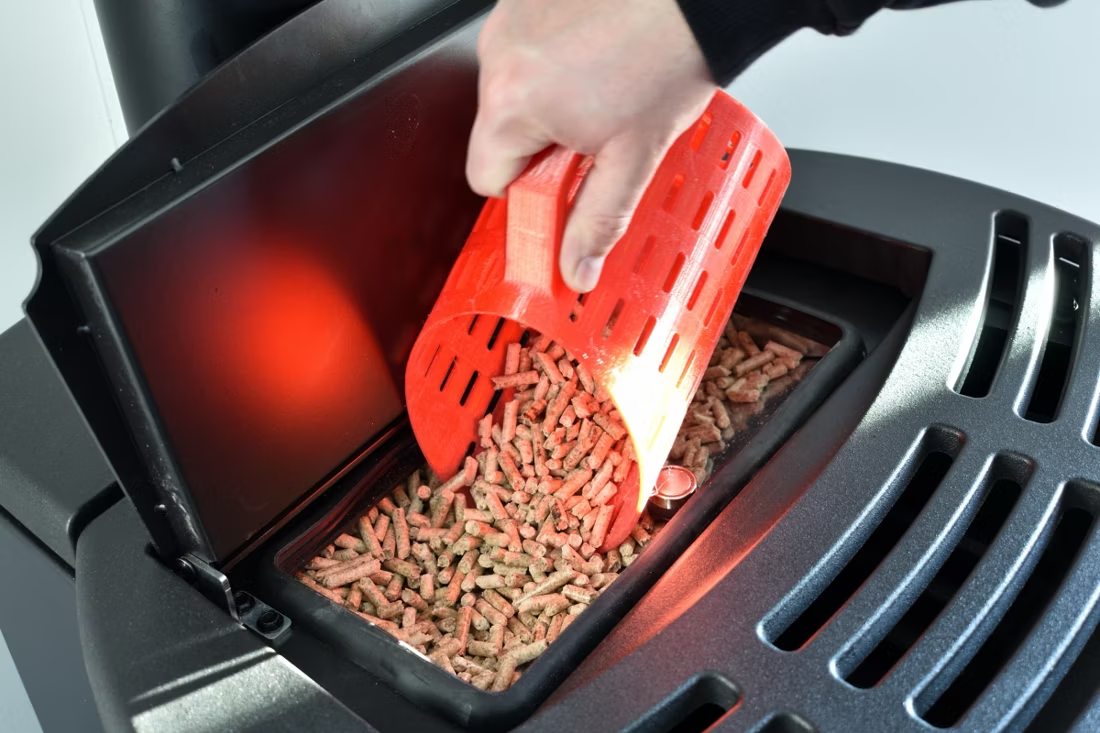
A clean pellet stove is a happy pellet stove. Plan on cleaning the burn pot about once a week when you're burning regularly—ash and clinkers gum up the air holes just like a pellet barbecue. Most pellet stove problems trace back to skipped cleaning that nobody explained up front. Some designs make it easy with a trapdoor burn pot: pull a lever and the gunk drops into the ash pan.
What's the difference between an insert and a zero-clearance fireplace?
An insert is a fireplace that slides into a pre-existing wood-burning fireplace—if you don't have one, there's nothing to insert it into. A zero-clearance fireplace is built into a framed wall, which makes it the answer for remodels and new construction. Simple test: existing masonry fireplace means insert; blank or framed wall means zero-clearance.
Should the dealer who sells my fireplace also install it?
Ideally, yes. A fireplace project involves vent pipe, gas line, electrical, and often tile or stone. Hire three or four separate trades and you own the liability and the game of telephone between them. One company selling and installing means one accountable party, start to finish—ask about factory training, on-time completion records, and what happens if an inspection fails.
Does a fireplace add value to my home?
On average, a fireplace adds back to the home about the same amount you spent installing it. Add the monthly savings from heating the rooms you actually use instead of the whole house—often hundreds of dollars a year—and the value case is strong before you even count what a fire does for how your family uses the room.
Pellet Brands Stocked Around Rock County
Manufacturers will point you to the nearest stocking dealer.
Find your pellet stove in Rock County.
Tell us about your home and we'll match you with a trusted local dealer and send over a free Project Guide & Parts List—the exact stove, vent kit, and parts recommended for your Rock County installation.
Find Your Fireplace →