
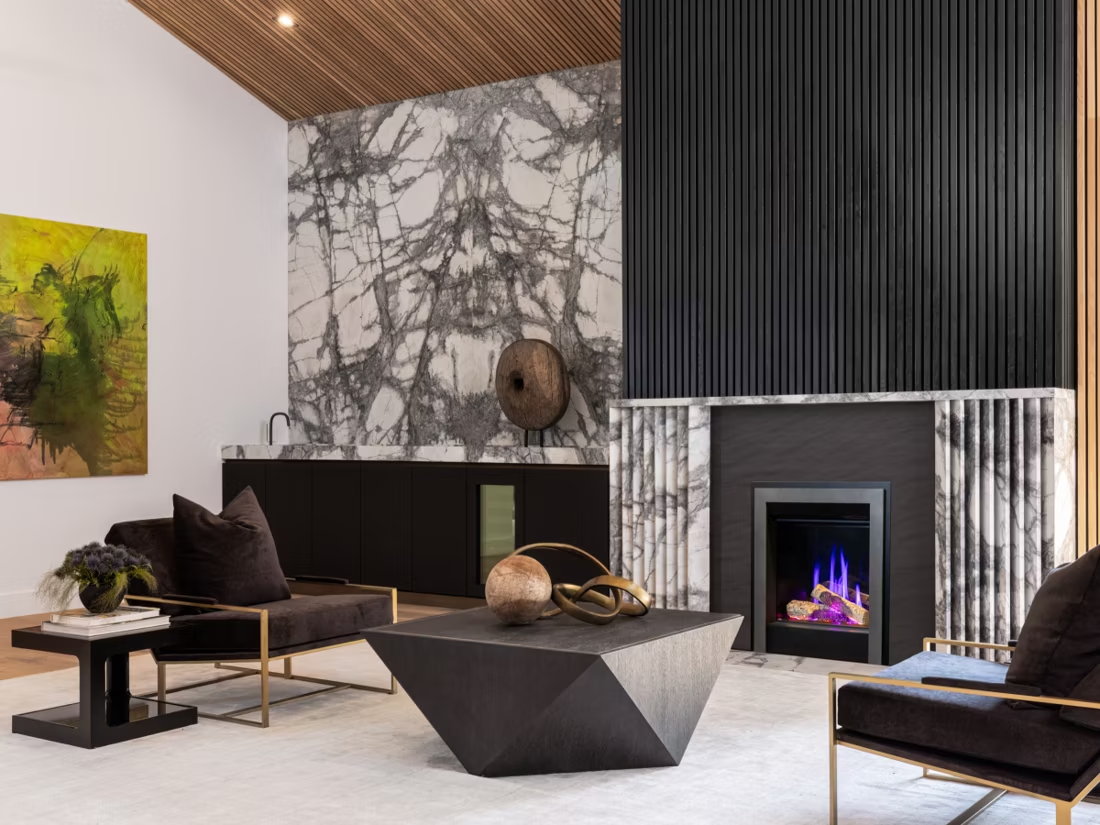
Add real ambiance to a Rock County home without touching the chimney.
For the 668 residents spread across Rock County's ranch country, an electric fireplace means supplemental warmth and real flame-look ambiance with no venting, no gas line, and no wood to split. Find the right unit and connect with a trusted local dealer.
Every Project Starts From One of These Five Situations
Simple heat for a county where wood and propane already do the heavy lifting.
Rock County sits in Nebraska's Sandhills, a sparsely populated stretch of Zone 5A country where winters run cold and long—closer in feel to Fargo, ND, than to the rest of the Midwest most people picture. With only 668 residents spread across the county, most homes rely on propane furnaces or wood heat from local oak, hickory, and cottonwood as their primary systems. Electric fireplaces here aren't usually the main heat source; they're the unit that goes into a den, a finished basement, or a bedroom addition where running a gas line or building a chimney doesn't make sense.
That's actually where electric fireplaces earn their keep. Power in Rock County is served by Nebraska Public Power District's local distribution, and a standard 120-volt electric insert or wall unit plugs into an existing outlet—no new gas line, no masonry, no permit delays waiting on a county building inspector who may be covering several counties at once. For a ranch home outside Bassett or a second living space that just needs supplemental warmth and the look of a fire, electric is the low-hassle answer. It won't replace a wood stove or propane furnace on a January night at 15 below, but it does the job it's built for well.
Three steps. No salesperson until you're ready.
Tell us about your project
Your zip code, your situation, and the fuel you're leaning toward—or let the answers point you to one.
See what's actually available
The brands dealers within 100 miles genuinely carry—real options, never a catalog mirage.
Get your dealer & Project Guide
A trusted local dealer, plus the free Project Guide & Parts List that names every component of the job.
Frequently Asked Questions
How much does an electric fireplace installation cost in Rock County?
Most electric fireplace and insert installations in Rock County run $400 to $1,200, and that's typically the entire project cost—not just the unit. A plug-in electric insert dropped into an existing masonry fireplace opening is on the low end; a built-in wall unit that needs a dedicated 120-volt circuit run by an electrician sits toward the higher end. Because there's no venting or gas line to install, most electric fireplace jobs in Rock County are same-day work once the unit is on hand, which matters given the driving distance to the nearest full-service hearth retailer.
Will an electric fireplace actually heat a room in a Sandhills winter?
An electric fireplace will comfortably supplement heat in a single room—most units put out around 5,000 BTU, enough to take the edge off a den, bonus room, or bedroom. It is not a substitute for a propane furnace or a wood stove burning local oak or hickory when temperatures in Rock County drop into the single digits or below, which happens regularly in this part of the Sandhills. Think of it as zone heat for a specific space, not a whole-home solution—that's the honest framing for a Zone 5A climate like this one.
Do I need a permit to install an electric fireplace in Rock County?
Generally no, if you're installing a plug-in electric insert or a freestanding unit into an existing outlet—there's no combustion, no venting, and no gas line, so most jurisdictions don't require a building permit for that. If you're having an electrician run a new dedicated circuit for a built-in wall unit, that electrical work itself may need a permit depending on how Rock County's building department handles rural electrical work. A local dealer or electrician can tell you definitively before work starts.
What's the difference between an electric insert and a built-in electric fireplace?
An electric insert is sized to slide into an existing fireplace opening—a good fit for a Rock County farmhouse that already has a masonry fireplace that's rarely used or was never converted to wood or gas. A built-in electric fireplace is designed to be framed into a wall from scratch, which works well in a new addition, a finished basement, or a remodel where there's no existing fireplace opening to use. Both plug into standard household power; the insert is the faster, lower-cost path if you already have the opening.
Can an electric fireplace run during a power outage?
No—electric fireplaces require household power to run the heater and flame effect, so they go dark along with everything else during an outage. This is worth weighing seriously in Rock County, where rural power lines can take longer to restore after a Sandhills ice storm or blizzard than in town. Most local homes that rely on electric fireplaces for ambiance also keep a wood stove or propane heater as backup heat for exactly this reason.
What's the best electric fireplace for a Rock County home?
For a supplemental heat and ambiance unit in a den or bonus room, a mid-size insert or wall-mount model with a realistic LED flame effect and a built-in thermostat covers most needs well. If the goal is heating a specific room on a cold Sandhills evening, look for a model rated for at least 400-500 square feet with a true 5,000 BTU heater rather than a decorative-only unit. Given the driving distance from most Rock County addresses to a hearth retailer, it's worth confirming with a local dealer that the model you want is actually in stock or easily orderable before you commit.
Does an electric fireplace need any maintenance?
Very little. Unlike a wood stove that needs an annual chimney sweep or a gas unit that needs a yearly burner inspection, an electric fireplace mainly needs occasional dusting of the heater vents and LED panel, and a bulb or LED module replacement every several years depending on the model. There's no combustion byproduct, no creosote, and no gas line to service—one of the reasons it's a low-maintenance option for a second living space in a rural county where a technician visit means a longer drive.
Electric vs. wood—which makes sense for my Rock County home?
Wood, burning local oak, hickory, or cottonwood, remains the practical primary or backup heat source for most Rock County homes because it works without power during outages and produces real heat output for a genuinely cold Sandhills winter. Electric fireplaces don't compete on heat output or outage resilience, but they win on convenience, installation speed, and ambiance—no chimney, no wood stacking, no permit wait. Most local homeowners who add electric are doing it for a specific room, not to replace the wood stove or propane furnace already carrying the load.
Is natural gas or propane a better option than electric for a Rock County fireplace?
Propane is common in rural Nebraska and can deliver more real heat output than an electric unit, but it requires a propane line or dedicated tank and generally costs more to install. Electric is the simpler, lower-cost path when the goal is ambiance and light supplemental warmth in a specific room rather than serious heating capacity. If you're trying to heat a whole addition or a drafty older room in Rock County's cold winters, a local dealer can walk you through whether propane or electric fits your actual heat-load needs better.
Can I put a TV above my fireplace?
Yes—with an asterisk. Fireplaces are hot and TVs don't like heat. Either put a mantel between them to deflect rising warmth, or choose a fireplace with heat-management technology that creates a cool zone on the wall above—the wall stays around 125 degrees, barely warm, while the room still gets full heat. If you like clean lines and don't want a mantel, heat management is the answer.
Does an electric fireplace need a vent or chimney?
No—that's its superpower. An electric fireplace needs a wall and an outlet, period. No vent pipe, no gas line, no clearances to design around, which is why it works in bedrooms, offices, apartments, and walls where venting a gas or wood unit would be impractical or impossible. Installation is typically the simplest and least expensive of any fireplace type.
Can a fireplace actually lower my heating bill?
Yes—by creating a comfort zone. A furnace heats every square foot of the house just to warm the one room you're in; a gas fireplace on low burns roughly a sixth of the gas a typical furnace does. Set the furnace around 55–60 degrees as a baseline, then heat the rooms your family actually uses. Families who heat this way commonly save $20–$60 a month.
What is an in-home preview and do I need one?
It's a visit where a hearth professional measures your space, confirms the model you picked actually works in your home, and walks the specs—framing, gas line, venting, finish work—before anything is ordered. Some details you just can't know until you see the house. Never make a down payment without one; it's the single most-skipped step that burns buyers.
Find your electric fireplace in Rock County.
Tell us a bit about your home and we'll match you with the right electric fireplace or insert, plus a free Project Guide & Parts List with the exact parts and a recommended local dealer for your Rock County project.
Find Your Fireplace →