
Heat that holds up on the Nebraska Sandhills.
Wood, gas, pellet, and electric fireplace resources for Bassett and the ranches scattered across Rock County. Find the right unit for your home and connect with a local hearth retailer who knows the territory.
Every Project Starts From One of These Five Situations
Ranch-country heating in Rock County, Nebraska.
Rock County sits in the heart of the Nebraska Sandhills, a sparsely populated stretch of grass-covered dunes where the wind rarely quits and winter cold settles in early. In climate zone 5A, temperatures here run comparable to Bismarck ND or Fargo ND in a hard winter—well below freezing for weeks at a stretch, with wind chill doing most of the damage. With just 668 residents spread across nearly 1,000 square miles, most homes here are freestanding ranch properties, not subdivisions, and heating decisions get made with self-reliance in mind: what still works if the power's out, what fuel you can stockpile, and what a local tech can actually get to when the roads are bad.
What you'll find on this hub: hearth retailers, service technicians, and fuel suppliers covering Bassett and the rural county around it. There's no air quality nonattainment designation here and no burn restrictions to navigate—just a genuinely cold, dry, wind-driven climate where a well-chosen stove or insert earns its keep. Pick your fuel below to get into the specifics—local dealers, install costs, recommended units, and species and supply notes particular to Rock County.
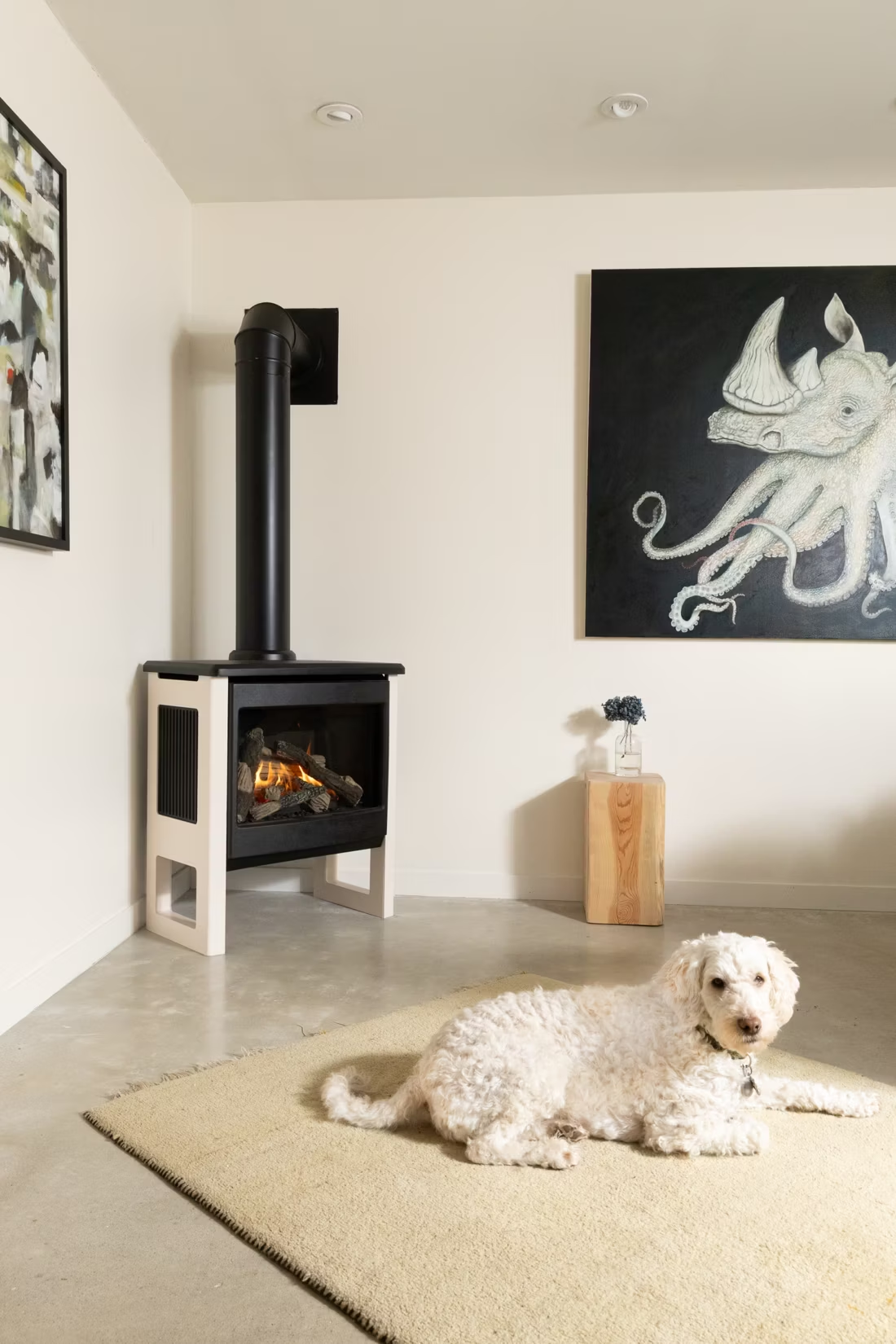
Four fuels. One honest answer for Rock County.
Three steps. No salesperson until you're ready.
Tell us about your project
Your zip code, your situation, and the fuel you're leaning toward—or let the answers point you to one.
See what's actually available
The brands dealers within 100 miles genuinely carry—real options, never a catalog mirage.
Get your dealer & Project Guide
A trusted local dealer, plus the free Project Guide & Parts List that names every component of the job.
Frequently Asked Questions
Which fuel works best for a Rock County ranch home?
It depends on how remote the property is and what happens when the power drops. Wood is the traditional answer out here, and it makes sense—oak, hickory, and cottonwood are cut locally, a well-loaded catalytic or non-cat stove will hold a fire through a long Sandhills night, and wood keeps working when the lines go down in a blizzard, which matters on properties miles from the nearest lineman. Gas, almost always propane given the rural setting, is the convenience option for main living areas—instant heat with no wood-splitting, though it depends on tank refills staying on schedule when roads get bad. Pellet stoves are a reasonable middle ground if you can keep a bag supply on hand, since pellets aren't sold locally in bulk the way firewood is—most owners order Lignetics or similar brands ahead of winter rather than buying as needed. Electric works fine as a supplemental heater in a bedroom or shop, but it isn't a serious primary-heat option here given how often rural power gets knocked out by wind and ice.
Do I need a permit to install a fireplace in Rock County?
Most rural Nebraska counties, Rock County included, have lighter permitting requirements than incorporated cities, but you should still confirm requirements with the county before installing a wood stove, insert, gas appliance, or pellet stove—particularly if you're adding new venting through a roof or wall. Propane installations typically require sign-off from your propane supplier or a licensed installer regardless of county permitting, since tank placement and line pressure have their own safety codes. Electric fireplaces generally don't require a permit unless you're hardwiring a built-in unit into a new circuit. A local hearth retailer who's installed in the county before will know exactly what Rock County expects and can usually handle the paperwork as part of the job.
Is wood burning restricted in Rock County?
No. Rock County has no air quality nonattainment designation and no wind or burn advisories tied to wood smoke—this is open Sandhills grassland with almost none of the inversion or population-density issues that trigger burn curtailment in places like the Klamath Basin. That said, this is grass country prone to wind, so if you're burning cut wood or brush outdoors, check for any active burn ban tied to fire danger rather than air quality; those are managed separately by the county emergency management office and tend to follow drought conditions, not winter heating.
Can one local retailer handle all four fuel types for a Rock County home?
Given how small Rock County's population base is, most dealers who actually make the drive out to Bassett and the surrounding ranches carry a mix of wood, gas (propane), and pellet units, since those cover the vast majority of rural heating needs. Electric fireplace inventory tends to be thinner and more special-order, since it's rarely anyone's primary heat source out here. If you want to compare fuels side by side, ask a retailer up front what they stock versus what they'd need to order—for a county this size, special ordering is normal, not a red flag.
How does fireplace service work when properties are this spread out?
Technicians covering Rock County typically build service routes rather than dispatching same-day, so scheduling ahead—ideally in late summer or early fall before the first hard freeze—gets you priority over a mid-January emergency call. Expect a trip charge for the distance on top of standard service if you're well outside Bassett proper. Because winter storms can close roads for days at a time, it's worth keeping basic maintenance supplies on hand yourself: spare gaskets or batteries for a gas unit's ignition system, and a chimney brush if you're comfortable doing a mid-season wood-stove cleaning between professional sweeps.
What's the typical cost range for fireplace installation across fuel types in Rock County?
Costs run close to typical rural Midwest pricing, sometimes slightly higher once you factor in a dealer's travel time to reach a Sandhills property. Wood stove or insert installation: roughly $4,000–$8,500 for a standard install, more if new chimney or hearth work is needed. Propane fireplace, insert, or stove: roughly $4,000–$10,000 depending on whether an existing tank and line are already in place. Pellet stove or insert: roughly $4,000–$7,000, with hopper and venting the main variables. Electric fireplace: $200–$3,000 for the unit itself, plus $400–$1,200 in labor for anything beyond a simple plug-in install. See the county + fuel pages above for retailer-specific figures.
How much should I budget for a fireplace?
For an average home—covering the fireplace, the vent pipe, and basic installation—a budget between $3,900 and $5,500 gives you a lot of options across wood, gas, and pellet. By the time you add finish work, gas line, and electrical, the average complete installation lands between $5,000 and $12,000 all-in. In a remodel or new build, a good rule is to put about 2.5% of the total project cost toward the fireplace.
Wood, gas, pellet, or electric—how do I choose?
Match the fuel to your life, not the other way around. Wood: lowest fuel cost and total power-outage independence, but you're hauling and stacking. Gas: press a button, set a thermostat, no maintenance to speak of. Pellet: wood economics with automatic feeding, in exchange for weekly cleaning and a need for electricity. Electric: plugs in anywhere with honest supplemental heat. Nobody regrets the fuel that fits how they actually live.
What is an in-home preview and do I need one?
It's a visit where a hearth professional measures your space, confirms the model you picked actually works in your home, and walks the specs—framing, gas line, venting, finish work—before anything is ordered. Some details you just can't know until you see the house. Never make a down payment without one; it's the single most-skipped step that burns buyers.
Can a fireplace actually lower my heating bill?
Yes—by creating a comfort zone. A furnace heats every square foot of the house just to warm the one room you're in; a gas fireplace on low burns roughly a sixth of the gas a typical furnace does. Set the furnace around 55–60 degrees as a baseline, then heat the rooms your family actually uses. Families who heat this way commonly save $20–$60 a month.
Stove and Fireplace Dealers in Rock County
Listings include WhyFire partner dealers, dealers we have verified as authorized for the brands we recommend, and established local businesses that carry hearth products. Every listing shows which one it is. The ones marked Preferred run on WhyFire's software, so they can show you real pricing and book your appointment right here. No manufacturer pays for placement. How we verify dealers →
Find your fireplace fit in Rock County.
Tell us about your Rock County property and fuel preference, and we'll match you with a local hearth retailer plus a free Project Guide & Parts List—the exact parts, vent kit included, for your specific install.
Find Your Fireplace →