
Find the right pellet stove for Nuckolls County's long, cold winters.
From Superior to Nelson to the farmsteads along the Kansas line, pellet heat delivers steady, low-maintenance warmth through a long, demanding winter. Find the right unit and connect with a trusted local dealer.
Every Project Starts From One of These Five Situations
Consistent heat with less hands-on work than a wood stove.
Nuckolls County sits in south-central Nebraska's Climate Zone 5A, with average winter lows around 14°F and a long, demanding heating season—a winter workload comparable to Fargo, ND. With a county population under 3,000 spread across small towns like Superior and Nelson and a lot of open farm ground in between, homeowners here tend to want a heat source that's efficient, doesn't demand daily tending, and can run reliably through a stretch of subzero nights without someone splitting wood at 6 a.m.
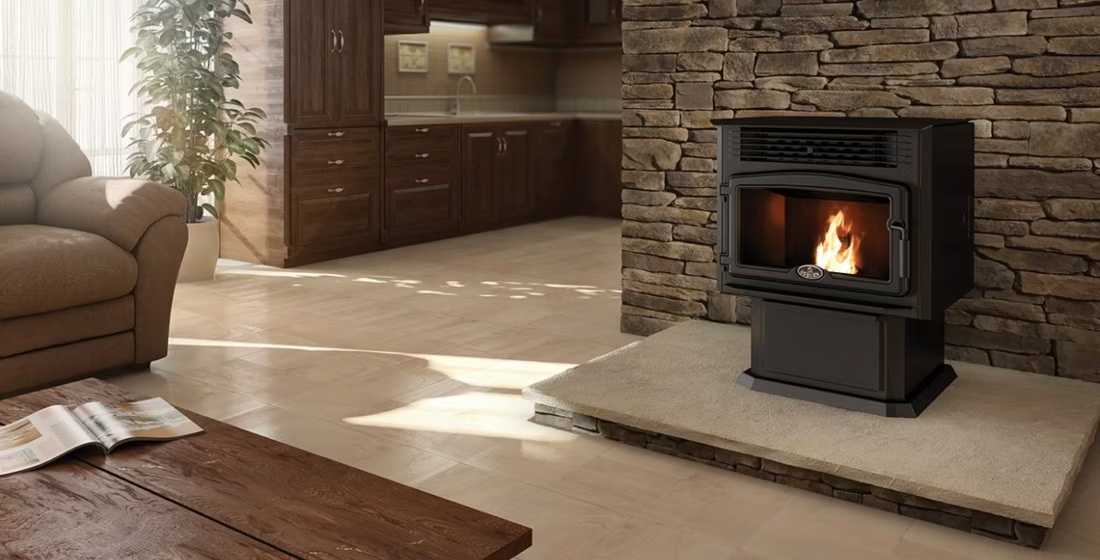
Pellet stoves fit that need well. Load the hopper, set the thermostat, and the auger handles the rest—a real advantage on farms where time during winter chores is limited. Regional pellet brands like Lignetics and Indeck Energy Services supply much of the Midwest, keeping fuel reasonably accessible even in a rural county like Nuckolls, where the nearest big-box hearth shop is often an hour's drive. The tradeoff is that pellet stoves need electricity to run the auger and blower, so most local dealers also talk through backup power options for the ice storms and high winds that occasionally knock out rural electric service here.
Three steps. No salesperson until you're ready.
Tell us about your project
Your zip code, your situation, and the fuel you're leaning toward—or let the answers point you to one.
See what's actually available
The brands dealers within 100 miles genuinely carry—real options, never a catalog mirage.
Get your dealer & Project Guide
A trusted local dealer, plus the free Project Guide & Parts List that names every component of the job.
Frequently Asked Questions
How much does a pellet stove installation cost in Nuckolls County?
Pellet stove and insert installations in Nuckolls County typically run in line with regional Midwest pricing, generally landing between $3,000 and $6,500 depending on the unit, whether it's a freestanding stove or an insert into an existing fireplace, and how much venting work is required. Homes without an existing chimney or masonry fireplace will be on the higher end once venting and a hearth pad are factored in. Given the small number of hearth retailers actually based in the county, expect installers from nearby Hastings or Beatrice trade areas to include a modest travel charge in their quote—worth asking about upfront.
What size pellet stove do I need for a Nuckolls County home?
Sizing depends on square footage, insulation, and whether you want the stove as primary or supplemental heat. Given the county's long, demanding heating season and regular subzero nights, err toward the larger end of any sizing range rather than the smaller end—older farmhouses with less insulation, common throughout rural Nuckolls County, lose heat faster than a similarly sized newer build in town. A stove sized for 1,500 square feet in a well-insulated Superior home might need to be sized up for an older two-story farmhouse outside Nelson. A local dealer will size the unit based on an in-home look at your insulation and layout, not just a square-footage chart.
Where can I find a pellet stove dealer near me in Nuckolls County?
With a county population under 3,000, Nuckolls County itself has few, if any, dedicated hearth retailers—most homeowners here work with dealers based in larger nearby trade centers like Hastings or Beatrice who service the county on a route basis. Look for a dealer who carries stoves stocking Lignetics or Indeck Energy Services pellets, since local fuel availability matters as much as the stove itself. Ask about installation turnaround time and travel charges, since a dealer an hour away may have a different schedule than one working strictly in-town in Superior.
What's the difference between a pellet stove and a pellet insert?
A pellet stove is a freestanding unit that sits on a hearth pad and vents through an exterior wall or existing chimney—it can go almost anywhere in a home with the right clearances. A pellet insert is built to slide into an existing masonry fireplace opening, turning an old wood-burning fireplace into an automated, thermostat-controlled heat source. For the older homes common in towns like Superior and Nelson that already have a masonry fireplace, an insert is often the simpler path since it reuses the existing chimney chase. Farmhouses or newer construction without an existing fireplace usually go with a freestanding stove instead.
Do I need a permit to install a pellet stove in Nuckolls County?
Most rural Nebraska counties, including Nuckolls, have lighter permitting requirements than larger metro building departments, but a permit through the county or local municipal building office is still typically required for a new solid-fuel appliance installation, particularly if a new vent penetration is being cut through an exterior wall or roof. A local, established dealer will generally handle the permit paperwork as part of the installation, so it's worth confirming that's included in your quote rather than tracking it down yourself.
What's the best pellet stove for Nuckolls County's climate?
With average winter lows around 14°F and a heating season on par with Fargo, ND, look for a pellet stove with a rated heating capacity that comfortably exceeds your square footage on paper—that headroom matters on the coldest nights of a Nebraska winter. Larger hopper capacity is also worth prioritizing here: a bigger hopper means fewer refills during a multi-day cold stretch, which matters on farms where someone may be out with livestock for hours at a time. A local dealer can match hopper size and BTU output to your home's specific insulation and layout.
How often should my pellet stove be cleaned and serviced?
Pellet stoves need more frequent attention than their reputation for low maintenance suggests. Ash pans should generally be emptied every few days during heavy winter use, the burn pot cleaned weekly, and the exhaust venting and hopper inspected at least once a season by a technician. Given Nuckolls County's long heating season, homes running a pellet stove as a primary heat source through the full winter should plan for a full professional cleaning and inspection each fall before the season's first cold snap.
Will my pellet stove work during a power outage?
No—this is the one real limitation to plan around. Pellet stoves rely on electricity to run the auger that feeds fuel and the blower that distributes heat, so a power outage stops the stove entirely, even with a full hopper. This matters in Nuckolls County, where winter ice storms and high wind events occasionally knock out rural electric cooperative service for hours or longer. Homeowners who want burn-without-power backup heat alongside a pellet stove often pair it with a wood-burning unit elsewhere in the home, or invest in a small backup generator sized to run the stove during an outage. Ask a local dealer about generator compatibility if this is a priority for you.
Pellet stove vs. wood stove—which is right for my Nuckolls County home?
Wood stoves burn local cordwood—oak, hickory, and cottonwood are all common species around Nuckolls County—work with zero electricity, and offer genuine backup heat during a rural power outage. Pellet stoves trade that off-grid resilience for convenience: load the hopper, set a thermostat, and let the auger handle the rest, with less daily hands-on tending and easier cleanup. For farms and rural homes where an ice storm outage is a real seasonal risk, a wood stove has an edge as a true backup heat source. For in-town homes in Superior or Nelson with reliable electric service and less time for wood handling, a pellet stove is often the more convenient fit. Some homeowners run both—pellet for daily convenience, wood as a power-outage backup.
Why is my open fireplace making my house colder?
Open fireplaces suck—literally. As the fire burns, it consumes air your furnace already paid to heat and pulls it out through the chimney, so the house is actually colder after the fire goes out than before you lit it. An insert fixes this: it seals the chimney, puts fixed glass across the front, and turns that hole in your house into a real heat source.
What's the difference between an insert and a zero-clearance fireplace?
An insert is a fireplace that slides into a pre-existing wood-burning fireplace—if you don't have one, there's nothing to insert it into. A zero-clearance fireplace is built into a framed wall, which makes it the answer for remodels and new construction. Simple test: existing masonry fireplace means insert; blank or framed wall means zero-clearance.
Can I install a fireplace myself?
If you're putting a fire in your house on purpose, it's best to work with an expert. Unless you're genuinely experienced in framing, gas line, vent pipe, and the national code on clearances to combustibles, have a professional do it—and ideally the same company that sells you the fireplace, so warranty, service, and liability all live under one roof.
Does a fireplace add value to my home?
On average, a fireplace adds back to the home about the same amount you spent installing it. Add the monthly savings from heating the rooms you actually use instead of the whole house—often hundreds of dollars a year—and the value case is strong before you even count what a fire does for how your family uses the room.
Pellet Brands Stocked Around Nuckolls County
Manufacturers will point you to the nearest stocking dealer.
Get matched with a Nuckolls County pellet stove dealer.
Tell us about your home and heating goals, and we'll match you with a trusted local dealer and send you a free Project Guide & Parts List—a plan for your pellet project with the exact parts, including the vent kit, and a recommended installer near you.
Find Your Fireplace →