
Reliable Heat for Every Nuckolls County Winter.
Wood, gas, pellet, and electric fireplace resources for every town in Nuckolls County—from Superior and Nelson to Lawrence, Nora, Ruskin, Oak, and Angus. Find the right unit and connect with a trusted local hearth retailer.
Every Project Starts From One of These Five Situations
Great Plains heating for Nuckolls County, Nebraska.
Nuckolls County sits on the Kansas border in south-central Nebraska, a stretch of open farmland along the Republican River valley. With roughly 6,050 heating degree days and winter lows averaging 14°F, the heating math here isn't far off from Madison, Wisconsin—long, exposed winters with steady wind across the plains that makes a well-sealed, correctly-sized appliance matter more than the thermometer alone suggests. The river bottoms and windbreaks around towns like Nelson and Superior supply oak, hickory, and cottonwood—hardwoods that burn hot and long, and have heated farmhouses in this county for generations.
What you'll find on this hub: hearth retailers, service technicians, and fuel suppliers covering every community in the county—Nelson (the county seat), Superior, Lawrence, Nora, Ruskin, Oak, and Angus, plus the farms and acreages between them. Pick your fuel below to see local dealers, installation costs, and recommended units for your specific project. Whether you're heating a farmhouse outside Superior or a home in Nelson, this is the starting point.
Four fuels. One honest answer for Nuckolls County.
Three steps. No salesperson until you're ready.
Tell us about your project
Your zip code, your situation, and the fuel you're leaning toward—or let the answers point you to one.
See what's actually available
The brands dealers within 100 miles genuinely carry—real options, never a catalog mirage.
Get your dealer & Project Guide
A trusted local dealer, plus the free Project Guide & Parts List that names every component of the job.
Frequently Asked Questions
Which fuel works best in Nuckolls County?
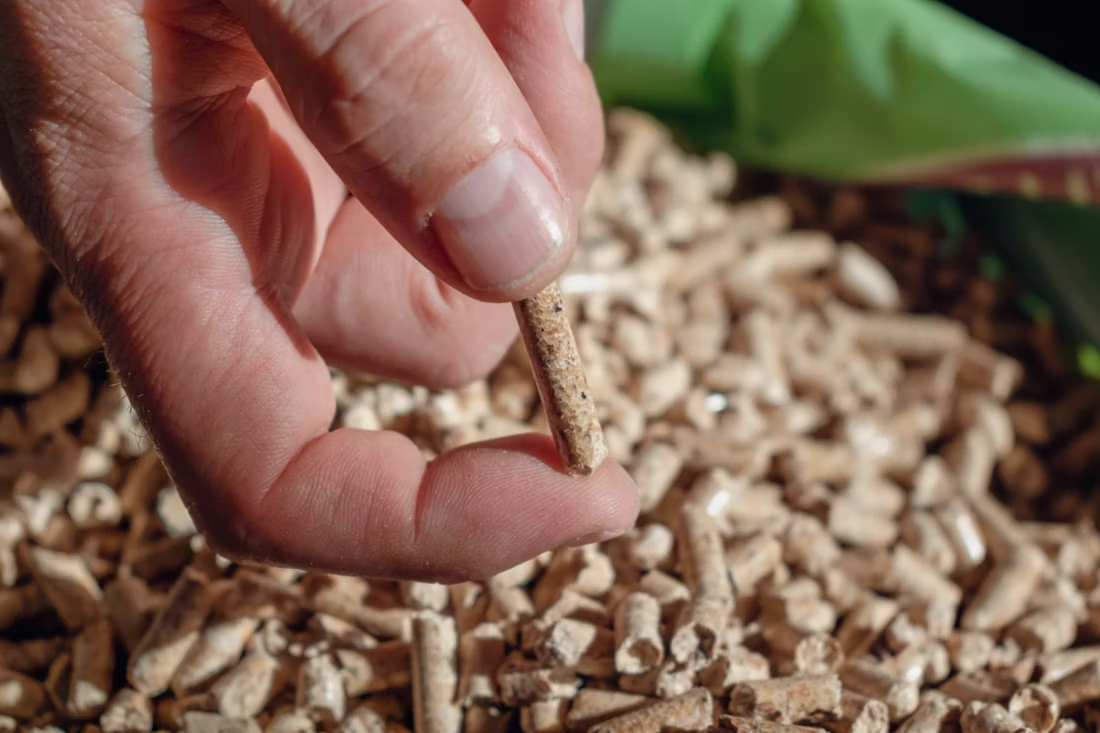
It depends on the home and how it's used. Wood is a natural fit for farm properties near the Republican River, where oak, hickory, and cottonwood are readily cut and split—oak and hickory in particular burn hot and hold coals well through the cold overnight stretches typical of a 14°F average winter low. Gas is the convenience choice, and in most of unincorporated Nuckolls County that means propane rather than piped natural gas—an LP tank feeding a direct-vent fireplace or insert is common on farm properties. Pellet stoves are a solid middle ground for households that want wood-style heat without the woodpile labor; Lignetics is the regional brand most retailers stock. Electric fireplaces work well for supplemental warmth in a bedroom or den, but with over 6,000 heating degree days, they're not a realistic primary heat source here. Most homes in the county end up running two fuels—wood or pellet for the bulk of the heating load, propane or electric filling in the gaps.
Do I need a permit to install a fireplace in Nuckolls County?
In most cases, yes, though the process is simpler than in larger jurisdictions. New wood stoves, wood inserts, gas fireplaces, gas inserts, and pellet stoves typically require a building permit, and gas work needs a licensed gas-fitter for the propane or gas-line connection. If you're inside the limits of Nelson, Superior, Lawrence, Nora, Ruskin, Oak, or Angus, permits generally run through that town's clerk's office; outside city limits, they go through the county's building and zoning office. Wood-burning appliances installed new should meet current EPA 2020 NSPS emissions standards. Electric fireplaces usually don't require a permit unless you're hardwiring a built-in unit with a new circuit. Most local retailers handle the paperwork as part of the installation, so you're not usually filing it yourself.
Are there air quality restrictions on wood burning in Nuckolls County?
No—unlike basin or coastal counties that deal with winter inversions or wildfire smoke, Nuckolls County has no active air quality advisories or burn curtailment periods. The open, wind-exposed terrain of the Great Plains disperses smoke quickly rather than trapping it, so there's no equivalent to the yellow/red advisory days you'd see in a place like the Klamath Basin. That said, an EPA 2020 NSPS-certified stove still burns cleaner and uses less wood per BTU than an older uncertified unit, which matters given how many cords a full Nebraska heating season can eat through.
Can one local hearth retailer handle all four fuel types?
Some can, but given the size of the county, expect more specialization than you'd find in a bigger market. Retailers based in Hastings or Grand Island that serve Nuckolls County often carry three or four fuel types on their showroom floor—wood, gas, pellet, and electric—since they're drawing customers from a wide rural territory and need to cover different heating situations. Smaller, closer-in dealers near Superior or the Kansas border towns may focus more narrowly on wood and propane-fired gas units, which are the two dominant fuels for farm properties in this part of the state. If you want to compare fuels side by side, the multi-fuel retailers in the larger regional hubs are worth the drive.
How does service work in rural areas of Nuckolls County?
Most technicians covering Nuckolls County are based outside it—in Hastings, Grand Island, or occasionally across the Kansas line—and travel in for scheduled service. Expect a modest trip fee for farm calls, especially for properties well off the highway corridors connecting Superior, Nelson, and Nora. Nebraska winters bring the occasional ice storm that knocks out power for a day or more, so it's worth scheduling wood chimney sweeps and pellet stove cleanings before the season starts (September–October) rather than waiting for a mid-January emergency call. Many rural households here keep a wood stove as backup heat specifically for outage scenarios, even if propane or pellet is the primary system.
What's the typical cost range for fireplace installation across all fuel types in Nuckolls County?
Costs run somewhat lower here than in higher-cost metro markets, but the spread by fuel type is similar. Wood stove or insert installation: roughly $3,500–$7,500 for a typical install, more if new chimney or hearth work is needed. Gas fireplace, insert, or stove: roughly $3,500–$9,000, with propane tank setup or line work affecting the low or high end. Pellet stove or insert: roughly $3,500–$6,500 for most installs. Electric fireplace: $200–$2,500 for the unit itself, with $300–$1,000 in labor unless it's a simple plug-and-play wall unit. Exact numbers depend on your specific home and which retailer you work with—the county + fuel pages above break this down further.
Wood, gas, pellet, or electric—how do I choose?
Match the fuel to your life, not the other way around. Wood: lowest fuel cost and total power-outage independence, but you're hauling and stacking. Gas: press a button, set a thermostat, no maintenance to speak of. Pellet: wood economics with automatic feeding, in exchange for weekly cleaning and a need for electricity. Electric: plugs in anywhere with honest supplemental heat. Nobody regrets the fuel that fits how they actually live.
How much should I budget for a fireplace?
For an average home—covering the fireplace, the vent pipe, and basic installation—a budget between $3,900 and $5,500 gives you a lot of options across wood, gas, and pellet. By the time you add finish work, gas line, and electrical, the average complete installation lands between $5,000 and $12,000 all-in. In a remodel or new build, a good rule is to put about 2.5% of the total project cost toward the fireplace.
What is an in-home preview and do I need one?
It's a visit where a hearth professional measures your space, confirms the model you picked actually works in your home, and walks the specs—framing, gas line, venting, finish work—before anything is ordered. Some details you just can't know until you see the house. Never make a down payment without one; it's the single most-skipped step that burns buyers.
Can a fireplace actually lower my heating bill?
Yes—by creating a comfort zone. A furnace heats every square foot of the house just to warm the one room you're in; a gas fireplace on low burns roughly a sixth of the gas a typical furnace does. Set the furnace around 55–60 degrees as a baseline, then heat the rooms your family actually uses. Families who heat this way commonly save $20–$60 a month.
Stove and Fireplace Dealers in Nuckolls County
Listings include WhyFire partner dealers, dealers we have verified as authorized for the brands we recommend, and established local businesses that carry hearth products. Every listing shows which one it is. The ones marked Preferred run on WhyFire's software, so they can show you real pricing and book your appointment right here. No manufacturer pays for placement. How we verify dealers →
Alan Witte Sales
Find your fireplace project in Nuckolls County.
Pick your fuel below and we'll match you with a trusted local dealer and send you a free Project Guide & Parts List—the exact parts, vent kit included, and the dealer we'd recommend for your home.
Find Your Fireplace →