
Add Warmth to Any Room in Nuckolls County—No Chimney Required.
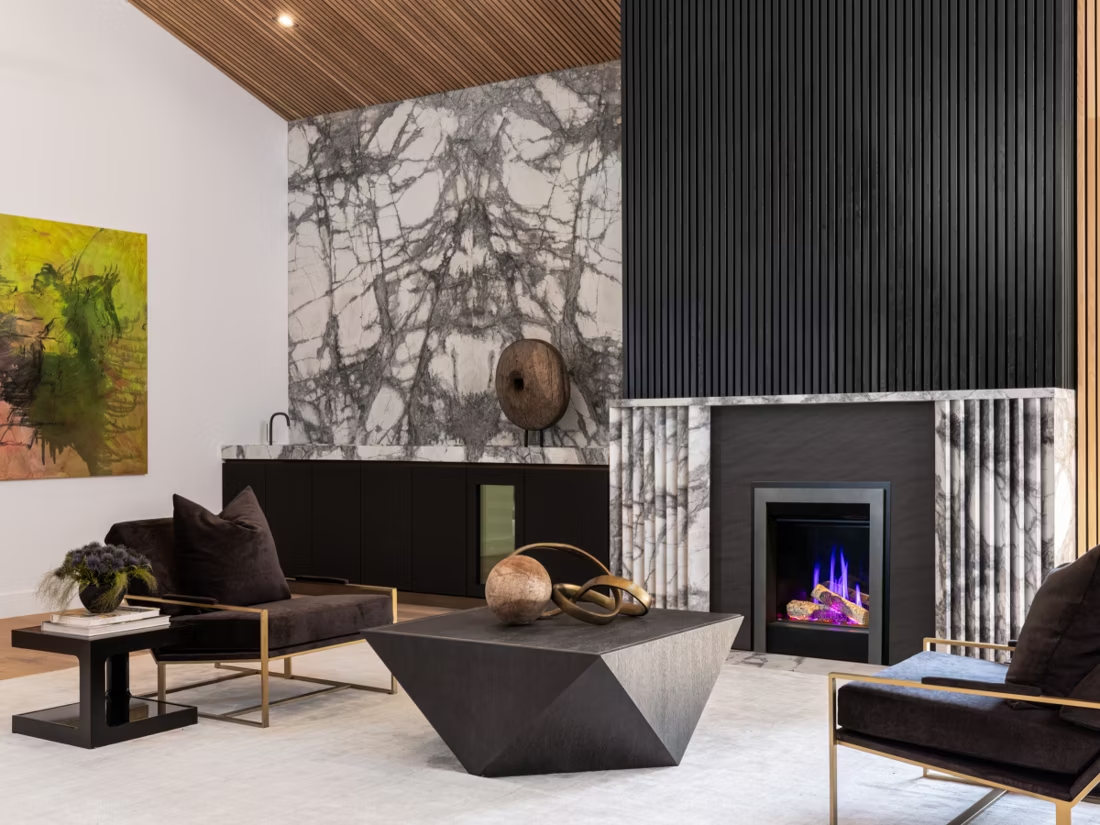
From Superior to Nelson to the smaller towns along the Little Blue River, electric fireplaces give Nuckolls County homes real-looking flame and instant zone heat without venting, gas lines, or chimney work. Find the right unit and connect with a trusted local dealer.
Every Project Starts From One of These Five Situations
Simple, safe heat for rural Nebraska homes.
Nuckolls County sits on the Kansas border in south-central Nebraska, home to about 2,932 people spread across Superior, Nelson (the county seat), Lawrence, Ruskin, Oak, and Angus. Winters here fall in climate zone 5A, with an average winter low near 14°F and roughly 6,052 heating degree days a year—cold enough to demand real heating strategy, though not the extreme deep-freeze of the Dakotas. It's a heating-degree-day total in the same neighborhood as Buffalo, NY, which means long stretches of below-freezing weather but rarely the sustained sub-zero snaps that push homeowners toward oversized wood stoves as a survival necessity.
Every home in the county is served by Nuckolls County Public Power District, part of Nebraska's unusual all-public-power grid—there are no investor-owned electric utilities anywhere in the state. Natural gas lines don't reach most of the county's smaller towns, so many households already rely on propane or electric resistance heat, or a mix of both. Electric fireplaces fit naturally into that setup: no venting, no gas line, no combustion byproducts to manage, and a straightforward retrofit into an old farmhouse fireplace opening in Nelson or a cold back bedroom in Ruskin. They won't replace a furnace on a January night, but as supplemental zone heat and everyday ambiance, they're one of the simplest upgrades available in the county.
Three steps. No salesperson until you're ready.
Tell us about your project
Your zip code, your situation, and the fuel you're leaning toward—or let the answers point you to one.
See what's actually available
The brands dealers within 100 miles genuinely carry—real options, never a catalog mirage.
Get your dealer & Project Guide
A trusted local dealer, plus the free Project Guide & Parts List that names every component of the job.
Frequently Asked Questions
skip
skip
skip
skip
skip
skip
skip
skip
skip
skip
skip
skip
skip
skip
skip
skip
skip
skip
Can I put a TV above my fireplace?
Yes—with an asterisk. Fireplaces are hot and TVs don't like heat. Either put a mantel between them to deflect rising warmth, or choose a fireplace with heat-management technology that creates a cool zone on the wall above—the wall stays around 125 degrees, barely warm, while the room still gets full heat. If you like clean lines and don't want a mantel, heat management is the answer.
What fireplace styles should I know before shopping?
Four cover most of the market: screen-front traditional (mesh front, open feel, fits craftsman homes), traditional door set (the classic look you grew up with), modern linear (wide, low, the statement piece for entertaining), and clean face contemporary (no trim—your tile or stone runs right to the fire's edge). Walk in knowing those four terms and you're ahead of most buyers.
How much should I budget for a fireplace?
For an average home—covering the fireplace, the vent pipe, and basic installation—a budget between $3,900 and $5,500 gives you a lot of options across wood, gas, and pellet. By the time you add finish work, gas line, and electrical, the average complete installation lands between $5,000 and $12,000 all-in. In a remodel or new build, a good rule is to put about 2.5% of the total project cost toward the fireplace.
Can a fireplace actually lower my heating bill?
Yes—by creating a comfort zone. A furnace heats every square foot of the house just to warm the one room you're in; a gas fireplace on low burns roughly a sixth of the gas a typical furnace does. Set the furnace around 55–60 degrees as a baseline, then heat the rooms your family actually uses. Families who heat this way commonly save $20–$60 a month.