
Steady heat for Jefferson County winters—without cutting a single log.
With a long, demanding winter heating season and average winter lows around 14°F, Jefferson County homes need dependable heat. A pellet stove delivers thermostat-controlled warmth from a hopper of compressed fuel—no woodpile, no chainsaw, no hauling cordwood off the section line. Find the right unit and connect with a trusted local dealer.
Every Project Starts From One of These Five Situations
An easier way to heat a farmhouse through a Nebraska winter.
Jefferson County sits in climate zone 5A, with a long, cold winter heating season and winter lows that regularly settle into the teens. That's a real heating season—long enough that a lot of homes around Fairbury, Endicott, Diller, and Plymouth run a wood stove or fireplace as backup or primary heat, burning the oak, hickory, and cottonwood common along the Little Blue River bottoms. Pellet appliances have become a popular alternative to that routine: same radiant comfort, same lower utility bills, but fuel that comes in 40-lb bags instead of a truckload of split logs.
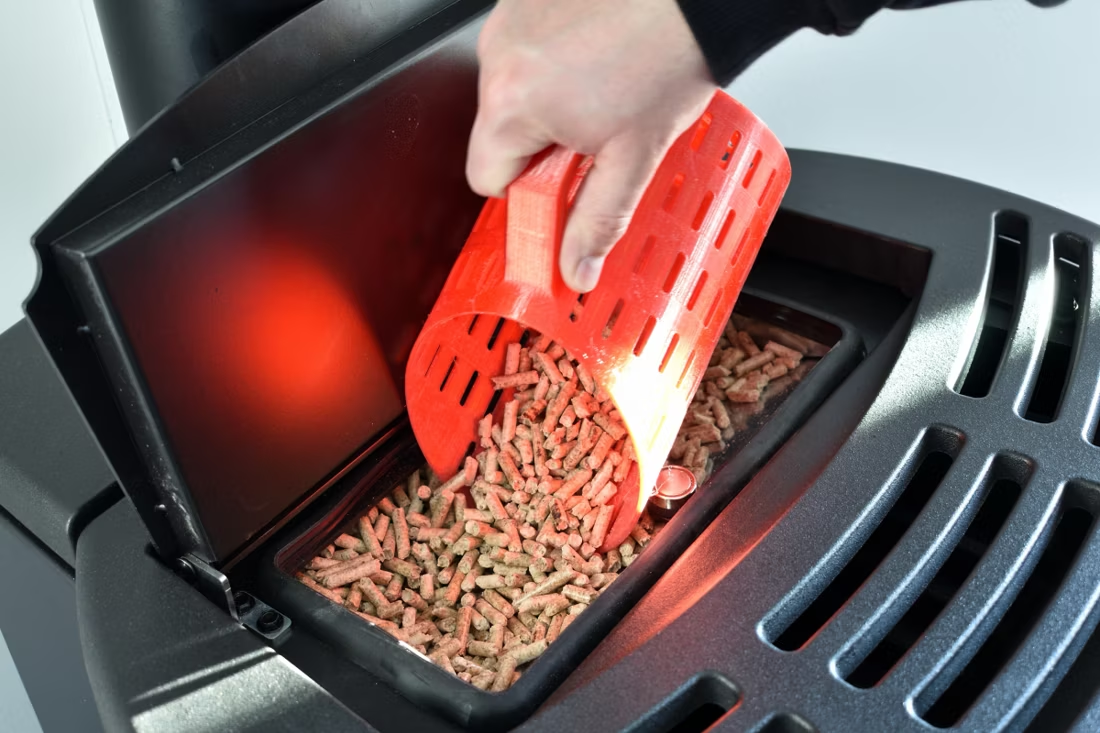
There's no air quality nonattainment issue in Jefferson County, so pellet stoves aren't solving a smoke problem here the way they might in a western river valley—the appeal is mostly about convenience and consistency. A hopper-fed auger keeps the burn rate steady for 24 hours or more on a single load, the thermostat holds a set temperature automatically, and cleanup is a scoop of ash rather than a chimney sweep. Regional pellet brands like Lignetics and Indeck Energy Services supply bagged fuel throughout the Midwest, so sourcing isn't a concern even this far from a major metro.
Three steps. No salesperson until you're ready.
Tell us about your project
Your zip code, your situation, and the fuel you're leaning toward—or let the answers point you to one.
See what's actually available
The brands dealers within 100 miles genuinely carry—real options, never a catalog mirage.
Get your dealer & Project Guide
A trusted local dealer, plus the free Project Guide & Parts List that names every component of the job.
Frequently Asked Questions
How much does a pellet stove installation cost in Jefferson County?
A pellet stove installation in Jefferson County typically runs $3,000 to $6,500, depending on the unit and venting path. Because pellet stoves vent through a small-diameter PL pipe rather than a full masonry chimney, installs are usually simpler and cheaper than wood stove installs—a straight through-the-wall vent into an existing room is on the lower end, while a pellet insert going into an existing fireplace with a liner runs toward the higher end. Local dealers will give you a firm number after seeing the room and the venting route in person.
What size pellet stove do I need for a Jefferson County home?
With winter lows averaging around 14°F and a long heating season, most Jefferson County homes do well with a mid-size pellet stove rated for 1,200–2,000 square feet if it's supplemental heat, or a larger unit if it's carrying the whole house—many older farmhouses around Fairbury and the surrounding townships have less insulation than newer construction, which pushes sizing up a notch. A local dealer can size the unit correctly based on square footage, ceiling height, and how drafty the home actually is—oversizing wastes fuel, undersizing leaves you cold on the coldest nights of the season.
Where can I buy pellets locally in Jefferson County?
Bagged wood pellets from brands like Lignetics and Indeck Energy Services are distributed through farm supply and hardware retailers across southeast Nebraska, and most pellet stove dealers either sell fuel directly or can point you to a nearby supplier. Buying by the pallet (typically 50 bags, or one ton) ahead of the season is the standard approach in rural Jefferson County—it saves repeat trips into Fairbury and locks in supply before winter demand picks up. Store pallets on a dry pad; pellets that absorb moisture swell and jam the auger.
Do pellet stoves work during a power outage?
No—this is the one real tradeoff to understand before buying. Pellet stoves rely on an electric auger to feed fuel and a blower to distribute heat, so they shut down when the power goes out. In rural Jefferson County, served by the local rural electric cooperative, winter ice storms can knock out power for hours at a time. Some homeowners pair a pellet stove with a small battery backup or generator for exactly this reason; others keep a wood stove or fireplace as a no-electricity backup. Worth discussing with your dealer if outages are a real concern on your property.
Do I need a permit to install a pellet stove in Jefferson County?
Most new pellet stove installations require a building permit through Jefferson County's building and zoning office, based at the courthouse in Fairbury—this covers the venting penetration and confirms clearances to combustibles. Most local dealers handle the permit paperwork as part of the installation, so you typically don't have to file anything yourself. There's no air quality nonattainment designation in Jefferson County, so there are no curtailment periods or burn bans to plan around, unlike some western counties.
Pellet stove vs. pellet insert—what's the difference?
A pellet stove is a freestanding unit that sits on a hearth pad and vents through a wall or existing chimney chase—it works in almost any room with a nearby exterior wall. A pellet insert is built to slide into an existing masonry fireplace opening, turning a fireplace you already have into a sealed, thermostat-controlled heat source. For Jefferson County farmhouses with an old open fireplace that's more decorative than functional, an insert is usually the better fit. Homes without an existing fireplace opening are better served by a freestanding stove.
How much maintenance does a pellet stove require?
Pellet stoves need more routine attention than a gas unit but far less than a wood stove. Plan on emptying the ash pan every few days during regular use, a deeper cleaning of the burn pot and heat exchanger tubes every couple of weeks, and an annual professional service to check the auger motor, exhaust blower, and venting. Because pellet fuel burns cleaner than cordwood, there's no chimney creosote to worry about—but the mechanical parts (auger, igniter, blower) are what eventually need service or replacement, typically after several heating seasons of regular use.
Pellet vs. wood—which is right for a Jefferson County home?
Wood—burning the oak, hickory, and cottonwood common along the Little Blue River—works without electricity, which matters during winter ice storms in rural Jefferson County, and fuel can be self-cut or bought cheap from a neighbor with timber ground. Pellet stoves trade that off for real convenience: no splitting, no hauling, no creosote, and a thermostat that holds a set temperature automatically instead of needing to be fed and adjusted by hand. For a primary residence where someone's home to load the hopper and the power stays on most of the winter, pellet is often the easier day-to-day choice. For a hunting cabin, shop, or backup-heat situation, wood's independence from the grid still wins.
How do I find a certified pellet stove dealer near Jefferson County?
Because Jefferson County's population is small—just over 5,000 across the whole county—dealer options are limited locally, and many homeowners work with hearth retailers based in Beatrice, Hastings, or other regional hubs who service the Fairbury area. Look for dealers who install as well as sell; installation quality (correct venting slope, proper clearance to combustibles, a level hearth pad) matters more for long-term reliability than the stove brand itself. Find My Fireplace matches you with a trusted dealer who actually covers your part of the county rather than a big-box retailer guessing at your setup.
What's the difference between an insert and a zero-clearance fireplace?
An insert is a fireplace that slides into a pre-existing wood-burning fireplace—if you don't have one, there's nothing to insert it into. A zero-clearance fireplace is built into a framed wall, which makes it the answer for remodels and new construction. Simple test: existing masonry fireplace means insert; blank or framed wall means zero-clearance.
Why is a fireplace insert so efficient?
An insert does two things: it seals the chimney completely, so you stop losing air you already paid to heat, and it radiates warmth into the room through the firebox and glass. Most add a heat-exchange fan that pulls cool room air underneath, wraps it around the hot firebox, and pushes it back out warm. Your home is more efficient before you've even lit the first fire.
What is an in-home preview and do I need one?
It's a visit where a hearth professional measures your space, confirms the model you picked actually works in your home, and walks the specs—framing, gas line, venting, finish work—before anything is ordered. Some details you just can't know until you see the house. Never make a down payment without one; it's the single most-skipped step that burns buyers.
How much should I budget for a fireplace?
For an average home—covering the fireplace, the vent pipe, and basic installation—a budget between $3,900 and $5,500 gives you a lot of options across wood, gas, and pellet. By the time you add finish work, gas line, and electrical, the average complete installation lands between $5,000 and $12,000 all-in. In a remodel or new build, a good rule is to put about 2.5% of the total project cost toward the fireplace.
Pellet Brands Stocked Around Jefferson County
Manufacturers will point you to the nearest stocking dealer.
Find your pellet stove in Jefferson County.
Tell us a bit about your home and we'll put together a free Project Guide & Parts List—the right pellet stove or insert, the vent kit it needs, and a trusted local dealer who can install it.
Find Your Fireplace →