
Find the right gas fireplace for Jefferson County winters.
Reliable, instant heat for the flat, wind-exposed farm country between Fairbury and Diller, where January mornings routinely dip into the single digits. Find the right unit and connect with a trusted local dealer.
Every Project Starts From One of These Five Situations
Steady heat for open, wind-swept farmland.
Jefferson County sits in the flat farm belt of southeast Nebraska, around 1,400 feet elevation, with a long, cold winter heating season and average winter lows near 14°F. A run of single-digit mornings each January is normal here, not exceptional, and the open cropland around Fairbury, Diller, Endicott, and Jansen does nothing to slow the wind—actual air temperature and what it feels like on a county road can differ by 15 or 20 degrees. Ice storms occasionally take down power lines for a day or more, which is part of why a gas fireplace or insert in this county tends to earn its keep as real backup heat, not just a focal point in the living room.
Natural gas service reaches Fairbury and the towns immediately around it through Black Hills Energy, while homes further out on the county roads typically run on propane delivered by regional suppliers. The equipment itself barely changes between the two—a direct-vent fireplace or insert can be set up for either fuel—it's really just the connection that differs. A properly sized, correctly vented gas unit gives you heat at the flip of a switch, and select battery-backup or self-powered models keep working when a winter storm knocks out the grid, which matters on a farmstead a mile or two from the nearest neighbor.
Three steps. No salesperson until you're ready.
Tell us about your project
Your zip code, your situation, and the fuel you're leaning toward—or let the answers point you to one.
See what's actually available
The brands dealers within 100 miles genuinely carry—real options, never a catalog mirage.
Get your dealer & Project Guide
A trusted local dealer, plus the free Project Guide & Parts List that names every component of the job.
Frequently Asked Questions
How much does a gas fireplace installation cost in Jefferson County?
A typical gas fireplace installation in Jefferson County runs roughly $3,800 to $9,500 depending on the unit, whether you're on natural gas or propane, and how much venting or gas line work is involved. A direct-vent insert going into an existing masonry fireplace with gas already run to the house sits at the lower end. A new built-in fireplace for a remodel or new construction—with framing, venting, and a fresh gas line—lands in the middle to upper range. Homes on propane that need a new tank set can run a bit higher once the tank installation and line work are added. A local dealer will give you a firm number after seeing the space in person.
Can I convert my existing wood fireplace to gas?
Yes, and it's a common project in Jefferson County's older farmhouses, many of which still have the original brick or block fireplace built for wood. In most cases a gas insert drops into that existing masonry opening with a stainless liner run up the flue, so you keep the chimney you already have. Costs typically land in the $4,000 to $8,500 range locally, with homes already on natural gas in Fairbury usually coming in lower than rural homes that need a propane hookup added. The conversion keeps the look of the original hearth while cutting out the wood handling and ash cleanup entirely.
Do I need natural gas to install a gas fireplace, or can I use propane?
Either works fine. Natural gas through Black Hills Energy reaches Fairbury and its immediate surroundings, so if your water heater or furnace already runs on natural gas, adding a fireplace is a straightforward tap into that existing line. Outside of town—across most of unincorporated Jefferson County, including the areas around Diller, Endicott, and Plymouth—propane is the standard fuel, either from an existing tank or a new one set by a regional propane supplier. Nearly every gas fireplace and insert on the market can be configured for either fuel; your installer just sets the correct orifice and regulator.
Will my gas fireplace work during a power outage?
Most modern gas fireplaces will, which matters in a county where ice storms and high winds can knock power out for a day or longer. Units with IPI (intermittent pilot ignition) include a battery backup—usually a set of AA batteries inside the unit—that takes over automatically when the power drops, so the fireplace lights on demand just like normal. Valor's lineup works a little differently: their pilot generates its own electricity through the thermocouple, so there are no batteries to check or replace, ever. For a farmstead relying on a fireplace as real backup heat during a Nebraska winter storm, that's worth asking your local dealer about directly.
What's the difference between a gas fireplace, gas insert, and gas stove?
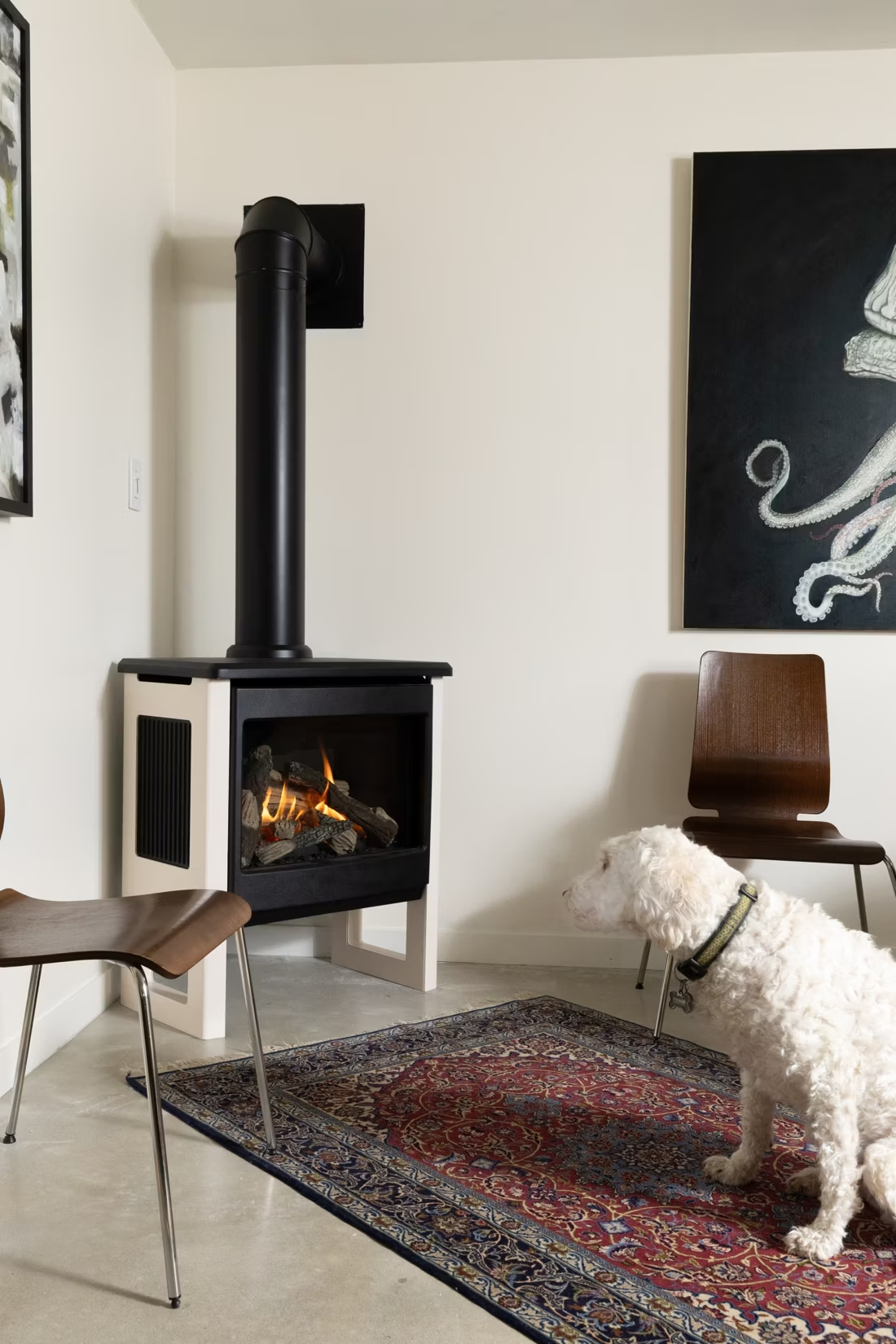
A gas fireplace is a fully built-in unit framed into a wall—the right choice for new construction or a full remodel. A gas insert is built to slide into an existing masonry fireplace opening, sealing it up and venting through the existing chimney with a liner. A gas stove is a freestanding cabinet-style unit that sits on the floor, similar in footprint to a wood stove but running on gas. For the many older homes around Fairbury and the rest of the county with an existing fireplace, an insert is usually the most direct upgrade. New builds or additions without an existing fireplace are better suited to a built-in unit or a freestanding stove.
Do I need a permit to install a gas fireplace in Jefferson County?
Yes. Inside Fairbury city limits, permits go through the City of Fairbury Building Department; outside town, unincorporated Jefferson County properties fall under the county's building and zoning office. Both a building permit and a gas line permit are typically required, and the gas line portion has to be done by a licensed gas-fitter. Most local hearth dealers handle the paperwork as part of the installation, coordinating the gas work, venting, and inspection so you're not managing separate trades yourself.
What's the difference between vented and vent-free gas fireplaces?
Vented gas fireplaces—direct-vent or B-vent—pull combustion air from outside and exhaust the byproducts back outside through a sealed vent. Vent-free units burn without any outside venting, releasing water vapor and small amounts of combustion byproducts directly into the room, which requires strict attention to room size and ventilation. Vent-free models are legal to install in Nebraska, but for Jefferson County's older, sometimes drafty farmhouses, a direct-vent unit is the more common and more strongly recommended choice—it delivers real heat output without any tradeoff on indoor air quality. Ask a local dealer to walk through both options for your specific room.
How often should my gas fireplace be serviced?
An annual inspection is recommended for any gas fireplace or insert. A technician checks the burner, pilot assembly, venting, and gas connections, and cleans the glass and interior—a much lighter job than a wood chimney sweep, but still important. Locally, this typically runs $150 to $250 a visit. It's worth scheduling before the heating season ramps up in the fall, especially for a unit you're counting on to keep running through a Jefferson County ice storm.
Gas vs. wood—which is right for my home?
Wood has deep roots in this county—oak, hickory, and cottonwood are common in local wood lots and farm groves, and burning your own firewood costs far less than any other fuel. Wood also keeps working with no electricity at all, which matters when a winter storm takes down power lines across the open farmland here. Gas trades that self-sufficiency for convenience: instant heat at the flip of a switch, no ash or creosote, and—with a battery-backup or self-powered pilot model—a real backup heat source of its own. Pellet stoves, using regional brands like Lignetics or Indeck Energy Services, split the difference somewhat but still need electricity to run the auger and blower. A lot of Jefferson County households end up with gas in the main living space for everyday convenience and keep wood or a generator-ready setup as the true storm backup.
Why is my open fireplace making my house colder?
Open fireplaces suck—literally. As the fire burns, it consumes air your furnace already paid to heat and pulls it out through the chimney, so the house is actually colder after the fire goes out than before you lit it. An insert fixes this: it seals the chimney, puts fixed glass across the front, and turns that hole in your house into a real heat source.
Why is a fireplace insert so efficient?
An insert does two things: it seals the chimney completely, so you stop losing air you already paid to heat, and it radiates warmth into the room through the firebox and glass. Most add a heat-exchange fan that pulls cool room air underneath, wraps it around the hot firebox, and pushes it back out warm. Your home is more efficient before you've even lit the first fire.
Can I install a fireplace myself?
If you're putting a fire in your house on purpose, it's best to work with an expert. Unless you're genuinely experienced in framing, gas line, vent pipe, and the national code on clearances to combustibles, have a professional do it—and ideally the same company that sells you the fireplace, so warranty, service, and liability all live under one roof.
Can a fireplace actually lower my heating bill?
Yes—by creating a comfort zone. A furnace heats every square foot of the house just to warm the one room you're in; a gas fireplace on low burns roughly a sixth of the gas a typical furnace does. Set the furnace around 55–60 degrees as a baseline, then heat the rooms your family actually uses. Families who heat this way commonly save $20–$60 a month.
Find your gas fireplace in Jefferson County.
Tell us a bit about your home and we'll match you with a trusted local dealer, plus send you a free Project Guide & Parts List—the exact parts, including the vent kit, for your Jefferson County gas fireplace project.
Find Your Fireplace →