
Heating solutions built for Jefferson County's long prairie winters.
Wood, gas, pellet, and electric fireplace resources for Fairbury and every farm and small town across Jefferson County. Find the right unit for your home and connect with a trusted local dealer who can actually install it.
Every Project Starts From One of These Five Situations
A long, hard winter heating season on the southern Nebraska plains.
Jefferson County sits in south-central Nebraska along the Kansas border, a landscape of farmland and small towns anchored by Fairbury. With a long, hard winter heating season and average winter lows near 14°F, the heating season here runs comparable to places like Fargo, ND—long, and with stretches of hard cold driven by open prairie wind. Oak, hickory, and cottonwood are the common local firewood species, reflecting the river-bottom and windbreak timber that grows along the Little Blue River corridor. There are no air quality non-attainment issues here, which means wood burning isn't restricted by local ordinance the way it is in some western basin communities—it's simply a matter of what fits your home and budget.
With a population under 6,000 spread across a rural county, most residents rely on hearth retailers and technicians based in Fairbury who cover the surrounding towns and farms. This hub rolls up retailers, service techs, and fuel suppliers serving the whole county, plus a directory of every community—Fairbury, Steele City, Plymouth, Endicott, Reynolds, Jansen, and Diller. Pick your fuel below for local dealers, typical installation costs, and unit recommendations specific to Jefferson County.
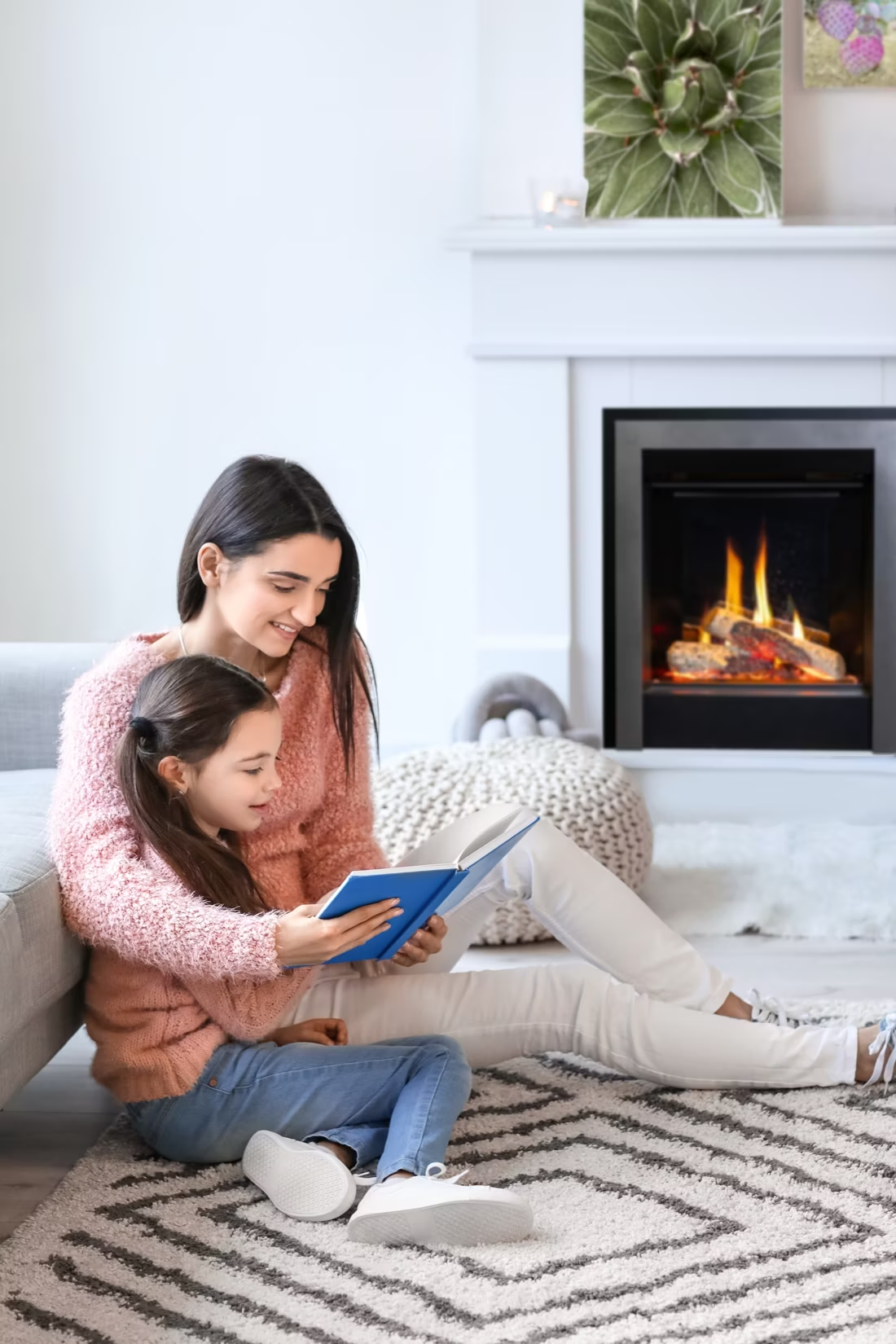
Four fuels. One honest answer for Jefferson County.
Three steps. No salesperson until you're ready.
Tell us about your project
Your zip code, your situation, and the fuel you're leaning toward—or let the answers point you to one.
See what's actually available
The brands dealers within 100 miles genuinely carry—real options, never a catalog mirage.
Get your dealer & Project Guide
A trusted local dealer, plus the free Project Guide & Parts List that names every component of the job.
Frequently Asked Questions
Which fuel works best for a home in Jefferson County?
It depends on the house and how you use it. Wood is a natural fit here—oak and hickory from local farms and windbreaks burn hot and long, and a modern EPA-certified wood stove or insert can carry a farmhouse through a stretch of single-digit nights without relying on the grid. Gas is the low-maintenance option for in-town Fairbury homes with natural gas service, or propane for rural properties off the gas main—no wood-splitting, no ash, heat on demand. Pellet stoves are a middle path: wood-like heat without the labor of cutting and stacking, and Lignetics product is regularly stocked at regional suppliers. Electric fireplaces work well as supplemental heat in bedrooms or additions, but with winter lows averaging 14°F and a long, hard winter heating season, electric alone isn't typically enough to be a primary heat source here. Many Jefferson County households pair wood or propane as the main heater with electric or gas for secondary rooms.
Do I need a permit to install a fireplace in Jefferson County?
In most cases, yes, for wood stoves, wood inserts, gas fireplaces, gas inserts, and pellet stoves—a building permit is typically required, and gas installations also need a licensed gas-fitter for the line work and connection. Wood-burning appliances installed today should meet current EPA emissions standards regardless of local air quality status. Electric fireplaces are usually exempt unless the installation involves new wiring or a built-in unit tied into your home's electrical circuit. Fairbury and the surrounding unincorporated parts of Jefferson County handle permitting through the appropriate local building authority. Most local hearth retailers handle this paperwork as part of the installation, so you generally don't have to navigate it alone.
Are there any wood-burning restrictions in Jefferson County?
No—Jefferson County has no air quality non-attainment designations and no winter inversion or wildfire smoke concerns of the kind that trigger burn curtailment programs in parts of the West. That means wood burning here isn't subject to voluntary or mandatory no-burn day advisories. The practical considerations are more about the appliance itself: installing a newer EPA-certified wood stove or insert instead of an old uncertified unit will burn cleaner, use less wood per BTU, and generally perform better through a Nebraska winter than an older stove.
Can one local retailer handle all four fuel types in a rural county like this?
It varies. In a county with Jefferson's population—just over 5,000—you're less likely to find a single big-box showroom carrying every fuel and more likely to find one or two established hearth dealers based in Fairbury that carry a solid mix, often wood, gas, and pellet, with electric units available as a smaller accessory line. Some fuel suppliers focus purely on firewood, propane, or bagged pellets and don't sell or install appliances at all. If you're comparing fuel types before deciding, ask a Fairbury-area retailer what they stock in working displays—in a county this size, a phone call before you drive out will save you a trip.
How does installation and service work for homes outside Fairbury?
Most hearth retailers and service techs serving Jefferson County are based in or near Fairbury and drive out to the smaller towns—Steele City, Plymouth, Endicott, Reynolds, Jansen, and the farms in between. Expect a modest trip fee for service calls outside town, and plan installations and annual chimney sweeps or gas inspections in late summer or early fall before the first hard freeze—scheduling gets tighter once temperatures drop and service calls turn into emergency repairs. For rural properties reliant on propane, coordinating your tank delivery schedule with your appliance install timeline helps avoid gaps in heat during the coldest stretch of the season.
What's the typical cost range for a fireplace project across fuel types in Jefferson County?
Costs run in line with typical rural Midwest pricing. Wood stove or insert installation: roughly $4,000–$8,500 for a standard install, higher if new chimney or hearth work is needed. Gas fireplace, insert, or stove: roughly $4,000–$10,000, with cost depending heavily on whether existing gas or propane line service is already in place. Pellet stove or insert: roughly $4,000–$7,000 for a typical installation. Electric fireplace: $200–$2,500 for the unit itself, plus $300–$1,000 in labor for anything beyond a simple plug-in unit. Exact pricing depends on your home and the retailer—see the county + fuel pages above for cost detail tied to specific local dealers.
How much should I budget for a fireplace?
For an average home—covering the fireplace, the vent pipe, and basic installation—a budget between $3,900 and $5,500 gives you a lot of options across wood, gas, and pellet. By the time you add finish work, gas line, and electrical, the average complete installation lands between $5,000 and $12,000 all-in. In a remodel or new build, a good rule is to put about 2.5% of the total project cost toward the fireplace.
Should the dealer who sells my fireplace also install it?
Ideally, yes. A fireplace project involves vent pipe, gas line, electrical, and often tile or stone. Hire three or four separate trades and you own the liability and the game of telephone between them. One company selling and installing means one accountable party, start to finish—ask about factory training, on-time completion records, and what happens if an inspection fails.
What are the biggest mistakes people make buying a fireplace?
Five come up constantly: budgeting for the unit but not the full job (vent, gas line, electrical, finish work); drowning in options instead of starting from style and fuel; buying without an in-home preview; handing installation to a handyman instead of a pro; and giving up out of sheer indecision. Every one is avoidable with a clear plan—step one, step two, step three.
Wood, gas, pellet, or electric—how do I choose?
Match the fuel to your life, not the other way around. Wood: lowest fuel cost and total power-outage independence, but you're hauling and stacking. Gas: press a button, set a thermostat, no maintenance to speak of. Pellet: wood economics with automatic feeding, in exchange for weekly cleaning and a need for electricity. Electric: plugs in anywhere with honest supplemental heat. Nobody regrets the fuel that fits how they actually live.
Stove and Fireplace Dealers in Jefferson County
Listings include WhyFire partner dealers, dealers we have verified as authorized for the brands we recommend, and established local businesses that carry hearth products. Every listing shows which one it is. The ones marked Preferred run on WhyFire's software, so they can show you real pricing and book your appointment right here. No manufacturer pays for placement. How we verify dealers →
Edward's Stone Inc
Table Rock Stone & Fireplace
Fireplace Stone & Patio - Lincoln
Capital Patio/flame Shop
Robidoux Inc
J & R Heating
Find your fireplace fit in Jefferson County.
Tell us your fuel and your town, and we'll match you with a trusted local dealer and send you a free Project Guide & Parts List—the exact parts, including the vent kit, and the dealer we recommend for your Jefferson County project.
Find Your Fireplace →