
Steady, thermostat-controlled heat for Garfield County's Sandhills winters.
From the ranchland along the North Loup River to the streets of Burwell, pellet stoves deliver consistent heat without the daily wood-hauling—matched with a local dealer who can actually get pellets and parts to one of Nebraska's smallest counties.
Every Project Starts From One of These Five Situations
Convenience built for ranch country.
Garfield County sits in the Nebraska Sandhills along the North Loup and Calamus Rivers, anchored by Burwell—the seat of a county that counts just 938 residents, one of the smallest populations in the state. Climate zone 5A brings the same kind of biting continental winters you'd find in Fargo or Bismarck: long stretches of below-freezing days, wind that cuts across open rangeland with nothing to block it, and cold snaps that arrive fast. Local hardwoods—oak, hickory, and river-bottom cottonwood—have heated ranch houses here for generations, but for many households, especially those managing cattle through calving season, a pellet stove's thermostat control and overnight burn without tending is worth the tradeoff.
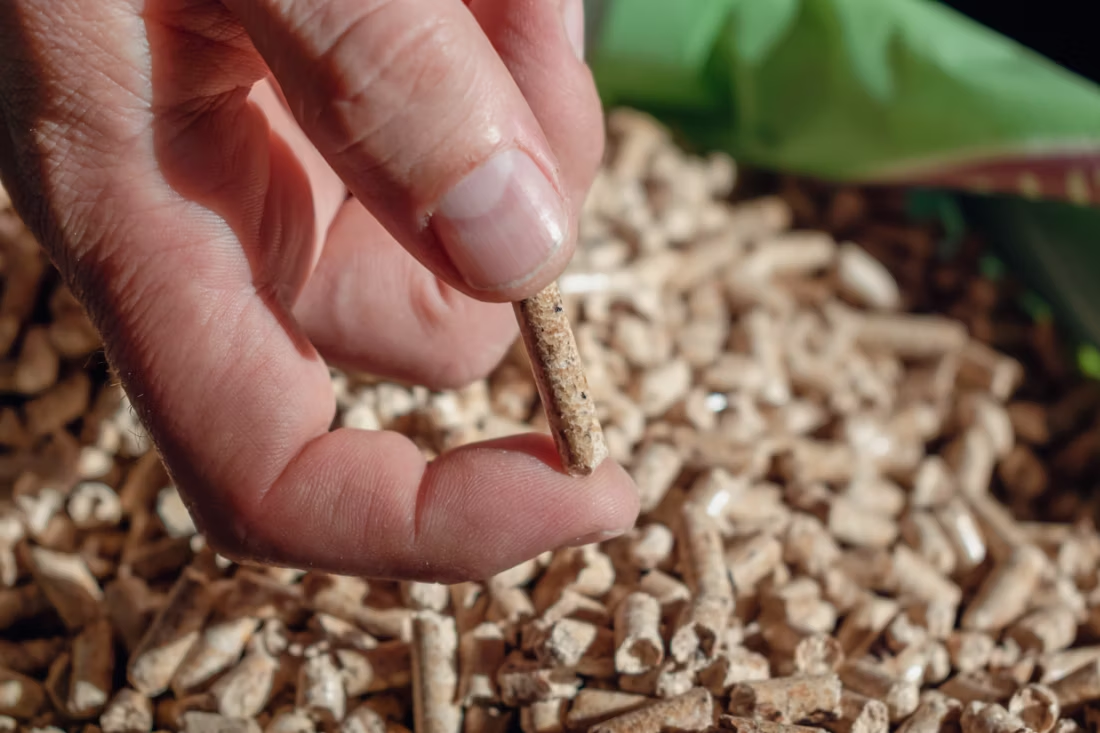
There's no non-attainment designation or burn restriction in Garfield County—open space and wind keep air quality a non-issue here—so pellet stoves run without the seasonal curtailment rules you'd find in a more crowded air basin. The catch in a county this small is supply: with under 1,000 residents, Garfield County doesn't support its own hearth retailer, so most homeowners stock Lignetics or Indeck Energy Services pellets through regional farm and ranch supply stores or distributors trucking in from hubs like Ord, O'Neill, or Bassett. Buying a season's supply before the first hard freeze, rather than restocking bag by bag in February, is standard practice out here.
Three steps. No salesperson until you're ready.
Tell us about your project
Your zip code, your situation, and the fuel you're leaning toward—or let the answers point you to one.
See what's actually available
The brands dealers within 100 miles genuinely carry—real options, never a catalog mirage.
Get your dealer & Project Guide
A trusted local dealer, plus the free Project Guide & Parts List that names every component of the job.
Frequently Asked Questions
How much does a pellet stove installation cost in Garfield County?
A typical pellet stove or insert installation runs roughly $3,000 to $6,000, depending on whether you're venting through an existing masonry chimney, running new through-wall venting, or building a hearth pad from scratch. Because Garfield County has no local hearth retailer, factor in a trip charge for install crews traveling from Ord, O'Neill, or Bassett—extra miles are standard practice for reaching ranch properties spread across the Sandhills.
Where do I even buy pellets in a county this small?
Garfield County's population of under 1,000 doesn't support a dedicated pellet retailer, so most homeowners buy Lignetics or Indeck Energy Services pellets through farm and ranch supply stores in nearby towns or have them trucked in by the pallet from regional distributors. Because restocking mid-winter can mean a long drive, the common local practice is to buy a full season's supply—often 100-plus bags—before the first hard freeze rather than running down to a half-empty hopper in February.
What size pellet stove do I need for a Sandhills ranch house?
Sizing comes down to square footage, ceiling height, and how tight the building envelope is—older ranch homes with less insulation need more BTU capacity than a newer build with modern sealing. As a rough guide, a small pellet stove (under 1,000 sq ft) suits a single wing or addition, a medium unit (1,000-2,000 sq ft) covers most farmhouse main floors, and a large stove handles a bigger whole-house load. Given how much wind exposure open Sandhills rangeland brings, it's worth sizing slightly up rather than down—a local installer can walk your home and give you a real recommendation.
Do I need a permit to install a pellet stove in Garfield County?
Garfield County handles building permits through its county building department, and because the county is largely unincorporated ranchland, permitting requirements tend to be lighter than what you'd find in a city jurisdiction—but a solid-fuel appliance installation typically still needs sign-off confirming venting and clearances meet code. Your installer can verify exactly what's required for your property and handle the paperwork as part of the job.
Pellet stove vs. wood stove—which makes more sense out here?
With oak, hickory, and cottonwood all growing along the North Loup and Calamus river bottoms, wood heat has deep roots in Garfield County, and a wood stove works fine without electricity—a real advantage when Sandhills blizzards knock out power for days. Pellet stoves trade that off for convenience: no splitting or hauling, a thermostat that holds a steady temperature overnight, and a cleaner burn—but they need electricity to run the auger and blower, so they go dark in an outage unless you add a battery backup or generator. Many ranch households here end up running both: wood as backup heat that works no matter what, pellet for daily convenience.
What happens to my pellet stove during a winter power outage?
Pellet stoves rely on electricity to feed the auger and run the combustion blower, so a standard unit stops producing heat the moment power drops—a real consideration in a county where Sandhills ice storms and blizzards can take out power for extended stretches. A small battery backup (UPS) can carry a pellet stove through short outages, and a generator can cover longer ones. If backup heat during outages matters to you, pair the pellet stove with a wood stove or plan for a generator.
How much pellet fuel should I store for the winter, and how do I store it?
A typical pellet stove burns roughly 1 to 2 tons of pellets over a Nebraska heating season, depending on run time and how well-insulated the home is. Given the distance to the nearest supplier, most Garfield County households buy a full season's worth at once—40-lb bags stacked on pallets in a dry outbuilding or garage work well, since pellets swell and turn to sawdust if they absorb moisture. Keep the stack off a bare concrete floor and away from any leak-prone corner of a barn or shed.
How often does a pellet stove need maintenance?
Plan on cleaning the burn pot and ash tray weekly during heavy use, a deeper cleaning of the exhaust venting and hopper a few times each winter, and a full professional service once a year, ideally before the season starts. Because Garfield County doesn't have a local service technician, most homeowners schedule that annual service during a visit from an installer based in Ord or O'Neill, or learn to handle basic burn-pot and venting upkeep themselves between visits.
What pellet stove brands are actually available near Garfield County?
Lignetics and Indeck Energy Services are the two regional pellet brands most consistently stocked and trucked into this part of Nebraska, and most installers serving Garfield County carry stove lines that pair well with that supply chain. Since you're not next to a big-box hearth showroom, it's worth confirming with your installer that the stove they recommend burns fuel that's actually easy to keep stocked here, rather than a premium pellet blend you'd have to special-order.
Why is my open fireplace making my house colder?
Open fireplaces suck—literally. As the fire burns, it consumes air your furnace already paid to heat and pulls it out through the chimney, so the house is actually colder after the fire goes out than before you lit it. An insert fixes this: it seals the chimney, puts fixed glass across the front, and turns that hole in your house into a real heat source.
What's the difference between an insert and a zero-clearance fireplace?
An insert is a fireplace that slides into a pre-existing wood-burning fireplace—if you don't have one, there's nothing to insert it into. A zero-clearance fireplace is built into a framed wall, which makes it the answer for remodels and new construction. Simple test: existing masonry fireplace means insert; blank or framed wall means zero-clearance.
Can a fireplace actually lower my heating bill?
Yes—by creating a comfort zone. A furnace heats every square foot of the house just to warm the one room you're in; a gas fireplace on low burns roughly a sixth of the gas a typical furnace does. Set the furnace around 55–60 degrees as a baseline, then heat the rooms your family actually uses. Families who heat this way commonly save $20–$60 a month.
Can I install a fireplace myself?
If you're putting a fire in your house on purpose, it's best to work with an expert. Unless you're genuinely experienced in framing, gas line, vent pipe, and the national code on clearances to combustibles, have a professional do it—and ideally the same company that sells you the fireplace, so warranty, service, and liability all live under one roof.
Pellet Brands Stocked Around Garfield County
Manufacturers will point you to the nearest stocking dealer.
Find your pellet stove in Garfield County.
Tell us about your home and we'll match you with a trusted local dealer and a free Project Guide & Parts List—sized right for Sandhills winters, with a plan for keeping pellets stocked in a county this rural.
Find Your Fireplace →