
Find your wood, gas, pellet, or electric fireplace in Garfield County, Nebraska.
Wood, gas, pellet, and electric fireplace resources for Burwell, Ericson, and the ranches and farmsteads scattered across the Calamus and Loup River valleys. Find the right unit and connect with a trusted local hearth dealer.
Every Project Starts From One of These Five Situations
Sandhills heating for a county of fewer than a thousand people.
Garfield County is one of Nebraska's smallest by population—938 people spread across ranch and farm ground where the Loup River valley meets the edge of the Sandhills. Burwell, the county seat, sits along the Calamus Reservoir and is best known for hosting Nebraska's Big Rodeo each July; Ericson is the county's other incorporated town. Winters here are the same cold, wind-exposed continental winters you'd find in Fargo, North Dakota—climate zone 5A, with open Sandhills terrain that gives wind nothing to break on before it hits a farmhouse. Cottonwood and willow line the river bottoms, while oak and hickory show up in the shelterbelts and timber draws that ranchers planted decades ago as windbreaks—all three are common firewood species for county households that still burn wood.
What you'll find on this hub: hearth retailers, service technicians, and fuel suppliers serving Garfield County—recognizing that with fewer than a thousand residents, most of that service comes from dealers and techs based in nearby towns like Ord who travel into the county for installs and annual maintenance. Pick your fuel below to see recommended units, typical costs, and the resources that fit a rural Sandhills property, whether it's a ranch house on the Calamus or a lake cabin near Burwell.
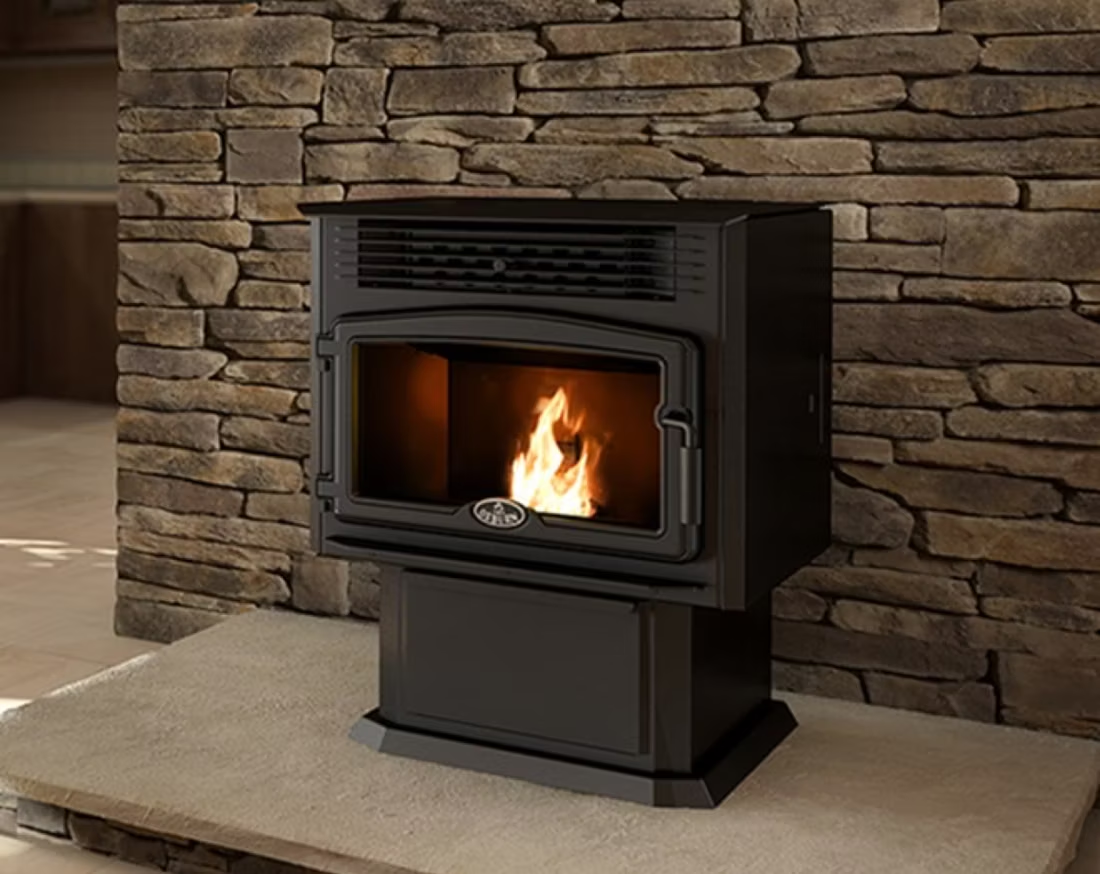
Four fuels. One honest answer for Garfield County.
Three steps. No salesperson until you're ready.
Tell us about your project
Your zip code, your situation, and the fuel you're leaning toward—or let the answers point you to one.
See what's actually available
The brands dealers within 100 miles genuinely carry—real options, never a catalog mirage.
Get your dealer & Project Guide
A trusted local dealer, plus the free Project Guide & Parts List that names every component of the job.
Frequently Asked Questions
Which fuel works best for a home in Garfield County?
It depends on how remote your place is and what backup you need. Wood remains a practical primary or supplemental heat source for ranch houses along the Loup and Calamus—cottonwood, oak, and hickory are all locally available, and a wood stove keeps working through the ice storms and power outages that hit exposed Sandhills lines every few winters. Propane is the default "gas" option here since there's no natural gas main running through the county; most propane fireplaces and inserts run off a home's existing bulk tank. Pellet stoves are a solid middle ground for households that want wood-style heat without processing their own firewood—Lignetics and Indeck Energy Services pellets are both available through regional suppliers, though delivery routes matter more out here than in town. Electric fireplaces are best treated as supplemental heat for a bedroom or den rather than a primary source, given how cold Sandhills winters run.
Do I need a permit to install a fireplace in Garfield County?
Garfield County doesn't run a dedicated building permit office the way a larger county does—there's no full-time building inspector on staff given the population. For most rural installs, that means the permitting burden falls more on your installer's code compliance than on a formal county review process; it's still worth a call to the Garfield County Clerk's office to confirm zoning or setback requirements before work starts, especially near the Calamus Reservoir where lakefront lots can have different rules. Gas line work should still go through a licensed propane technician regardless of whether a county permit is required, since code compliance on the gas connection itself isn't optional.
Are there any burn restrictions in Garfield County?
No formal air quality nonattainment issues here—Garfield County doesn't deal with the winter inversions or wildfire smoke advisories that trigger curtailment days in more populated basins. That said, the open Sandhills terrain means red flag fire-weather warnings are a real seasonal concern, particularly in fall and during dry, windy stretches. Those warnings are about outdoor burning and grass fire risk, not indoor wood stove use, but they're worth watching if you're stacking firewood or clearing brush near the house. Indoor wood-burning appliances themselves face no local emissions restrictions beyond standard EPA certification on new units.
Can one local dealer handle wood, gas, pellet, and electric?
Most dealers who cover Garfield County are general hearth retailers based in Ord or Grand Island, and several of them do carry all four fuel types, since a single rural showroom needs to serve a wide range of customers rather than specializing narrowly. That's actually an advantage here—with so few households to serve, dealers that survive tend to be generalists who can walk you through wood, propane, pellet, and electric options in one visit rather than sending you to three different shops. Confirm which fuels a given dealer stocks and installs before you commit, since travel distance means you don't want a second trip to find someone who carries what you actually need.
How does installation and service work when the nearest dealer is an hour away?
Plan ahead more than you would in a town with a hearth shop on Main Street. Most technicians serving Garfield County are based in Ord, Broken Bow, or Grand Island and build routes that bundle several rural service calls into one trip—which means scheduling flexibility helps, and pre-season appointments (late summer through early fall) are far easier to book than an emergency mid-winter call during a cold snap. Expect a modest trip charge for the drive, and keep propane tank levels topped off before winter storms make deliveries harder—a bulk tank running low in January is a much bigger problem here than in a city with same-day service.
What's the typical cost range for a fireplace install across fuel types in Garfield County?
Costs run close to regional averages, with a bit more added for travel time. Wood stove or insert installation: roughly $4,000–$8,500 for a typical install, more if a full chimney or hearth pad is being built from scratch. Propane fireplace, insert, or stove: roughly $4,000–$10,000 depending on whether new gas line work from the bulk tank is needed. Pellet stove or insert: roughly $4,000–$7,000 for a standard install. Electric fireplace: $200–$3,000 for the unit itself, plus $400–$1,200 in labor for anything beyond a simple plug-in placement. Rural trip charges from Ord or Grand Island-based crews can add a few hundred dollars on top of these ranges—ask your dealer to itemize travel separately when you get a quote.
How much should I budget for a fireplace?
For an average home—covering the fireplace, the vent pipe, and basic installation—a budget between $3,900 and $5,500 gives you a lot of options across wood, gas, and pellet. By the time you add finish work, gas line, and electrical, the average complete installation lands between $5,000 and $12,000 all-in. In a remodel or new build, a good rule is to put about 2.5% of the total project cost toward the fireplace.
Can I install a fireplace myself?
If you're putting a fire in your house on purpose, it's best to work with an expert. Unless you're genuinely experienced in framing, gas line, vent pipe, and the national code on clearances to combustibles, have a professional do it—and ideally the same company that sells you the fireplace, so warranty, service, and liability all live under one roof.
Can a fireplace actually lower my heating bill?
Yes—by creating a comfort zone. A furnace heats every square foot of the house just to warm the one room you're in; a gas fireplace on low burns roughly a sixth of the gas a typical furnace does. Set the furnace around 55–60 degrees as a baseline, then heat the rooms your family actually uses. Families who heat this way commonly save $20–$60 a month.
Wood, gas, pellet, or electric—how do I choose?
Match the fuel to your life, not the other way around. Wood: lowest fuel cost and total power-outage independence, but you're hauling and stacking. Gas: press a button, set a thermostat, no maintenance to speak of. Pellet: wood economics with automatic feeding, in exchange for weekly cleaning and a need for electricity. Electric: plugs in anywhere with honest supplemental heat. Nobody regrets the fuel that fits how they actually live.
Stove and Fireplace Dealers in Garfield County
Listings include WhyFire partner dealers, dealers we have verified as authorized for the brands we recommend, and established local businesses that carry hearth products. Every listing shows which one it is. The ones marked Preferred run on WhyFire's software, so they can show you real pricing and book your appointment right here. No manufacturer pays for placement. How we verify dealers →
Fireplace Stone And Patio - Kearney
Builders Warehouse Inc
Find your fireplace dealer for Garfield County.
Pick your fuel below and I'll match you with a trusted local dealer who actually services this part of the Sandhills—plus a free Project Guide & Parts List with the exact parts, vent kit, and recommended installer for your home.
Find Your Fireplace →