
Bring dependable gas heat to Garfield County homes.
Instant, low-maintenance warmth for ranch houses and Burwell-area homes scattered across Garfield County's Sandhills country. Find the right unit and get matched with a trusted local installer.
Every Project Starts From One of These Five Situations
Reliable warmth for Sandhills ranch country.
Garfield County is small—under 1,000 residents spread across open Sandhills grassland and the North Loup River valley, with Burwell as the county seat and the only real town center. Homes here range from tight-in-town lots to ranch houses set miles down gravel roads, and climate zone 5A means real winter: hard freezes, biting wind across open country, and stretches where a dependable indoor heat source isn't optional. Wood has long played a role in local heating—oak, hickory, and cottonwood grow along the river bottoms—but for many households, especially those managing livestock schedules or wanting heat that starts with the flip of a switch, gas has become the go-to for daily comfort.
Because Garfield County is so rural and sparsely populated, natural gas mains are limited to whatever municipal service exists in and around Burwell—most homes outside town, and plenty within it, run on propane instead. That's a normal setup out here, not a compromise: propane-fired direct-vent fireplaces and inserts deliver the same instant heat, the same clean glass front, and (with the right ignition system) the same ability to run during a winter power outage that knocks out the county's above-ground lines. A trusted local installer will know whether your address is a candidate for a gas line hookup or whether a propane tank is the standard path, and will size the unit and venting for your specific home rather than guessing off a big-box display model.
Three steps. No salesperson until you're ready.
Tell us about your project
Your zip code, your situation, and the fuel you're leaning toward—or let the answers point you to one.
See what's actually available
The brands dealers within 100 miles genuinely carry—real options, never a catalog mirage.
Get your dealer & Project Guide
A trusted local dealer, plus the free Project Guide & Parts List that names every component of the job.
Frequently Asked Questions
How much does a gas fireplace installation cost in Garfield County?
Most gas fireplace and insert installations in Garfield County run in the $3,500 to $9,500 range, with the low end covering a straightforward propane insert into an existing masonry fireplace and the higher end covering new-construction direct-vent units that require fresh gas line runs, framing, and venting. Because most of the county runs on propane rather than piped natural gas, factor in whether you already have a tank and regulator in place—a new propane tank setup adds to the project cost but is routine for local propane suppliers to handle alongside the fireplace install.
Can I convert my existing wood fireplace to gas?
Yes, and it's a common project for older homes in and around Burwell. A gas insert slides into your existing masonry firebox and vents through a stainless liner run up your current chimney, so you keep the look of the original fireplace while gaining push-button heat. For most Garfield County homes this runs on propane rather than natural gas, so your installer will also confirm tank placement and gas line routing to the hearth as part of the quote.
Do I need natural gas, or can I use propane?
Propane is the standard fuel for gas fireplaces across most of Garfield County. Municipal natural gas service, where it exists at all, is generally limited to in-town Burwell addresses—homes outside town, and many within it, already run propane for cooking, water heating, or a furnace, so adding a fireplace on the same fuel is straightforward. Nearly every gas fireplace model sold today can be configured for either fuel; your local dealer sets the correct orifice and regulator before installation.
Will my gas fireplace still work if the power goes out?
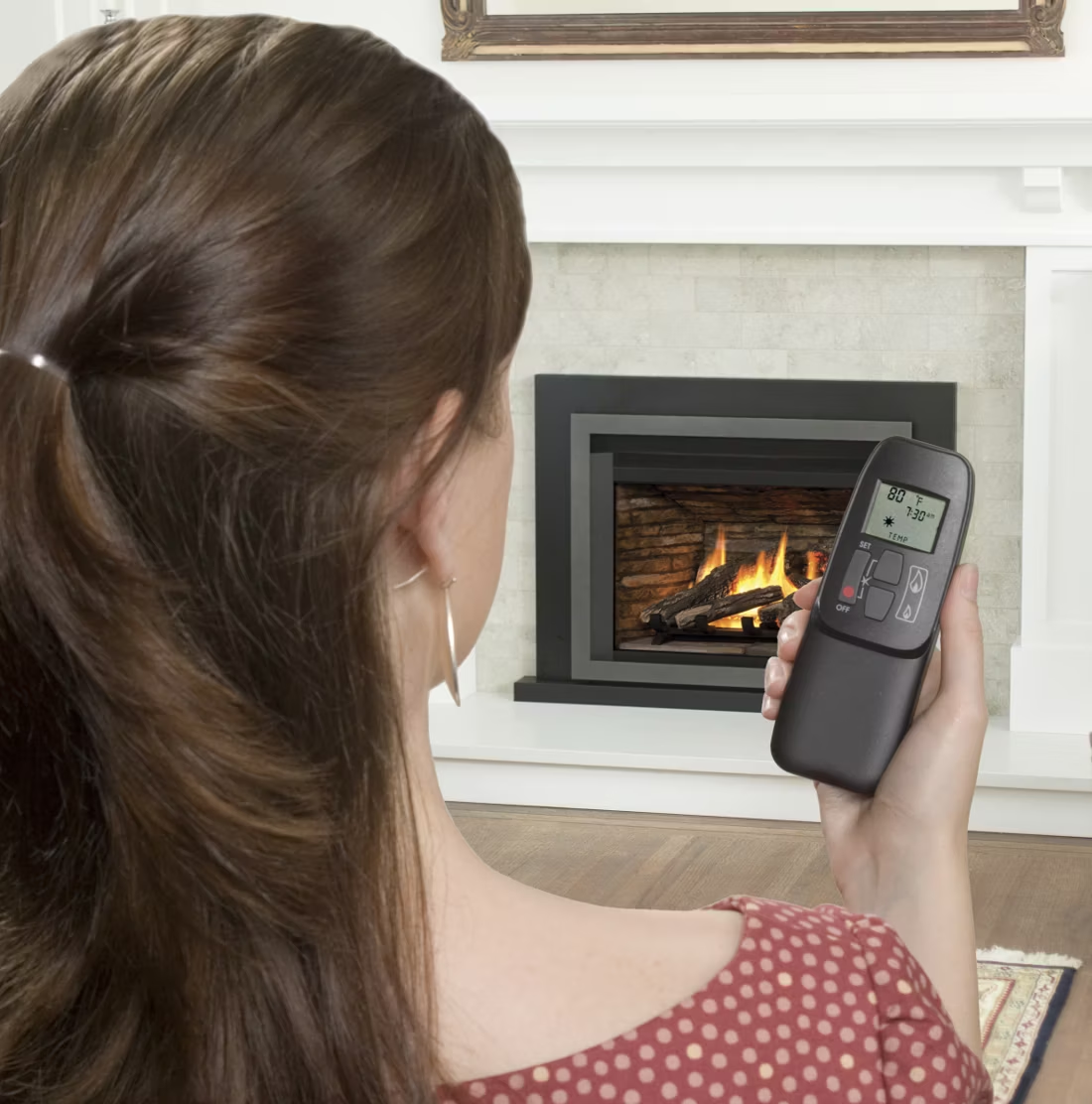
Most direct-vent gas fireplaces with intermittent pilot ignition (IPI) include a battery backup that keeps the unit operable when the power drops—a real advantage in a county where long rural power lines mean outages can stretch longer than they would in town. Some manufacturers, including Valor, go a step further with a pilot-generated electrical system that needs no batteries at all. If backup heat during a winter storm matters to you, ask your installer about the ignition system before you settle on a model.
What's the difference between a gas fireplace, gas insert, and gas stove?
A gas fireplace is a fully built-in unit installed into a framed wall opening—the right choice for new construction or a remodel without an existing chimney. A gas insert fits inside an existing masonry firebox and uses your current chimney as the vent path, which suits many of Garfield County's older farmhouses and in-town homes. A gas stove is a freestanding cabinet unit that sits on the floor like a wood stove but burns gas or propane, a good fit for a shop, addition, or room without any existing fireplace. A local dealer will walk your specific space before recommending one over the others.
Do I need a permit to install a gas fireplace in Garfield County?
Yes—new gas fireplace and insert installations require both a building permit and a gas line permit through the Garfield County building authority, and the gas connection itself has to be run by a licensed gas-fitter or propane technician. Most established local dealers handle this paperwork as part of the installation rather than leaving it to the homeowner, which also keeps the gas line, venting, and framing inspections coordinated under one contractor instead of several.
What's the difference between vented and vent-free gas fireplaces?
Vented (direct-vent) gas fireplaces draw combustion air from outside and exhaust the byproducts back outside through a sealed pipe—the cleanest and most universally code-compliant option. Vent-free units burn gas directly into the room air, which is legal in Nebraska but comes with strict room-sizing and ventilation rules since combustion byproducts stay indoors. Garfield County has no local air quality restrictions to navigate either way, but for a home that's often closed up tight against Sandhills winter wind, a direct-vent unit is still the safer, more commonly recommended choice among local installers.
How often should my gas fireplace be serviced?
Plan on an annual inspection, ideally before the coldest stretch of winter sets in. A technician will check the burner, pilot assembly, venting, and gas connections, and clean the glass and interior components. This is a much lighter lift than chimney sweeping for a wood stove, but skipping it is the most common cause of pilot and ignition problems reported by local propane service techs.
Gas vs. wood—which makes more sense for a Garfield County home?
Wood remains a practical option here—oak, hickory, and cottonwood are all locally available along the river bottoms, and a wood stove keeps working with zero utility dependence during a storm, which matters on isolated Sandhills properties. Gas trades that self-sufficiency for convenience: no hauling or splitting, consistent heat output, and instant on-off operation that fits better around chores and livestock schedules. Many Garfield County households end up with both—gas for daily use in the main living space, wood or a pellet stove using regional fuel like Lignetics as backup. A local dealer can help you weigh which role you actually need filled.
Why is a fireplace insert so efficient?
An insert does two things: it seals the chimney completely, so you stop losing air you already paid to heat, and it radiates warmth into the room through the firebox and glass. Most add a heat-exchange fan that pulls cool room air underneath, wraps it around the hot firebox, and pushes it back out warm. Your home is more efficient before you've even lit the first fire.
What's the difference between an insert and a zero-clearance fireplace?
An insert is a fireplace that slides into a pre-existing wood-burning fireplace—if you don't have one, there's nothing to insert it into. A zero-clearance fireplace is built into a framed wall, which makes it the answer for remodels and new construction. Simple test: existing masonry fireplace means insert; blank or framed wall means zero-clearance.
What is an in-home preview and do I need one?
It's a visit where a hearth professional measures your space, confirms the model you picked actually works in your home, and walks the specs—framing, gas line, venting, finish work—before anything is ordered. Some details you just can't know until you see the house. Never make a down payment without one; it's the single most-skipped step that burns buyers.
Does a fireplace add value to my home?
On average, a fireplace adds back to the home about the same amount you spent installing it. Add the monthly savings from heating the rooms you actually use instead of the whole house—often hundreds of dollars a year—and the value case is strong before you even count what a fire does for how your family uses the room.
Find your gas fireplace in Garfield County.
Tell us about your home and we'll match you with a trusted local dealer and send over your free Project Guide & Parts List—the exact fireplace, vent kit, and parts your Garfield County installation needs.
Find Your Fireplace →