
Find a pellet stove built for Furnas County winters.
Consistent, thermostat-controlled heat for farmhouses and in-town homes across the Republican River valley—no woodpile, no chainsaw. Find the right unit and connect with a trusted local dealer.
Every Project Starts From One of These Five Situations
Consistent heat without the woodpile.
Furnas County sits in south-central Nebraska along the Republican River, home to Beaver City, Cambridge, Arapahoe, Oxford, and Edison, with a population spread thin across roughly 720 square miles of farmland—about 4,052 people in a county where the nearest hardware store or hearth dealer can be a real drive. Winters here are classic Zone 5A: dry cold that settles in for months, with arctic outbreaks pushing down from the Dakotas that can drop temperatures well below zero for days at a stretch, not unlike what Fargo or Bismarck see most winters. Plenty of local homes still burn oak, hickory, and cottonwood cut from the river bottoms, but not every acreage has a woodlot, and not every homeowner wants to split and stack cordwood every fall.
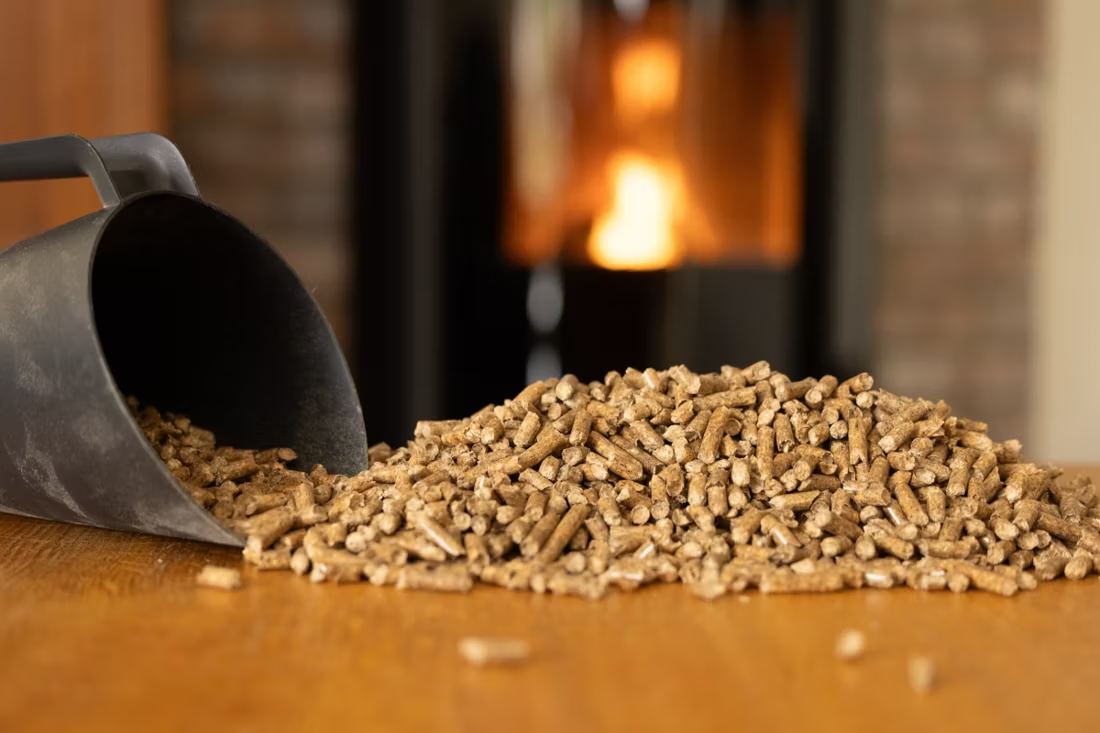
That's where pellet stoves fit in. Load the hopper, set the thermostat, and the auger feeds the fire automatically—no cutting, no seasoning, no creosote buildup to speak of. Furnas County has no air quality non-attainment restrictions or burn curtailment periods, so pellet appliances run without the regulatory headaches some counties impose. Regional supply comes through brands like Lignetics and Indeck Energy Services, both of which distribute hardwood pellets through farm-supply and hearth retailers across south-central Nebraska, making fuel sourcing straightforward even for homes well outside Beaver City or Cambridge proper.
Three steps. No salesperson until you're ready.
Tell us about your project
Your zip code, your situation, and the fuel you're leaning toward—or let the answers point you to one.
See what's actually available
The brands dealers within 100 miles genuinely carry—real options, never a catalog mirage.
Get your dealer & Project Guide
A trusted local dealer, plus the free Project Guide & Parts List that names every component of the job.
Frequently Asked Questions
How much does a pellet stove installation cost in Furnas County?
A freestanding pellet stove installation typically runs $3,000 to $6,000 in this part of Nebraska, depending on the unit, whether a dedicated electrical outlet needs to be run for the auger and blower, and any hearth pad or clearance work required. A pellet insert going into an existing masonry fireplace usually falls in the $4,000 to $7,500 range, since it involves fitting a liner through the existing chimney. Rural properties outside Beaver City, Cambridge, or Arapahoe sometimes see a modest travel charge added to installer quotes given the distances involved in Furnas County.
What size pellet stove do I need for my home?
Sizing depends on square footage, ceiling height, and how drafty the house is—and a lot of Furnas County housing stock is older farmhouses with less insulation than a new build. As a rough guide, smaller units (under 1,500 sq ft) suit a single living area or a smaller in-town house, while larger units (2,000+ sq ft) are better matched to whole-home heating on an acreage. Homes that catch open exposure to Plains wind, which is most of the county outside town windbreaks, often need to size up from what square footage alone would suggest. A local dealer can walk your floor plan and give you an actual recommendation rather than a rule of thumb.
Pellet stove vs. wood stove—which makes more sense out here?
Wood is genuinely abundant in Furnas County—oak, hickory, and cottonwood along the Republican River have kept farmhouses warm for generations, and self-cut firewood costs next to nothing if you have access to a woodlot. But wood heat means splitting, stacking, hauling ash, and tending a fire through the night. A pellet stove trades some of that labor for convenience: load the hopper once or twice a day and let the thermostat do the rest. For older residents, smaller acreages without timber, or anyone tired of the chainsaw, pellet is often the more practical choice. For households with a reliable woodlot and the time to work it, wood still wins on raw fuel cost.
Where can I buy pellets in Furnas County?
Hardwood pellets from brands like Lignetics and Indeck Energy Services are distributed through farm-supply stores and hearth retailers serving south-central Nebraska, and most local dealers can either stock or special-order pellets by the ton for pickup or delivery. Pellets are sold in 40-pound bags, typically stacked on pallets of 50 bags (one ton)—plan on a dry garage, barn, or shed for storage, since Nebraska's humidity swings can degrade pellets left exposed to moisture. Buying a season's supply in late summer, before demand picks up, is common practice among local pellet-stove owners.
Do I need a permit to install a pellet stove in Furnas County?
Yes—a building permit is generally required for a new pellet stove or insert installation, handled through the Furnas County building permit process out of the courthouse in Beaver City. Most hearth dealers that sell and install pellet stoves in the area will pull the permit as part of the job, so you're not left coordinating inspections yourself. If your home falls within city limits of Cambridge, Arapahoe, or Oxford, check whether the town has its own permitting requirement in addition to the county's.
Will my pellet stove work during a power outage?
Not without a backup power source—this is the one real tradeoff of pellet heat. Pellet stoves rely on electricity to run the auger, igniter, and combustion blower, so a line outage from an ice storm or high wind event, which Furnas County sees on the Plains, will shut the stove down. Homes served by Southern Public Power District and other rural cooperatives in south-central Nebraska sometimes see extended outages after major ice events. A small battery backup or a portable generator sized to the stove's low wattage draw (most pellet stoves use well under 500 watts) will keep it running through an outage. If uninterrupted backup heat during storms is a priority, ask your dealer about pairing a pellet stove with a wood-burning option elsewhere in the house.
What's the best pellet stove for a Furnas County home?
Look for a stove rated for the temperature swings this part of Nebraska sees—brands like Harman, Lopi, and England's Stove Works build units that hold a consistent burn through sustained sub-zero stretches, not just mild shoulder-season use. For larger farmhouses or homes prioritizing whole-house heat, a higher-BTU model with a larger hopper capacity means fewer refills during multi-day cold snaps. A local dealer can match hopper size and BTU output to your square footage and how often you're willing to reload.
How much maintenance does a pellet stove need?
Less than a wood stove, but it's not zero-maintenance. Plan on emptying the ash pan every few days during regular use, cleaning the burn pot weekly to keep the fire burning efficiently, and a full professional cleaning and inspection once a year—typically before the heating season starts in fall. Neglecting the burn pot is the most common reason pellet stoves in this region underperform or shut down mid-winter, since a clogged pot restricts airflow and chokes the fire.
Pellet stove vs. propane heat—which is right for my home?
Propane is common across rural Furnas County for whole-home furnace heat, and it's a fine choice for central heating with no hands-on involvement. A pellet stove is usually installed as a supplemental or zone-heat source—heating the main living area efficiently while the propane furnace covers the rest of the house or handles the coldest nights. Pellet fuel costs are generally more stable and often lower per BTU than propane, which fluctuates with regional supply, making a pellet stove a hedge against propane price spikes during hard winters. Most local homeowners who add a pellet stove keep their propane furnace as the backbone system rather than replacing it outright.
How often does a pellet stove need cleaning?
A clean pellet stove is a happy pellet stove. Plan on cleaning the burn pot about once a week when you're burning regularly—ash and clinkers gum up the air holes just like a pellet barbecue. Most pellet stove problems trace back to skipped cleaning that nobody explained up front. Some designs make it easy with a trapdoor burn pot: pull a lever and the gunk drops into the ash pan.
Why is a fireplace insert so efficient?
An insert does two things: it seals the chimney completely, so you stop losing air you already paid to heat, and it radiates warmth into the room through the firebox and glass. Most add a heat-exchange fan that pulls cool room air underneath, wraps it around the hot firebox, and pushes it back out warm. Your home is more efficient before you've even lit the first fire.
What is an in-home preview and do I need one?
It's a visit where a hearth professional measures your space, confirms the model you picked actually works in your home, and walks the specs—framing, gas line, venting, finish work—before anything is ordered. Some details you just can't know until you see the house. Never make a down payment without one; it's the single most-skipped step that burns buyers.
How much should I budget for a fireplace?
For an average home—covering the fireplace, the vent pipe, and basic installation—a budget between $3,900 and $5,500 gives you a lot of options across wood, gas, and pellet. By the time you add finish work, gas line, and electrical, the average complete installation lands between $5,000 and $12,000 all-in. In a remodel or new build, a good rule is to put about 2.5% of the total project cost toward the fireplace.
Pellet Brands Stocked Around Furnas County
Manufacturers will point you to the nearest stocking dealer.
Find your pellet stove in Furnas County.
Tell us a bit about your home and we'll match you with the right pellet stove or insert, plus a free Project Guide & Parts List with the exact parts and vent kit for your Furnas County project—matched to a trusted local dealer.
Find Your Fireplace →