
Reliable gas heat for Furnas County's cold, windy winters.
From Beaver City to Cambridge and Arapahoe, Furnas County homes deal with open-plains wind and hard freezes every winter. Find the right gas fireplace or insert for your farmhouse or in-town home, and get matched with a trusted local dealer.
Every Project Starts From One of These Five Situations
Steady heat for a rural, wind-exposed county.
Furnas County sits along the Republican River valley in south-central Nebraska, spread across roughly 720 square miles and home to just over 4,000 people in towns like Beaver City, Cambridge, Arapahoe, Oxford, Wilsonville, Hendley, and Edison. The county falls in IECC climate zone 5A, which puts its winters in the same general heating-degree-day range as Madison, WI—cold enough for sustained subzero wind chills, especially when open farmland offers nothing to break the wind coming off the plains. Ice storms and prolonged power outages aren't rare here, which shapes how a lot of local homeowners think about backup heat.
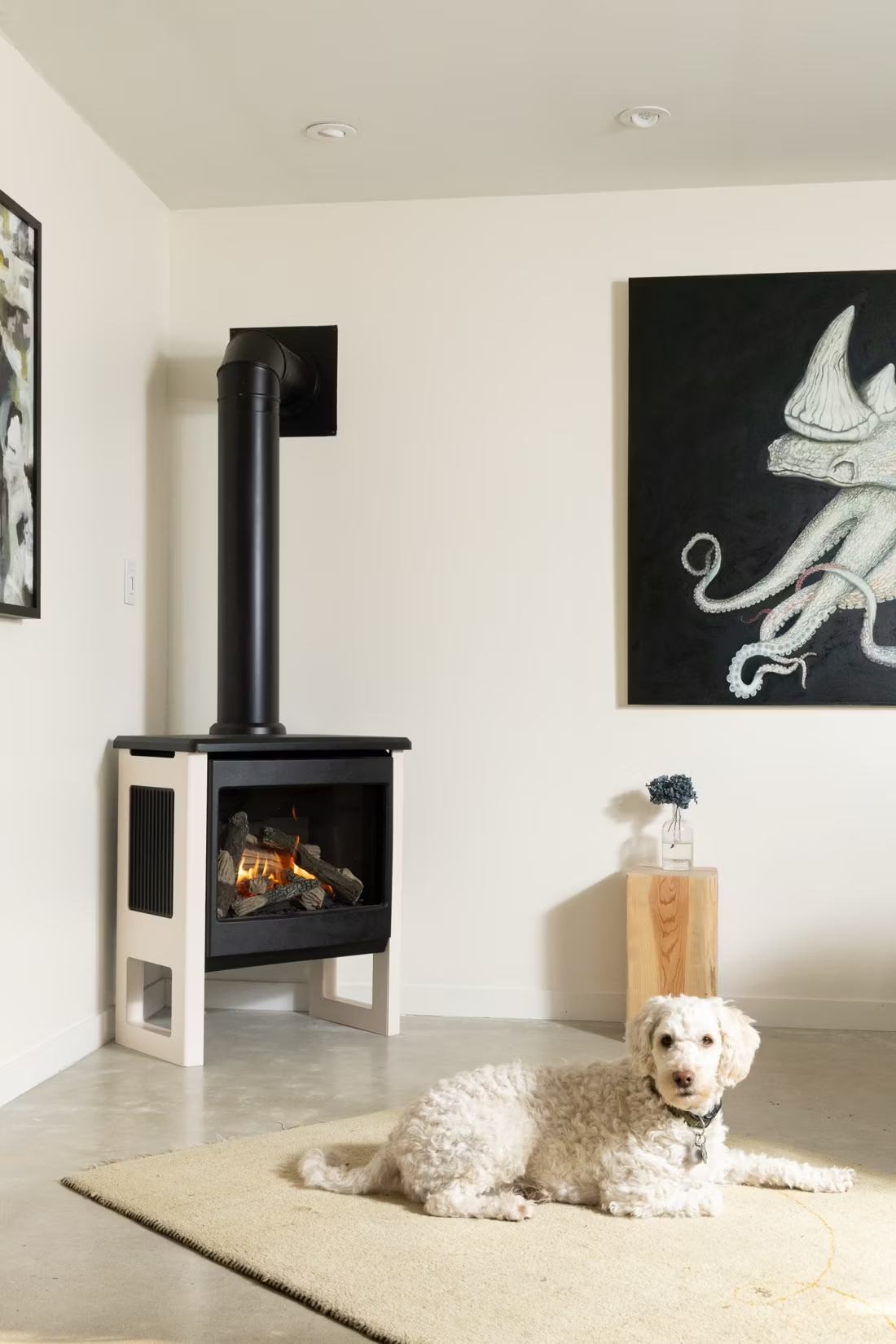
Natural gas service through Black Hills Energy reaches most of the incorporated towns in the county—Beaver City, Cambridge, and Arapahoe among them—while farmsteads and homes outside town limits typically run on propane from regional co-ops. Either fuel gives you a gas fireplace or insert that lights instantly, doesn't need daily tending, and can be configured to keep working when the power drops during an ice storm. For a lot of Furnas County homes, that combination of convenience and outage resilience is exactly why gas has become the default choice for the main living space.
Three steps. No salesperson until you're ready.
Tell us about your project
Your zip code, your situation, and the fuel you're leaning toward—or let the answers point you to one.
See what's actually available
The brands dealers within 100 miles genuinely carry—real options, never a catalog mirage.
Get your dealer & Project Guide
A trusted local dealer, plus the free Project Guide & Parts List that names every component of the job.
Frequently Asked Questions
How much does a gas fireplace installation cost in Furnas County?
Most gas fireplace or insert installations in Furnas County run between $3,500 and $9,500, depending on the unit, whether you're on natural gas or propane, and how much gas line or venting work is involved. A direct-vent insert going into an existing masonry fireplace with gas already run to the house sits at the lower end. New construction, a fresh propane tank set, or a longer gas line run out to a rural farmhouse pushes costs toward the higher end. Because dealers serving this part of south-central Nebraska often cover a lot of ground between Beaver City and the smaller towns, expect a modest trip charge factored into rural estimates.
Can I convert my existing wood fireplace to gas?
Yes, and it's a common project for older farmhouses in the county that were originally built around a wood-burning hearth fed by oak, hickory, or cottonwood cut from the Republican River bottomland. A gas insert typically drops into the existing masonry opening with a stainless liner run up the existing flue, which keeps your chimney doing the venting work. Expect $4,000 to $8,500 for a conversion locally, with the low end for homes already on natural gas through Black Hills Energy and the higher end for homes needing a new propane tank and line.
Do I need natural gas, or can I use propane?
Either works, and which one you use mostly comes down to where you live in the county. Black Hills Energy provides natural gas service in Beaver City, Cambridge, and Arapahoe, so homes in those towns generally hook straight into that existing infrastructure. Outside town limits—which describes most of Furnas County's farmsteads and acreages—propane from a regional supplier is the standard option, usually with a tank set on the property. Nearly every gas fireplace and insert on the market today can be configured for either fuel; your installer sets the correct orifice and regulator for whichever you have.
Will my gas fireplace work during a power outage?
Most will, which matters in a county where ice storms and downed lines along exposed farm roads can knock out power for a day or more. Units with intermittent pilot ignition (IPI) run on a battery backup that kicks in the moment the power drops, so the fireplace lights and operates normally off batteries alone. A handful of manufacturers, including Valor, go a step further and generate their own electricity through the pilot's thermocouple, so there's no battery to remember at all. If reliable heat during an outage is a priority on your farmstead, ask your local dealer specifically about the ignition system before you buy.
What's the difference between a gas fireplace, gas insert, and gas stove?
A gas fireplace is a built-in unit framed into a wall, typically chosen for new construction or a remodel. A gas insert is sized to slide into an existing masonry fireplace opening and uses the existing chimney as its vent path—the common choice for the older farmhouses and in-town homes scattered across Beaver City and Cambridge that already have a hearth. A gas stove is a freestanding unit that sits on its own hearth pad, which works well in a home without an existing fireplace or in a smaller space like a converted mudroom or den. Most Furnas County homeowners with an existing fireplace end up choosing an insert.
Do I need a permit to install a gas fireplace in Furnas County?
It depends on where in the county you are. Furnas County itself doesn't maintain a countywide building code, so most of the permitting requirement in unincorporated areas is limited to the gas line work, which has to be done by a licensed installer regardless of permit rules. Inside incorporated towns like Beaver City, Cambridge, and Arapahoe, check with the village clerk's office, since some issue their own building permits for gas line and venting work. A local hearth dealer who's done installs across the county will know exactly which jurisdiction applies to your address and can handle the paperwork as part of the job.
What's the difference between vented and vent-free gas fireplaces?
Vented (direct-vent) fireplaces pull combustion air from outside and exhaust the exhaust gases back outside through sealed venting—they're the cleanest, safest, and most universally code-compliant option. Vent-free units burn fuel directly into the room without outside venting, which is legal in Nebraska but comes with strict room-sizing rules and requires an oxygen depletion sensor. For the older, tightly insulated farmhouses common in Furnas County, a direct-vent unit is usually the better call, since it doesn't add moisture or combustion byproducts to a house that may already have limited fresh-air exchange. Ask your local dealer to walk through both options against your home's specific layout.
How often should my gas fireplace be serviced?
Plan on an annual inspection, ideally in late summer or early fall before the first cold snap rolls through the Republican River valley. A technician will check the burner, pilot assembly, venting, and gas connections, and clean the glass and firebox interior. This is a quick, inexpensive visit compared to wood chimney sweeping, but it matters just as much for safety—especially for propane-fed units on rural properties where a service call takes longer to schedule if something goes wrong mid-winter.
Gas vs. wood—which is right for my home?
Wood remains a real option in Furnas County—oak, hickory, and cottonwood from the river bottomland are all common locally, and a wood stove keeps working with zero electricity, which is a genuine advantage during the ice storms that periodically take out power lines here. Gas trades that off-grid resilience for instant, no-mess heat: no hauling wood, no ash, no chimney creosote to manage. For farmhouses and acreages that already lean on propane for other appliances, adding a gas fireplace is often a natural extension. For homes prioritizing daily convenience in the main living space, gas is usually the better fit, and plenty of local homeowners run both—gas for everyday use, wood as backup.
Why is a fireplace insert so efficient?
An insert does two things: it seals the chimney completely, so you stop losing air you already paid to heat, and it radiates warmth into the room through the firebox and glass. Most add a heat-exchange fan that pulls cool room air underneath, wraps it around the hot firebox, and pushes it back out warm. Your home is more efficient before you've even lit the first fire.
Why is my open fireplace making my house colder?
Open fireplaces suck—literally. As the fire burns, it consumes air your furnace already paid to heat and pulls it out through the chimney, so the house is actually colder after the fire goes out than before you lit it. An insert fixes this: it seals the chimney, puts fixed glass across the front, and turns that hole in your house into a real heat source.
How much should I budget for a fireplace?
For an average home—covering the fireplace, the vent pipe, and basic installation—a budget between $3,900 and $5,500 gives you a lot of options across wood, gas, and pellet. By the time you add finish work, gas line, and electrical, the average complete installation lands between $5,000 and $12,000 all-in. In a remodel or new build, a good rule is to put about 2.5% of the total project cost toward the fireplace.
What is an in-home preview and do I need one?
It's a visit where a hearth professional measures your space, confirms the model you picked actually works in your home, and walks the specs—framing, gas line, venting, finish work—before anything is ordered. Some details you just can't know until you see the house. Never make a down payment without one; it's the single most-skipped step that burns buyers.
Find your gas fireplace in Furnas County.
Tell us a bit about your home and we'll put together a free Project Guide & Parts List for your gas fireplace project—the right unit, the exact vent kit and parts, and a trusted local dealer near Beaver City, Cambridge, or Arapahoe to install it.
Find Your Fireplace →