
The simplest way to add real warmth to a Furnas County home.
From Beaver City to Cambridge, Arapahoe, and Edison, electric fireplaces bring zone heat to rooms an old farmhouse furnace never quite reaches—no chimney, no gas line, no propane tank. Find the right unit and connect with a trusted local pro.
Every Project Starts From One of These Five Situations
No chimney, no gas line, no fuss.
Furnas County sits in climate zone 5A along the Republican River in south-central Nebraska—real winters, with plenty of nights cold enough that a farmhouse built decades ago starts showing its cold corners. With just over 4,000 residents spread across Beaver City, Cambridge, Arapahoe, Edison, and the farmland between them, a lot of local housing stock is older construction: additions, finished basements, and enclosed porches that the original ductwork never anticipated. Wood has deep roots here too—oak, hickory, and cottonwood off the river bottoms have heated plenty of Furnas County homes—but electric fireplaces have become the practical answer for rooms that just need supplemental warmth without opening up a wall for venting.
Most homes in Furnas County get their power through the local rural electric cooperative or Southern Public Power District service territory, and that reliability matters for anyone weighing an electric unit against a propane stove for an outbuilding or a bonus room. A plug-in electric fireplace needs nothing more than a standard outlet; a built-in wall unit needs a dedicated circuit and a licensed electrician, but still skips the masonry, flue, and gas-line work that wood or gas installs require. For a lot of Furnas County households, that's the whole appeal—real supplemental heat and fireplace ambiance in an afternoon, not a multi-week remodel.
Three steps. No salesperson until you're ready.
Tell us about your project
Your zip code, your situation, and the fuel you're leaning toward—or let the answers point you to one.
See what's actually available
The brands dealers within 100 miles genuinely carry—real options, never a catalog mirage.
Get your dealer & Project Guide
A trusted local dealer, plus the free Project Guide & Parts List that names every component of the job.
Frequently Asked Questions
How much does an electric fireplace installation cost in Furnas County?
A basic plug-in electric insert or freestanding unit runs $400 to $1,200 installed, and in many cases the 'installation' is simply setting it in place and plugging into an existing outlet—no permit, no electrician required. A built-in wall unit or a linear electric fireplace set into new framing costs more once you factor in a licensed electrician running a dedicated 20-amp or 240-volt circuit, drywall or trim work, and any mantel or surround. For a farmhouse room addition or finished basement in Furnas County, budget on the higher end of that range if new wiring has to be pulled any distance from the panel.
What size electric fireplace do I need for my room?
Electric fireplaces are rated for zone heating, not whole-house heat, so sizing comes down to the specific room rather than total square footage. A 1,500-watt unit comfortably supplements a bedroom or den in the 200-to-400-square-foot range; larger open living areas or a finished basement in an older Furnas County farmhouse may call for a bigger unit or two smaller ones placed strategically. Because climate zone 5A winters can be genuinely cold, don't expect an electric fireplace to replace your furnace or propane heat—it's meant to take the edge off a chilly room and let you turn the thermostat down elsewhere in the house.
Who installs electric fireplaces near me in Furnas County?
For a simple plug-in unit, most homeowners handle it themselves—no professional needed. For a built-in or wall-mounted linear fireplace that requires new wiring, you'll want a licensed electrician; Furnas County is small enough that many residents pull from electricians based in Cambridge, Arapahoe, or nearby McCook in Red Willow County for this kind of work. A hearth retailer that carries electric fireplaces can also point you toward whoever locally handles the install, since the two jobs—selecting the right unit and wiring it in safely—often go together.
What's the difference between an electric fireplace, insert, and stove?
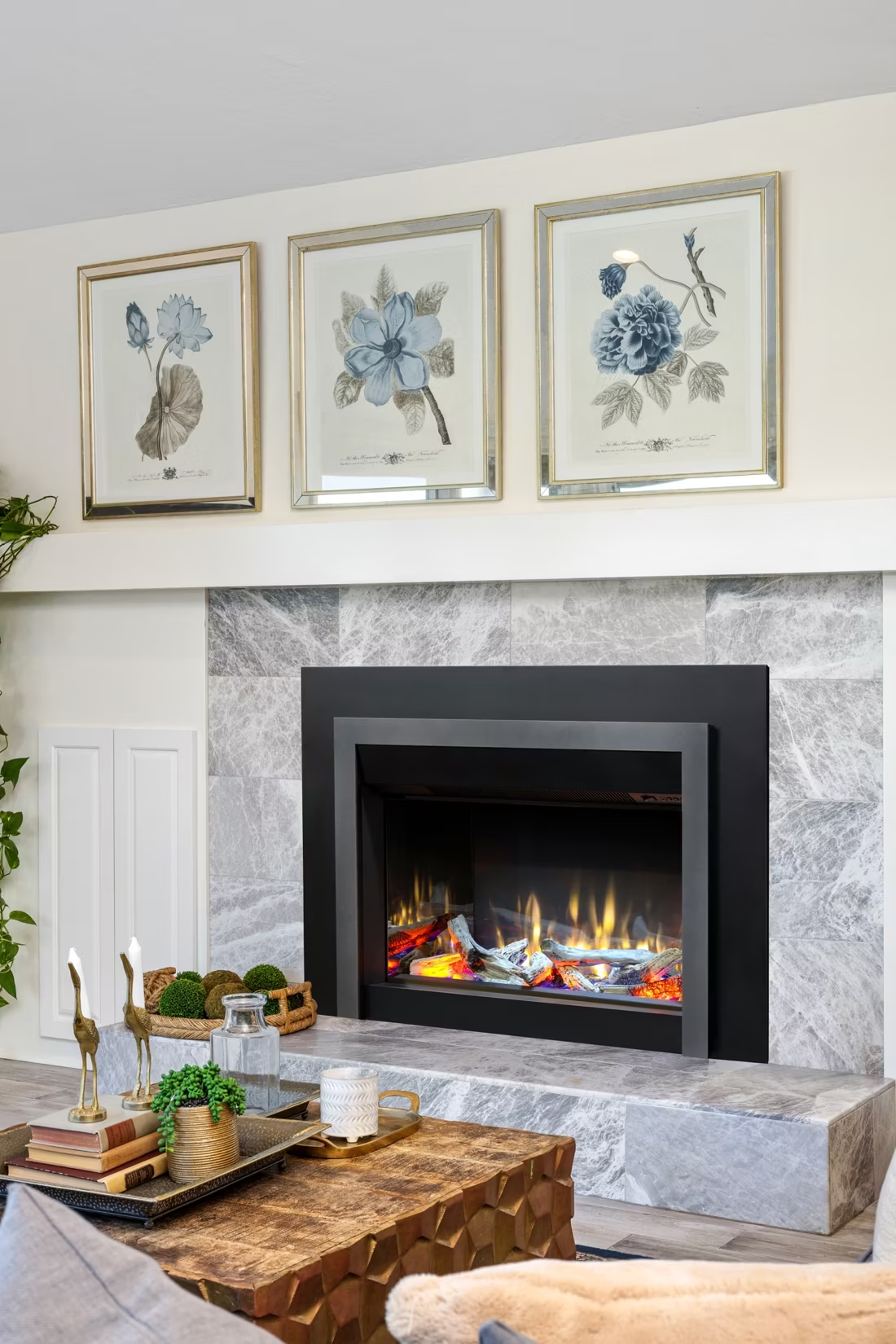
An electric fireplace is typically a built-in or wall-mount unit designed to look like a real firebox, often with a mantel or surround. An electric insert is sized to slot into an existing masonry fireplace opening, giving an old wood-burning hearth a heat source again without touching the chimney. An electric stove is a freestanding cabinet-style unit that sits on the floor like a wood stove but plugs into an outlet. For Furnas County homes with an existing but unused masonry fireplace, an insert is often the fastest way to bring that space back into use; for a room addition or basement with no existing hearth, a built-in or freestanding unit makes more sense.
Do I need a permit to install an electric fireplace in Furnas County?
A plug-in unit that uses an existing outlet generally doesn't require a permit. If your install involves new electrical wiring—a dedicated circuit for a built-in unit, for example—that work typically needs to meet code and may require an electrical permit through the county, which most licensed electricians will pull as part of the job. There's no venting, chimney, or gas-line inspection to worry about, which is one of the reasons electric installs move faster than wood or gas projects in Furnas County.
What's the best electric fireplace for a Furnas County winter?
Look for a unit with a strong-output heater—most quality electric fireplaces top out around 1,500 watts, roughly 5,100 BTUs, which is enough to noticeably warm a single room in climate zone 5A's cold months. Models with a variable thermostat and a fan-forced heater (rather than just a radiant coil) do a better job holding a set temperature through a long winter night. Since electric fireplaces are supplemental rather than primary heat here, pair one with your existing furnace or propane system rather than relying on it alone during the coldest stretches.
How much does an electric fireplace cost to run?
A typical 1,500-watt electric fireplace run on the heater setting costs roughly 15 to 25 cents per hour depending on local electricity rates through your rural cooperative or Southern Public Power District service, and most units let you run the flame effect alone—with the heater off—for pennies an hour. That makes electric a low-commitment way to add ambiance to a room in Furnas County during shoulder-season evenings when you want a fire but don't want to fire up the furnace.
Electric vs. wood—which makes more sense for my Furnas County home?
Wood remains a strong option here—oak, hickory, and cottonwood off the Republican River bottoms have heated Furnas County homes for generations, and a wood stove works without electricity, which matters during winter storm outages. Electric fireplaces can't provide backup heat if the power's out, but they install in an afternoon with no chimney, no wood storage, and no ash cleanup, and they're the practical choice for a room that just needs supplemental warmth rather than a primary heat source. A lot of local households end up with both: wood or propane as the workhorse, electric for a bedroom, sunroom, or finished basement that doesn't justify a full venting project.
Electric vs. pellet stove—which is right for me?
Pellet stoves burn compressed wood pellets—regional brands like Lignetics and Indeck Energy Services supply this area—and produce real, substantial heat, but they still require electricity to run the auger and combustion blower, so they're not a power-outage backup either. Where pellet stoves need a vent through an exterior wall or roof, fuel storage, and periodic ash cleanup, an electric fireplace needs none of that—just an outlet or a dedicated circuit. For a Furnas County homeowner who wants meaningful heat output and doesn't mind buying and storing pellet bags, pellet wins on raw BTUs; for someone who wants ambiance and light supplemental heat with zero maintenance, electric is the simpler answer.
Do electric fireplaces actually produce heat?
Yes—most put out around 4,800–5,000 BTUs from a standard outlet, which comfortably warms a bedroom, office, or den as a comfort-zone heater. What they won't do is carry a whole house the way wood, gas, or pellet can. Think of electric as ambiance-first with honest supplemental heat: flames on with no heat in July, flames plus warmth in January.
Can I put a TV above my fireplace?
Yes—with an asterisk. Fireplaces are hot and TVs don't like heat. Either put a mantel between them to deflect rising warmth, or choose a fireplace with heat-management technology that creates a cool zone on the wall above—the wall stays around 125 degrees, barely warm, while the room still gets full heat. If you like clean lines and don't want a mantel, heat management is the answer.
How much should I budget for a fireplace?
For an average home—covering the fireplace, the vent pipe, and basic installation—a budget between $3,900 and $5,500 gives you a lot of options across wood, gas, and pellet. By the time you add finish work, gas line, and electrical, the average complete installation lands between $5,000 and $12,000 all-in. In a remodel or new build, a good rule is to put about 2.5% of the total project cost toward the fireplace.
Can a fireplace actually lower my heating bill?
Yes—by creating a comfort zone. A furnace heats every square foot of the house just to warm the one room you're in; a gas fireplace on low burns roughly a sixth of the gas a typical furnace does. Set the furnace around 55–60 degrees as a baseline, then heat the rooms your family actually uses. Families who heat this way commonly save $20–$60 a month.
Find your electric fireplace in Furnas County.
Tell us a bit about your home and we'll put together a free Project Guide & Parts List for your electric fireplace project in Furnas County—the right unit, the exact parts, and a recommended local dealer or electrician to install it.
Find Your Fireplace →