
Pellet heat for the wide-open plains of Banner County.
With fewer than sixty year-round residents spread across the high plains near the Wyoming line, Banner County doesn't have a hearth shop on every corner. We'll match you with a real installer who serves this stretch of the Panhandle and get you a clear plan before anyone drives out.
Every Project Starts From One of These Five Situations
Consistent heat where firewood is scarce.
Banner County sits on the open high plains of the Nebraska Panhandle, a place with almost no standing timber outside the cottonwood stands along Lawrence Fork and a few scattered draws. Oak and hickory show up occasionally on farmsteads and shelterbelts, but there's no forest base here to sustain regular firewood cutting the way there is in eastern Nebraska. In a Zone 5A climate, winters bring long stretches of below-freezing days and hard wind off the plains that cuts through older farmhouses fast—and a home this exposed needs heat that doesn't depend on finding enough cordwood on land where trees are the exception, not the rule.
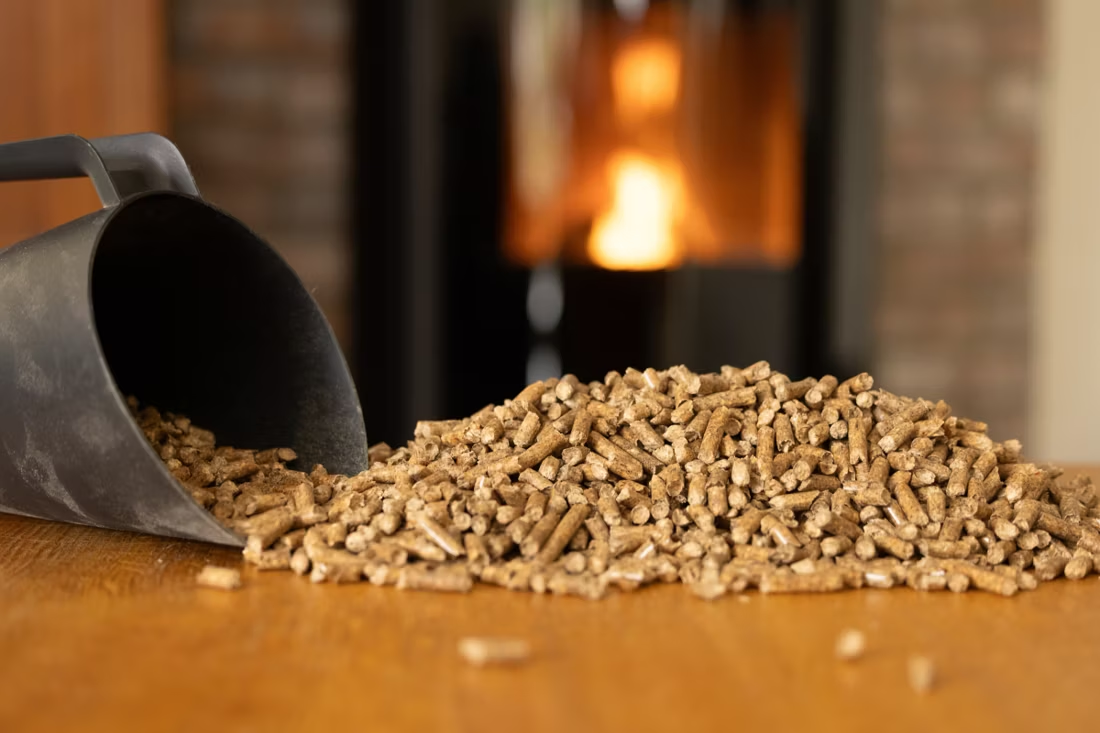
That's the practical case for pellet: bagged fuel arrives by truck rather than by chainsaw, and Banner County has no air quality restrictions or burn curtailment periods to plan around, so a pellet stove can run whenever it's needed. Regional supply comes primarily through Lignetics and Indeck Energy Services, typically stocked at farm and ranch supply outlets rather than a dedicated hearth store—there simply isn't the population base here to support one. Most homeowners end up working with an installer based out of Kimball or Scottsbluff, the nearest towns with full-service hearth capability, and coordinating pellet delivery separately.
Three steps. No salesperson until you're ready.
Tell us about your project
Your zip code, your situation, and the fuel you're leaning toward—or let the answers point you to one.
See what's actually available
The brands dealers within 100 miles genuinely carry—real options, never a catalog mirage.
Get your dealer & Project Guide
A trusted local dealer, plus the free Project Guide & Parts List that names every component of the job.
Frequently Asked Questions
How much does a pellet stove installation cost in Banner County?
A typical freestanding pellet stove installation in a rural Panhandle county like Banner runs roughly $3,000 to $6,500, depending on the unit, whether a new through-wall vent needs to be cut, and electrical work for the hopper motor and blower. Because there's no installer physically based in the county—most work is dispatched out of Kimball or Scottsbluff—expect a trip charge folded into the quote, particularly for farmsteads well off the highway. Pellet insert conversions into an existing masonry fireplace tend to land on the lower end of that range since venting is often simpler.
What size pellet stove do I need for a Banner County home?
Most homes out here are older farmhouses or ranch-style single-story builds, often with less insulation than newer construction and a lot of exposed wall facing prevailing wind. For a Zone 5A climate with sustained plains wind, size up from what a square-footage chart alone would suggest—a stove rated for the room count on paper may still struggle on a windy 10-degree night. A mid-size unit (rated for 1,500–2,200 sq ft) is a common fit for a modest single-story farmhouse; larger or drafty older homes often do better with a bigger hopper and higher max BTU output so it isn't running at full tilt around the clock.
Is there a pellet stove installer near me in Banner County?
Not based in the county itself—with a population under a hundred spread across roughly 745 square miles, Banner County doesn't support a standalone hearth business. Homeowners typically work with installers out of Kimball to the south or Scottsbluff to the north, both within reasonable driving distance of Harrisburg and most farmsteads. Confirm your installer is comfortable with pellet-specific venting (typically PL vent rather than a full masonry chimney) and ask upfront about travel charges for the distance.
Why choose a pellet stove over a wood stove in Banner County?
The honest answer is fuel access. Banner County has almost no timber to speak of—a bit of cottonwood along the creek bottoms, occasional oak or hickory on a shelterbelt or farmstead—but nothing close to the forested acreage that makes self-cut firewood practical elsewhere. A pellet stove sidesteps that entirely: bags arrive by pallet delivery or from a farm supply outlet, and you're not dependent on finding, hauling, and seasoning cordwood on land where trees are scarce. Wood stoves still work here if you're buying cordwood in from outside the county, but pellet is the more realistic self-sufficient option given the terrain.
Do I need a permit to install a pellet stove in Banner County?
Yes—a building permit is generally required for a new solid-fuel or pellet appliance installation, handled through the Banner County building department out of Harrisburg. Requirements are less involved than a full masonry chimney project since pellet venting is typically a smaller-diameter PL vent through an exterior wall, but the permit still covers clearances and venting termination. Most installers coming out from Kimball or Scottsbluff will handle the permit paperwork as part of the job.
What's the best pellet stove for Banner County's wind and cold?
Look for a unit with a larger hopper capacity so you're not refilling constantly during multi-day cold stretches, and confirm the intake/exhaust venting is rated for high-wind exterior wall installations—sustained Panhandle wind can affect draft on a poorly sealed vent termination. Because pellet stoves run on electric auger and blower motors, ask your installer about battery backup options too; on the open plains, winter storms and line work can knock out power for hours, and an unpowered pellet stove goes cold fast without one.
Where can I buy pellets near Banner County?
Lignetics and Indeck Energy Services are the two regional brands most commonly available to Panhandle customers, typically stocked through farm and ranch supply retailers in Kimball or Scottsbluff rather than a dedicated pellet dealer—there isn't the customer base in Banner County to support one locally. Given the distances involved, most homeowners here buy by the pallet (about a ton per pallet) rather than by the bag, both for cost efficiency and to avoid multiple trips into town during winter.
Will my pellet stove work if the power goes out?
Not without a backup plan. Pellet stoves rely on an electric auger to feed fuel and a blower to distribute heat, so a power outage shuts the unit down even with a full hopper. This matters more in a place like Banner County, where winter storms and long rural power lines can mean outages that stretch for hours rather than minutes. A battery backup unit or small generator sized for the stove's draw is worth discussing with your installer if reliable off-grid heat during outages matters to you—otherwise a wood stove or propane unit may make more sense as a secondary heat source.
Pellet vs. propane—which makes more sense in Banner County?
With no natural gas infrastructure this far out on the plains, propane is the common gas alternative in Banner County, usually via a tank delivery service. Propane stoves and fireplaces offer instant on-demand heat and don't require electricity to ignite (though blower-equipped units do), which is an advantage during outages. Pellet stoves generally cost less to run per BTU and burn a renewable fuel, but they need electricity to operate at all. If backup heat during power loss is the priority, propane has the edge; if lower operating cost and not depending on tank refills is the priority, pellet is usually the better fit.
Why is my open fireplace making my house colder?
Open fireplaces suck—literally. As the fire burns, it consumes air your furnace already paid to heat and pulls it out through the chimney, so the house is actually colder after the fire goes out than before you lit it. An insert fixes this: it seals the chimney, puts fixed glass across the front, and turns that hole in your house into a real heat source.
Why is a fireplace insert so efficient?
An insert does two things: it seals the chimney completely, so you stop losing air you already paid to heat, and it radiates warmth into the room through the firebox and glass. Most add a heat-exchange fan that pulls cool room air underneath, wraps it around the hot firebox, and pushes it back out warm. Your home is more efficient before you've even lit the first fire.
What is an in-home preview and do I need one?
It's a visit where a hearth professional measures your space, confirms the model you picked actually works in your home, and walks the specs—framing, gas line, venting, finish work—before anything is ordered. Some details you just can't know until you see the house. Never make a down payment without one; it's the single most-skipped step that burns buyers.
Can a fireplace actually lower my heating bill?
Yes—by creating a comfort zone. A furnace heats every square foot of the house just to warm the one room you're in; a gas fireplace on low burns roughly a sixth of the gas a typical furnace does. Set the furnace around 55–60 degrees as a baseline, then heat the rooms your family actually uses. Families who heat this way commonly save $20–$60 a month.
Pellet Brands Stocked Around Banner County
Manufacturers will point you to the nearest stocking dealer.
Find your pellet stove in Banner County.
Tell us about your home and we'll put together a free Project Guide & Parts List—the right pellet stove or insert, the vent kit it needs, and a trusted local installer who actually covers this part of the Panhandle.
Find Your Fireplace →