
Gas heat built for Banner County's wide-open winters.
From Harrisburg to the ranchland around Panorama Point, Banner County homes face long, dry, wind-driven winters with almost no natural gas infrastructure to speak of. We'll help you find the right propane-fired gas fireplace or insert and match you with a local dealer who actually covers this stretch of the panhandle.
Every Project Starts From One of These Five Situations
Reliable heat for one of Nebraska's most remote counties.
Banner County sits at the far western edge of the Nebraska panhandle, home to Panorama Point—the highest spot in the state—and a population so small that the county seat, Harrisburg, barely registers as a town. Climate zone 5A means cold, dry winters with persistent wind off the high plains, and homes here are spread across ranch and farmland rather than clustered in neighborhoods. That geography shapes everything about how heating gets installed and serviced.
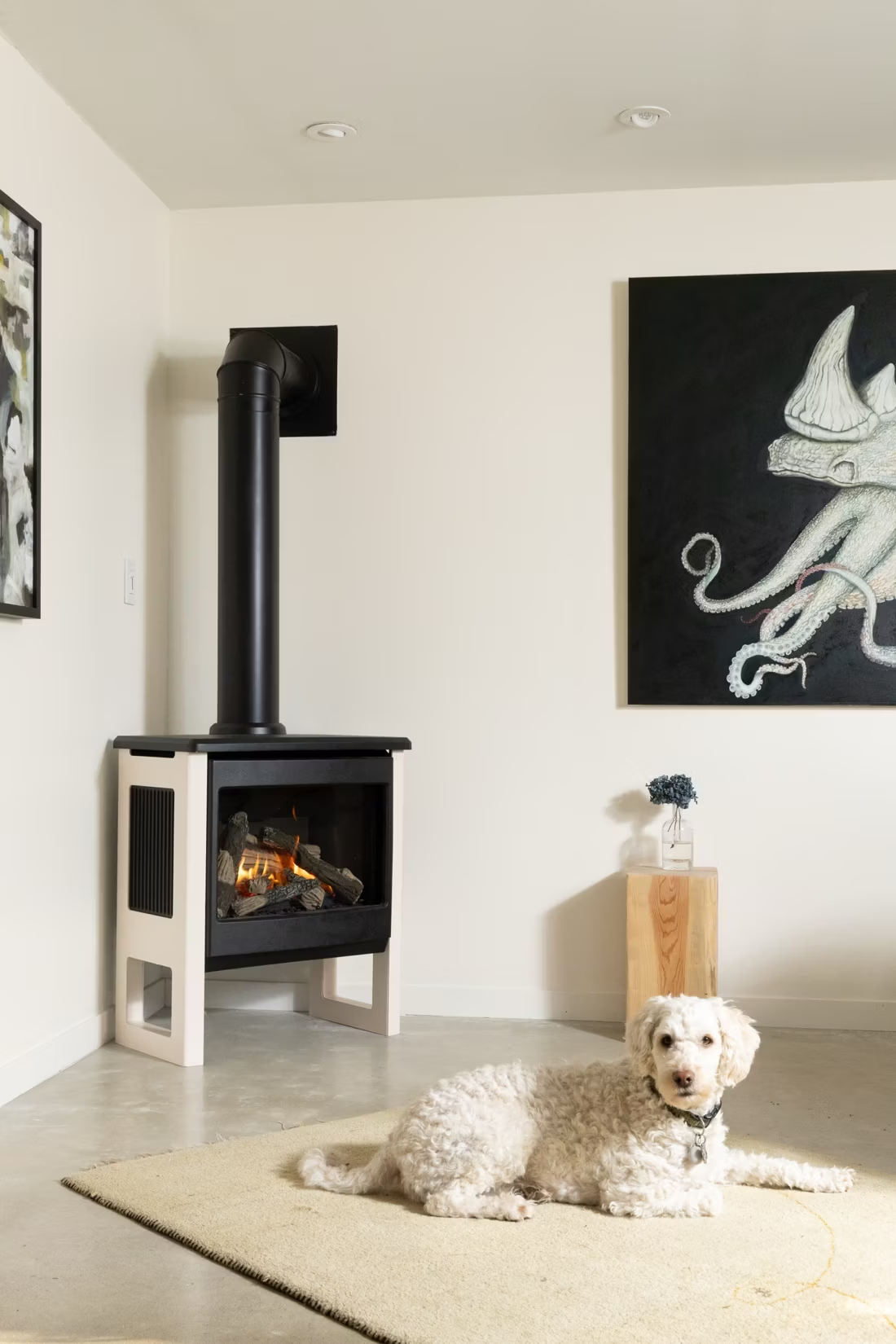
With almost no natural gas mains reaching this far into the panhandle, propane is the practical standard here rather than an exception—tanks and deliveries are simply how gas appliances run in Banner County. A direct-vent propane fireplace or insert gives ranch households dependable, thermostat-controlled heat in outbuildings, additions, and main living spaces without relying solely on hauling and stacking cordwood, even though local oak, hickory, and cottonwood remain common backup fuel for the wood stoves many of these same homes also keep on hand for when the power goes out.
Three steps. No salesperson until you're ready.
Tell us about your project
Your zip code, your situation, and the fuel you're leaning toward—or let the answers point you to one.
See what's actually available
The brands dealers within 100 miles genuinely carry—real options, never a catalog mirage.
Get your dealer & Project Guide
A trusted local dealer, plus the free Project Guide & Parts List that names every component of the job.
Frequently Asked Questions
How much does a gas fireplace installation cost in Banner County?
Because Banner County has so few year-round households, most gas fireplace and insert installs are handled by dealers based out of Kimball, Sidney, or Scottsbluff—occasionally crews from Cheyenne, Wyoming, given how close the county line sits to the state border. Expect a travel charge on top of the unit and labor cost, and budget in the range of $3,500 to $9,000 depending on whether you're running a new propane line, tying into an existing tank, or converting an old masonry fireplace. Get a firm number from an in-home visit rather than a phone estimate—travel distance and tank placement vary a lot out here.
Can I convert my existing wood fireplace to gas?
Yes, and it's a common request in older Banner County farmhouses that were built with a masonry fireplace decades before propane delivery was reliable in this part of the panhandle. A gas insert typically slides into the existing firebox and vents through a stainless liner run up your current chimney, so you keep the look of the fireplace while gaining thermostat control. The bigger variable locally is propane line routing—if your tank is already set and plumbed for a furnace or range, tying in a fireplace is straightforward; if not, that line work adds to the project.
Do I need natural gas, or is propane the only option in Banner County?
Propane is effectively the standard fuel for gas fireplaces across Banner County. Natural gas mains don't reach into this kind of low-density ranch country, so nearly every gas appliance out here—furnace, range, water heater, fireplace—runs on propane from a tank on the property. Any gas fireplace or insert you choose can be configured for propane; your installer sets the correct orifice and regulator for the fuel, and coordinates with your propane supplier if a new or larger tank is needed to handle the added load.
Will my gas fireplace work during a power outage?
This matters more in Banner County than almost anywhere—when a high plains winter storm knocks out power in this part of the panhandle, restoration can take longer simply because crews have so much ground to cover between ranches. Gas fireplaces with IPI (intermittent pilot ignition) run on battery backup and will light and heat normally with the power off, as long as the batteries are fresh. Valor units go a step further, generating their own current through the pilot's thermocouple with no batteries required at all. For an isolated ranch home, that's a real difference during a multi-day outage.
What's the difference between a gas fireplace, gas insert, and gas stove?
A gas fireplace is a fully framed-in unit, typically chosen for new construction or a remodel. A gas insert drops into an existing masonry firebox and uses the chimney you already have as the vent path—the common choice for Banner County's older farmhouses. A gas stove is a freestanding cabinet-style unit that doesn't need a fireplace opening at all, which makes it a good fit for a shop, addition, or outbuilding without an existing chimney. Which one fits depends mostly on what your home already has to work with.
Do I need a permit to install a gas fireplace in Banner County?
Yes—a building permit is generally required for a new gas fireplace or insert, along with sign-off on the propane line work, which needs to be done by a licensed gas-fitter regardless of how rural the property is. Check with the Banner County zoning and building office in Harrisburg before work starts. Most established hearth dealers handle this paperwork as part of the job, which is worth confirming up front given how few installers regularly work this part of the panhandle.
What's the difference between vented and vent-free gas fireplaces?
Vented (direct-vent) gas fireplaces pull combustion air from outside and exhaust it back outside through a sealed pipe, keeping combustion byproducts out of the living space entirely. Vent-free units burn without any outside venting, releasing some water vapor and trace combustion gases into the room, and they come with strict room-sizing and oxygen-sensor requirements. Nebraska allows vent-free units, but for Banner County's larger, often older farmhouses with big open rooms, a direct-vent fireplace or insert is the more common and generally recommended choice—no compromise on indoor air quality, and reliable heat output regardless of room size.
How often should my gas fireplace be serviced?
An annual inspection is the standard recommendation—a technician checks the burner, pilot assembly, venting, and gas connections, and cleans the glass. Given how far Banner County sits from most service providers, it's worth scheduling this in late summer or early fall before heating season, both to beat the rush and to avoid a mid-winter service call across long ranch roads if something needs attention.
Gas vs. wood—which makes more sense for a Banner County ranch home?
Wood—burning local oak, hickory, or cottonwood—remains a practical backup in a county this remote, since it needs no propane delivery and keeps working through an extended power outage. Gas offers instant, consistent, thermostat-controlled heat without hauling or stacking cordwood, which matters on a working ranch where time is tight. Many Banner County households end up with both: a propane fireplace or insert for daily comfort in the main living area, and a wood stove kept ready as a backup when weather or supply lines make propane delivery unreliable.
Can I put a TV above my fireplace?
Yes—with an asterisk. Fireplaces are hot and TVs don't like heat. Either put a mantel between them to deflect rising warmth, or choose a fireplace with heat-management technology that creates a cool zone on the wall above—the wall stays around 125 degrees, barely warm, while the room still gets full heat. If you like clean lines and don't want a mantel, heat management is the answer.
Is my gas fireplace wasting gas?
If it was installed more than 15 years ago, probably. Older gas fireplaces keep a standing pilot light burning all the time, and that little flame can cost a couple hundred dollars a year. Newer models use pilot-on-demand ignition—the pilot lights only when you use the fireplace and goes out when you turn it off.
What is an in-home preview and do I need one?
It's a visit where a hearth professional measures your space, confirms the model you picked actually works in your home, and walks the specs—framing, gas line, venting, finish work—before anything is ordered. Some details you just can't know until you see the house. Never make a down payment without one; it's the single most-skipped step that burns buyers.
Can I install a fireplace myself?
If you're putting a fire in your house on purpose, it's best to work with an expert. Unless you're genuinely experienced in framing, gas line, vent pipe, and the national code on clearances to combustibles, have a professional do it—and ideally the same company that sells you the fireplace, so warranty, service, and liability all live under one roof.
Get matched with a gas fireplace dealer serving Banner County.
Tell us about your home and we'll match you with a trusted local dealer and send over your free Project Guide & Parts List—a plan for your gas fireplace or insert project in Banner County, with the exact parts, including the vent kit, and the dealer we recommend for the install.
Find Your Fireplace →