
Instant heat for Banner County ranch homes—no chimney required.
Zone heat for the high plains of Banner County—from Harrisburg to the ranches scattered along Pumpkin Creek and the Wildcat Hills. No gas line, no venting, no cutting a hole in the wall. Find the right unit and connect with a trusted regional dealer.
Every Project Starts From One of These Five Situations
Simple heat for one of Nebraska's smallest counties.
Banner County sits in the Nebraska panhandle near the Wyoming line, with a county-wide population of just 59—Harrisburg, the county seat, is more crossroads than town. Climate zone 5A means long, wind-driven winters across the high plains, with cottonwood, oak, and hickory growing mostly in the draws and shelterbelts along Pumpkin Creek rather than in open pasture. There's no natural gas infrastructure to speak of out here, and the ranch houses and doublewides that make up most of the county's housing stock are spread far enough apart that running new gas lines or masonry chimneys is rarely practical.
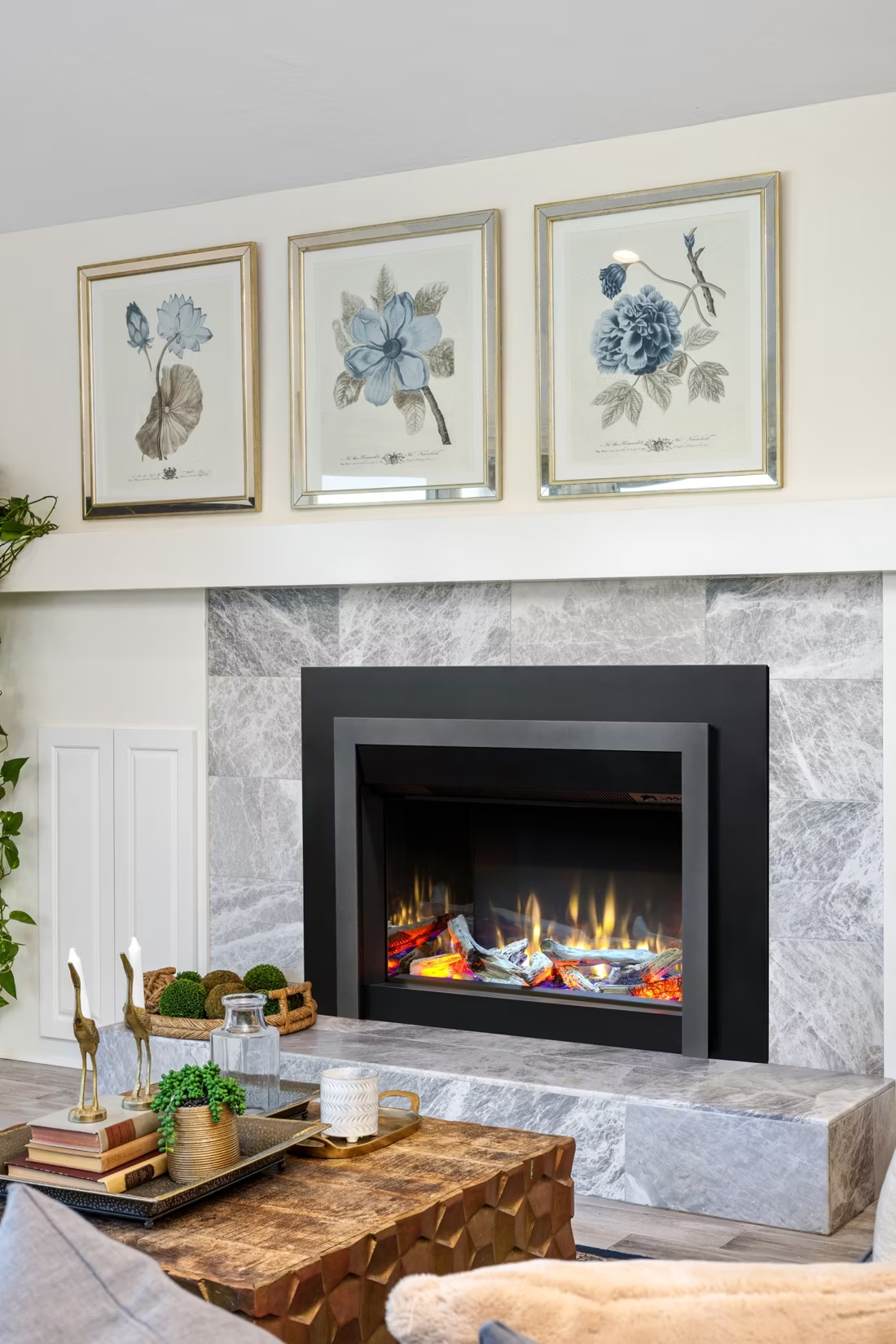
That's exactly the gap electric fireplaces and inserts fill. They plug into wiring that's already run to the house, need no venting or combustion air, and can go into a living room, a bunkhouse, or a converted mudroom in an afternoon rather than a multi-day construction project. Power in Banner County runs through Panhandle Rural Electric Membership Association's cooperative lines, and most homes already have the amperage to support a 120V unit without panel work. For a county this sparsely populated, with the nearest hearth showroom likely in Sidney, Scottsbluff, or across the border in Cheyenne, an electric unit that a local electrician can install without specialty tools is often the most realistic path to supplemental warmth and fireplace ambiance.
Three steps. No salesperson until you're ready.
Tell us about your project
Your zip code, your situation, and the fuel you're leaning toward—or let the answers point you to one.
See what's actually available
The brands dealers within 100 miles genuinely carry—real options, never a catalog mirage.
Get your dealer & Project Guide
A trusted local dealer, plus the free Project Guide & Parts List that names every component of the job.
Frequently Asked Questions
How much does an electric fireplace installation cost in Banner County?
Electric fireplaces are the least expensive hearth option to install, typically running $400 to $1,500 for a plug-in insert or wall-mount unit, and up to $2,500 for a built-in unit that requires framing or minor electrical work. Because Banner County has no gas infrastructure and few homes with existing masonry chimneys, electric is often the cheapest route to a working fireplace in an old ranch farmhouse—there's no venting, no gas line, and no chimney liner to account for. Most units run on a standard 120V circuit already present in the room; larger built-ins occasionally need a dedicated 20-amp circuit, which a local electrician can add.
Do I need a permit to install an electric fireplace in Banner County?
With a county population of 59, Banner County doesn't maintain a dedicated building permit office the way larger counties do—most electrical work is handled through your electrician following the National Electrical Code, and any permit questions route through the county clerk's office in Harrisburg. A plug-in electric fireplace generally requires no permit at all. A built-in unit that needs new wiring or a dedicated circuit may call for an electrical permit depending on the scope of work; your installer can confirm what's needed for your specific project.
Will an electric fireplace keep my home warm during a Nebraska panhandle winter?
Electric fireplaces are best thought of as zone heaters, not whole-house furnaces. In a 5A climate zone with the kind of wind-driven cold that sweeps across Banner County's open pasture, a 1,500-watt electric unit will comfortably supplement a single room—a living room, a converted den, a bunkhouse—but it won't replace your propane furnace or forced-air system on a sub-zero night. Most Banner County homeowners use electric inserts to take the edge off in a room they spend the most time in, letting the central system run lower overall.
What happens to my electric fireplace during a power outage?
It won't run. This is worth being direct about: electric fireplaces need grid power, and rural stretches of Banner County served by Panhandle Rural Electric Membership Association can lose power for hours or longer during a bad plains blizzard or high-wind event. If backup heat during outages matters to you—and for isolated ranch properties it often should—a wood stove or propane-fueled unit is a better primary choice, with an electric fireplace serving as everyday convenience heat rather than your emergency plan.
What's the difference between an electric fireplace, insert, and stove?
An electric fireplace is typically a built-in or wall-mounted unit designed to look like a traditional fireplace, often with a media mantel surround. An electric insert is sized to slide into an existing masonry firebox—useful if an older Banner County farmhouse already has a fireplace opening that's no longer safe or practical to burn wood in. An electric stove is a freestanding cabinet-style unit that mimics a wood stove's look without the venting or fuel handling. All three plug into standard household power and produce heat via a resistive coil or infrared element rather than an open flame.
What size electric fireplace do I need for a ranch home?
Most electric fireplaces top out around 5,000 BTU (roughly 1,500 watts), which comfortably heats 400 to 1,000 square feet depending on ceiling height and insulation. For the older, less-insulated farmhouses common in Banner County, size toward the larger units and expect the fireplace to handle one main room rather than an open-concept ranch layout. If you're trying to warm a larger single space—a great room in a newer build, for instance—a local dealer can recommend a dual-unit setup or point you toward a different fuel entirely.
Where can I find a local dealer for electric fireplaces near Banner County?
Banner County itself doesn't have a hearth showroom—with only 59 residents countywide, there isn't the customer base to support one. Homeowners here typically work with retailers based in Sidney, Scottsbluff, or Cheyenne, Wyoming, several of whom regularly service rural panhandle properties and are comfortable with the drive. We match Banner County homeowners with a trusted dealer from that regional pool rather than a big-box option, so you get someone who actually knows ranch-home wiring and older farmhouse electrical panels.
Electric vs. wood—which is right for my Banner County home?
Wood has real roots here—oak, hickory, and cottonwood grow along Pumpkin Creek and in the county's scattered shelterbelts, and a wood stove keeps working when the power lines go down, which matters on an isolated ranch. Electric wins on simplicity and cost: no chimney, no wood handling, no ash, and an install a local electrician can finish in a day. Many Banner County households end up using both—wood as the backup and primary winter heat source out on the property, electric as low-maintenance ambiance or supplemental heat in a room where running a flue isn't practical.
Are electric fireplaces expensive to run?
Running cost depends on your electric rate and how many hours you use it, but a typical 1,500-watt unit run for several hours a day generally adds a modest amount to a monthly bill under Panhandle Rural Electric Membership Association's cooperative rates—usually less than the cost of propane delivery for the same supplemental heat output. Since there's no fuel to haul, store, or dry, and no chimney to maintain, the ongoing cost of an electric fireplace is largely just the electricity itself.
Do electric fireplaces actually produce heat?
Yes—most put out around 4,800–5,000 BTUs from a standard outlet, which comfortably warms a bedroom, office, or den as a comfort-zone heater. What they won't do is carry a whole house the way wood, gas, or pellet can. Think of electric as ambiance-first with honest supplemental heat: flames on with no heat in July, flames plus warmth in January.
Can I put a TV above my fireplace?
Yes—with an asterisk. Fireplaces are hot and TVs don't like heat. Either put a mantel between them to deflect rising warmth, or choose a fireplace with heat-management technology that creates a cool zone on the wall above—the wall stays around 125 degrees, barely warm, while the room still gets full heat. If you like clean lines and don't want a mantel, heat management is the answer.
What is an in-home preview and do I need one?
It's a visit where a hearth professional measures your space, confirms the model you picked actually works in your home, and walks the specs—framing, gas line, venting, finish work—before anything is ordered. Some details you just can't know until you see the house. Never make a down payment without one; it's the single most-skipped step that burns buyers.
Does a fireplace add value to my home?
On average, a fireplace adds back to the home about the same amount you spent installing it. Add the monthly savings from heating the rooms you actually use instead of the whole house—often hundreds of dollars a year—and the value case is strong before you even count what a fire does for how your family uses the room.
Find your electric fireplace in Banner County.
Tell us a bit about your home and we'll put together a free Project Guide & Parts List for your Banner County electric fireplace project—the right unit, the wiring needs, and a trusted regional dealer who can actually get out to you.
Find Your Fireplace →