
Steady heat for Nebraska's wide-open Sandhills.
With around 100 residents spread across Sandhills ranch country, Arthur County runs on self-sufficiency—and pellet heat fits that life. Find the right stove or insert and connect with a trusted local dealer who'll actually make the drive.
Every Project Starts From One of These Five Situations
Clean-burning heat built for wide-open ranch country.
Arthur County is Nebraska's least populated county—roughly 100 people spread across nearly 700 square miles of Sandhills grassland, with the town of Arthur itself serving as the only real population center. Climate zone 5A here means long, cold winters with sustained wind across open range, and the nearest big-box hardware store or hearth retailer is typically a 45-minute to hour-long drive to North Platte, Ogallala, or Alliance. When a household is this remote, heat can't depend on same-day trips to town.
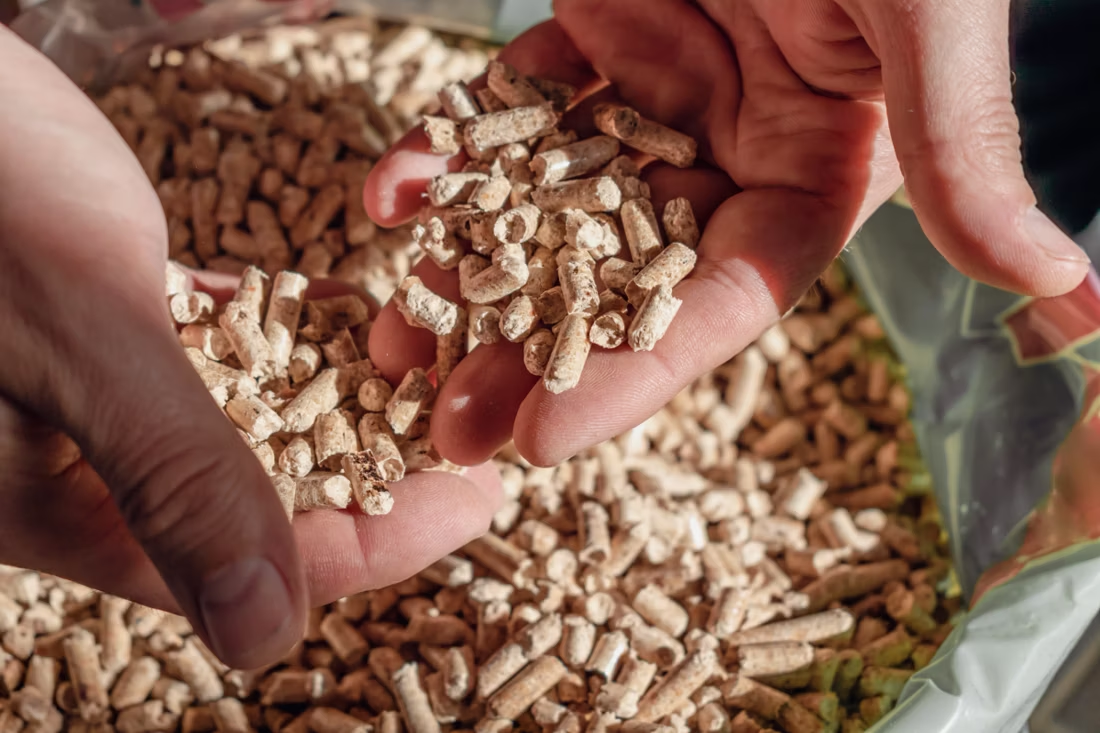
Pellet stoves and inserts fit that reality well. A hopper loaded with bagged pellets from a regional supplier like Lignetics or Indeck Energy Services can run 24-plus hours unattended—useful when a Sandhills blizzard closes roads for a few days. Compared with sourcing and splitting oak, hickory, or cottonwood from the scattered river-bottom stands along the North Platte, pellets store cleanly in a garage or mudroom and burn with almost no ash to manage. For a county this sparsely populated, the dealer relationship matters as much as the stove—someone who will actually stock your fuel and service the unit without treating the trip as an afterthought.
Three steps. No salesperson until you're ready.
Tell us about your project
Your zip code, your situation, and the fuel you're leaning toward—or let the answers point you to one.
See what's actually available
The brands dealers within 100 miles genuinely carry—real options, never a catalog mirage.
Get your dealer & Project Guide
A trusted local dealer, plus the free Project Guide & Parts List that names every component of the job.
Frequently Asked Questions
How much does a pellet stove installation cost in Arthur County?
A typical pellet stove installation runs roughly $3,000 to $6,500, depending on the unit, whether venting through an existing wall or requiring new penetration, and any electrical work for the hopper and blower circuit. Because Arthur County has no hearth retailer of its own, expect installers based out of North Platte or Ogallala to add a modest travel charge for the trip out—worth confirming up front when you get a quote, since distances here are longer than in most counties.
What size pellet stove do I need for a Sandhills ranch home?
Sizing depends on square footage, ceiling height, and how exposed the house is to open-plains wind, which drives heat loss harder than temperature alone in this part of Nebraska. Smaller stoves suit a single living area or a line shack; medium units handle most farmhouse main floors; larger units are worth considering for older, less-insulated homes that catch the full brunt of Sandhills wind across unbroken range. A local dealer sizing your specific home—rather than a generic square-footage chart—is especially important here given how few reference homes exist nearby to compare against.
How do I keep a steady pellet supply in a county this remote?
Since Arthur County has no retail outlet of its own, most homeowners buy pellets by the pallet—50 forty-pound bags—from regional suppliers like Lignetics or Indeck Energy Services, either through a dealer delivery route out of North Platte or Ogallala or by picking up on a supply run. Stocking a full winter's worth (often 2 to 3 tons for a primary-heat home) before the first heavy snow is the safer approach here, since a closed road during a Sandhills storm can delay a delivery for days.
Do I need a permit to install a pellet stove in Arthur County?
Most jurisdictions require a permit for a new pellet stove installation, particularly if it involves new wall penetration for venting or dedicated electrical work for the hopper and blower. Given Arthur County's small size, check directly with the county's building or zoning office before installation—a quick phone call typically settles it, and any installer working out of North Platte or Ogallala who regularly serves this area should already know the local requirements.
Pellet stove or wood stove—which makes more sense out here?
Wood is available locally from cottonwood, oak, and hickory along the river-bottom draws, but standing timber is genuinely limited across the open Sandhills, and cutting, hauling, and seasoning your own supply takes real effort in a county with so few wooded acres. Pellet stoves sidestep that by running on bagged fuel delivered or hauled in from regional suppliers, with far less mess and a more consistent burn. The tradeoff is that pellet stoves need electricity for the auger and blower, so they're not a stand-alone option during a power outage the way a wood stove is—something to weigh seriously given how exposed above-ground lines are to Sandhills wind events.
What happens to my pellet stove during a power outage?
Pellet stoves rely on electricity to run the auger, igniter, and blower, so they shut down without power—a real consideration in a county where above-ground lines run long distances across open range and wind events can knock out service for hours or longer. Many rural Arthur County households pair a pellet stove with a small backup generator (many pellet units draw well under 500 watts) to bridge outages, or keep a wood-burning option on hand as a true off-grid backup.
How often does a pellet stove need cleaning and service?
Plan on emptying and vacuuming the ash pan every few days during heavy winter use, a deeper burn-pot and glass cleaning weekly, and a full annual service—checking the auger, gaskets, exhaust blower, and venting—before each heating season starts. Given the distance to the nearest certified service technician, many Arthur County homeowners learn basic hopper and burn-pot maintenance themselves and reserve professional service for the annual inspection.
Are there tax credits available for a pellet stove in Arthur County?
High-efficiency pellet stoves rated at 75% efficiency or higher generally qualify for the federal biomass stove tax credit (Section 25C), worth 30% of the equipment and installation cost up to $2,000—this applies nationwide, including here in Arthur County, and doesn't require any state-specific paperwork. Ask your dealer for the manufacturer's efficiency certification when you buy, since you'll need it to claim the credit.
Which pellet stove brands can I actually get serviced near Arthur County?
Fuel availability matters as much as the stove brand out here—Lignetics and Indeck Energy Services both distribute regionally and are the pellets most Arthur County households can reliably source. When picking a stove, it's worth confirming with your dealer (typically based in North Platte, Ogallala, or Alliance) that they stock parts and can service the specific model you're considering, rather than choosing a brand with no local support and a long wait for repairs.
How often does a pellet stove need cleaning?
A clean pellet stove is a happy pellet stove. Plan on cleaning the burn pot about once a week when you're burning regularly—ash and clinkers gum up the air holes just like a pellet barbecue. Most pellet stove problems trace back to skipped cleaning that nobody explained up front. Some designs make it easy with a trapdoor burn pot: pull a lever and the gunk drops into the ash pan.
What's the difference between an insert and a zero-clearance fireplace?
An insert is a fireplace that slides into a pre-existing wood-burning fireplace—if you don't have one, there's nothing to insert it into. A zero-clearance fireplace is built into a framed wall, which makes it the answer for remodels and new construction. Simple test: existing masonry fireplace means insert; blank or framed wall means zero-clearance.
How much should I budget for a fireplace?
For an average home—covering the fireplace, the vent pipe, and basic installation—a budget between $3,900 and $5,500 gives you a lot of options across wood, gas, and pellet. By the time you add finish work, gas line, and electrical, the average complete installation lands between $5,000 and $12,000 all-in. In a remodel or new build, a good rule is to put about 2.5% of the total project cost toward the fireplace.
What is an in-home preview and do I need one?
It's a visit where a hearth professional measures your space, confirms the model you picked actually works in your home, and walks the specs—framing, gas line, venting, finish work—before anything is ordered. Some details you just can't know until you see the house. Never make a down payment without one; it's the single most-skipped step that burns buyers.
Pellet Brands Stocked Around Arthur County
Manufacturers will point you to the nearest stocking dealer.
Get matched with a pellet stove dealer for Arthur County.
Tell us about your home and we'll match you with a trusted dealer who serves this part of the Sandhills, plus a free Project Guide & Parts List with the exact parts—including the vent kit—for your pellet stove project.
Find Your Fireplace →