
Heating help for Arthur County's Sandhills ranch country.
Wood, gas, pellet, and electric fireplace resources for the town of Arthur and the scattered ranches that make up Nebraska's smallest county by population. Find the right unit and connect with a trusted retailer that actually services this part of the Sandhills.
Every Project Starts From One of These Five Situations
Grassland winters in one of Nebraska's most sparsely populated counties.
Arthur County sits in the heart of the Nebraska Sandhills—rolling grass-stabilized dunes with roughly 100 residents spread across nearly 700 square miles. There's no natural gas main running through this part of the state, and the native tree cover is thin: cottonwood along the Dismal River and North Platte drainages, with oak and hickory mostly limited to shelterbelts ranchers planted decades ago to break the wind. Climate zone 5A means winters here run cold and long, closer to what you'd expect in Bismarck, ND, than in Omaha—heating season typically stretches from October into April, and wind chill off the open range adds to the load a stove or furnace has to carry.
With a population this small, there's no hearth retailer physically located inside Arthur County—the nearest dealers are based in North Platte or Ogallala, roughly 40-60 miles out, and they've built their business around serving ranch homes on gravel and sand roads. This hub rolls up what's actually available to Arthur County residents: retailers who make the drive, technicians who service Sandhills properties, and fuel suppliers who deliver propane and pellets out this far. Pick your fuel below for installation costs, unit recommendations, and dealer specifics.
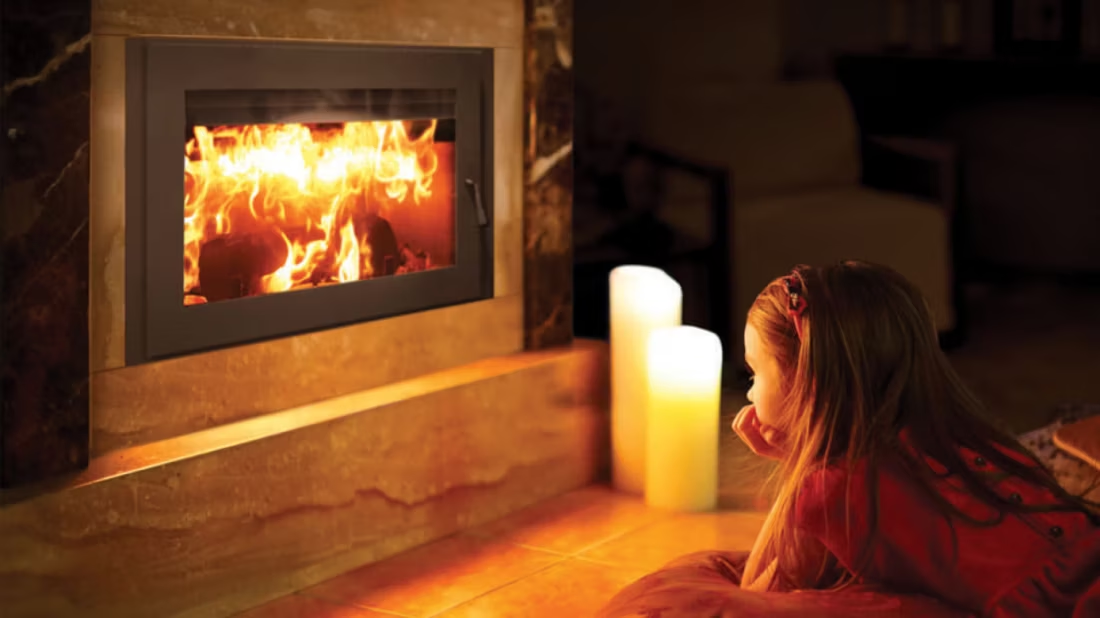
Four fuels. One honest answer for Arthur County.
Three steps. No salesperson until you're ready.
Tell us about your project
Your zip code, your situation, and the fuel you're leaning toward—or let the answers point you to one.
See what's actually available
The brands dealers within 100 miles genuinely carry—real options, never a catalog mirage.
Get your dealer & Project Guide
A trusted local dealer, plus the free Project Guide & Parts List that names every component of the job.
Frequently Asked Questions
Which fuel works best for a home in Arthur County?
It comes down to what you can reliably get delivered or hauled out this far. Wood is common on ranches with mature shelterbelt oak and hickory, or cottonwood cut along the Dismal River and North Platte bottoms—it's the fuel that keeps working when winter roads make deliveries unpredictable. Propane is the standard gas option since there's no natural gas main in the county; most ranch homes already have a propane tank for cooking or water heating, so adding a gas fireplace or insert is often a straightforward tie-in. Pellet stoves are a realistic middle ground—Lignetics and Indeck Energy Services both distribute into this region, though buying in bulk before winter matters more here than in a town with a local pellet retailer on every corner. Electric fireplaces work fine for supplemental heat in a bunkhouse, office, or bedroom, but given the cold stretches at this latitude, they're not a primary heat source for most Arthur County homes.
Do I need a permit to install a fireplace or stove in Arthur County?
Arthur County's building code enforcement is minimal given its size—with a population around 100, there isn't a dedicated inspections staff the way a larger Nebraska county would have. That said, any gas line work still needs to go through a licensed propane technician, and most reputable installers will pull whatever permit the Arthur County Building Department or County Clerk's office requires before starting work. If you're building new or doing a major insert conversion, it's worth a quick call to the county clerk to confirm current requirements—rules can be less standardized in a county this small than what you'd find in North Platte or Lincoln County next door.
Are there any air quality restrictions on wood burning in Arthur County?
No—Arthur County has no air quality non-attainment designation and no winter burn advisories. The open Sandhills topography doesn't trap smoke the way a basin or valley does, so wood burning here doesn't carry the same restrictions you'd see in a place like Klamath Falls, OR, or other inversion-prone regions. That means a cottonwood or oak fire on a cold ranch night is simply a heating decision, not a regulatory one.
Can one retailer handle wood, gas, pellet, and electric for a ranch this far out?
Given the driving distances involved, most Arthur County customers are better served by a multi-fuel dealer out of North Platte or Ogallala that can bring options for all four fuel types on a single visit rather than scheduling separate trips. A dealer who carries wood stoves, propane fireplaces, pellet inserts, and electric units can walk a ranch owner through trade-offs—fuel delivery logistics, backup heat during power outages, and installation timing around calving or haying season—in one conversation instead of four.
How does service and installation work for a property this remote?
Expect technicians to build in a travel fee for the drive from North Platte, Ogallala, or Alliance—often $75-$150 depending on distance and road conditions, since much of Arthur County is reached by gravel or minimum-maintenance roads that aren't always plowed quickly after a Sandhills storm. Scheduling matters more here than almost anywhere: booking annual chimney sweeps or propane inspections in September or early October, before the first hard freeze, avoids the scramble of trying to get a tech out during a January storm. Many ranch households also keep a backup fuel source on hand—a wood stove as insurance if the propane truck can't get through, or a battery backup for pellet stove ignition during outages.
What does fireplace or stove installation typically cost in Arthur County?
Costs run similar to other rural Nebraska Sandhills counties, with travel built into the estimate. Wood stove or insert installation: roughly $4,000-$8,500, depending on chimney work and whether shelterbelt wood or purchased cordwood is the primary fuel. Propane fireplace, insert, or stove: $4,500-$10,000, often on the lower end if an existing propane tank and line are already in place from the home's water heater or range. Pellet stove or insert: $4,000-$7,000 for a typical install, with fuel costs depending on how far Lignetics or Indeck Energy Services product has to travel to reach a regional dealer. Electric fireplace: $200-$2,500 for the unit itself, plus $400-$1,000 in labor for anything beyond a plug-in unit. Ask any quoted retailer whether their price includes the drive time—on a property this far from town, that's often itemized separately.
Can a fireplace actually lower my heating bill?
Yes—by creating a comfort zone. A furnace heats every square foot of the house just to warm the one room you're in; a gas fireplace on low burns roughly a sixth of the gas a typical furnace does. Set the furnace around 55–60 degrees as a baseline, then heat the rooms your family actually uses. Families who heat this way commonly save $20–$60 a month.
Does a fireplace add value to my home?
On average, a fireplace adds back to the home about the same amount you spent installing it. Add the monthly savings from heating the rooms you actually use instead of the whole house—often hundreds of dollars a year—and the value case is strong before you even count what a fire does for how your family uses the room.
How much should I budget for a fireplace?
For an average home—covering the fireplace, the vent pipe, and basic installation—a budget between $3,900 and $5,500 gives you a lot of options across wood, gas, and pellet. By the time you add finish work, gas line, and electrical, the average complete installation lands between $5,000 and $12,000 all-in. In a remodel or new build, a good rule is to put about 2.5% of the total project cost toward the fireplace.
What is an in-home preview and do I need one?
It's a visit where a hearth professional measures your space, confirms the model you picked actually works in your home, and walks the specs—framing, gas line, venting, finish work—before anything is ordered. Some details you just can't know until you see the house. Never make a down payment without one; it's the single most-skipped step that burns buyers.
Stove and Fireplace Dealers in Arthur County
Listings include WhyFire partner dealers, dealers we have verified as authorized for the brands we recommend, and established local businesses that carry hearth products. Every listing shows which one it is. The ones marked Preferred run on WhyFire's software, so they can show you real pricing and book your appointment right here. No manufacturer pays for placement. How we verify dealers →
Hearth & Tile Creations - Platte Construction, Inc
Lusk Heating & Ac
Get your Arthur County Project Guide & Parts List.
Tell us your fuel and your project, and we'll match you with a trusted retailer that actually services Arthur County, along with a free Project Guide & Parts List—including the vent kit—built around what a real local installer can get out to your property.
Find Your Fireplace →