
Reliable warmth for the wide-open Sandhills of Arthur County.
No gas main to tap, no chimney to maintain—just plug-in or hardwired heat for ranch homes, additions, and outbuildings scattered across Arthur County's Sandhills grazing land. Find the right unit and connect with a trusted local dealer.
Every Project Starts From One of These Five Situations
Zone heat that doesn't need a chimney or a gas line.
Arthur County is home to roughly 100 people spread across sandhill grazing country in west-central Nebraska—one of the least populated counties in the nation, and a place where the nearest hardware store or hearth retailer may be a 40-minute drive down a county road. Winters here fall in climate zone 5A, with hard cold stretches and wind that finds every gap in an old ranch house. For generations, families here have leaned on oak, hickory, and cottonwood cut from the county's scattered river-bottom stands for primary heat, but electric fireplaces have carved out a real role in Arthur County homes—in additions, bunkhouses, manufactured homes, and rooms too far from the woodpile or the propane tank to make another fuel practical.
There's no natural gas main running through this stretch of the Sandhills, and Arthur County doesn't maintain its own building department given the population—electrical permitting for a hearth installation typically runs through a licensed electrician pulling a state-registered permit rather than a county office visit. With no air quality restrictions or burn advisories on the books here, the case for electric in Arthur County isn't regulatory—it's practical: zero venting, zero chimney maintenance, and heat you can add to a single room without touching the rest of the house.
Three steps. No salesperson until you're ready.
Tell us about your project
Your zip code, your situation, and the fuel you're leaning toward—or let the answers point you to one.
See what's actually available
The brands dealers within 100 miles genuinely carry—real options, never a catalog mirage.
Get your dealer & Project Guide
A trusted local dealer, plus the free Project Guide & Parts List that names every component of the job.
Frequently Asked Questions
How much does an electric fireplace installation cost in Arthur County?
A plug-in electric fireplace insert or freestanding unit runs $150 to $600 for the unit itself, with no real installation cost beyond plugging it into an existing outlet—a common choice for ranch additions or a bunkhouse that just needs supplemental heat. A built-in electric fireplace, wired into a dedicated circuit and framed into a wall, typically runs $1,500 to $4,000 installed once you factor in an electrician's time for the wiring and any carpentry for the surround. Given the driving distance to licensed installers from most of Arthur County, expect a trip charge folded into any built-in quote—it's worth bundling the work with other electrical projects on the property if you can.
Do I need a permit for an electric fireplace in Arthur County?
A simple plug-in unit needs no permit at all—it's no different than plugging in a space heater. A hardwired built-in unit on its own circuit generally requires an electrical permit, which in Arthur County is handled through the state electrical inspection program rather than a dedicated county building office, since the county doesn't maintain one given its size. Any licensed electrician doing the wiring should know the process and can pull the permit as part of the job.
Will an electric fireplace still work if the power goes out?
No—and this matters more in Arthur County than in a city. Electric fireplaces run on grid power, and Sandhills winter storms can knock out rural power lines for hours at a time across sparsely populated stretches of the county. If you're relying on a fireplace for real backup heat during outages, a wood stove burning locally cut oak or cottonwood, or a propane heater, will keep working when the lines go down. Electric fireplaces are best thought of as everyday zone heat and ambiance, not storm-day insurance, out here.
Where do electric fireplaces make the most sense on a Sandhills property?
They're a strong fit for spaces where running a chimney or a gas line isn't worth the trouble relative to the square footage—a converted bunkhouse, a manufactured home, an office off the main house, or a sunroom addition. Because there's no venting requirement, an electric unit can go into an interior wall or a room with no existing flue, which is common in the older, added-onto ranch homes typical of Arthur County. For the main living area of a full-time residence in a county this cold, most homeowners still pair electric zone heat with wood or propane as the primary source.
Electric vs. wood—which is right for my Arthur County home?
Wood—burning locally available oak, hickory, or cottonwood—delivers real BTU output and keeps working with no power at all, which matters given how spread out the power lines are across the county. Electric fireplaces offer instant on-off convenience, zero ash or creosote, and installation flexibility in rooms without a chimney, but they add to your electric bill and go dark in an outage. Many Arthur County households run both: wood or propane for primary heat and storm-day reliability, electric for supplemental warmth in an addition or a room used only part of the year.
What size electric fireplace do I need?
Most electric fireplace inserts and freestanding units are rated for 400 to 1,500 square feet of supplemental heat, which covers a single room or a small addition comfortably. They're not designed or sized to heat an entire drafty Sandhills ranch house through a Nebraska winter—that's a job for wood, propane, or a whole-house furnace. Match the unit to the specific room you're heating rather than the whole home's square footage, and a local dealer can confirm the right BTU rating during a consultation.
Does a built-in electric fireplace need its own circuit?
Most built-in models draw enough current (typically 1,500 watts on high) that manufacturers recommend a dedicated 15- or 20-amp circuit rather than sharing an existing outlet with other appliances. In an older ranch home with dated wiring—common across Arthur County's rural housing stock—this often means running new circuit wiring from the panel, which is the bulk of the labor cost on a built-in installation. Plug-in units avoid this entirely since they draw less and use a standard outlet.
Are electric fireplaces safe around kids and pets?
Yes—this is one of electric's clearest advantages. The glass front on most electric fireplaces stays cool to the touch, unlike a wood stove or gas unit's glass, which can cause serious burns. For ranch households with young kids, dogs, or barn cats that have the run of the house, that cool-touch glass removes a real hazard that comes standard with every other fuel type.
Electric vs. propane heaters—which makes more sense out here?
Propane is the more common backup and primary heat fuel across rural Nebraska, including Arthur County, since it works without grid power and delivers more heat per unit. Electric fireplaces can't compete with propane on raw heating capacity or storm-day reliability, but they win on cleanliness, zero combustion byproducts, and simple installation in a room where running a propane line or tank isn't practical. For most Arthur County homes, propane handles the heavy lifting and an electric fireplace adds convenient ambiance to a specific room.
Can I put a TV above my fireplace?
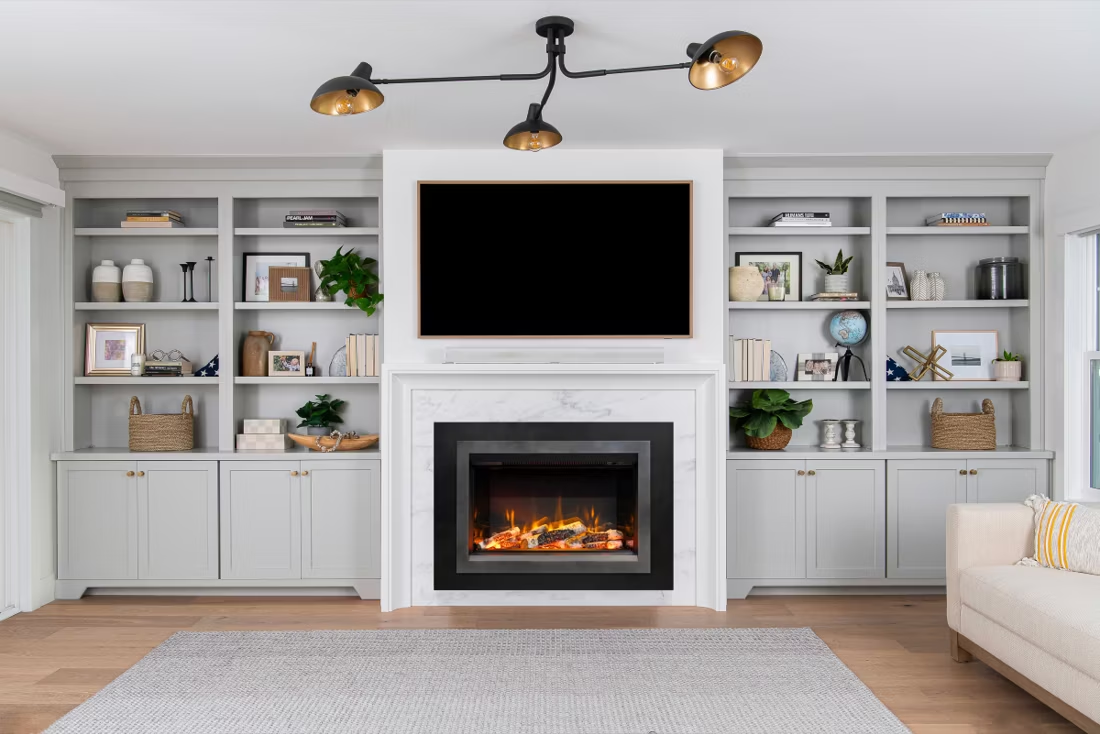
Yes—with an asterisk. Fireplaces are hot and TVs don't like heat. Either put a mantel between them to deflect rising warmth, or choose a fireplace with heat-management technology that creates a cool zone on the wall above—the wall stays around 125 degrees, barely warm, while the room still gets full heat. If you like clean lines and don't want a mantel, heat management is the answer.
Does an electric fireplace need a vent or chimney?
No—that's its superpower. An electric fireplace needs a wall and an outlet, period. No vent pipe, no gas line, no clearances to design around, which is why it works in bedrooms, offices, apartments, and walls where venting a gas or wood unit would be impractical or impossible. Installation is typically the simplest and least expensive of any fireplace type.
Does a fireplace add value to my home?
On average, a fireplace adds back to the home about the same amount you spent installing it. Add the monthly savings from heating the rooms you actually use instead of the whole house—often hundreds of dollars a year—and the value case is strong before you even count what a fire does for how your family uses the room.
How much should I budget for a fireplace?
For an average home—covering the fireplace, the vent pipe, and basic installation—a budget between $3,900 and $5,500 gives you a lot of options across wood, gas, and pellet. By the time you add finish work, gas line, and electrical, the average complete installation lands between $5,000 and $12,000 all-in. In a remodel or new build, a good rule is to put about 2.5% of the total project cost toward the fireplace.
Find your electric fireplace in Arthur County.
Tell us about your home and where you need the heat, and we'll match you with a trusted local dealer serving Arthur County—plus a free Project Guide & Parts List with the exact parts for your electric fireplace project and a dealer recommendation to match.
Find Your Fireplace →