
Find the right pellet stove for Wheatland County winters.
From Harlowton to Judith Gap, pellet heat gives Wheatland County homes a clean, low-maintenance way to fight back against Zone 6B cold. Get matched with a trusted local dealer who can size and install it right.
Every Project Starts From One of These Five Situations
Convenience that holds up against Montana wind.
Wheatland County sits on the open plains of central Montana, in climate zone 6B, where winter wind off the Big Belt and Crazy Mountains can drop wind chills well below the air temperature for days at a stretch—conditions closer to Bismarck, ND than milder parts of the Rockies. With a population of just over 1,200 spread across Harlowton, Judith Gap, and Two Dot, firewood culture is strong here thanks to lodgepole pine, ponderosa pine, Douglas fir, and aspen from nearby forest land—but a growing number of households are adding a pellet stove or insert as a second heat source that doesn't require splitting, hauling, or tending a fire around the clock.
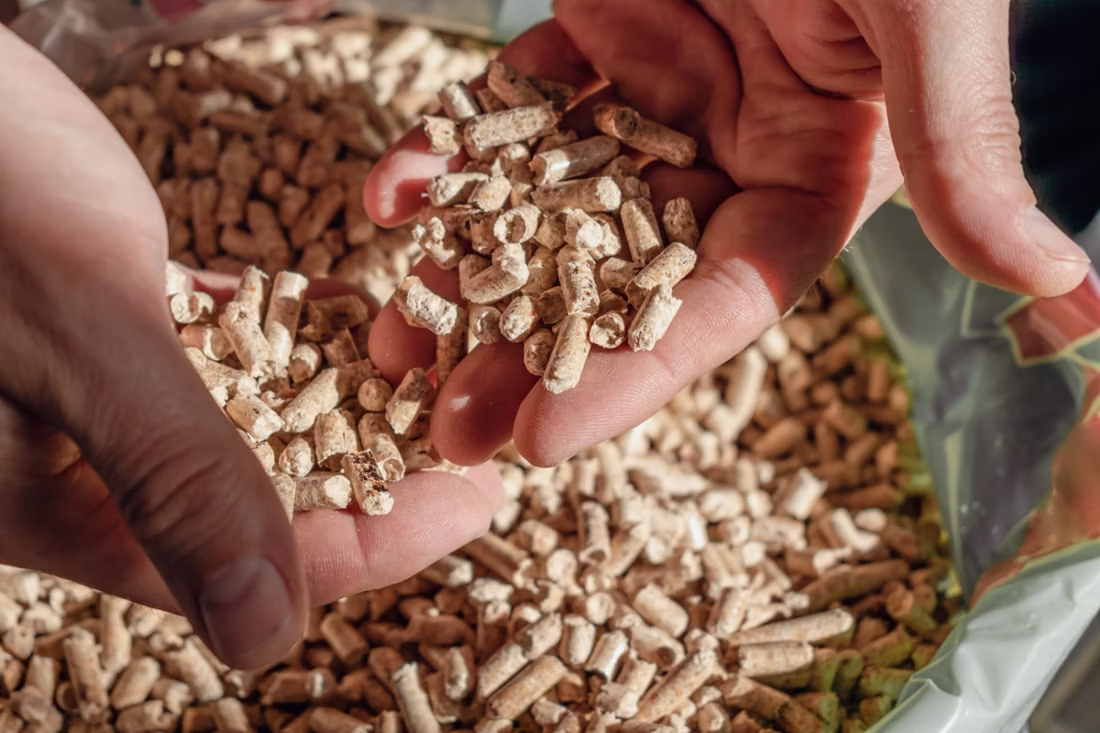
A pellet stove's thermostatically controlled auger feed means consistent heat without babysitting the burn—useful during the long stretches of sub-zero nights that define a Wheatland County winter. Bagged pellets from regional brands like Bear Mountain, Lignetics, and Forest Energy are sold through farm and ranch supply outlets across this part of Montana, so fuel access isn't the obstacle it can be in more remote counties. The tradeoff is that pellet stoves need electricity to run the auger and blower—worth planning around given how exposed rural Wheatland County power lines can be during a plains windstorm.
Three steps. No salesperson until you're ready.
Tell us about your project
Your zip code, your situation, and the fuel you're leaning toward—or let the answers point you to one.
See what's actually available
The brands dealers within 100 miles genuinely carry—real options, never a catalog mirage.
Get your dealer & Project Guide
A trusted local dealer, plus the free Project Guide & Parts List that names every component of the job.
Frequently Asked Questions
How much does a pellet stove installation cost in Wheatland County?
Most pellet stove and insert installations in this part of Montana run $2,500 to $5,500 depending on the unit, whether you're installing into an existing masonry fireplace or placing a freestanding stove new, and how far the venting run has to travel. Rural properties around Two Dot or outside Harlowton proper sometimes see a modest travel charge added by installers based out of larger Central Montana towns, since Wheatland County itself has a small population and limited local retail presence.
What size pellet stove do I need for a Wheatland County home?
Given the wind exposure and zone 6B heating load typical of this area, most homeowners size up from what a square-footage chart alone would suggest. A stove rated for 1,000-1,500 sq ft is a reasonable baseline for a small, well-insulated Harlowton home, but older farmhouses or homes with less insulation on the open plains around Judith Gap often do better with a medium-to-large unit even at similar square footage, simply because wind infiltration drives heat loss harder here than in a sheltered valley town. A local installer can size this properly during an in-home visit rather than guessing from a chart.
Where do I buy pellets near Wheatland County, and which brands are common?
Bear Mountain, Lignetics, and Forest Energy are the regional brands most commonly stocked at farm and ranch supply stores and hearth dealers serving Central Montana. Because Wheatland County itself is small, many residents pick up pellets while running other errands in Lewistown or along the Highway 12/191 corridor, or arrange seasonal bulk delivery ahead of winter. Buying a season's supply early—before the first hard freeze—is common practice here, since availability can tighten once cold weather sets in across the region.
Will a pellet stove still work if the power goes out?
No—this is the single most important thing to understand about pellet stoves for a county like Wheatland, where plains windstorms and winter ice can knock out rural power lines. The auger that feeds pellets into the burn pot and the blower that circulates heat both run on electricity, so a standard pellet stove goes cold in an outage unless you have a battery backup or generator wired in. Homeowners in exposed rural areas around Two Dot or Judith Gap who want a heat source that works with no power at all often pair a pellet stove for daily convenience with a wood stove as backup, since wood needs no electricity to function.
Do I need a permit to install a pellet stove in Wheatland County?
Pellet stove installations typically require a building permit and must meet current EPA emissions standards for the unit itself. Because Wheatland County is unincorporated for much of its area outside Harlowton, permitting can run through the county rather than a city office—your installer will confirm the correct jurisdiction and, in most cases, handle the paperwork as part of the install so you aren't left tracking it down yourself.
What's the difference between a pellet stove and a pellet insert?
A pellet stove is a freestanding unit that sits on its own hearth pad and vents through a wall or roof—it can go almost anywhere with the right clearances, which makes it a common choice for outbuildings, shops, or homes without an existing fireplace. A pellet insert is built to slide into an existing masonry fireplace opening, using a vent kit routed through the existing chimney. For the older homes found around Harlowton with a legacy wood fireplace, an insert is often the simpler retrofit; for newer construction or a garage or shop, a freestanding stove is usually the better fit.
How does pellet stove maintenance compare to a wood stove in this area?
Pellet stoves need a hopper refill every day or two during heavy winter use, a weekly ash-pan cleaning, and an annual professional service to check the auger motor, gaskets, and exhaust blower—considerably less labor than splitting and hauling cordwood from lodgepole pine or Douglas fir, the species most common on Wheatland County's surrounding timberland. There's no chimney sweep required in the traditional sense, though the vent pipe and exhaust components still need periodic inspection. For a household already managing ranch work or a long commute on Highway 191, that lower time commitment is often the deciding factor.
How does wildfire smoke season affect pellet stove use in Wheatland County?
Wildfire smoke is the primary air quality concern in this part of Montana during late summer and early fall, but it has little bearing on pellet stove operation itself since pellet appliances burn cleaner than open wood fires and aren't typically subject to the burn curtailments sometimes issued for wood stoves during heavy smoke events. Where it does matter is timing: many Wheatland County households use the smoky shoulder season to schedule their annual pellet stove service and stock up on Bear Mountain or Lignetics fuel, well ahead of the first real cold snap.
Pellet stove vs. wood stove—which makes more sense for a Wheatland County home?
Wood stoves need no electricity, which matters given how exposed rural power lines are to plains wind events here, and pair naturally with the lodgepole pine, ponderosa pine, and Douglas fir available regionally. Pellet stoves trade that off-grid resilience for daily convenience—no splitting, no hauling, and steadier thermostatic heat overnight. Plenty of households in and around Harlowton run both: a wood stove as the resilient backbone of their heating plan, and a pellet stove or insert for the ease of day-to-day use in the main living space.
How often does a pellet stove need cleaning?
A clean pellet stove is a happy pellet stove. Plan on cleaning the burn pot about once a week when you're burning regularly—ash and clinkers gum up the air holes just like a pellet barbecue. Most pellet stove problems trace back to skipped cleaning that nobody explained up front. Some designs make it easy with a trapdoor burn pot: pull a lever and the gunk drops into the ash pan.
What's the difference between an insert and a zero-clearance fireplace?
An insert is a fireplace that slides into a pre-existing wood-burning fireplace—if you don't have one, there's nothing to insert it into. A zero-clearance fireplace is built into a framed wall, which makes it the answer for remodels and new construction. Simple test: existing masonry fireplace means insert; blank or framed wall means zero-clearance.
Can a fireplace actually lower my heating bill?
Yes—by creating a comfort zone. A furnace heats every square foot of the house just to warm the one room you're in; a gas fireplace on low burns roughly a sixth of the gas a typical furnace does. Set the furnace around 55–60 degrees as a baseline, then heat the rooms your family actually uses. Families who heat this way commonly save $20–$60 a month.
What is an in-home preview and do I need one?
It's a visit where a hearth professional measures your space, confirms the model you picked actually works in your home, and walks the specs—framing, gas line, venting, finish work—before anything is ordered. Some details you just can't know until you see the house. Never make a down payment without one; it's the single most-skipped step that burns buyers.
Pellet Brands Stocked Around Wheatland County
Manufacturers will point you to the nearest stocking dealer.
Get matched with a pellet dealer serving Wheatland County.
Tell us about your home and we'll match you with a trusted local dealer and send you a free Project Guide & Parts List—the exact parts, including the vent kit, for your pellet stove or insert project.
Find Your Fireplace →