
Zone heat for the rooms your furnace can't quite reach through Wheatland County's long winters.
With just over 1,200 people spread across ranch country around Harlowton, most Wheatland County homes lean on propane, wood, or baseboard electric for primary heat. An electric fireplace adds clean, no-venting warmth and ambiance to a bedroom, addition, or living room—and we'll connect you with a real local dealer who can size it right.
Every Project Starts From One of These Five Situations
Clean, no-fuss heat for the rooms your primary system skips.
Wheatland County sits in central Montana around Harlowton, a small ranching community where winters run long, cold, and windy—Climate Zone 6B territory, not far in character from what you'd find in Bozeman or Helena, just with a fraction of the population to spread services across. Most homes here were built around wood or propane as the primary heat source, and lodgepole pine, ponderosa pine, douglas fir, and aspen are all common locally for anyone still splitting their own firewood. Electric fireplaces don't compete with that primary system—they fill a different job: warming up a bedroom, sunroom, or basement addition without running new gas line or cutting a hole in the roof for a chimney.
NorthWestern Energy serves most of the electric grid in this part of Montana, and rural single-feed lines mean outages during a hard blizzard aren't unheard of—which is the honest caveat with any electric appliance: it's dead heat the moment the power drops, unlike a wood stove. That's exactly why most Wheatland County households treat an electric fireplace as a supplemental or ambiance unit rather than a sole heat source. On the upside, electric units produce zero smoke, which matters during wildfire smoke season when air quality in the Judith Basin region can turn hazy for days—a real plus if you're smoke-sensitive but still want visible flame and heat in the room. With the county's small population, the nearest full hearth retailers tend to be in Lewistown or Billings, and that's who we'll match you with for sizing and installation.
Three steps. No salesperson until you're ready.
Tell us about your project
Your zip code, your situation, and the fuel you're leaning toward—or let the answers point you to one.
See what's actually available
The brands dealers within 100 miles genuinely carry—real options, never a catalog mirage.
Get your dealer & Project Guide
A trusted local dealer, plus the free Project Guide & Parts List that names every component of the job.
Frequently Asked Questions
How much does an electric fireplace cost to install in Wheatland County?
Plug-in electric fireplace inserts and freestanding units are the least expensive option, often installed for a few hundred dollars with no electrician needed if the room already has a standard outlet. Built-in electric fireplaces or mantel-integrated units that require a dedicated 120V or 240V circuit run higher once you add a licensed electrician's time—commonly in the $1,000 to $2,500 range for a full install in an older Wheatland County ranch house, depending on how far the panel is from the install location and whether wiring needs updating. Because dealers in this area are based out of Lewistown or Billings, expect a modest trip charge factored into any in-home quote for rural addresses.
Do I need an electrician or a permit to install an electric fireplace?
A simple plug-in unit that runs off an existing outlet typically requires neither. A built-in unit wired to a dedicated circuit does require a licensed electrician, and that electrical work is usually the piece that needs a permit through the county building office—the electrician generally handles that paperwork as part of the job. Because Wheatland County's housing stock includes a number of older ranch homes with dated panels, it's worth having your electrician confirm the panel has capacity before you commit to a larger built-in unit.
Will an electric fireplace keep my house warm if the power goes out?
No—and this is the honest answer worth knowing before you buy. Electric fireplaces stop producing heat the instant power drops, and rural single-feed power lines around Harlowton and the surrounding county mean outages during a hard winter storm do happen. If backup heat during an outage matters to your household, a wood stove or a propane unit with battery-backed ignition is the safer primary choice, with an electric fireplace layered in for everyday convenience and ambiance rather than storm-day heat.
What size electric fireplace do I need?
Most electric fireplaces are rated for supplemental heat in a single room—typically up to 400 to 1,000 square feet depending on the unit's wattage and your ceiling height and insulation. In a drafty older Wheatland County farmhouse, expect the actual heated footprint to run smaller than the box claims, since these units aren't drawing on combustion the way a wood stove does. For a single bedroom, den, or addition, a mid-size 1,500-watt insert or built-in unit is usually plenty; larger open rooms may need two zones rather than one oversized unit.
What's the difference between an electric insert, a built-in, and a freestanding unit?
An electric insert slides into an existing masonry or wood-burning fireplace opening, letting you keep the mantel and surround while swapping to flame-effect electric heat with no venting required. A built-in unit is framed into a wall—common in additions or new construction where there's no existing fireplace opening. A freestanding electric stove or fireplace sits on the floor and plugs into a standard outlet, which makes it the simplest retrofit for a bedroom or manufactured home, both common in this part of rural Montana. For homes with an existing but unused wood fireplace, an insert is usually the cleanest upgrade.
Can an electric fireplace replace my wood stove as primary heat?
For most Wheatland County homes, no—not as the sole heat source through a Montana winter. Electric units are excellent zone heaters for a specific room, but they don't match the sustained BTU output of a well-loaded wood stove burning lodgepole pine or douglas fir on a subzero night, and they go dark in an outage. Where electric works well as a near-primary option is in a smaller, well-insulated addition or a secondary residence used seasonally, where running new gas line or a chimney doesn't make sense for the square footage involved.
Are electric fireplaces good during wildfire smoke season?
Yes—this is one of the strongest arguments for electric in this region. When wildfire smoke settles over the Judith Basin in late summer, running a wood stove adds particulate load to air that's already unhealthy, and even a well-tuned unit means opening a firebox door indoors. An electric fireplace produces zero combustion byproducts, so it's a reasonable way to get visible flame and warmth in a room without adding to indoor air quality problems during a smoke event.
How does electric compare to propane for supplemental heat here?
Propane heaters and fireplaces produce more heat per unit and, with the right ignition system, can run during a power outage—a real advantage in a county where rural lines can go down in a blizzard. Electric fireplaces are simpler to install, have no fuel deliveries or tank to manage, and produce no combustion exhaust, but they're fully dependent on grid power from NorthWestern Energy staying up. In Wheatland County, many households end up with propane as backup or primary and electric in a secondary room where installing gas line isn't worth the cost for one space.
Where can I actually buy and install an electric fireplace near Wheatland County?
With Harlowton's population under 1,000 and the whole county around 1,200 people, there isn't a hearth retailer based locally—most homeowners end up sourcing through a dealer in Lewistown or Billings, both within a reasonable drive. That's exactly the gap we help close: instead of guessing which online unit will actually fit your room and wiring, we match you with a trusted dealer who covers this part of central Montana and can confirm sizing, circuit requirements, and installation before you buy anything.
Can I put a TV above my fireplace?
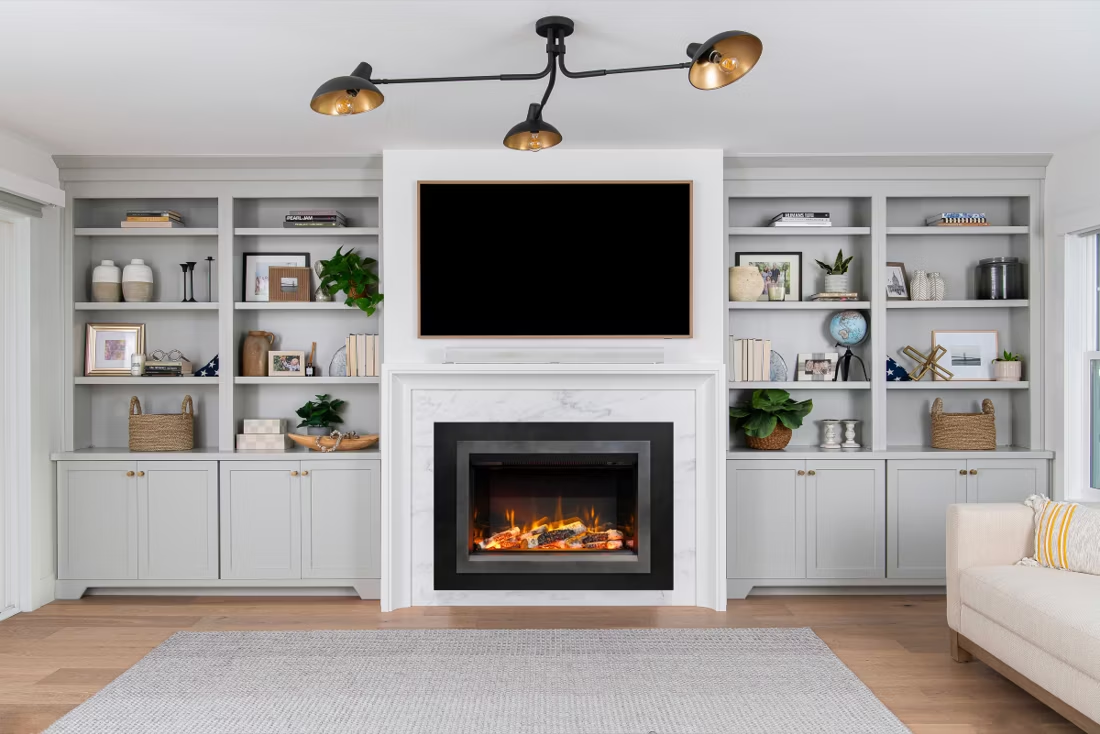
Yes—with an asterisk. Fireplaces are hot and TVs don't like heat. Either put a mantel between them to deflect rising warmth, or choose a fireplace with heat-management technology that creates a cool zone on the wall above—the wall stays around 125 degrees, barely warm, while the room still gets full heat. If you like clean lines and don't want a mantel, heat management is the answer.
Does an electric fireplace need a vent or chimney?
No—that's its superpower. An electric fireplace needs a wall and an outlet, period. No vent pipe, no gas line, no clearances to design around, which is why it works in bedrooms, offices, apartments, and walls where venting a gas or wood unit would be impractical or impossible. Installation is typically the simplest and least expensive of any fireplace type.
Can I install a fireplace myself?
If you're putting a fire in your house on purpose, it's best to work with an expert. Unless you're genuinely experienced in framing, gas line, vent pipe, and the national code on clearances to combustibles, have a professional do it—and ideally the same company that sells you the fireplace, so warranty, service, and liability all live under one roof.
How much should I budget for a fireplace?
For an average home—covering the fireplace, the vent pipe, and basic installation—a budget between $3,900 and $5,500 gives you a lot of options across wood, gas, and pellet. By the time you add finish work, gas line, and electrical, the average complete installation lands between $5,000 and $12,000 all-in. In a remodel or new build, a good rule is to put about 2.5% of the total project cost toward the fireplace.
Find your electric fireplace in Wheatland County.
Tell us about your room, your panel, and how you plan to use it, and we'll match you with a trusted local dealer serving Wheatland County—plus a free Project Guide & Parts List with the exact unit and wiring plan for your space.》
Find Your Fireplace →