
Heat That Holds Through a Montana Winter.
Wood, gas, pellet, and electric fireplace resources for Harlowton, Judith Gap, Twodot, and every ranch and rural address in between. Find the right unit for a Climate Zone 6B winter and get connected with a hearth retailer that actually serves this part of central Montana.
Every Project Starts From One of These Five Situations
Cold, rural, and wood-smart: heating in Wheatland County, Montana.
Wheatland County sits in Climate Zone 6B, with winters that run long and hard—closer in feel to Bismarck, North Dakota than to the milder valleys west of the Continental Divide. With roughly 1,224 residents spread across open range and a handful of small towns, most homes here are on their own when it comes to backup heat during outages, and wood heat has stayed practical for a reason: lodgepole pine, ponderosa pine, Douglas fir, and aspen are all cut locally, and a well-run stove doesn't care if the power line to Harlowton goes down in a February storm. Natural gas service is limited outside the Harlowton core, so most gas-fired installations in the county run on propane rather than piped natural gas.
This hub covers hearth retailers, service technicians, and fuel suppliers serving Wheatland County's towns and rural routes—from the county seat in Harlowton out to Judith Gap and Twodot. Given the county's small population, dealer options are limited locally; many homeowners work with retailers based in Billings, Lewistown, or Great Falls who travel in for installs. Pick your fuel below to see local dealers, typical installed costs, and unit recommendations for a 6B winter.
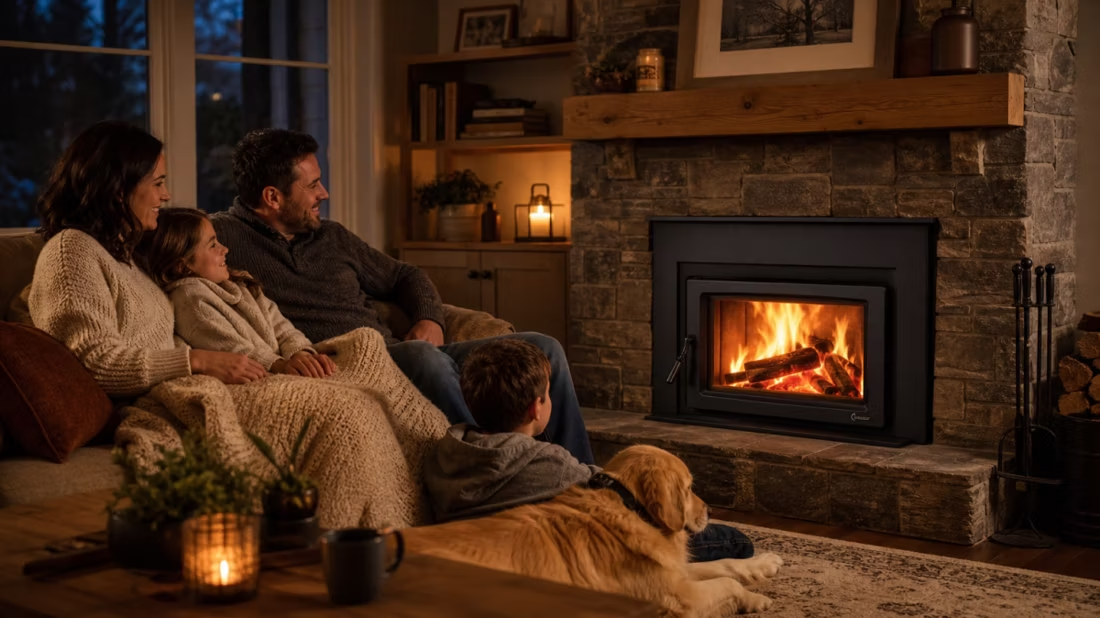
Four fuels. One honest answer for Wheatland County.
Three steps. No salesperson until you're ready.
Tell us about your project
Your zip code, your situation, and the fuel you're leaning toward—or let the answers point you to one.
See what's actually available
The brands dealers within 100 miles genuinely carry—real options, never a catalog mirage.
Get your dealer & Project Guide
A trusted local dealer, plus the free Project Guide & Parts List that names every component of the job.
Frequently Asked Questions
Which fuel makes the most sense for a home in Wheatland County?
It depends on how the home is built and whether you need backup heat during a power outage. Wood remains the most practical primary or backup fuel here—lodgepole pine, ponderosa, Douglas fir, and aspen are all cut and split locally, and a cast-iron or catalytic stove keeps running when the lines go down in a winter storm, which matters more in a county this rural. Gas fireplaces and inserts are the convenience option, but since piped natural gas is limited outside Harlowton, most gas installs here run on propane tank service instead. Pellet stoves are a solid middle ground if you don't want to split and stack wood yourself, and regional brands like Bear Mountain, Lignetics, and Forest Energy are reasonably available through central Montana suppliers. Electric fireplaces work well for supplemental warmth in a bedroom or den but shouldn't be counted on as a sole heat source through a Zone 6B winter. Many Wheatland County households end up with wood or pellet as the workhorse and propane or electric for secondary rooms.
Do I need a permit to install a fireplace or stove in Wheatland County?
Generally yes for wood, gas, and pellet appliances that involve new venting or gas line work. In unincorporated Wheatland County, building permits are handled through the county offices in Harlowton; if you're inside Harlowton city limits, check whether the town has its own permitting process before you assume the county handles it. Propane connections typically require sign-off from a licensed gas fitter in addition to the building permit. Electric fireplaces usually skip the permit process unless you're hardwiring a built-in unit into a new circuit. Because this is a small county, most local retailers and installers are used to walking homeowners through the paperwork themselves—worth asking about as part of any installation quote.
Are there wood-burning restrictions in Wheatland County?
Wheatland County's main air quality concern is wildfire smoke, not winter inversion—this is central Montana range and forest country, and summer fire season can bring smoke advisories that have nothing to do with home heating. There's no equivalent to the mandatory curtailment programs you see in inversion-prone basins elsewhere. That said, a new wood stove installation should still meet current EPA emissions standards, and if you're near national forest or state land, check with local land management offices before cutting your own firewood—permit rules and seasonal closures during high fire-danger periods can affect where and when you're allowed to gather wood.
Can I find one dealer who carries all four fuel types near Wheatland County?
It's less likely here than in a larger market. With a county population around 1,224, Wheatland County doesn't support a dedicated multi-fuel showroom of its own—most homeowners end up working with a retailer based in Billings, Lewistown, or Great Falls that carries wood, gas/propane, pellet, and electric units and is willing to travel for installation. If you're deciding between fuels, it's worth calling ahead to ask which units a given retailer keeps in stock versus special-orders, since travel time affects how quickly parts and service can get to you.
How does installation and service work when you're this far from a dealer?
Plan on some travel time built into the process. Retailers and service technicians covering Wheatland County are typically based an hour or more away, so scheduling ahead—especially for pre-season chimney sweeps or gas inspections in late summer and early fall—is more reliable than trying to book during the first cold snap. Expect a trip charge for service calls out to Judith Gap, Twodot, or ranch addresses well off the highway. If you're relying on wood or pellet heat as backup during power outages, it's worth keeping a spare part or two (igniter, auger belt) on hand rather than waiting on a tech to drive out mid-storm.
What does fireplace installation typically cost across fuel types in Wheatland County?
Costs run similar to other rural Montana counties, with travel sometimes added to the labor line. Wood stove or insert: roughly $4,000–$8,500 installed, more if a full masonry chimney is involved. Propane fireplace, insert, or stove: roughly $4,500–$10,000 depending on tank setup and venting, since piped natural gas isn't an option for most addresses. Pellet stove or insert: roughly $4,000–$7,000 installed. Electric fireplace: $200–$3,000 for the unit itself, plus $400–$1,200 in labor for anything beyond a simple plug-in. Because dealers often travel in from Billings, Lewistown, or Great Falls, ask upfront whether a trip fee is built into the estimate.
Can I install a fireplace myself?
If you're putting a fire in your house on purpose, it's best to work with an expert. Unless you're genuinely experienced in framing, gas line, vent pipe, and the national code on clearances to combustibles, have a professional do it—and ideally the same company that sells you the fireplace, so warranty, service, and liability all live under one roof.
Does a fireplace add value to my home?
On average, a fireplace adds back to the home about the same amount you spent installing it. Add the monthly savings from heating the rooms you actually use instead of the whole house—often hundreds of dollars a year—and the value case is strong before you even count what a fire does for how your family uses the room.
Can a fireplace actually lower my heating bill?
Yes—by creating a comfort zone. A furnace heats every square foot of the house just to warm the one room you're in; a gas fireplace on low burns roughly a sixth of the gas a typical furnace does. Set the furnace around 55–60 degrees as a baseline, then heat the rooms your family actually uses. Families who heat this way commonly save $20–$60 a month.
What is an in-home preview and do I need one?
It's a visit where a hearth professional measures your space, confirms the model you picked actually works in your home, and walks the specs—framing, gas line, venting, finish work—before anything is ordered. Some details you just can't know until you see the house. Never make a down payment without one; it's the single most-skipped step that burns buyers.
Stove and Fireplace Dealers in Wheatland County
Listings include WhyFire partner dealers, dealers we have verified as authorized for the brands we recommend, and established local businesses that carry hearth products. Every listing shows which one it is. The ones marked Preferred run on WhyFire's software, so they can show you real pricing and book your appointment right here. No manufacturer pays for placement. How we verify dealers →
Universal Heating,cooling &r
Central Montana Propane LLC
Warmstone Fireplaces & Designs
Finest Flames Stove & Hearth
White Heating & Air Conditioning
Stove Doctor
Bozeman Fireplaces
Get your Wheatland County Project Guide & Parts List.
Pick your fuel below and we'll match you with a trusted local dealer, plus a free Project Guide & Parts List covering the exact venting and parts your home needs before the next cold front rolls in.
Find Your Fireplace →