
Find dependable pellet heat for Powell County's long winters.
Powell County runs cold—Deer Lodge and the surrounding valley log winter lows near 11°F and more than 9,000 heating degree days a year, on par with International Falls, Minnesota. A pellet stove or insert delivers clean, automated heat without the daily wood-splitting, and we'll connect you with a local dealer who can size and install it right.
Every Project Starts From One of These Five Situations
Consistent, automated warmth for a valley that gets very cold.
Powell County sits in a high mountain valley in southwestern Montana, with Deer Lodge anchoring a population of just 3,668 spread across ranch land, timber, and public forest. At climate zone 6B, the county racks up more than 9,000 heating degree days a year and average winter lows around 11°F—cold enough that a lot of local homes run more than one heat source. Wood has always been the backbone of that heat here, with lodgepole pine, ponderosa pine, Douglas fir, and aspen cut under permit from the Helena-Lewis and Clark, Lolo, and Bitterroot National Forests during the May-to-October cutting season. But pellet stoves have earned a real foothold as the low-maintenance option—especially for households who want steady, thermostatically controlled heat without splitting and stacking cords every fall.
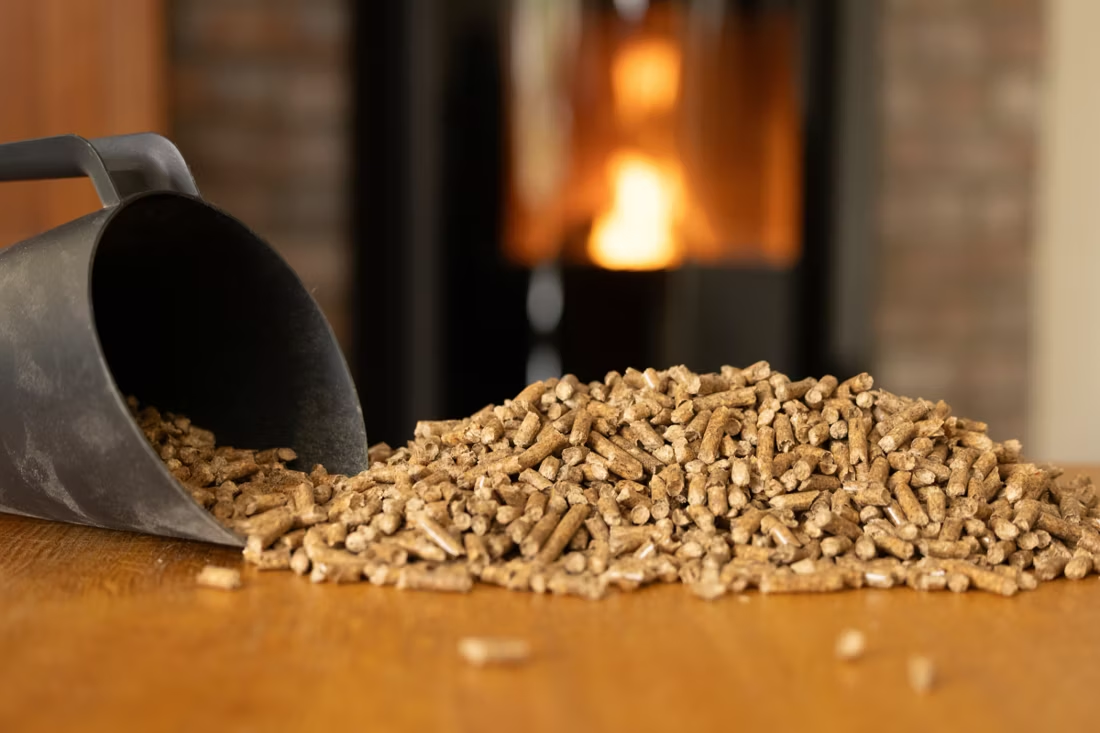
The valley is also prone to winter temperature inversions that trap smoke close to the ground, along with periodic wildfire smoke in late summer—both of which make pellet appliances an easier sell than an open wood stove on the days air quality matters. Regional pellet brands like Bear Mountain, Lignetics, and Forest Energy are widely stocked at hearth and farm-supply retailers across western Montana, and a hopper-fed pellet stove or insert burns cleaner and more consistently than cordwood, with far less ash to manage. For a lot of Powell County homes, that combination—clean burn during inversion days, automated feed, and no daily wood-hauling—is exactly why pellet has moved from novelty to mainstream option.
Three steps. No salesperson until you're ready.
Tell us about your project
Your zip code, your situation, and the fuel you're leaning toward—or let the answers point you to one.
See what's actually available
The brands dealers within 100 miles genuinely carry—real options, never a catalog mirage.
Get your dealer & Project Guide
A trusted local dealer, plus the free Project Guide & Parts List that names every component of the job.
Frequently Asked Questions
How much does a pellet stove installation cost in Powell County?
Across rural Montana, a pellet stove or insert installation typically runs $3,000 to $6,000, depending on the unit, whether you're venting through an existing masonry chimney or running new sidewall venting, and whether you need electrical work for the hopper's auger and blower. Homes converting an old wood fireplace to a pellet insert usually land toward the lower end since the existing chimney or hearth does some of the work. Because Powell County is sparsely populated, expect installers based out of Deer Lodge, Anaconda, or Missoula to build a trip charge into quotes for more remote rural addresses—worth asking about up front.
What size pellet stove do I need for my home?
With winter lows averaging 11°F and heating degree days above 9,000, Powell County homes need more heating capacity per square foot than milder parts of the state. As a rough guide: a small pellet stove (up to around 1,000 sq ft) suits a cabin or single zone, a medium unit (1,000-2,000 sq ft) covers most ranch-style homes in the Deer Lodge valley, and a large stove (2,000+ sq ft) can carry a well-insulated whole house as primary heat. Homes at higher elevation in the surrounding foothills, or older farmhouses with poor insulation, generally need to size up. A local dealer can run a proper heat-loss calculation rather than going off square footage alone.
Where can I find pellet stove installers near me?
Powell County's population is under 4,000, so most homeowners work with installers based in Deer Lodge, Anaconda, or Missoula who cover the county as part of a broader western Montana service area. Look for NFI-certified technicians—a pellet-specific certification exists separately from wood-stove certification, since venting, electrical, and hopper setup differ from a standard wood stove install. Given the driving distances involved, ask about trip charges for addresses outside Deer Lodge proper, and confirm the installer stocks parts locally rather than special-ordering from out of state when something needs service.
What's the difference between a pellet stove and a pellet insert?
A pellet stove is a freestanding appliance that sits on its own hearth pad and vents through a wall or existing chimney—it can go almost anywhere with the right clearances. A pellet insert is built to slide into an existing masonry fireplace opening, turning an old open hearth into a sealed, thermostatically controlled heat source. For Powell County's older ranch houses and Deer Lodge-area homes with an existing wood fireplace, an insert is often the simpler retrofit since it reuses the chimney. Homes without an existing fireplace, or newer construction, usually go with a freestanding stove instead.
Do I need a permit to install a pellet stove in Powell County?
Yes—a new pellet stove or insert installation generally requires a building permit, and most installers coordinate that directly with Powell County's building office as part of the job. Because pellet appliances burn more completely and produce less particulate than an open wood stove, they're also generally treated more leniently than wood-burning appliances during the kind of winter inversion advisories that sometimes hit the valley—one more reason they've become a popular add for households that already burn wood but want a cleaner backup option.
What's the best pellet stove for Powell County's climate?
With average winter lows near 11°F and a long heating season, look for a pellet stove with a larger hopper capacity—40 to 60 pounds—so it can run overnight or through a full workday without a refill. Higher-BTU units in the 40,000-50,000 range handle the county's cold more comfortably as primary or near-primary heat, while smaller units work fine as a supplemental zone heater alongside a wood stove or existing furnace. Regional brands like Bear Mountain and Lignetics are widely available for fuel, and a local dealer can match hopper size and BTU output to your specific home and how you plan to use it—daily primary heat versus occasional backup.
How often should my pellet stove be serviced?
Plan on a full professional cleaning and inspection once a year, ideally before heating season starts in the fall. Pellet stoves also need more frequent homeowner-level maintenance than wood stoves—emptying the ash pan and cleaning the burn pot every few days of regular use, and vacuuming the hopper and exhaust vent periodically through the season. Heavy users running the stove as primary heat through Powell County's long winter should expect to do this maintenance more often than someone using it for supplemental warmth on cold evenings.
Where can I buy pellet fuel in Powell County?
Regional brands including Bear Mountain, Lignetics, and Forest Energy are sold through hearth retailers and farm-and-ranch supply stores across western Montana, with some outlets in the Deer Lodge and Anaconda area carrying stock seasonally. Because the county is rural, it's worth buying by the ton and stocking up before heating season rather than making repeat trips—many households plan pellet purchases around the same late-summer window they'd use to secure firewood cutting permits (May through October) from the Helena-Lewis and Clark, Lolo, and Bitterroot National Forests, since wildfire smoke season can complicate both wood gathering and driving conditions later in the year.
Pellet stove vs. wood stove—which is right for my home?
Wood stoves work without electricity, which matters in a county where winter storms can knock out power for stretches at a time—and Powell County has ready access to cheap, permitted firewood (lodgepole pine, ponderosa pine, Douglas fir, aspen) from the surrounding national forests. Pellet stoves need power to run the auger and blower, so they're not a stand-alone option during an extended outage unless paired with a backup power source—but they burn cleaner, need less daily tending, and are the better choice on inversion days when wood smoke builds up in the valley. Many Powell County households end up with both: wood for storm resilience and self-sufficiency, pellet for daily convenience and cleaner air on the days it matters.
Why is a fireplace insert so efficient?
An insert does two things: it seals the chimney completely, so you stop losing air you already paid to heat, and it radiates warmth into the room through the firebox and glass. Most add a heat-exchange fan that pulls cool room air underneath, wraps it around the hot firebox, and pushes it back out warm. Your home is more efficient before you've even lit the first fire.
How often does a pellet stove need cleaning?
A clean pellet stove is a happy pellet stove. Plan on cleaning the burn pot about once a week when you're burning regularly—ash and clinkers gum up the air holes just like a pellet barbecue. Most pellet stove problems trace back to skipped cleaning that nobody explained up front. Some designs make it easy with a trapdoor burn pot: pull a lever and the gunk drops into the ash pan.
Does a fireplace add value to my home?
On average, a fireplace adds back to the home about the same amount you spent installing it. Add the monthly savings from heating the rooms you actually use instead of the whole house—often hundreds of dollars a year—and the value case is strong before you even count what a fire does for how your family uses the room.
What is an in-home preview and do I need one?
It's a visit where a hearth professional measures your space, confirms the model you picked actually works in your home, and walks the specs—framing, gas line, venting, finish work—before anything is ordered. Some details you just can't know until you see the house. Never make a down payment without one; it's the single most-skipped step that burns buyers.
Pellet Brands Stocked Around Powell County
Manufacturers will point you to the nearest stocking dealer.
Find your pellet stove in Powell County.
Tell us about your home and heating goals, and we'll match you with a trusted local dealer and send over a free Project Guide & Parts List—a complete plan for your pellet project in Powell County, including the right vent kit and parts list.
Find Your Fireplace →