
Heating a high mountain valley, one hearth at a time.
Wood, gas, pellet, and electric fireplace resources for Deer Lodge and every rural community in Powell County—where 9,032 heating degree days make a working hearth a necessity, not a luxury.
Every Project Starts From One of These Five Situations
Deep-cold heating in the Deer Lodge Valley.
Powell County sits in a high intermountain valley between the Flint Creek and Garnet ranges, with Deer Lodge as the county seat at roughly 4,700 feet. At 9,032 heating degree days, this county runs colder over the season than Bozeman and closer to what you'd expect in Fargo, ND—winter lows averaging 11°F, with hard cold snaps that push well below zero. Climate zone 6B means homes here need heating equipment rated for sustained deep cold, not just occasional chill. Lodgepole pine, ponderosa pine, Douglas fir, and aspen are the wood species most local households burn, much of it self-cut under permits from the Helena-Lewis and Clark, Lolo, and Bitterroot National Forests.
What you'll find on this hub: hearth retailers, service technicians, and fuel suppliers serving every community in Powell County—from Deer Lodge along Highway 12 and I-90 out to Elliston, Avon, Ovando, and the ranch country in between. Pick your fuel below to see local dealers, realistic installation costs, and recommended units for this climate. Whether you're heating a Deer Lodge Valley ranch house or a cabin up toward Rock Creek, this page is the starting point.
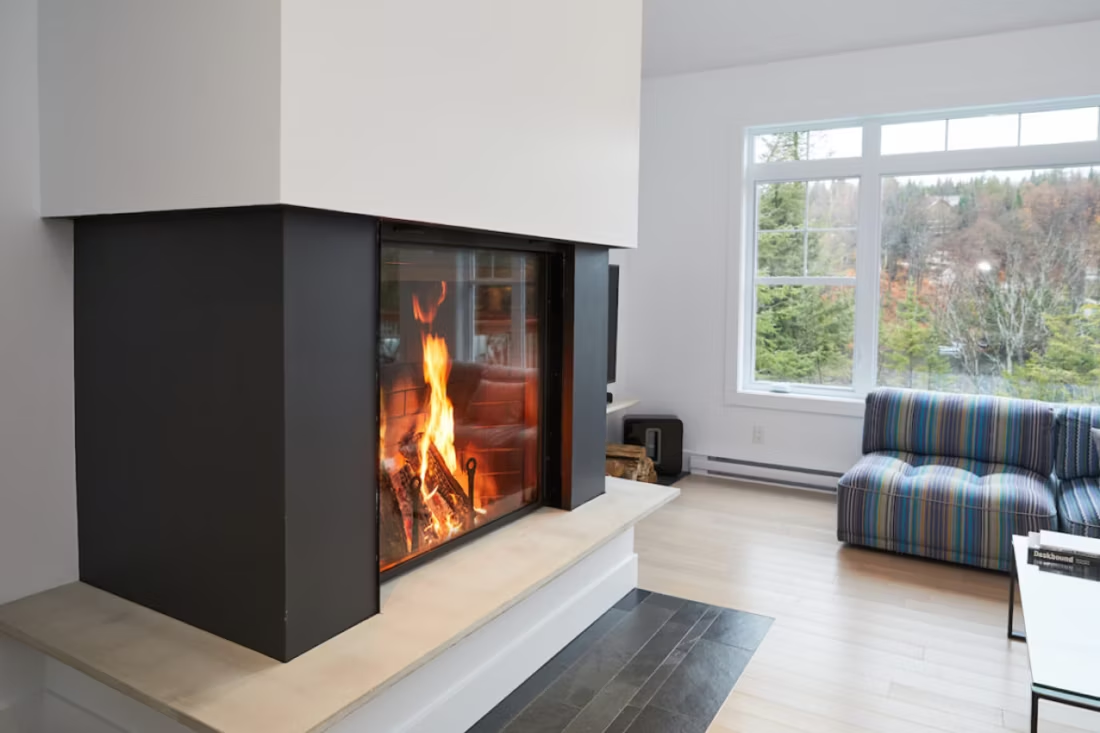
Four fuels. One honest answer for Powell County.
Three steps. No salesperson until you're ready.
Tell us about your project
Your zip code, your situation, and the fuel you're leaning toward—or let the answers point you to one.
See what's actually available
The brands dealers within 100 miles genuinely carry—real options, never a catalog mirage.
Get your dealer & Project Guide
A trusted local dealer, plus the free Project Guide & Parts List that names every component of the job.
Frequently Asked Questions
Which fuel works best for a Powell County winter?
At 9,032 heating degree days and winter lows averaging 11°F, the equipment has to be built for sustained cold, not mild-winter comfort. Wood remains the backbone fuel for most rural Powell County households—lodgepole pine and Douglas fir are abundant, Forest Service permits from the Helena-Lewis and Clark and Lolo National Forests keep fuel costs low, and a catalytic stove can hold an overnight burn through a hard cold snap without power. Gas, mostly propane out here since natural gas service is limited outside Deer Lodge, is the convenience option—no wood handling, instant heat, good for homes where daily wood-loading isn't practical. Pellet splits the difference, offering wood-like heat with less labor, and Bear Mountain and Lignetics pellets are both regionally available. Electric works as supplemental heat for a bedroom or den but isn't a realistic primary heat source given how long and cold the season runs here. Most homes in this county end up pairing a wood or pellet primary heater with gas or electric backup in secondary rooms.
Do I need a permit to install a fireplace or stove in Powell County?
Yes, in most cases. New wood stoves, wood inserts, gas fireplaces, gas inserts, gas stoves, and pellet stoves all typically require a building permit, and wood-burning appliances need to meet current EPA emissions standards to be installed new. Gas installations also need a separate gas line permit and a licensed gas-fitter for the connection work. Electric fireplaces usually don't require a permit unless the installation involves hardwiring a built-in unit into a new circuit. Permits in Deer Lodge and unincorporated Powell County both route through the county building department. Most local hearth retailers handle this paperwork as part of the installation, so it's rarely something a homeowner has to manage solo.
Are there air quality concerns with wood burning in Powell County?
Yes, at certain times of year. The Deer Lodge Valley is a bowl-shaped basin that can trap cold air and hold winter inversions, which concentrate wood smoke near the surface on the coldest, calmest days. Wildfire smoke from summer fire season is a separate seasonal concern that can affect air quality regardless of what's burning in local stoves. Neither issue currently triggers mandatory burning restrictions in the county the way some Montana valleys see, but choosing an EPA-certified stove and burning well-seasoned lodgepole pine or Douglas fir (rather than green wood) meaningfully cuts smoke output and helps on inversion-prone days.
Can one local retailer handle all four fuel types in a county this rural?
Not always, and that's worth knowing before you start shopping. Powell County's small population means there are fewer in-county dealers than in a place like Missoula County next door, so some homeowners end up working with a multi-fuel retailer based in Deer Lodge for straightforward jobs, and driving to Missoula, Helena, or Butte for a wider selection or a more complex install. If a fuel isn't well represented locally, it usually means fewer dealers stock it here—not that it doesn't work in this climate. The county + fuel pages on this hub note which dealers, local or regional, actually carry and service each fuel type.
How does service work for homes outside Deer Lodge?
Most technicians serving Powell County are based in Deer Lodge, Missoula, Helena, or Butte and travel out to Elliston, Avon, Ovando, Gold Creek, and the ranch properties in between. Expect a modest travel fee for anything outside Deer Lodge proper, and expect fall scheduling (September–October) to be far easier than a mid-January emergency call, since demand for chimney sweeps and gas inspections spikes right before the coldest stretch of the season. For remote properties, it's worth scheduling annual service early, keeping IPI battery backups on hand for gas units, and having a wood or pellet backup source ready in case of an extended power outage during a cold snap.
What's the typical cost range for installation across fuel types in Powell County?
Costs run comparable to elsewhere in western Montana, with rural travel occasionally adding to labor. Wood stove or insert installation: roughly $4,500–$9,500 for a typical job, more for new chimney construction in new-build homes. Gas fireplace, insert, or stove: roughly $4,500–$11,000, with propane line work and venting driving the range; conversions where gas service already exists run toward the lower end. Pellet stove or insert: roughly $4,500–$7,500 for most installs. Electric fireplace: $200–$3,000 for the unit itself, plus $400–$1,200 in labor for anything beyond a plug-and-play wall unit. See the county + fuel pages above for cost detail tied to specific local and regional dealers.
What is an in-home preview and do I need one?
It's a visit where a hearth professional measures your space, confirms the model you picked actually works in your home, and walks the specs—framing, gas line, venting, finish work—before anything is ordered. Some details you just can't know until you see the house. Never make a down payment without one; it's the single most-skipped step that burns buyers.
Can I install a fireplace myself?
If you're putting a fire in your house on purpose, it's best to work with an expert. Unless you're genuinely experienced in framing, gas line, vent pipe, and the national code on clearances to combustibles, have a professional do it—and ideally the same company that sells you the fireplace, so warranty, service, and liability all live under one roof.
Does a fireplace add value to my home?
On average, a fireplace adds back to the home about the same amount you spent installing it. Add the monthly savings from heating the rooms you actually use instead of the whole house—often hundreds of dollars a year—and the value case is strong before you even count what a fire does for how your family uses the room.
What are the biggest mistakes people make buying a fireplace?
Five come up constantly: budgeting for the unit but not the full job (vent, gas line, electrical, finish work); drowning in options instead of starting from style and fuel; buying without an in-home preview; handing installation to a handyman instead of a pro; and giving up out of sheer indecision. Every one is avoidable with a clear plan—step one, step two, step three.
Stove and Fireplace Dealers in Powell County
Listings include WhyFire partner dealers, dealers we have verified as authorized for the brands we recommend, and established local businesses that carry hearth products. Every listing shows which one it is. The ones marked Preferred run on WhyFire's software, so they can show you real pricing and book your appointment right here. No manufacturer pays for placement. How we verify dealers →
S.j. Perry Co
Ridgeline Heating
The Stove Man
Find your fireplace project in Powell County.
Pick your fuel below and get matched with a trusted local dealer—plus a free Project Guide & Parts List with the exact parts, vent kit, and recommended installer for your home.
Find Your Fireplace →