
Add instant warmth to any room in Powell County—no chimney required.
With winters this long in the Deer Lodge valley, a lot of homes could use a clean, no-fuss heat source for one room. Find the right electric fireplace or insert and connect with a trusted local dealer.
Every Project Starts From One of These Five Situations
Zone heat that earns its keep at 9,032 heating degree days.
Powell County sits in the Deer Lodge valley at roughly 4,700 feet, flanked by the Flint Creek Range and the Garnet Range, with a winter that runs long and cold—an average low of 11°F and 9,032 heating degree days a year, a load in the same range as International Falls, Minnesota. Most homes here rely on wood or propane for primary heat, using lodgepole pine, ponderosa pine, Douglas fir, and aspen cut under Forest Service permits from the Helena-Lewis and Clark, Lolo, or Bitterroot National Forests. Electric fireplaces play a different role—they show up in bedrooms, dens, bonus rooms, and cabins around Georgetown Lake where running a flue or hauling firewood doesn't make sense for the space.
It's worth being honest about what electric heat can do here: at this HDD load, running electric resistance heat as your sole heat source gets expensive fast, and it isn't how most Powell County homeowners use it. Instead, electric fireplaces work as zone heat for a single room, backup warmth during shoulder-season weeks, or ambiance with a modest heat boost—all with none of the chimney maintenance, creosote, or winter-inversion wood smoke that comes with a wood stove. NorthWestern Energy serves Deer Lodge and most of the valley, with Vigilante Electric Cooperative covering some of the more rural stretches of the county, so most homes have straightforward access to the power a unit needs.
Three steps. No salesperson until you're ready.
Tell us about your project
Your zip code, your situation, and the fuel you're leaning toward—or let the answers point you to one.
See what's actually available
The brands dealers within 100 miles genuinely carry—real options, never a catalog mirage.
Get your dealer & Project Guide
A trusted local dealer, plus the free Project Guide & Parts List that names every component of the job.
Frequently Asked Questions
How much does it cost to install an electric fireplace in Powell County?
Plug-in freestanding or mantel units cost very little to install—often just $150 to $600 including delivery—since they run on a standard 120V outlet and need no permit or electrician. Built-in wall units or inserts recessed into a wall or existing fireplace opening run higher, typically $800 to $2,500, because most models over 1,500 watts call for a dedicated 20-amp circuit, which means bringing in a licensed electrician. In Deer Lodge and the smaller communities around Powell County—Elliston, Avon, Garrison—electricians sometimes add a modest trip charge for rural addresses, so ask about that upfront.
Can an electric fireplace actually heat my house in Powell County's climate?
Not as primary heat, and it's worth being straightforward about that. Powell County racks up roughly 9,032 heating degree days a year—a cold-climate load in the same range as International Falls, Minnesota—and running electric resistance heat as your only source at that kind of demand gets expensive fast. Most electric fireplaces here are used the way they're actually designed to be used: as zone heat for a single room, or as ambiance with a modest heat boost on shoulder-season evenings. Whole-home heating loads at 11°F average winter lows are still handled by wood, propane, or a central system.
What type of electric fireplace fits my home best?
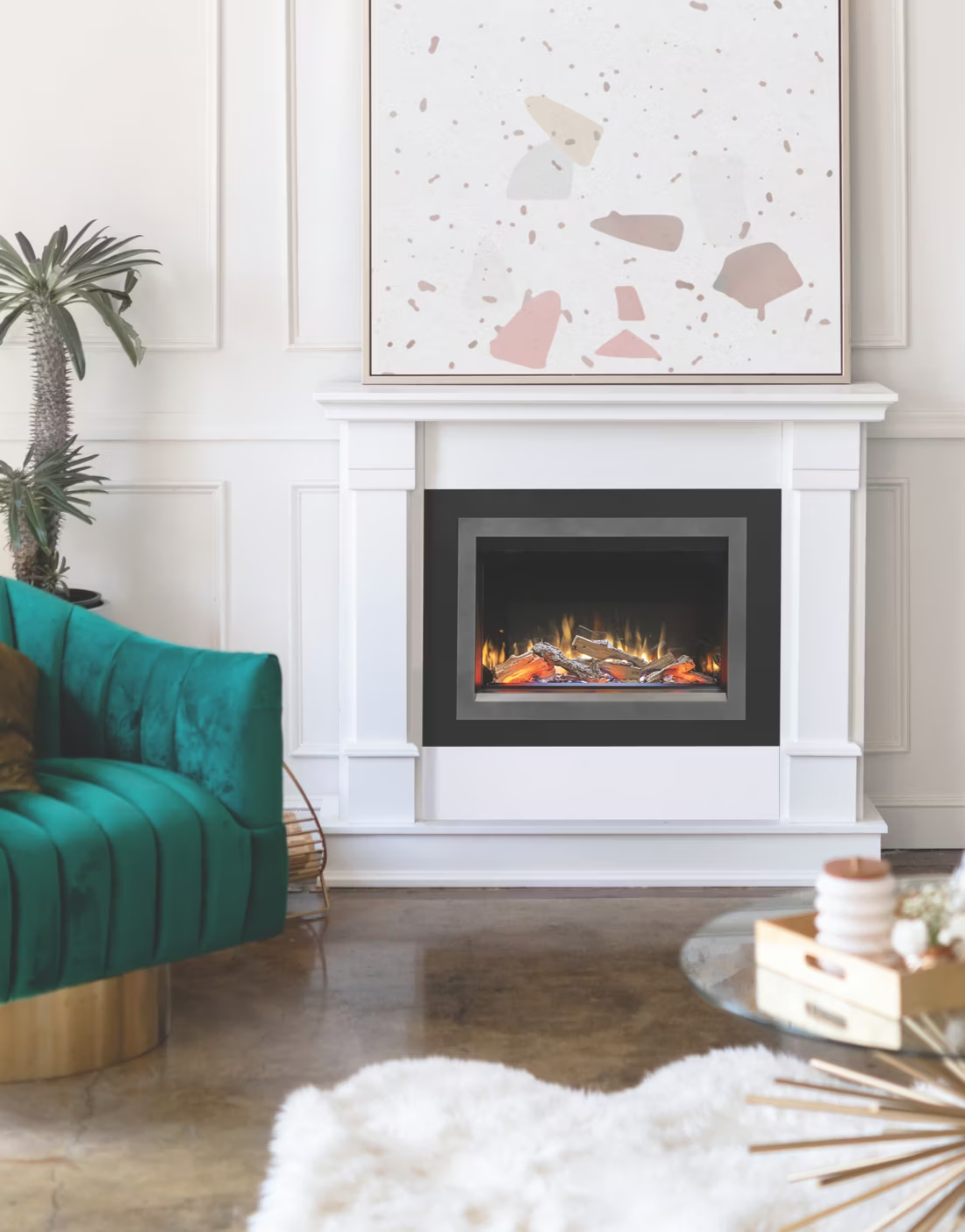
For an existing masonry fireplace you don't use anymore, an electric insert slides into the firebox opening and gives you flame-effect ambiance without any venting work. For a room without a fireplace, a wall-mount or built-in unit recessed into framing looks the most like a real fireplace but needs that dedicated circuit. Freestanding stove-style units are the simplest option—no electrician, no wall modification—and work well in cabins around Georgetown Lake or seasonal properties near Avon where you don't want to commit to permanent electrical work.
Do I need a permit or an electrician to install an electric fireplace in Powell County?
A basic plug-in unit needs neither—it's no different than plugging in a space heater. A built-in or wall-mount unit wired to a dedicated circuit does need an electrician, and depending on the scope of the work, the Powell County Building Department may require an electrical permit. Local electricians serving Deer Lodge and the surrounding county can usually tell you in a five-minute phone call whether your specific model and panel setup triggers a permit.
What will an electric fireplace cost to run on my electric bill?
Most electric fireplaces draw about 1,500 watts on the heat setting, which costs roughly 15 to 25 cents an hour to run depending on your rate. NorthWestern Energy serves Deer Lodge and most of the valley, with Vigilante Electric Cooperative covering some of the more rural stretches of the county; either way, running an electric fireplace for a few hours an evening in a single room is far cheaper than heating that same square footage with a whole-home electric system. It's also a useful way to take the edge off a cold room during the shoulder-season weeks when firing up the wood stove or propane furnace feels like overkill.
Are electric fireplaces a good fit for cabins around Georgetown Lake or off-grid properties near Avon and Elliston?
For seasonal cabins with standard grid power, yes—a plug-in or simple built-in unit gives you instant ambiance without adding a chimney or worrying about creosote buildup in a place you might only visit a few weekends a month. For truly off-grid properties running on generator or limited solar capacity, electric fireplaces are a harder sell—even a modest 1,500-watt unit is a meaningful draw on a small system, and wood or propane makes more sense as the primary heat source in that scenario.
Electric vs. wood—which makes sense for my Powell County home?
Wood remains the backbone of heating for a lot of Powell County homes, and it's easy to see why: Forest Service permits through the Helena-Lewis and Clark, Lolo, or Bitterroot National Forests run $5 to $20 per cord during the May-through-October cutting season, and lodgepole pine, ponderosa pine, and Douglas fir are all abundant locally. Wood also keeps working when the power's out, which matters here. Electric fireplaces don't compete with that as a heat source, but they solve a different problem—clean, no-maintenance ambiance in a room where you don't want smoke or ash, and no contribution to the wood smoke that builds up during winter inversions in the valley.
Electric vs. pellet stove—which is right for a supplemental heat source?
A pellet stove from a regional brand like Bear Mountain, Lignetics, or Forest Energy will genuinely heat a room or two and can run for a day or more on a hopper of pellets, but it needs electricity to run the auger and blower, plus venting through a wall or roof. An electric fireplace needs neither—no venting, no combustion byproducts, no ash—but it also won't produce meaningful whole-room heat in a 9,032-HDD climate the way a pellet stove will. If you want real supplemental heat, pellet wins. If you want a fireplace look and feel with minimal installation, electric wins.
How much maintenance does an electric fireplace need?
Very little, which is a big part of the appeal in a county where wood stove owners are scheduling annual chimney sweeps and permit renewals every year. Electric units just need an occasional dusting of the heating element vents and a check that the flame-effect bulbs or LEDs are working—most brands rate those for 20,000+ hours. There's no chimney to inspect, no creosote, and nothing seasonal to plan around, which is exactly why so many Powell County homeowners choose one for a guest room or den even when wood or propane handles the real heating load elsewhere in the house.
Can I put a TV above my fireplace?
Yes—with an asterisk. Fireplaces are hot and TVs don't like heat. Either put a mantel between them to deflect rising warmth, or choose a fireplace with heat-management technology that creates a cool zone on the wall above—the wall stays around 125 degrees, barely warm, while the room still gets full heat. If you like clean lines and don't want a mantel, heat management is the answer.
Do electric fireplaces actually produce heat?
Yes—most put out around 4,800–5,000 BTUs from a standard outlet, which comfortably warms a bedroom, office, or den as a comfort-zone heater. What they won't do is carry a whole house the way wood, gas, or pellet can. Think of electric as ambiance-first with honest supplemental heat: flames on with no heat in July, flames plus warmth in January.
Can a fireplace actually lower my heating bill?
Yes—by creating a comfort zone. A furnace heats every square foot of the house just to warm the one room you're in; a gas fireplace on low burns roughly a sixth of the gas a typical furnace does. Set the furnace around 55–60 degrees as a baseline, then heat the rooms your family actually uses. Families who heat this way commonly save $20–$60 a month.
Does a fireplace add value to my home?
On average, a fireplace adds back to the home about the same amount you spent installing it. Add the monthly savings from heating the rooms you actually use instead of the whole house—often hundreds of dollars a year—and the value case is strong before you even count what a fire does for how your family uses the room.
Find your electric fireplace in Powell County.
Tell us a bit about your home and we'll put together a free Project Guide & Parts List—the right electric fireplace or insert for your room, the exact parts you'll need, and a trusted local dealer to install it.
Find Your Fireplace →