
Reliable Heat for Montana's Most Remote County.
Petroleum County is home to just 178 residents scattered across high plains and river breaks around Winnett, and winters here settle firmly into climate zone 6B. Pellet stoves deliver steady, thermostat-controlled heat without the daily work of cutting and hauling cordwood. Find the right unit and connect with a trusted regional dealer.
Every Project Starts From One of These Five Situations
Consistent, low-maintenance heat for the high plains.
Petroleum County is Montana's least populous county—178 residents spread across roughly 1,650 square miles of high plains and Missouri River breaks north of Lewistown. Winnett, the county seat, sits at the center of a landscape built around cattle ranches and dryland wheat, with winters that fall into climate zone 6B—cold enough that anyone who's wintered in Havre or Glasgow would recognize the feel. Summers bring their own challenge in the form of wildfire smoke drifting in from fire activity across central and western Montana, the county's main air quality concern and a reason more households are moving away from open burning toward cleaner-burning appliances.
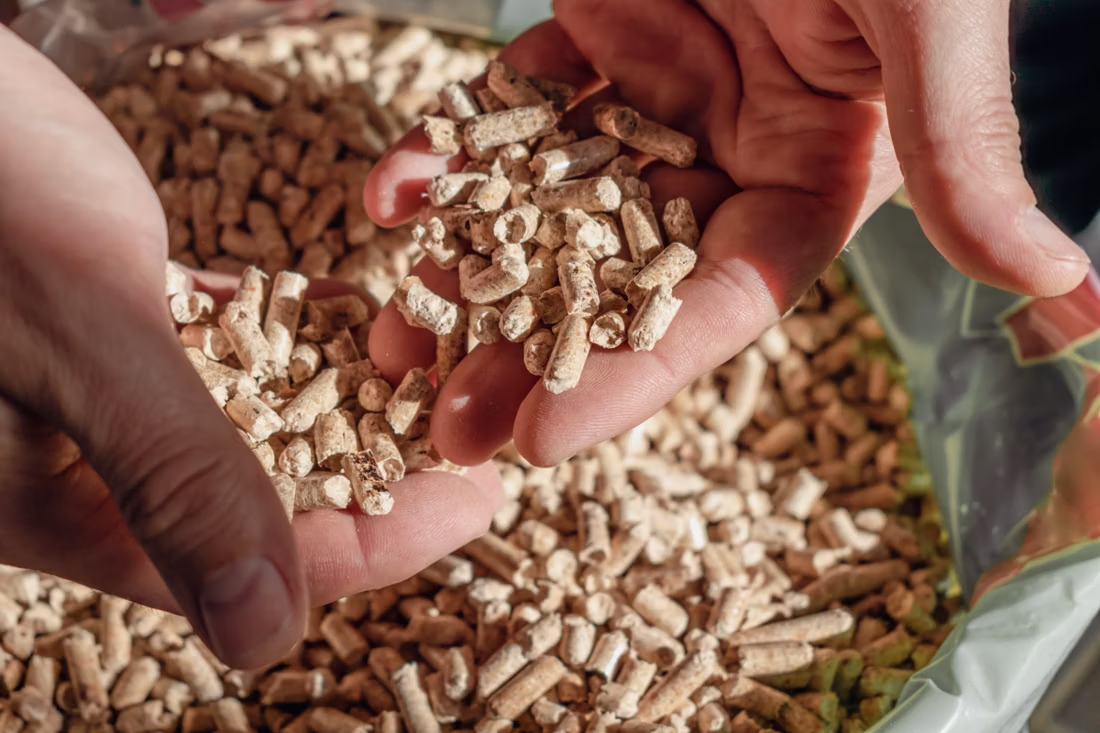
Pellet stoves make sense here precisely because so little else is convenient in a county this small. There's no hearth shop in Winnett—certified dealers typically come from Lewistown, about an hour south, or from farther out in Billings and Great Falls. The appeal of a pellet stove in Petroleum County isn't novelty, it's practicality: load a hopper with bagged fuel from regional producers like Bear Mountain, Lignetics, or Forest Energy, set a thermostat, and get even heat through a long Montana winter without splitting and hauling lodgepole pine, ponderosa pine, Douglas fir, or aspen off the breaks yourself.
Three steps. No salesperson until you're ready.
Tell us about your project
Your zip code, your situation, and the fuel you're leaning toward—or let the answers point you to one.
See what's actually available
The brands dealers within 100 miles genuinely carry—real options, never a catalog mirage.
Get your dealer & Project Guide
A trusted local dealer, plus the free Project Guide & Parts List that names every component of the job.
Frequently Asked Questions
How much does a pellet stove installation cost in Petroleum County?
Pellet stove and insert installations typically run $3,000 to $7,000 depending on the unit, the venting path, and whether it's going into an existing masonry fireplace or installed as a new freestanding unit. Petroleum County has no hearth retailer of its own—installers generally travel out from Lewistown, Billings, or Great Falls—so expect a trip charge folded into the quote, especially for properties well off Highway 200 or deep in the breaks. Given the distances involved, get a firm in-home estimate rather than assuming a number from an online listing.
What size pellet stove do I need for my home?
Sizing depends on square footage, insulation, and ceiling height, but climate zone 6B winters mean most Petroleum County homes should size toward the upper end of a stove's rated range rather than the low end. A small pellet stove (under 1,000 sq ft) suits a single living area or a hunting cabin; a medium unit (1,000-2,000 sq ft) covers most full-size homes in Winnett or the surrounding ranch country. Older farmhouses with single-pane windows and uninsulated additions—common on properties that have been in the family for generations out here—often need a stove rated one size up from what the square footage alone would suggest.
Where can I find a certified pellet stove installer near Petroleum County?
With a county population of 178, there's no hearth shop within Petroleum County itself. NFI-certified installers serving this stretch of central Montana are based primarily in Lewistown, with additional options in Billings and Great Falls willing to travel for the right job. Ask any installer about their experience with rural Montana ranch properties specifically—venting correctly in an older farmhouse with an unconventional floor plan is different work than a standard suburban install, and travel time should be built into the quote up front rather than added as a surprise.
What's the difference between a pellet stove and a pellet insert?
A pellet stove is a freestanding, self-contained unit that sits on a hearth pad and vents through a wall or existing chimney, so it can go almost anywhere with the right clearances. A pellet insert is built to slide into an existing masonry fireplace opening, turning an old wood-burning fireplace into a hopper-fed, thermostatically controlled heat source. For the older ranch homes common around Winnett that already have a masonry fireplace, an insert often makes sense because it reuses the chimney you already have. Homes without an existing fireplace, or newer construction, are usually better suited to a freestanding stove.
Do I need a permit to install a pellet stove in Petroleum County?
Most likely, yes—a building permit is standard for new solid-fuel appliance installations, including pellet stoves and inserts. Petroleum County's permitting is handled through the courthouse in Winnett rather than a dedicated building department, which is typical for a county this size, so call ahead to confirm the process before scheduling an install. Because pellet stoves burn compressed fuel rather than raw cordwood, they're also generally exempt from the open-burning restrictions that sometimes apply to wood stoves and outdoor burning during wildfire smoke season in this part of Montana.
What's the best pellet stove for Petroleum County's climate?
Look for a pellet stove rated for continuous, high-output burn cycles—climate zone 6B winters here run long and cold, and a stove that's only comfortable cycling on low will fall behind on the coldest nights. Regional pellet brands like Bear Mountain, Lignetics, and Forest Energy are common fuel sources across central Montana, and most mid-size and larger stoves run reliably on any of them. Because pellet stoves need electricity for the auger, hopper feed, and blower, it's also worth asking a dealer about battery backup options—rural power outages during winter storms can stretch longer here than in town, and a stove that goes dark with the grid isn't much use on the night you need it most.
How often does a pellet stove need to be serviced?
Plan on a full annual service—burn pot, auger, exhaust fan, and gaskets checked and cleaned—ideally before heating season starts in the fall. Ash removal is a weekly task during regular winter use, and the glass typically needs wiping every few days with daily operation. Since there's no chimney sweep or hearth technician based in Petroleum County, many owners either learn basic maintenance themselves or time a service call to coincide with an installer's trip out from Lewistown or Billings for another job in the area.
Where can I buy pellet fuel in or near Petroleum County?
Bagged pellets from regional producers like Bear Mountain, Lignetics, and Forest Energy are typically sold through farm and ranch supply stores in Lewistown, the nearest sizable town to Winnett, as well as in Billings and Great Falls. Given the distances involved—and that Petroleum County has essentially no retail infrastructure of its own—most residents buy pellets by the pallet rather than by the bag, both to cut down on trips to town and to lock in a season's supply before winter sets in.
Pellet stove vs. wood stove—which makes more sense in Petroleum County?
Wood is the traditional choice out here, and lodgepole pine, ponderosa pine, Douglas fir, and aspen are all available locally for anyone willing to cut and haul their own. Wood stoves also keep working without electricity, which matters during winter storms in a county this remote. Pellet stoves trade that off-grid independence for convenience and cleaner, more consistent heat—no splitting, stacking, or chimney creosote to manage, and a thermostat that holds a steady temperature through the night. Pellet fuel also sidesteps the open-burning concerns that surface during wildfire smoke season. For a full-time residence where someone's home to reload the hopper, pellet is often the lower-maintenance choice; for a hunting cabin or backup heat source, wood's independence from the grid still carries real weight.
Why is my open fireplace making my house colder?
Open fireplaces suck—literally. As the fire burns, it consumes air your furnace already paid to heat and pulls it out through the chimney, so the house is actually colder after the fire goes out than before you lit it. An insert fixes this: it seals the chimney, puts fixed glass across the front, and turns that hole in your house into a real heat source.
What's the difference between an insert and a zero-clearance fireplace?
An insert is a fireplace that slides into a pre-existing wood-burning fireplace—if you don't have one, there's nothing to insert it into. A zero-clearance fireplace is built into a framed wall, which makes it the answer for remodels and new construction. Simple test: existing masonry fireplace means insert; blank or framed wall means zero-clearance.
What is an in-home preview and do I need one?
It's a visit where a hearth professional measures your space, confirms the model you picked actually works in your home, and walks the specs—framing, gas line, venting, finish work—before anything is ordered. Some details you just can't know until you see the house. Never make a down payment without one; it's the single most-skipped step that burns buyers.
Can a fireplace actually lower my heating bill?
Yes—by creating a comfort zone. A furnace heats every square foot of the house just to warm the one room you're in; a gas fireplace on low burns roughly a sixth of the gas a typical furnace does. Set the furnace around 55–60 degrees as a baseline, then heat the rooms your family actually uses. Families who heat this way commonly save $20–$60 a month.
Pellet Brands Stocked Around Petroleum County
Manufacturers will point you to the nearest stocking dealer.
Find your pellet stove in Petroleum County.
Tell us about your home and we'll match you with a trusted pellet stove dealer serving Petroleum County—plus a free Project Guide & Parts List with the exact parts, vent kit, and installation plan for your project.
Find Your Fireplace →