
Fireplace Help for Montana's Emptiest County.
Wood, gas, pellet, and electric fireplace resources for Winnett and the ranches scattered across Petroleum County—Montana's least populated county, with no hearth dealer of its own. We match you with a trusted regional retailer who actually makes the drive.
Every Project Starts From One of These Five Situations
Heating a county with 178 people and no stoplight.
Petroleum County sits in Climate Zone 6B on the Montana high plains, where the Musselshell River valley meets the Missouri River Breaks to the north. Winters run long and hard—closer in feel to Bismarck, ND than to anywhere with a Home Depot nearby. Wind-driven cold snaps and heavy snow loads are routine, and with a year-round population smaller than most subdivisions, self-sufficiency is the default. Ranch families here have burned lodgepole pine, ponderosa pine, Douglas fir, and aspen cut from the Breaks and the Snowy Mountains foothills for generations, and a working wood stove is still treated as essential equipment, not decor.
Because the county's entire population is smaller than a single Lewistown neighborhood, there's no hearth shop, chimney sweep, or fuel distributor headquartered inside Petroleum County itself. What you'll find on this hub is the honest picture: which regional retailers and technicians—mostly out of Lewistown, Roundup, or Billings—actually service Winnett, Teigen, Flatwillow, and the outlying ranches, what that coverage costs in travel time, and how to plan a wood, gas, pellet, or electric installation around that reality.
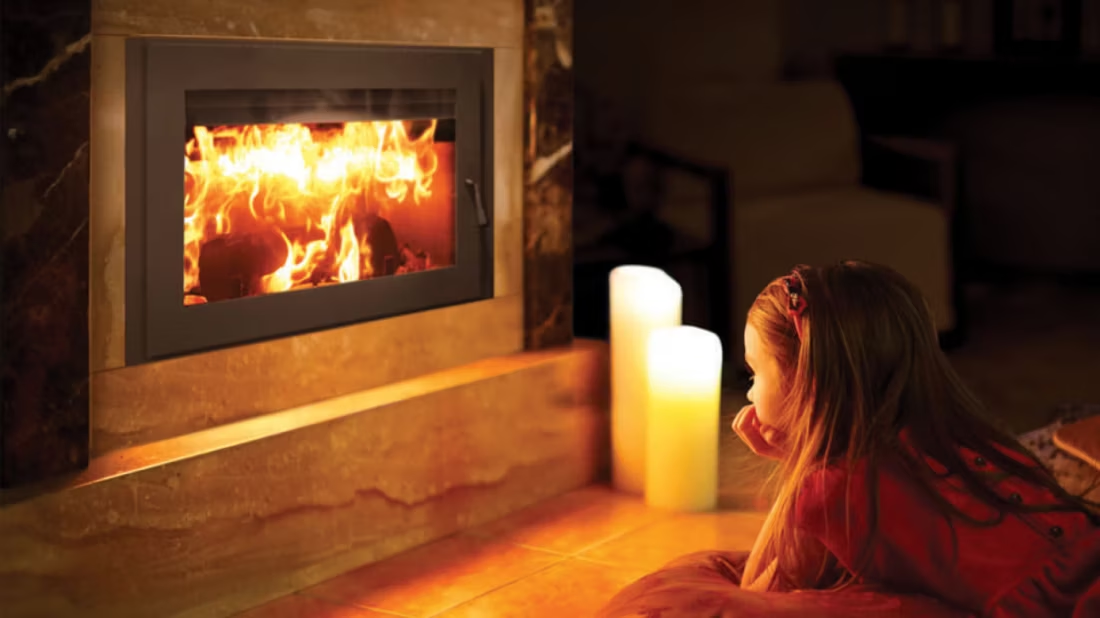
Four fuels. One honest answer for Petroleum County.
Three steps. No salesperson until you're ready.
Tell us about your project
Your zip code, your situation, and the fuel you're leaning toward—or let the answers point you to one.
See what's actually available
The brands dealers within 100 miles genuinely carry—real options, never a catalog mirage.
Get your dealer & Project Guide
A trusted local dealer, plus the free Project Guide & Parts List that names every component of the job.
Frequently Asked Questions
Which fuel works best in Petroleum County?
Wood remains the backbone here for good reason—Petroleum County's ranches have long relied on self-cut lodgepole pine, ponderosa pine, Douglas fir, and aspen from the Breaks and nearby foothills, and a good catalytic or non-cat stove keeps burning through the kind of wind-driven cold that hits this stretch of the plains. Propane is the practical 'gas' option for most homes, since there's no natural gas main running out to Winnett or the surrounding ranches—tank delivery takes planning ahead of winter. Pellet stoves are a real option too, with Bear Mountain, Lignetics, and Forest Energy all distributed within reach, though bulk bag storage matters more here than in town. Electric works for supplemental heat in a bedroom or shop, but given how often winter storms take down rural power lines, it's rarely anyone's only source of heat.
Do I need a permit to install a fireplace in Petroleum County?
Generally yes, though the process is far less bureaucratic than in a populated county. New wood stoves, inserts, gas appliances, and pellet stoves still need to meet current EPA emissions standards, and gas work involving a new propane line or connection should go through a licensed installer. With Petroleum County's tiny population, permitting runs through the county courthouse in Winnett rather than a dedicated building department—a phone call and a straightforward application usually cover it. Most regional retailers who travel out from Lewistown or Billings are used to walking ranch customers through this and will typically handle the paperwork as part of the install.
Are there air quality restrictions on wood burning in Petroleum County?
Not the winter inversion advisories you'd see in a mountain basin—Petroleum County's open, windswept plains don't trap smoke the way a bowl-shaped valley does. The concern here is wildfire smoke in late summer, when fires in the Breaks or the Snowy Mountains can blanket the county for days at a time. That's an outdoor air quality issue rather than a restriction on home heating appliances, but it's worth knowing before you plan any outdoor burning or brush clearing near your property during fire season. Certified, EPA-compliant wood stoves for home heating face no local curtailment periods.
Can one retailer handle wood, gas, pellet, and electric for a Petroleum County home?
Yes, and given how far most retailers are already driving to reach Winnett or an outlying ranch, most of the dealers who cover this county carry all four fuel types rather than specializing narrowly—it isn't worth the trip otherwise. Expect your options to be based out of Lewistown or Billings, with a single visit typically covering a walkthrough of wood, gas (propane), pellet, and electric options side by side. Because there's no in-county showroom, plan on discussing your project by phone first and scheduling an in-person visit rather than dropping by a storefront.
How does fireplace service and repair work in a county with 178 people?
Slowly, and with advance scheduling. Technicians serving Petroleum County are based well outside it—usually Lewistown, Roundup, or Billings—and route through Winnett, Teigen, and Flatwillow on a circuit rather than on demand. Expect a travel charge for any service call, and expect August through October to be the realistic window for annual chimney sweeps or gas inspections; mid-winter emergency service on a ranch 40 miles from pavement is a much harder ask. Given how remote the county is, many households keep a backup heat source—a wood stove alongside a propane unit, or a generator for the rural electric co-op's inevitable winter outages.
What's the typical cost range for a fireplace installation across fuel types in Petroleum County?
Costs run a bit higher here than in a Billings suburb, mostly due to travel. Wood stove or insert installation: roughly $4,500–$9,500, including a travel surcharge from the installing dealer. Propane fireplace, insert, or stove: $5,000–$11,500 depending on tank setup and venting, since there's no existing gas main to tie into. Pellet stove or insert: $4,800–$8,000, plus factoring in bulk pellet delivery logistics for Bear Mountain, Lignetics, or Forest Energy bags. Electric fireplace: $200–$3,000 for the unit itself, with modest labor if it's a straightforward plug-in wall unit. A local retailer visit will give you the real number for your specific ranch or Winnett address—that's what the Project Guide is built to capture.
Can a fireplace actually lower my heating bill?
Yes—by creating a comfort zone. A furnace heats every square foot of the house just to warm the one room you're in; a gas fireplace on low burns roughly a sixth of the gas a typical furnace does. Set the furnace around 55–60 degrees as a baseline, then heat the rooms your family actually uses. Families who heat this way commonly save $20–$60 a month.
Wood, gas, pellet, or electric—how do I choose?
Match the fuel to your life, not the other way around. Wood: lowest fuel cost and total power-outage independence, but you're hauling and stacking. Gas: press a button, set a thermostat, no maintenance to speak of. Pellet: wood economics with automatic feeding, in exchange for weekly cleaning and a need for electricity. Electric: plugs in anywhere with honest supplemental heat. Nobody regrets the fuel that fits how they actually live.
What is an in-home preview and do I need one?
It's a visit where a hearth professional measures your space, confirms the model you picked actually works in your home, and walks the specs—framing, gas line, venting, finish work—before anything is ordered. Some details you just can't know until you see the house. Never make a down payment without one; it's the single most-skipped step that burns buyers.
Does a fireplace add value to my home?
On average, a fireplace adds back to the home about the same amount you spent installing it. Add the monthly savings from heating the rooms you actually use instead of the whole house—often hundreds of dollars a year—and the value case is strong before you even count what a fire does for how your family uses the room.
Stove and Fireplace Dealers in Petroleum County
Listings include WhyFire partner dealers, dealers we have verified as authorized for the brands we recommend, and established local businesses that carry hearth products. Every listing shows which one it is. The ones marked Preferred run on WhyFire's software, so they can show you real pricing and book your appointment right here. No manufacturer pays for placement. How we verify dealers →
Universal Heating,cooling &r
Central Montana Propane LLC
Find your fireplace in Petroleum County.
Tell us about your home near Winnett or out on the ranch, and we'll match you with a trusted regional dealer plus a free Project Guide & Parts List—the exact parts, vent kit included, for your wood, gas, pellet, or electric project.
Find Your Fireplace →