
Clean-burning heat for Park County's long, cold winters.
From Livingston through Paradise Valley to Gardiner at Yellowstone's north entrance, Park County has a winter heating load about as demanding as Duluth, MN. A pellet stove gives you steady, thermostat-controlled heat without splitting cordwood in the county's notorious wind. I'll match you with a local dealer who can size and install one correctly.
Every Project Starts From One of These Five Situations
Consistent heat without the wood-splitting.
Park County runs from the Yellowstone River bottomlands around Livingston up through Paradise Valley to Gardiner, at Yellowstone National Park's north entrance. Winters here are long and cold—average lows near 15°F and a winter heating load about as demanding as Duluth, MN put this county in the same cold-climate territory. Add in the wind that funnels through the Livingston gap most winters, and a natural-draft wood chimney can be a fight some nights. Pellet appliances use a forced-air combustion blower rather than relying on chimney draft alone, which makes them noticeably more forgiving in a wind-prone valley like this one.
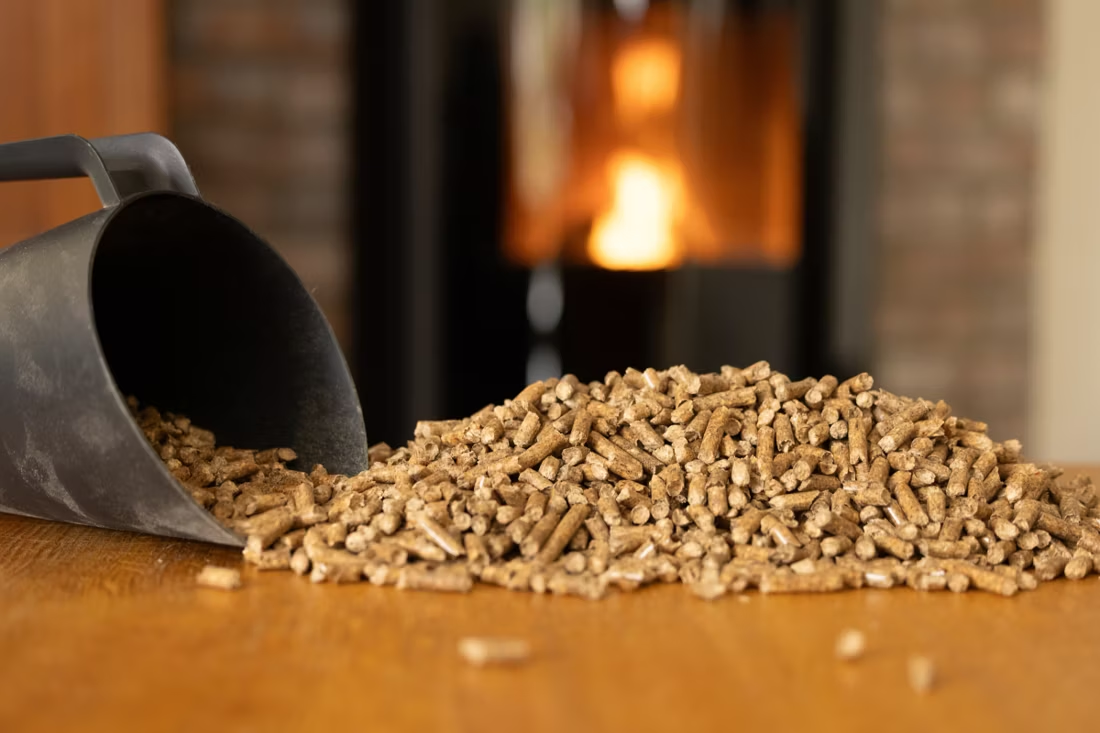
Regional pellet brands including Bear Mountain, Lignetics, and Forest Energy are commonly stocked by dealers serving southwest Montana, so fuel supply isn't the constraint it can be in more remote parts of the Mountain West. Wildfire smoke is a real seasonal concern here given the county's proximity to Custer Gallatin National Forest, and pellet stoves burn cleaner than an open or older wood stove—a point worth weighing if you're also managing air quality during summer fire seasons. For second-home owners in Paradise Valley or retirees in Livingston who want reliable heat without the labor of stacking and hauling cordwood, pellet is often the simplest path to real, sustained warmth through a Park County winter.
Three steps. No salesperson until you're ready.
Tell us about your project
Your zip code, your situation, and the fuel you're leaning toward—or let the answers point you to one.
See what's actually available
The brands dealers within 100 miles genuinely carry—real options, never a catalog mirage.
Get your dealer & Project Guide
A trusted local dealer, plus the free Project Guide & Parts List that names every component of the job.
Frequently Asked Questions
How much does a pellet stove or insert installation cost in Park County?
Most pellet stove and insert installations in Park County land somewhere between $3,000 and $6,000, depending on the unit, whether you're venting through an existing masonry fireplace or a new wall penetration, and whether an electrical circuit needs to be added for the stove's auger and blower. Inserts going into an existing fireplace at a Livingston or Gardiner-area home tend to run toward the lower end since the chimney chase is already in place. New installations in a home without an existing hearth—common in newer Paradise Valley construction—run a bit higher once venting and hearth pad work are factored in. A local dealer will give you a firm number after seeing the space.
What size pellet stove do I need for a Park County home?
With a winter heating load about as demanding as Duluth, MN and average winter lows around 15°F, Park County sits solidly in cold-climate heating territory, so undersizing is the more common mistake than oversizing. A stove rated for 1,500–2,000 square feet is a reasonable starting point for a well-insulated Livingston home used as supplemental heat, while homes further up Paradise Valley or older, draftier farmhouses often need to size up or plan on the stove running as primary heat rather than backup. Wind exposure matters too—homes on the valley's open, exposed benches lose heat faster than sheltered in-town lots. A local dealer will factor in your square footage, insulation, and exposure during an in-home visit.
Where can I find certified pellet stove installers near me?
Look for installers who are NFI-certified (National Fireplace Institute) and familiar with the electrical and venting requirements specific to pellet appliances, since these units need both a dedicated power source and a properly sized vent kit—not just a chimney. Building permits for new installations go through Park County's building department, based in Livingston, and most dealers handle that paperwork as part of the install rather than leaving it to the homeowner. If you're out toward Gardiner or up in Paradise Valley, ask about travel charges up front—installers based in Livingston or Bozeman typically add a modest fee for the drive.
Pellet stove vs. wood stove—which makes more sense in Park County?
Wood is deeply practical here—Park County sits next to Custer Gallatin National Forest, where personal-use cutting permits run $5 to $20 per cord during the May-to-October season, and lodgepole pine, ponderosa pine, Douglas fir, and aspen are all locally available. That makes wood cheap to fuel if you're willing to cut, split, and stack it. Pellet stoves trade that labor for convenience: load a hopper, set a thermostat, and let it run—but they need electricity to operate, which matters in a county where winter wind events occasionally knock out power along the valley. Many Park County households end up with a wood stove for backup heat during outages and a pellet stove or insert for day-to-day convenience in the main living space.
Do I need a permit to install a pellet stove in Park County?
Yes—a new pellet stove or insert installation requires a building permit through Park County's building department, and if new wiring is needed for the appliance's blower and auger, an electrical permit as well. Most local dealers coordinate this as part of the installation rather than handing it back to the homeowner. There's no permit required to simply operate a pellet stove once it's installed and inspected, but if you're also burning firewood on the property, remember that any cutting on Custer Gallatin National Forest land requires its own separate cutting permit.
What's the best pellet stove for Park County's climate?
For a county averaging 15°F overnight lows and a winter heating load about as demanding as Duluth, MN, look for a pellet stove with a large hopper capacity and a burn rate that can be dialed up for sustained cold snaps rather than just mild-weather cycling. Brands like Harman and Quadra-Fire are widely serviced in the Rocky Mountain region and hold up well in high-use, cold-climate homes. For fuel, regional brands including Bear Mountain, Lignetics, and Forest Energy are commonly stocked by dealers serving southwest Montana, so you're not dependent on long-haul shipping for pellets. A dealer can match hopper size and BTU output to your specific square footage and exposure—homes exposed to the Livingston wind often benefit from a slightly larger unit than the square footage alone would suggest.
How often does a pellet stove need cleaning and service?
Plan on a full professional service once a year, ideally before winter starts, plus regular homeowner-level maintenance during the season—emptying the ash pan, cleaning the burn pot, and wiping the glass every week or two during heavy use. A once-a-year inspection also gives a technician a chance to check the auger motor, combustion blower, and vent kit, which matters more in a wind-prone valley like Park County where vent terminations can see more weather exposure than in calmer climates. Heavy users running the stove as primary heat through a full Park County winter often benefit from a mid-season check as well.
Where can I buy pellets locally in Park County?
Regional brands including Bear Mountain, Lignetics, and Forest Energy are the most commonly stocked options at hearth retailers and farm supply stores serving Livingston and the broader Park County area, typically running somewhere in the $250 to $320 per ton range depending on the brand and time of year. Buying early in the fall, before the first cold snap hits the valley, usually means better selection and avoids the price bump that comes with late-season demand. Some dealers offer seasonal bulk pricing if you buy a full winter's supply at once—worth asking about if you're heating with pellets as your primary source.
Will my pellet stove work during a power outage?
No—this is the honest tradeoff. Pellet stoves rely on an electric auger to feed fuel and a blower for combustion air, so they shut down when the power does. That matters in Park County, where wind events along the Yellowstone River corridor occasionally take out power for hours at a time, particularly out in Paradise Valley or toward Gardiner. Some homeowners pair a pellet stove with a small battery backup or generator to bridge short outages, but if reliable off-grid heat during storms is your top priority, a wood stove is the more dependable backup. Plenty of Park County households run both—pellet for daily convenience, wood for the nights the power actually goes out.
Why is my open fireplace making my house colder?
Open fireplaces suck—literally. As the fire burns, it consumes air your furnace already paid to heat and pulls it out through the chimney, so the house is actually colder after the fire goes out than before you lit it. An insert fixes this: it seals the chimney, puts fixed glass across the front, and turns that hole in your house into a real heat source.
Are pellet stoves loud?
They make some noise—there are two fans running plus an auger motor that turns as it feeds pellets. But there's a real range: premium models are engineered quiet, and the best offer a whisper-quiet mode you can comfortably watch TV next to. If noise matters in your room, ask to hear a stove running before you buy—it's a five-minute test that saves years of annoyance.
Can a fireplace actually lower my heating bill?
Yes—by creating a comfort zone. A furnace heats every square foot of the house just to warm the one room you're in; a gas fireplace on low burns roughly a sixth of the gas a typical furnace does. Set the furnace around 55–60 degrees as a baseline, then heat the rooms your family actually uses. Families who heat this way commonly save $20–$60 a month.
Can I install a fireplace myself?
If you're putting a fire in your house on purpose, it's best to work with an expert. Unless you're genuinely experienced in framing, gas line, vent pipe, and the national code on clearances to combustibles, have a professional do it—and ideally the same company that sells you the fireplace, so warranty, service, and liability all live under one roof.
Stove and Fireplace Dealers in Park County
Pellet Brands Stocked Around Park County
Manufacturers will point you to the nearest stocking dealer.
Find your pellet stove in Park County.
Tell us about your home in Livingston, Gardiner, Paradise Valley, or anywhere else in Park County, and we'll match you with a trusted local dealer and send over a free Project Guide & Parts List—the exact parts, vent kit, and recommended installer for your pellet stove or insert project.
Find Your Fireplace →