
Stay warm through Park County's long Montana winters.
Wood, gas, pellet, and electric fireplace resources for every town in Park County—from Livingston down the Paradise Valley to Gardiner at Yellowstone's north entrance. Find the right unit and connect with a trusted local hearth dealer.
Every Project Starts From One of These Five Situations
Wind, elevation, and cold across Park County, Montana.
Park County stretches from the Yellowstone River bottoms near Livingston, at roughly 4,500 feet, up through Paradise Valley and into the Absaroka-Beartooth high country above 10,000 feet. At 7,828 heating degree days and an average winter low of 15°F, the county isn't far off the totals you'd see in Fargo, ND or Bismarck, ND—and Livingston adds its own factor most of those towns don't deal with: relentless canyon wind funneling off the mountains, which drives real-feel temperatures well below the thermometer reading. Firewood cutting is part of daily life here—lodgepole pine, ponderosa pine, Douglas fir, and aspen are all standing in the Custer Gallatin National Forest, and personal-use permits are a routine winter errand for a lot of households.
This hub rolls up hearth retailers, service technicians, and fuel suppliers covering every community in the county—Livingston, Clyde Park, Wilsall, Emigrant, Gardiner, and Cooke City. Pick your fuel below to see local dealers, install costs, and the resources that fit your specific project, whether you're heating a ranch house in the valley or a cabin near the park boundary.
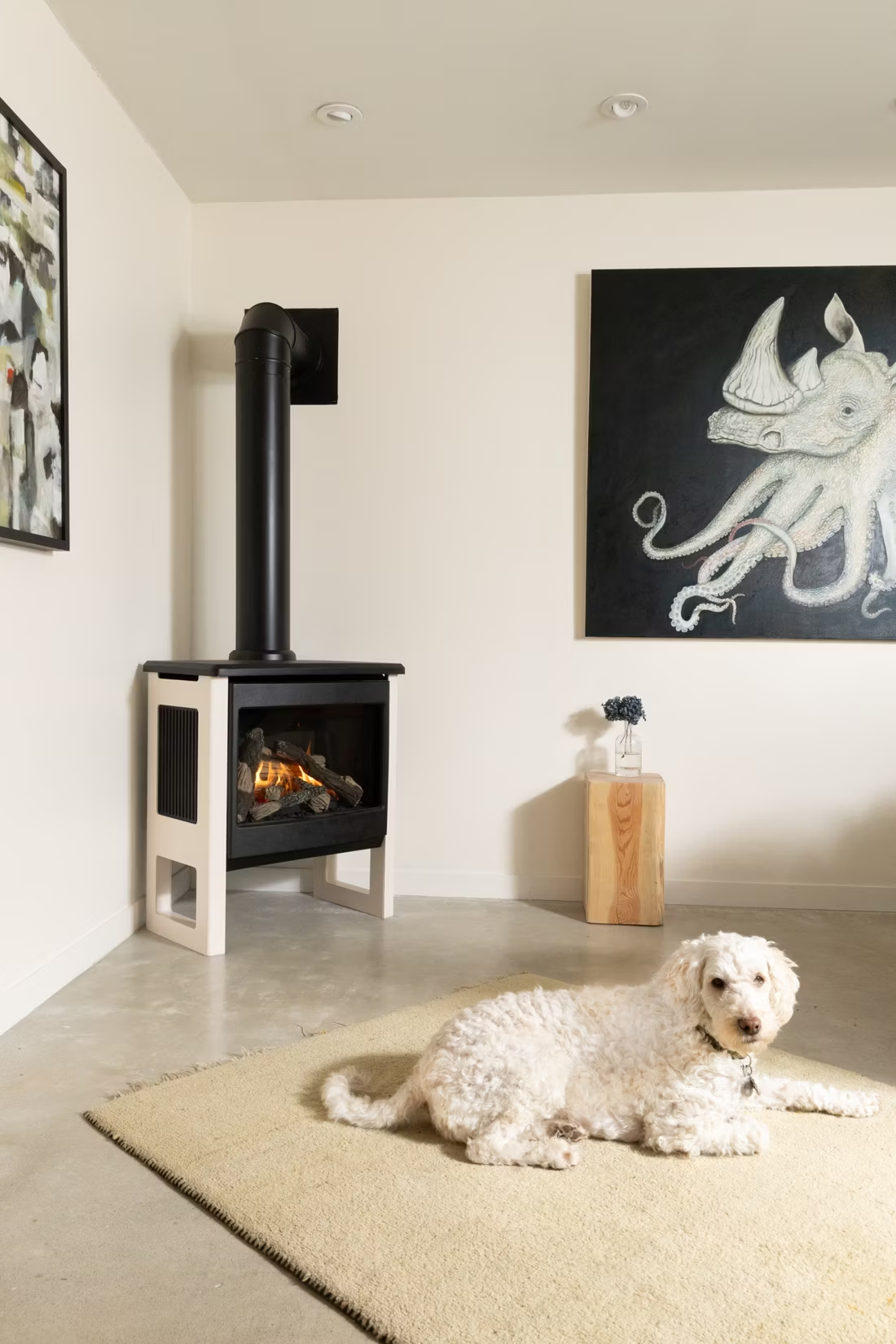
Four fuels. One honest answer for Park County.
Three steps. No salesperson until you're ready.
Tell us about your project
Your zip code, your situation, and the fuel you're leaning toward—or let the answers point you to one.
See what's actually available
The brands dealers within 100 miles genuinely carry—real options, never a catalog mirage.
Get your dealer & Project Guide
A trusted local dealer, plus the free Project Guide & Parts List that names every component of the job.
Frequently Asked Questions
Which fuel works best in Park County?
It depends on where you're located and how the home is used. Wood remains the backbone fuel across much of rural Park County—lodgepole pine, ponderosa pine, Douglas fir, and aspen are all locally cut under Custer Gallatin National Forest permits, and a catalytic stove will hold a fire through a long overnight at 15°F without much trouble. Gas is the convenience pick, especially where Livingston has piped service; outside town, most gas installs run on propane tanks instead, since the terrain makes natural gas lines impractical for scattered ranch and mountain properties. Pellet is a strong middle option—Bear Mountain, Lignetics, and Forest Energy all supply the region, and a pellet stove gives wood-style heat without the daily woodpile work. Electric is mostly supplemental here—useful in Gardiner vacation rentals and guest cabins near Yellowstone, but not something you'd rely on as primary heat through a Paradise Valley winter.
Do I need a permit to install a fireplace in Park County?
Generally yes. New wood stoves, wood inserts, gas fireplaces, gas inserts, gas stoves, and pellet stoves all typically require a building permit through the Park County Planning & Building Department for work outside Livingston city limits, or through the City of Livingston for in-town projects. Wood-burning appliances need to meet current EPA 2020 NSPS emissions standards to be permitted new. Gas installs also require a separate line permit and licensed gas-fitter work, whether you're on propane or piped service. Electric fireplaces are usually permit-free unless the install involves a new dedicated circuit or built-in framing. Most local hearth retailers pull these permits as part of the install, so you're rarely handling paperwork yourself.
Are there air quality restrictions on wood burning in Park County?
Park County doesn't carry the winter inversion problems some Montana valleys deal with, so there's no mandatory wood-burning curtailment program tied to routine winter days. The bigger air quality issue here is wildfire smoke in late summer and early fall, when regional fires can blanket the Yellowstone corridor for days at a time—that's a smoke-exposure concern more than a heating-season one. For wood stove owners, the practical takeaway is the same either way: an EPA 2020 NSPS-certified stove burns cleaner and more efficiently than an older uncertified unit, which matters both for your air and your neighbors' during a county that already deals with enough smoke from wildfire season.
Can one local hearth retailer handle all four fuel types?
Most full-service Park County dealers carry at least three of the four fuels. Livingston-based shops like Yellowstone Hearth & Home or Paradise Valley Stove & Fireplace typically stock wood, gas, and pellet units side by side, with a smaller electric fireplace lineup for guest cabins and rentals. Smaller Gardiner-area outfits tend to focus on wood and propane gas, given how many properties there sit off piped utility service. If you want to compare fuels side by side before deciding, a multi-fuel Livingston dealer is usually the more efficient stop—they can walk you through trade-offs specific to your elevation, wind exposure, and whether you're heating full-time or seasonally.
How does service work in rural areas of Park County?
Most chimney sweeps and gas techs are based in Livingston and drive out to Emigrant, Wilsall, Clyde Park, Gardiner, and even Cooke City up the Beartooth Highway when the road's clear. Expect a modest travel charge for the farther stops, and know that Cooke City in particular can be tough to reach outside the summer season due to snow closures on the highway. Scheduling annual service in September or October—before the first real cold snap—is far easier than trying to get someone out mid-winter. If your property is remote, it's worth keeping a backup heat source on hand; a wood stove as backup for a pellet or gas system covers you if a tech can't get out right away during a bad stretch of weather.
What's the typical cost range for fireplace installation across all fuel types in Park County?
Costs vary by fuel and by how much venting or gas line work is involved. Wood stove or insert installation: roughly $4,500–$9,500 for a standard install, higher for new chimney construction on a ranch build. Gas fireplace, insert, or stove: about $4,500–$11,000, with propane conversions often landing on the higher end due to tank and line work for rural properties. Pellet stove or insert: typically $4,500–$7,500. Electric fireplace: $200–$3,000 for the unit itself, plus $400–$1,200 in labor for anything beyond a simple plug-in install. See the county + fuel pages above for cost detail tied to specific local retailers.
Does a fireplace add value to my home?
On average, a fireplace adds back to the home about the same amount you spent installing it. Add the monthly savings from heating the rooms you actually use instead of the whole house—often hundreds of dollars a year—and the value case is strong before you even count what a fire does for how your family uses the room.
What is an in-home preview and do I need one?
It's a visit where a hearth professional measures your space, confirms the model you picked actually works in your home, and walks the specs—framing, gas line, venting, finish work—before anything is ordered. Some details you just can't know until you see the house. Never make a down payment without one; it's the single most-skipped step that burns buyers.
Can a fireplace actually lower my heating bill?
Yes—by creating a comfort zone. A furnace heats every square foot of the house just to warm the one room you're in; a gas fireplace on low burns roughly a sixth of the gas a typical furnace does. Set the furnace around 55–60 degrees as a baseline, then heat the rooms your family actually uses. Families who heat this way commonly save $20–$60 a month.
Can I install a fireplace myself?
If you're putting a fire in your house on purpose, it's best to work with an expert. Unless you're genuinely experienced in framing, gas line, vent pipe, and the national code on clearances to combustibles, have a professional do it—and ideally the same company that sells you the fireplace, so warranty, service, and liability all live under one roof.
Stove and Fireplace Dealers in Park County
Listings include WhyFire partner dealers, dealers we have verified as authorized for the brands we recommend, and established local businesses that carry hearth products. Every listing shows which one it is. The ones marked Preferred run on WhyFire's software, so they can show you real pricing and book your appointment right here. No manufacturer pays for placement. How we verify dealers →
Warmstone Fireplaces & Designs
Bozeman Fireplaces
Get matched with a Park County hearth dealer.
Tell us about your home and fuel preference, and we'll match you with a trusted local dealer serving your part of Park County—plus a free Project Guide & Parts List with the exact parts, including the vent kit, for your project.
Find Your Fireplace →