
Add electric warmth to your Park County home, without the venting or wood work.
From Livingston to Gardiner and up into the Paradise Valley, electric fireplaces give Park County homes a clean, no-chimney way to add zone heat and ambiance. Find the right unit and connect with a trusted local dealer.
Every Project Starts From One of These Five Situations
Where wood and propane do the heavy lifting, electric does the rest.
Park County sits in south-central Montana at the edge of Yellowstone's north entrance, with Livingston in the Yellowstone River valley and outlying communities like Gardiner, Clyde Park, Wilsall, and Emigrant scattered across the Paradise Valley and up into the Absaroka and Crazy Mountains. With an average winter low of 15°F, this county's heating season rivals International Falls, Minnesota for sheer length—and Livingston's notorious wind adds a wind-chill factor that most temperature averages don't capture. Electric fireplaces aren't the primary defense against a Park County winter, but they've earned a real place in the mix.
NorthWestern Energy serves most of the grid-connected county, and a growing number of homeowners here use electric inserts, wall units, or freestanding stoves as supplemental zone heat—warming a bedroom, den, or finished basement without running the furnace harder or tending a second woodstove. They're also the go-to choice for cabins and vacation rentals around Gardiner and the park's north entrance, where a masonry chimney isn't practical or a landlord wants zero fire risk. And because summer and fall wildfire smoke periodically triggers burn advisories across the region, an electric unit gives households a smoke-free way to keep a fire going in the living room when the woodstove needs to sit idle.
Three steps. No salesperson until you're ready.
Tell us about your project
Your zip code, your situation, and the fuel you're leaning toward—or let the answers point you to one.
See what's actually available
The brands dealers within 100 miles genuinely carry—real options, never a catalog mirage.
Get your dealer & Project Guide
A trusted local dealer, plus the free Project Guide & Parts List that names every component of the job.
Frequently Asked Questions
How much does an electric fireplace installation cost in Park County?
Most electric fireplace projects in Park County run $500 to $3,000. A plug-in insert or wall-mounted unit that uses an existing outlet sits at the low end. A built-in electric fireplace that requires a dedicated 20-amp circuit, new wiring, or custom framing into a wall or existing fireplace opening runs higher, especially in older Livingston homes where panel upgrades are sometimes needed to add a circuit. Because there's no venting or gas line involved, electric installs are consistently the least expensive fireplace option in the county—a licensed electrician handles the wiring in an afternoon in most cases.
Can an electric fireplace actually heat my home through a Park County winter?
Not as a primary heat source—not with a heating season this long and winter lows that regularly sit in the single digits or below across the Paradise Valley. Electric resistance heat is efficient at the plug but expensive to run as whole-home heat in a climate this cold, and most units are rated for 400 to 1,000 square feet of supplemental warmth at best. In Park County, electric fireplaces work best paired with a wood stove, pellet stove, or propane furnace as the main heat source, with the electric unit handling a single room, a finished basement, or the coldest overnight hours in a bedroom.
Do I need a permit to install an electric fireplace in Park County?
Usually not for a plug-in insert or freestanding unit—there's no combustion, no venting, and no gas line to inspect. If you're adding a dedicated circuit for a built-in unit, that electrical work typically requires a permit through Park County's building department and should be pulled by your electrician. This is a much lighter permitting lift than a wood stove or gas fireplace, which is part of why electric units are popular for quick upgrades in rental properties around Livingston and Gardiner.
What's the difference between an electric fireplace, insert, and stove?
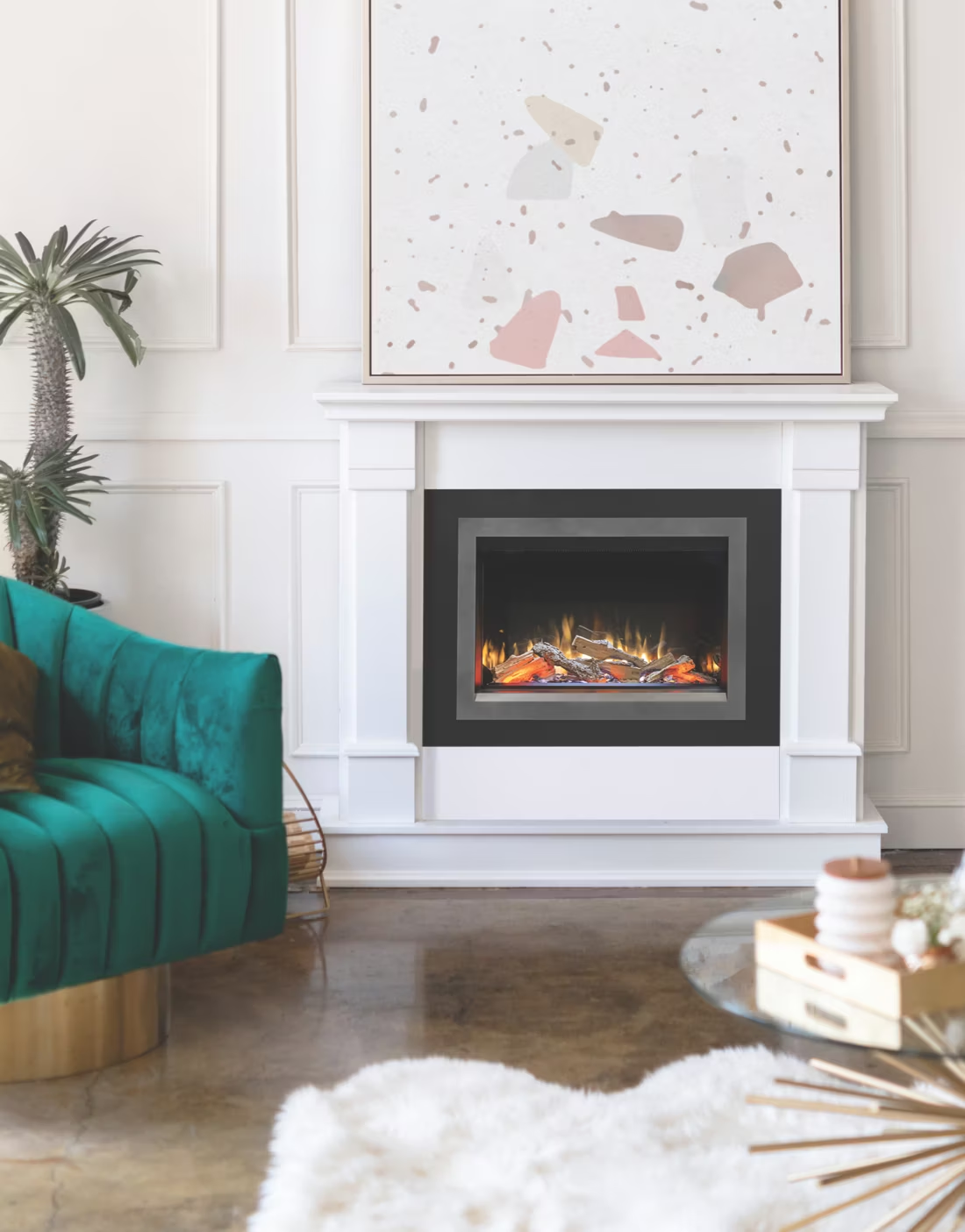
An electric fireplace is typically a built-in or wall-mounted unit designed to look like a traditional firebox, often installed into a framed wall or media console. An electric insert is sized to slide into an existing masonry fireplace opening, giving an old, rarely-used wood fireplace a clean glass-front makeover with heat output and none of the ash or chimney maintenance. An electric stove is a freestanding cabinet-style unit that mimics a wood stove's look and can sit almost anywhere near an outlet. For Park County homes with a fireplace opening that's been sitting cold, an insert is often the simplest upgrade.
Will my electric fireplace work if the power goes out?
No—and this matters more here than in a lot of counties. Livingston is one of the windiest towns in the Lower 48, and high wind events regularly knock out power along the Yellowstone River corridor and up into the Paradise Valley. An electric fireplace goes dark the moment the grid does. If you're relying on it as your main backup heat plan, it isn't one. Most Park County households pair electric units with a wood stove or propane appliance that can run independent of the grid for real outage resilience.
Are electric fireplaces a good fit for cabins and rentals near Yellowstone's north entrance?
Yes—this is one of the strongest use cases in the county. Gardiner cabins, Paradise Valley vacation rentals, and short-term rental properties near the park entrance often don't have an existing chimney and landlords don't want the liability of an open flame. An electric fireplace or insert delivers the ambiance guests want, installs in a day with no venting or gas line, and can be placed on a timer or app control so it's simple for renters to operate safely.
How does wildfire smoke affect the choice between electric and wood heat here?
Park County sees periodic wildfire smoke advisories in late summer and fall, and some households voluntarily hold off on wood burning during heavy smoke events even outside formal restrictions. An electric fireplace produces zero combustion byproducts, so it's a useful fallback for keeping a fire going in the living room during smoke season without adding to outdoor air quality problems. It's not a replacement for a wood stove's heat output in January, but it fills the gap nicely in September and October.
How much does it cost to run an electric fireplace on NorthWestern Energy rates?
A typical 1,500-watt electric fireplace running a few hours an evening adds a modest amount to a NorthWestern Energy bill—usually in the range of $10 to $30 a month depending on usage and season. That's manageable for zone heating a den or bedroom, but running one as whole-home heat through a Park County winter would get expensive fast given how long and cold the heating season runs here. Most homeowners here use electric units as a supplement to a wood or propane system rather than as a stand-in for it.
Electric vs. wood—which should I choose for my Park County home?
Wood remains the backbone of heating for a lot of rural Park County households, with lodgepole pine, ponderosa pine, Douglas fir, and aspen all common locally and Custer Gallatin National Forest cutting permits available for $5 to $20 per cord during the May-to-October season. Wood heats independent of the grid and handles serious cold. Electric can't match that BTU output or outage resilience, but it wins on convenience—no ash, no chimney, no permit hassle, and it's the only realistic option for a rental cabin near Gardiner or a condo without a flue. Many households here run both: wood or propane as the workhorse, electric for a bedroom, bonus room, or shoulder-season evenings when a full wood fire is more than you need.
Can I put a TV above my fireplace?
Yes—with an asterisk. Fireplaces are hot and TVs don't like heat. Either put a mantel between them to deflect rising warmth, or choose a fireplace with heat-management technology that creates a cool zone on the wall above—the wall stays around 125 degrees, barely warm, while the room still gets full heat. If you like clean lines and don't want a mantel, heat management is the answer.
Does an electric fireplace need a vent or chimney?
No—that's its superpower. An electric fireplace needs a wall and an outlet, period. No vent pipe, no gas line, no clearances to design around, which is why it works in bedrooms, offices, apartments, and walls where venting a gas or wood unit would be impractical or impossible. Installation is typically the simplest and least expensive of any fireplace type.
Can I install a fireplace myself?
If you're putting a fire in your house on purpose, it's best to work with an expert. Unless you're genuinely experienced in framing, gas line, vent pipe, and the national code on clearances to combustibles, have a professional do it—and ideally the same company that sells you the fireplace, so warranty, service, and liability all live under one roof.
Can a fireplace actually lower my heating bill?
Yes—by creating a comfort zone. A furnace heats every square foot of the house just to warm the one room you're in; a gas fireplace on low burns roughly a sixth of the gas a typical furnace does. Set the furnace around 55–60 degrees as a baseline, then heat the rooms your family actually uses. Families who heat this way commonly save $20–$60 a month.
Stove and Fireplace Dealers in Park County
Find your electric fireplace in Park County.
Tell us a bit about your home and we'll match you with the right electric fireplace or insert—plus a free Project Guide & Parts List and a trusted local Park County dealer to install it.
Find Your Fireplace →