
Steady heat for Fallon County's long, hard winters.
With 8,085 heating degree days and winter lows that hover around 7°F, Fallon County demands heat you can count on for months at a stretch. Pellet stoves offer clean-burning, hopper-fed heat without the timber-hauling that cordwood requires out here on the plains—find the right unit and a trusted local dealer.
Every Project Starts From One of These Five Situations
A cleaner-burning option for a county with no timber of its own.
Fallon County sits in the far northeastern corner of Montana, tucked against the North Dakota line in Bakken oil country, with Baker serving as the county seat and the only real town in a county of roughly 1,750 people spread across open shortgrass prairie and ranchland. Winters here are long and unforgiving—8,085 heating degree days and an average winter low of 7°F mean furnaces and stoves run hard from October through April, with the wind-scoured plains adding a chill factor that thermometers alone don't capture. For a county this rural and this spread out, reliable heat isn't a comfort question, it's a practical one.
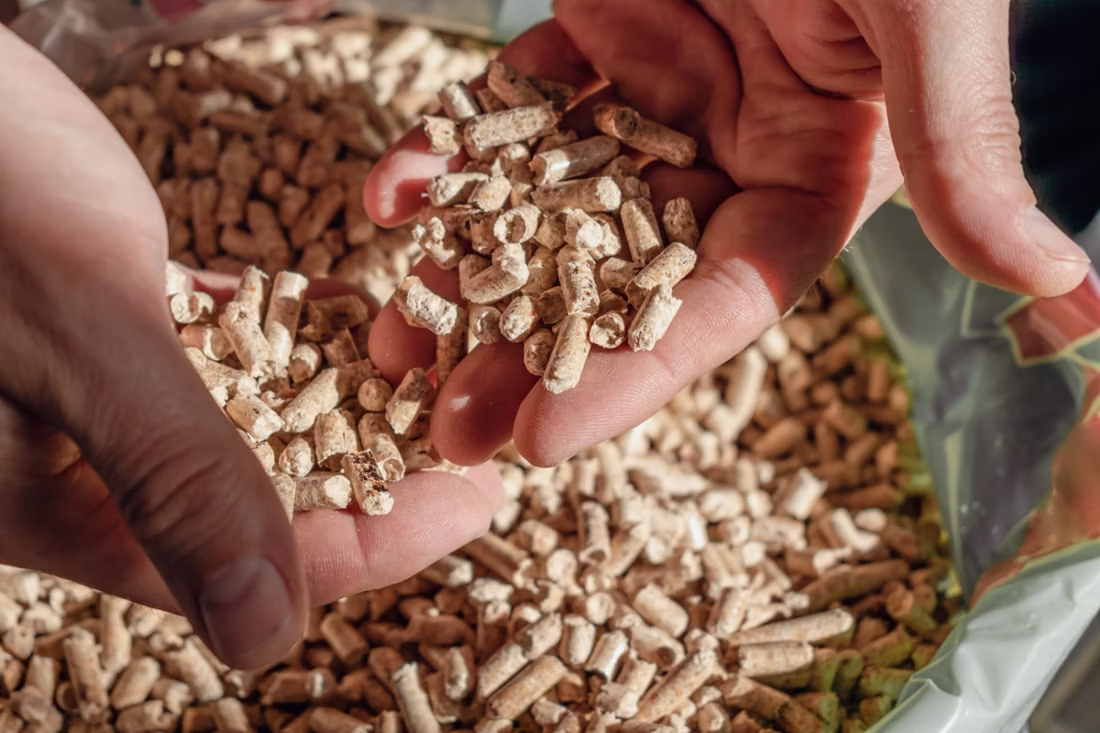
Fallon County's rolling prairie doesn't grow much timber of its own—the lodgepole pine, ponderosa pine, Douglas fir, and aspen burned regionally for firewood come from forested country hours to the west, not from anything standing nearby. That gap is a big part of why pellet stoves have found real traction out here: pellets from mills like Bear Mountain, Lignetics, and Forest Energy arrive already processed and bagged, so there's no chainsaw work, no splitting, and no hauling cordwood across long county roads to get heat into the house. Pellet stoves also burn cleaner than open wood fires, which matters during wildfire smoke season when outdoor air quality already takes a hit and nobody wants to add more particulate indoors.
Three steps. No salesperson until you're ready.
Tell us about your project
Your zip code, your situation, and the fuel you're leaning toward—or let the answers point you to one.
See what's actually available
The brands dealers within 100 miles genuinely carry—real options, never a catalog mirage.
Get your dealer & Project Guide
A trusted local dealer, plus the free Project Guide & Parts List that names every component of the job.
Frequently Asked Questions
How much does a pellet stove installation cost in Fallon County?
Pellet stove and insert installations typically run in the $3,000 to $6,500 range nationally, and Fallon County pricing generally falls in that band—the exact number depends on the unit, whether you're venting through an existing chimney or need new wall or roof penetration, and whether electrical work is needed to run the hopper's auger and blower. Because Fallon County is sparsely populated and installers may be based in Baker, Glendive, Miles City, or across the North Dakota line, expect a trip charge factored into rural quotes, especially for homes well outside town.
What size pellet stove do I need for my Fallon County home?
With 8,085 heating degree days and winter lows regularly near 7°F, Fallon County homes need to size on the larger end of manufacturer recommendations, not the smaller end. A stove rated for 1,500-2,000 square feet in a milder climate should generally be treated as a 1,200-1,500 square foot stove out here. Older farmhouses and ranch houses with less insulation, plus manufactured and modular homes common throughout the county's oil-and-ranching communities, often need a slightly larger hopper and higher max BTU output to keep up on the coldest nights and during multi-day cold snaps when the stove runs nonstop.
Where can I find a certified pellet stove installer near me in Fallon County?
Given Fallon County's population of around 1,750, there's no dedicated hearth shop inside the county—most homeowners in Baker and the surrounding area work with installers based out of Miles City, Glendive, or dealers just across the line in Dickinson, North Dakota. Look for NFI (National Fireplace Institute) certification, which signals proper training in venting, clearances, and combustion-air requirements specific to pellet appliances. Expect a service call charge factored into the quote given the driving distance most installers cover to reach ranch properties and homes outside Baker.
Pellet stove or pellet insert—what's the difference?
A pellet stove is a freestanding unit that sits on its own hearth pad and can go almost anywhere in a home with the right venting—a common choice in Fallon County's ranch houses and manufactured homes that don't have an existing masonry fireplace. A pellet insert is built to slide into an existing wood-burning fireplace opening, using much of the existing structure while converting it to hopper-fed pellet heat. Since older homes in Baker with a traditional fireplace are the exception rather than the rule out here, most Fallon County installations end up being freestanding stoves rather than inserts.
Do I need a permit to install a pellet stove in Fallon County?
Most pellet stove installations require a building permit through the Fallon County building department, along with adherence to current EPA emissions standards for the appliance itself. Unlike parts of the Mountain West with chronic winter air-quality problems, Fallon County's main air quality concern is seasonal wildfire smoke rather than a formal non-attainment designation, so there's no curtailment program limiting when you can burn—pellet stoves can run whenever you need the heat. Your installer should handle the permit paperwork as part of the job.
What's the best pellet stove for Fallon County's climate?
Look for a stove with a large hopper capacity—40 to 60+ pounds—so it can run through a full overnight cycle without a refill during the coldest stretches, and a high max BTU rating to handle stretches when the outdoor temperature sits well below zero and the wind is working against the house. Because pellet stoves depend on electricity to run the auger and combustion blower, and rural Fallon County can see extended power outages during winter storms, it's worth asking your local dealer about battery backup options or pairing the stove with a small generator—a consideration that matters more here than in a town with more reliable grid infrastructure.
Where can I buy pellet fuel in Fallon County?
Regional brands like Bear Mountain, Lignetics, and Forest Energy supply pellets throughout the Montana and Dakotas region, typically sold through farm supply stores, hardware stores, and hearth dealers in Baker and neighboring towns. Because Fallon County is remote and retail options are limited compared to larger markets, most residents buy pellets by the pallet (a ton or more) ahead of winter rather than picking up a few bags at a time—it's worth stocking up before the first hard freeze rather than counting on being able to restock mid-storm.
How often does a pellet stove need maintenance?
Pellet stoves need more routine attention than a wood stove but less than you'd think—the hopper and burn pot should be cleaned every few days to weekly during heavy winter use, and a full professional service (checking the auger, exhaust blower, gaskets, and venting) is recommended once a year, typically before the start of the heating season. Given the distance to certified service techs from most points in Fallon County, scheduling that annual service early—before the first real cold snap of the fall—avoids waiting on a technician during the county's busiest, coldest weeks.
Pellet stove vs. wood stove—which makes more sense in Fallon County?
Wood stoves work without electricity, which matters during the extended power outages that can accompany winter storms on the open plains—a real consideration in a county this rural. But Fallon County doesn't have local timber stands, so cordwood generally has to be trucked in from forested country to the west, adding cost and hassle. Pellet stoves solve that sourcing problem—pellets ship efficiently and store easily in a garage or shed—but they need electricity to run the auger and blower, so a power outage means no heat unless you have a backup plan. Many Fallon County homeowners land on pellet for daily convenience and reserve a wood stove, fireplace, or generator as backup for when the power goes out.
Why is my open fireplace making my house colder?
Open fireplaces suck—literally. As the fire burns, it consumes air your furnace already paid to heat and pulls it out through the chimney, so the house is actually colder after the fire goes out than before you lit it. An insert fixes this: it seals the chimney, puts fixed glass across the front, and turns that hole in your house into a real heat source.
What's the difference between an insert and a zero-clearance fireplace?
An insert is a fireplace that slides into a pre-existing wood-burning fireplace—if you don't have one, there's nothing to insert it into. A zero-clearance fireplace is built into a framed wall, which makes it the answer for remodels and new construction. Simple test: existing masonry fireplace means insert; blank or framed wall means zero-clearance.
How much should I budget for a fireplace?
For an average home—covering the fireplace, the vent pipe, and basic installation—a budget between $3,900 and $5,500 gives you a lot of options across wood, gas, and pellet. By the time you add finish work, gas line, and electrical, the average complete installation lands between $5,000 and $12,000 all-in. In a remodel or new build, a good rule is to put about 2.5% of the total project cost toward the fireplace.
Can I install a fireplace myself?
If you're putting a fire in your house on purpose, it's best to work with an expert. Unless you're genuinely experienced in framing, gas line, vent pipe, and the national code on clearances to combustibles, have a professional do it—and ideally the same company that sells you the fireplace, so warranty, service, and liability all live under one roof.
Pellet Brands Stocked Around Fallon County
Manufacturers will point you to the nearest stocking dealer.
Find your pellet stove in Fallon County.
Tell us about your home and we'll match you with the right pellet stove or insert and a trusted local dealer—plus a free Project Guide & Parts List with the exact parts, including the vent kit, for your Fallon County installation.
Find Your Fireplace →