
Heat that holds through an eastern Montana winter.
Wood, gas, pellet, and electric fireplace resources for Baker, Plevna, and the ranches spread across Fallon County—where 8,085 heating degree days and a 7°F average winter low make a dependable stove less a comfort item and more a necessity.
Every Project Starts From One of These Five Situations
Prairie cold and long burns in Fallon County, Montana.
Fallon County sits on the shortgrass prairie of far eastern Montana, hard against the North Dakota line, at around 2,900 feet with almost nothing to break the wind. With 8,085 heating degree days on record, this county runs colder over the season than Bismarck and lands in the same range as Fargo—a place where the heating season starts in earnest by October and doesn't fully let go until May. Locally, wood heat draws on lodgepole pine, ponderosa pine, and douglas fir hauled in from timber to the south, plus aspen cut from the creek bottoms that cross the ranch country. With a population of roughly 1,750 spread across open range and two small towns, most homes here—whether in town or 20 miles down a gravel road—treat a wood or pellet stove as backup heat that has to actually work when the power lines ice up or the propane truck can't get through.
What you'll find on this hub: hearth retailers, service technicians, and fuel suppliers covering Baker (the county seat), Plevna, and the ranch addresses in between. Because Fallon County's population is small, some of the retailers and techs serving these communities are based in Miles City, Glendive, or across the state line in Dickinson, North Dakota, and travel in for installs and service calls. Pick your fuel below to see local dealers, typical installed costs, and the units that hold up to a prairie winter—whether you're heating a Baker Main Street storefront or a ranch house with no natural gas line anywhere near it.
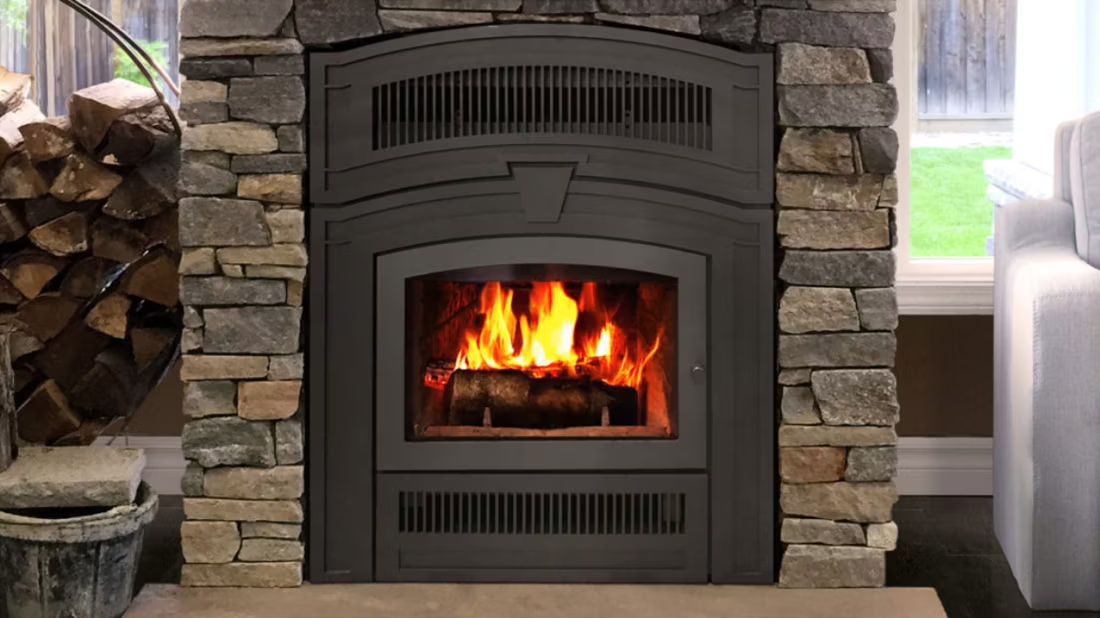
Four fuels. One honest answer for Fallon County.
Three steps. No salesperson until you're ready.
Tell us about your project
Your zip code, your situation, and the fuel you're leaning toward—or let the answers point you to one.
See what's actually available
The brands dealers within 100 miles genuinely carry—real options, never a catalog mirage.
Get your dealer & Project Guide
A trusted local dealer, plus the free Project Guide & Parts List that names every component of the job.
Frequently Asked Questions
Which fuel makes the most sense for a Fallon County home?
It depends on how remote your property is and what you're willing to manage. Wood remains the practical backup fuel across the county—lodgepole pine, ponderosa pine, and douglas fir are the common local species, and a catalytic wood stove can hold a fire through the kind of single-digit overnight lows this county sees regularly, with or without grid power. Gas here almost always means propane rather than piped natural gas, since MDU's gas lines only reach parts of Baker—a propane fireplace insert gives instant heat without relying on the electrical grid to run a blower, though the tank still needs delivery access on rural roads. Pellet stoves are a solid middle ground if you can keep a steady bag supply through Bear Mountain, Lignetics, or Forest Energy dealers, but they do need electricity to run the auger and blower, which matters during ice-storm outages. Electric fireplaces work fine for supplemental heat in town but aren't a serious answer to an 8,085-HDD winter on their own. Most Fallon County households I hear from end up running two fuels—one grid-dependent for daily convenience, one that works with the power off.
Do I need a permit to install a wood stove or gas fireplace in Fallon County?
Within Baker or Plevna city limits, plan on a building permit through the town office for any new wood stove, insert, gas appliance, or pellet stove installation, along with a separate gas permit and licensed installer for propane line work. Outside those towns, unincorporated Fallon County doesn't run a full local building-code enforcement program the way a county building department in a larger jurisdiction would—but state requirements still apply: any propane or natural gas connection needs a Montana-licensed gas fitter, and hardwired electric fireplace installations need a licensed electrician. Most hearth retailers serving the county, including those traveling in from Miles City or Glendive, are used to handling this paperwork as part of the install rather than leaving it to the homeowner.
Does wildfire smoke affect wood burning in Fallon County?
Fallon County doesn't deal with the winter temperature inversions that trigger mandatory burn curtailment in mountain valleys, but wildfire smoke from regional grass and forest fires is a real seasonal concern, especially in late summer and early fall when dry, wind-driven fires move across the prairie. That means the bigger local hearth issue isn't a burn ban—it's defensible space around the home and keeping chimneys and stovepipes clear of buildup before smoke-heavy, high-fire-danger stretches. A creosote buildup from a summer of light use, combined with dry conditions and wind, is a legitimate chimney-fire risk here, which is one more reason an annual fall sweep before heating season starts matters as much as the stove itself.
Can one local retailer handle wood, gas, pellet, and electric in a county this small?
Some can, but expect more driving than in a bigger market. Given Fallon County's population of around 1,750, the retailers with the broadest four-fuel selection tend to be based in Miles City (about 90 minutes west) or Glendive (roughly 45 minutes north), with a smaller Baker-area dealer or two carrying the fastest-moving categories—usually wood and pellet—locally. If you want to see working propane, pellet, wood, and electric units side by side before choosing, it's often worth the drive to a larger regional showroom rather than assuming Baker has everything on display.
How does hearth service work for ranches outside Baker or Plevna?
Technicians serving Fallon County typically base out of Baker, Miles City, or Glendive and build rural routes around the ranches and section-line roads that make up most of the county. Expect a trip charge for service calls well outside town—often more than you'd pay in a denser market, simply because of the distance involved—and expect to book pre-season chimney sweeps and gas inspections in September or early October, before the roads get bad and before every other rural customer is calling at once. If your place is genuinely remote, it's worth asking your propane supplier and your stove technician to coordinate fall visits together, since both are already making the long drive out.
What does fireplace installation typically cost across fuel types in Fallon County?
Costs run higher here than a national average mainly because of travel—installers are often coming from Miles City, Glendive, or across the border from Dickinson. Wood stove or insert installation: roughly $5,000–$10,000 for a typical install, more if the chimney needs full replacement. Propane fireplace, insert, or stove: roughly $5,000–$12,000, with cost driven by whether an existing tank and line are already in place. Pellet stove or insert: roughly $5,000–$8,000 for most installs. Electric fireplace: $200–$3,000 for the unit itself, with labor from a few hundred dollars for plug-and-play up to $1,200 for a hardwired built-in. Rural trip charges on top of these ranges aren't unusual—ask your dealer to itemize travel separately so you know what you're actually paying for.
How much should I budget for a fireplace?
For an average home—covering the fireplace, the vent pipe, and basic installation—a budget between $3,900 and $5,500 gives you a lot of options across wood, gas, and pellet. By the time you add finish work, gas line, and electrical, the average complete installation lands between $5,000 and $12,000 all-in. In a remodel or new build, a good rule is to put about 2.5% of the total project cost toward the fireplace.
Can I install a fireplace myself?
If you're putting a fire in your house on purpose, it's best to work with an expert. Unless you're genuinely experienced in framing, gas line, vent pipe, and the national code on clearances to combustibles, have a professional do it—and ideally the same company that sells you the fireplace, so warranty, service, and liability all live under one roof.
Can a fireplace actually lower my heating bill?
Yes—by creating a comfort zone. A furnace heats every square foot of the house just to warm the one room you're in; a gas fireplace on low burns roughly a sixth of the gas a typical furnace does. Set the furnace around 55–60 degrees as a baseline, then heat the rooms your family actually uses. Families who heat this way commonly save $20–$60 a month.
What is an in-home preview and do I need one?
It's a visit where a hearth professional measures your space, confirms the model you picked actually works in your home, and walks the specs—framing, gas line, venting, finish work—before anything is ordered. Some details you just can't know until you see the house. Never make a down payment without one; it's the single most-skipped step that burns buyers.
Stove and Fireplace Dealers in Fallon County
Listings include WhyFire partner dealers, dealers we have verified as authorized for the brands we recommend, and established local businesses that carry hearth products. Every listing shows which one it is. The ones marked Preferred run on WhyFire's software, so they can show you real pricing and book your appointment right here. No manufacturer pays for placement. How we verify dealers →
Keller Hearth'n Home Products
Find your fireplace in Fallon County.
Tell us about your home and we'll match you with a trusted local dealer serving Fallon County, and send you a free Project Guide & Parts List—the exact parts, including the vent kit, and the dealer we recommend for your project.
Find Your Fireplace →