
Add warmth to Fallon County homes without wood, gas, or a chimney.
Fallon County faces one of the heaviest winter heating loads in the country and winter lows that average around 7°F—cold enough to rival Fargo, North Dakota. Electric fireplaces won't replace your furnace or wood stove out here, but for zone heat, additions, and rentals in Baker, they're a clean, plug-in option. Find the right unit and connect with a trusted local dealer.
Every Project Starts From One of These Five Situations
Reliable zone heat for the plains, no venting required.
Fallon County is sparsely populated eastern Montana ranch country—about 1,750 people spread across open plains around Baker, the county seat. Winters run long and hard: an average low near 7°F and a winter heating season as demanding as the coldest parts of the country put this county in the same cold-climate category as Fargo, North Dakota. Historically, homes here have leaned on wood (lodgepole pine, ponderosa pine, Douglas fir, and aspen are all common locally) and propane furnaces to survive that kind of cold, since natural gas infrastructure doesn't reach most of the rural county.
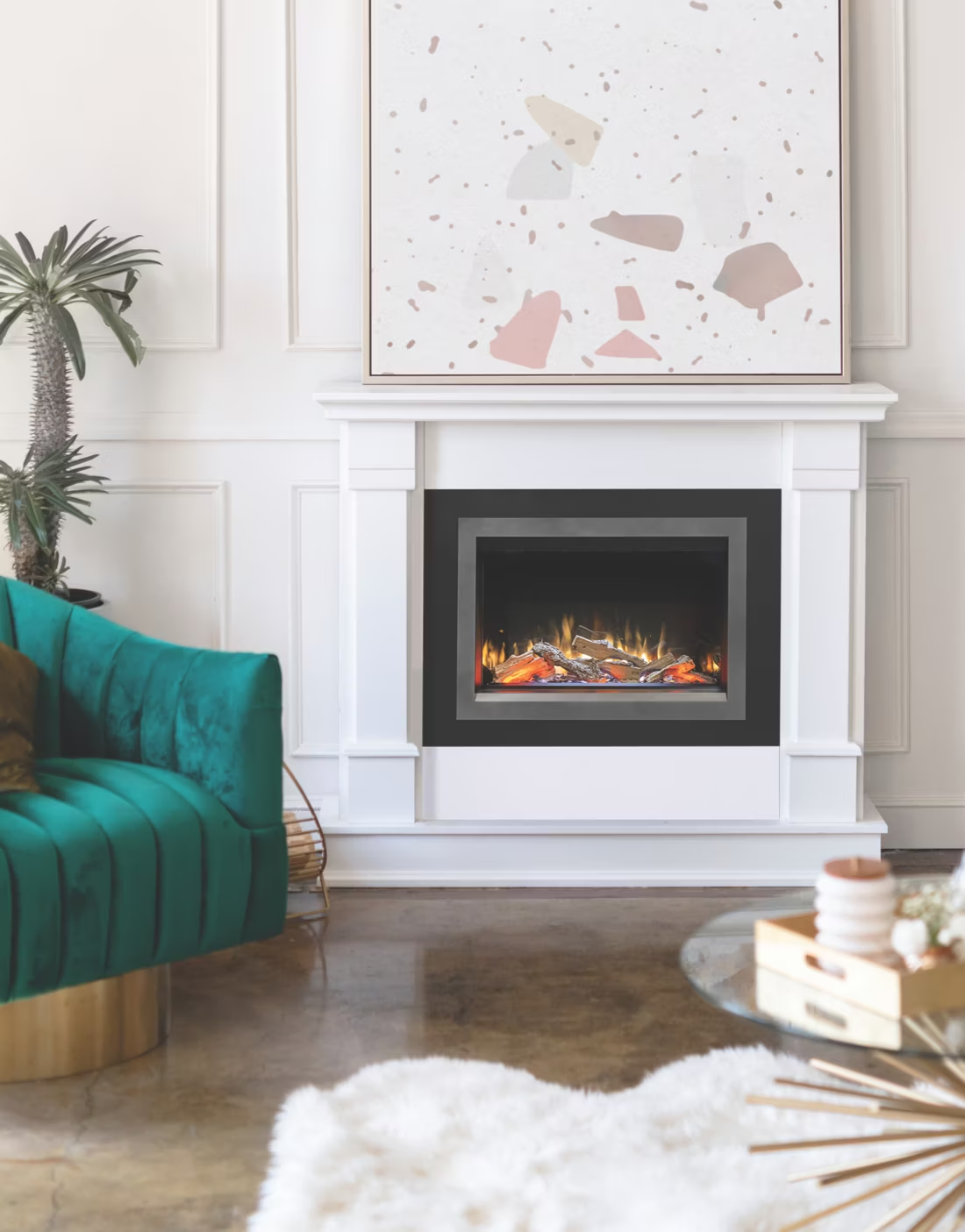
Electric fireplaces don't compete with a propane furnace or a wood stove for raw heat output in a climate this severe, but they fill a real niche: a sunroom addition, a converted garage, a spare bedroom, or a rental unit in Baker where running a chimney or gas line isn't practical. They also sidestep the wildfire smoke concerns that show up in Fallon County during dry summer and fall stretches—no combustion means no indoor air quality tradeoff, and no exterior venting to worry about. For homeowners who want supplemental warmth and the look of a fire without adding another combustion appliance to the house, electric is a straightforward, low-commitment option—and a trusted local dealer can tell you honestly whether it's the right fit for your specific room.
Three steps. No salesperson until you're ready.
Tell us about your project
Your zip code, your situation, and the fuel you're leaning toward—or let the answers point you to one.
See what's actually available
The brands dealers within 100 miles genuinely carry—real options, never a catalog mirage.
Get your dealer & Project Guide
A trusted local dealer, plus the free Project Guide & Parts List that names every component of the job.
Frequently Asked Questions
How much does an electric fireplace installation cost in Fallon County?
Plug-in electric fireplace inserts and stoves typically run $300 to $1,200 installed, since there's no venting, gas line, or chimney work involved—often just a dedicated outlet if the unit draws a full 1,500 watts. Built-in wall units or mantel packages that require framing and a finished surround run higher, generally $1,500 to $2,500. Because Fallon County has so few dealers relative to its population, expect a modest travel charge if your installer is coming from Baker or a neighboring town—worth asking about upfront.
Can an electric fireplace heat my whole house in Fallon County?
No, and any dealer worth working with will tell you that upfront. With a winter heating load among the heaviest in the country and average winter lows around 7°F, Fallon County's cold is in the same range as Fargo or Bismarck, North Dakota. Electric fireplaces are built for zone heating—a single room, roughly 400 square feet or less per unit—not whole-home heat. Most homes here rely on a propane furnace or a wood stove for primary heat, with an electric unit adding supplemental warmth and ambiance to one specific space.
Do I need a permit to install an electric fireplace in Fallon County?
Usually not. Because electric units don't require venting, a chimney, or gas line work, most installations fall outside the building permit requirements that apply to wood stoves and gas fireplaces in the county. The exception is if you're doing structural work—cutting into a wall for a built-in unit, for example—which may trigger a standard building permit through the county. A local installer can tell you quickly whether your specific project needs one.
Will an electric fireplace work during a power outage?
No—electric fireplaces need grid power to run, and Fallon County's rural electric service can go down during winter storms and high-wind events on the plains. If backup heat during an outage matters to you, a wood stove is the more reliable choice for this county, since it burns without any electrical dependency at all. Many Fallon County homes end up with both: wood or propane for primary and backup heat, electric for everyday supplemental warmth in a specific room.
What's the difference between an electric fireplace, insert, and mantel package?
An electric insert is a fixed-dimension unit designed to slide into an existing fireplace opening or a built framed cavity—common for homeowners converting an old masonry fireplace to something lower-maintenance. A mantel package pairs an electric insert with a surrounding cabinet or mantel and can be placed against any wall with an outlet, no existing opening needed. A standalone electric stove mimics the look of a wood or pellet stove but plugs in like any other unit. For most Fallon County homes without an existing fireplace, a mantel package or freestanding stove is the simplest path.
What's the best electric fireplace for Fallon County's climate?
Look for units with a true 1,500-watt heating element and a thermostat rather than a fixed heat setting—that gives you real zone-heating capacity for an addition, sunroom, or spare bedroom rather than just visual flame with token warmth. Wall-mounted units work well in tighter rooms like a converted garage or mudroom; a mantel package suits a main living area where you want the fireplace to be a focal point. Given the county's extreme cold, don't expect any electric unit to offset your propane furnace on the coldest nights—it's there to warm one room comfortably, not replace your primary system.
Will an electric fireplace lower my propane or electric heating bill?
It can, modestly, if you use it correctly—running the electric unit in one occupied room and turning down the propane furnace's zone or thermostat for that space can shave some fuel cost during moderate weather. But on the coldest Fallon County nights, when the ambient temperature is dropping well below zero, the electric unit's 1,500-watt output isn't enough to offset furnace runtime in any meaningful way. Think of it as comfort and convenience for one room rather than a real reduction strategy for your whole-home heating bill.
Where can I buy and install an electric fireplace near me in Fallon County?
With a county population under 2,000, Fallon County doesn't support a dedicated hearth retailer inside its own borders—most homeowners work with a dealer based in Baker or a larger service area covering nearby towns like Glendive or Miles City. That's exactly the gap Find My Fireplace exists to close: we match you with a trusted dealer who actually services this part of eastern Montana, rather than leaving you to guess at big-box options that don't know the local grid, climate, or delivery logistics.
Electric vs. pellet stove—which is right for my Fallon County home?
Pellet stoves from brands like Bear Mountain, Lignetics, or Forest Energy burn compressed wood pellets and produce real heat output—enough to serve as primary or significant supplemental heat in a cold climate like this one—but they require venting, a permit, and an electrical connection to run the auger and blower, so they still fail during a power outage. Electric fireplaces need no venting or permit at all, but their heat output is capped and best suited to a single room rather than a heating strategy for the whole house. If you're trying to meaningfully cut propane or wood use, pellet is the stronger tool; if you just want ambiance and light supplemental warmth in one space with zero installation hassle, electric wins.
Do electric fireplaces actually produce heat?
Yes—most put out around 4,800–5,000 BTUs from a standard outlet, which comfortably warms a bedroom, office, or den as a comfort-zone heater. What they won't do is carry a whole house the way wood, gas, or pellet can. Think of electric as ambiance-first with honest supplemental heat: flames on with no heat in July, flames plus warmth in January.
Can I put a TV above my fireplace?
Yes—with an asterisk. Fireplaces are hot and TVs don't like heat. Either put a mantel between them to deflect rising warmth, or choose a fireplace with heat-management technology that creates a cool zone on the wall above—the wall stays around 125 degrees, barely warm, while the room still gets full heat. If you like clean lines and don't want a mantel, heat management is the answer.
Can a fireplace actually lower my heating bill?
Yes—by creating a comfort zone. A furnace heats every square foot of the house just to warm the one room you're in; a gas fireplace on low burns roughly a sixth of the gas a typical furnace does. Set the furnace around 55–60 degrees as a baseline, then heat the rooms your family actually uses. Families who heat this way commonly save $20–$60 a month.
Can I install a fireplace myself?
If you're putting a fire in your house on purpose, it's best to work with an expert. Unless you're genuinely experienced in framing, gas line, vent pipe, and the national code on clearances to combustibles, have a professional do it—and ideally the same company that sells you the fireplace, so warranty, service, and liability all live under one roof.
Find your electric fireplace in Fallon County.
Tell us about your home and the room you're heating, and we'll match you with a trusted local dealer serving Fallon County—plus a free Project Guide & Parts List with the exact parts for your project and their recommendation.
Find Your Fireplace →