
Set-it-and-forget-it heat for Beartooth Front winters.
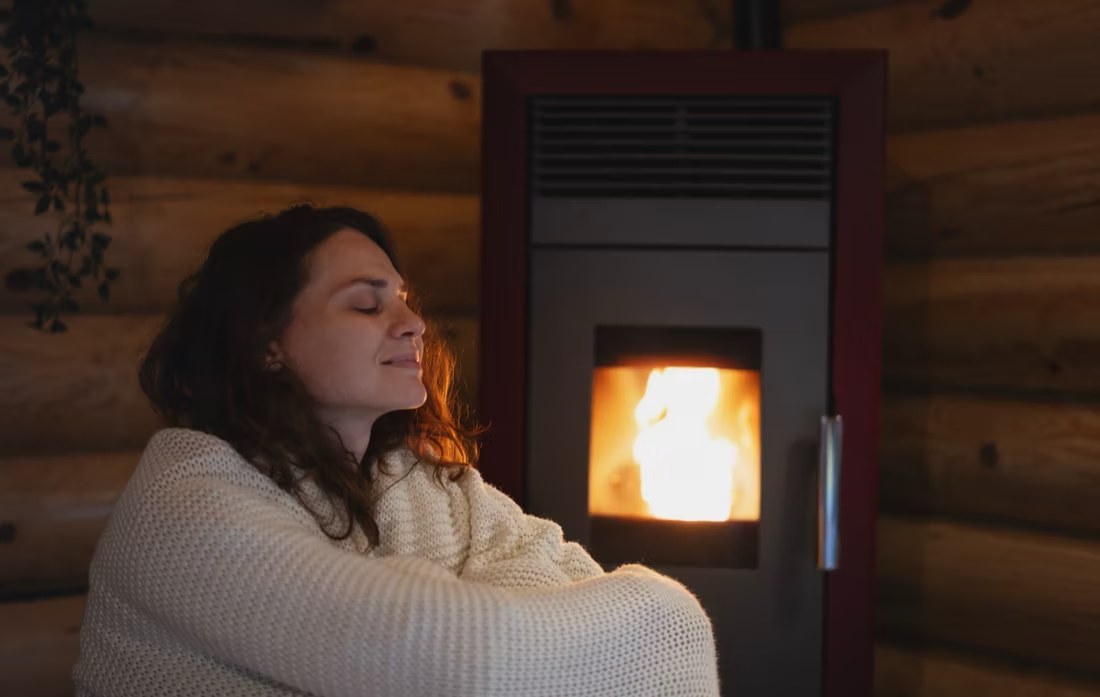
With 8,055 heating degree days and winter lows averaging 14°F, Carbon County runs winters on par with Bismarck, ND—long, hard, and unforgiving. A pellet stove's automated hopper and thermostat control mean less time splitting and stacking and more consistent heat through a season that stretches well past Halloween. I'll match you with a trusted local dealer who knows what actually vents and installs correctly in a Red Lodge, Bridger, or Joliet home.
Every Project Starts From One of These Five Situations
Convenience heat for a county surrounded by lodgepole pine and beetle-killed timber.
Carbon County runs from the Yellowstone River valley near Fromberg and Joliet up into the Beartooth Mountains above Red Lodge, where elevations climb from around 5,555 feet at the county seat to well over 10,000 feet along the Beartooth Plateau. With only about 5,540 residents spread across that terrain, homes here are used to being their own utility in a pinch—and with 8,055 heating degree days, the heating season is long enough that convenience matters as much as raw BTU output. Lodgepole pine, ponderosa pine, douglas fir, and aspen are all abundant on the surrounding national forest and BLM land, but a growing number of Carbon County households—especially retirees, weekend cabin owners near Red Lodge Mountain, and anyone who'd rather not spend fall weekends bucking and splitting rounds—are choosing pellet stoves for the automated feed and cleaner, more predictable burn.
Wildfire smoke is the county's defining air quality concern, particularly in late summer when fire activity in the surrounding forests can blanket the Beartooth Front for days. Pellet stoves burn cleaner and more completely than open wood fires, and they sidestep the need to cut and haul cordwood out of fire-scarred or beetle-killed stands, which is a real logistical headache in parts of the Shoshone National Forest and BLM ground near the county. Regional pellet brands like Bear Mountain, Lignetics, and Forest Energy are sold through dealers along the Billings-to-Red Lodge corridor, and a properly sized pellet insert or freestanding unit gives you steady, thermostat-controlled heat without tending a fire every few hours through a Montana winter that doesn't let up until May.
Three steps. No salesperson until you're ready.
Tell us about your project
Your zip code, your situation, and the fuel you're leaning toward—or let the answers point you to one.
See what's actually available
The brands dealers within 100 miles genuinely carry—real options, never a catalog mirage.
Get your dealer & Project Guide
A trusted local dealer, plus the free Project Guide & Parts List that names every component of the job.
Frequently Asked Questions
How much does a pellet stove installation cost in Carbon County?
Most pellet stove installations run in the $3,000 to $6,000 range once you account for the unit, a code-compliant hearth pad, and a through-wall vent kit—a straightforward setup in a Red Lodge or Bridger home with a reasonable exterior wall for venting lands on the lower end. Costs climb if the home needs a longer vent run, structural work for a hearth pad, or electrical work to add a dedicated outlet for the auger and blower, which comes up more often in older ranch houses around Fromberg and Joliet. A local dealer will give you a firm number after walking the space rather than quoting off a phone call.
What size pellet stove do I need for my home?
It depends on where in the county you sit. Down in the Yellowstone River valley around Joliet or Fromberg, a mid-size pellet stove rated for 1,200 to 2,000 square feet covers most main living areas built to typical insulation standards. Up toward Red Lodge and especially cabins pushing higher into the Beartooth foothills, winter lows run colder for longer, so the same footprint often calls for a larger hopper and higher BTU output to keep up overnight without constant refilling. A dealer sizing your stove in person will factor in elevation, insulation, and whether the stove is your primary heat source or backup—not just square footage off a chart.
Do I need a permit to install a pellet stove in Carbon County?
Yes, most new installations require a building permit, which in Carbon County is handled through the county building department based out of the courthouse in Red Lodge. The inspector will be checking hearth pad clearances, the wall thimble venting path, and that the unit is listed and installed to manufacturer specifications. Most established local dealers pull this permit as part of the installation, which is one good reason to go through a trusted installer rather than a private handyman deal, especially in a rural county where a failed inspection can mean a long drive back out to fix it.
Where do I buy pellet fuel in Carbon County, and how much storage do I need?
Bear Mountain, Lignetics, and Forest Energy are the regional brands most commonly stocked by dealers serving the Billings-to-Red Lodge corridor, typically sold by the pallet—around 50 forty-pound bags to a ton. A household running a pellet stove as primary heat through Carbon County's 8,055-heating-degree-day winter can go through 2 to 3 tons or more in a season, so plan for dry, covered storage—a garage bay or mudroom works, but bags left exposed to Montana's damp spring snowmelt will swell and clog the auger. Buying your season's supply in late summer, before the winter rush, also tends to lock in better pricing and availability out this far from Billings.
Is it cheaper to just cut my own firewood instead of buying pellets?
On raw fuel cost, yes—Shoshone National Forest and the BLM Montana State Office both issue personal-use cutting permits covering lodgepole pine, ponderosa pine, douglas fir, and aspen for $5 to $20 per cord and $10 per cord respectively, with cutting seasons running roughly April or May through October. But that cost comparison skips the labor: felling, bucking, splitting, hauling, and seasoning wood for a year takes real time, especially on steep BLM or forest ground. Pellet fuel costs more per BTU but requires none of that labor and burns with far less maintenance—which is exactly why it appeals to older homeowners, second-home owners near Red Lodge Mountain, and anyone who wants heat without a woodpile taking over the yard.
How much maintenance does a pellet stove actually need?
Plan on emptying the ash pan roughly once a week during heavy winter use and wiping down the glass every few days if you're burning daily, which is common for Carbon County households leaning on pellet heat through a long, cold season. Beyond that, an annual professional service—checking the auger, exhaust blower, gaskets, and venting—typically runs $150 to $250 and is worth scheduling in late summer before the first cold snap off the Beartooth Front. Low-ash pellets from brands like Bear Mountain or Lignetics cut down on how often you need to clean the burn pot, which matters if the stove is running most of the day at elevation.
Will my pellet stove work during a winter power outage?
Not on its own. Pellet stoves rely on electricity to run the auger that feeds fuel and the blower that pushes heat into the room, so a power outage shuts the stove down even with a full hopper—something to plan around given how exposed power lines are to winter storms along the Beartooth Front and up toward Red Lodge. Many rural Carbon County homeowners pair a pellet stove with a small backup battery system or a generator sized to keep the auger and blower running, or they keep a wood stove or fireplace as a no-electricity fallback. Ask your local dealer about battery backup options when you're picking a model if outages are a real concern for your property.
Which pellet brands are actually available to me locally?
Bear Mountain, Lignetics, and Forest Energy are the three regional brands most consistently stocked by dealers serving Carbon County, typically sourced through distribution out of the Billings area. All three are widely used across Montana and produce a consistent, low-ash pellet suited to daily use through a long heating season. Availability can tighten up during a hard cold snap when demand spikes across the region, so buying your pallets ahead of the season rather than waiting for the first big storm is the safer play out here.
Pellet stove vs. wood stove—which makes more sense for my Carbon County home?
Wood works with zero electricity and pairs with cheap Forest Service and BLM cutting permits—$5 to $20 per cord for lodgepole pine, ponderosa pine, douglas fir, or aspen—which matters if you're off the beaten path and worried about storm outages knocking out power for days. Pellet stoves trade that off-grid independence for real convenience: no splitting, no stacking, and a cleaner, more consistent burn that's easier to live with day to day, especially appealing during summer wildfire smoke stretches when handling fire-scarred timber is more hassle than it's worth. For a full-time Red Lodge residence with reliable power, pellet is often the easier daily driver; for a remote cabin higher up toward the Beartooth Plateau, wood heat as at least a backup is worth serious consideration.
Why is my open fireplace making my house colder?
Open fireplaces suck—literally. As the fire burns, it consumes air your furnace already paid to heat and pulls it out through the chimney, so the house is actually colder after the fire goes out than before you lit it. An insert fixes this: it seals the chimney, puts fixed glass across the front, and turns that hole in your house into a real heat source.
Why is a fireplace insert so efficient?
An insert does two things: it seals the chimney completely, so you stop losing air you already paid to heat, and it radiates warmth into the room through the firebox and glass. Most add a heat-exchange fan that pulls cool room air underneath, wraps it around the hot firebox, and pushes it back out warm. Your home is more efficient before you've even lit the first fire.
How much should I budget for a fireplace?
For an average home—covering the fireplace, the vent pipe, and basic installation—a budget between $3,900 and $5,500 gives you a lot of options across wood, gas, and pellet. By the time you add finish work, gas line, and electrical, the average complete installation lands between $5,000 and $12,000 all-in. In a remodel or new build, a good rule is to put about 2.5% of the total project cost toward the fireplace.
Can I install a fireplace myself?
If you're putting a fire in your house on purpose, it's best to work with an expert. Unless you're genuinely experienced in framing, gas line, vent pipe, and the national code on clearances to combustibles, have a professional do it—and ideally the same company that sells you the fireplace, so warranty, service, and liability all live under one roof.
Pellet Brands Stocked Around Carbon County
Manufacturers will point you to the nearest stocking dealer.
Get your free Project Guide & Parts List for a pellet stove in Carbon County.
Tell me about your home, its elevation, and how you plan to use the stove, and I'll match you with a trusted local Carbon County dealer and send a free Project Guide & Parts List—the exact equipment, including the vent kit, for your pellet heat project.copy_cta_eyebrow
Find Your Fireplace →