
Zone heat and ambiance—no chimney required—in Carbon County.
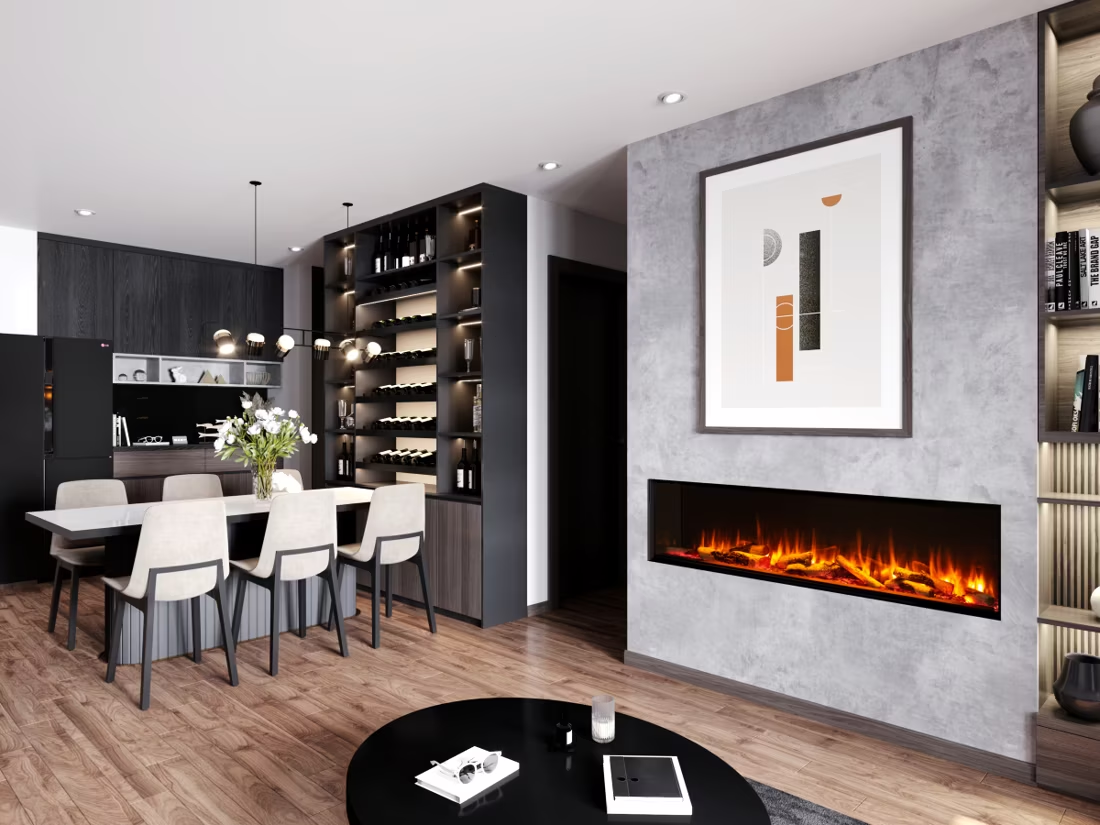
From Red Lodge to Bridger and Fromberg, electric fireplaces add instant warmth to additions, rentals, and rooms where running a flue or gas line isn't practical. Find the right unit and connect with a trusted local dealer.
Every Project Starts From One of These Five Situations
A plug-in supplement to a wood or propane furnace, not a replacement for one.
Carbon County sits along the front edge of the Beartooth Mountains, with Red Lodge at roughly 5,555 feet and terrain that climbs sharply toward the Shoshone National Forest boundary. With a winter heating load on par with Duluth, MN or International Falls, MN, the county's winters run long and hard—and the average winter low of 14°F doesn't tell the full story, since overnight lows well below zero are routine once storms drop off the Beartooth Highway. In a climate this demanding, electric heat rarely stands alone as the primary source for a whole house. Most Carbon County homes still lean on wood, propane, or a furnace for the bulk of the season.
Where electric earns its place is everywhere a chimney or gas line doesn't make sense. Red Lodge has a busy short-term rental market tied to Red Lodge Mountain Resort and the Beartooth Highway, and electric inserts are a common way for owners to add fireplace ambiance to a rental unit without venting work or an annual chimney sweep. Historic downtown buildings in Red Lodge and Bridger with old, unused masonry fireplaces are good candidates for electric inserts that reuse the existing opening. Ranch bunkhouses, garage conversions, and additions across the county also use electric units for supplemental zone heat in a single room. Beartooth Electric Cooperative, headquartered in Red Lodge, serves most of the county, with NorthWestern Energy covering some outlying areas—either way, larger built-in units typically need a dedicated circuit, which is worth discussing with your electrician and local dealer before you buy.
Three steps. No salesperson until you're ready.
Tell us about your project
Your zip code, your situation, and the fuel you're leaning toward—or let the answers point you to one.
See what's actually available
The brands dealers within 100 miles genuinely carry—real options, never a catalog mirage.
Get your dealer & Project Guide
A trusted local dealer, plus the free Project Guide & Parts List that names every component of the job.
Frequently Asked Questions
How much does an electric fireplace installation cost in Carbon County?
A basic plug-in freestanding or wall-mount electric fireplace runs $150 to $500 installed, since it uses a standard 120V outlet and generally requires no electrician or permit. Larger built-in or wall-recessed units that need a dedicated 20-amp or 240V circuit run $600 to $1,800 once electrician labor is included, and that's the more common path for a primary living-room installation in a Carbon County home. Converting an existing masonry fireplace to an electric insert—a popular option in older Red Lodge and Bridger homes—typically runs $1,000 to $2,500 depending on the insert size and whether new wiring needs to be run to the fireplace opening. Local dealers will confirm the exact number after seeing your electrical panel and the fireplace opening.
Can an electric fireplace actually heat my home through a Carbon County winter?
For most of the county, no—and it's worth being direct about that. With a winter heating load on par with Duluth, MN or International Falls, MN, Carbon County's winters are severe, and a typical electric fireplace tops out around 5,000 watts (roughly 17,000 BTU), enough to comfortably heat one room, not a whole house. Homes here rely on wood stoves, propane furnaces, or central heat as the primary system, with electric units used for zone heat in a specific room or as a low-maintenance ambiance piece. If you're heating a small addition, a single bedroom, or a detached bunkhouse, an electric unit can genuinely carry that space. If you're trying to replace a furnace, talk to a local dealer about wood or propane options instead.
What's the difference between an electric insert, a wall-mount unit, and a freestanding electric stove?
An electric insert is built to slide into an existing masonry fireplace opening, which makes it the natural choice for older homes in Red Lodge or Fromberg with an unused wood-burning fireplace. A wall-mount or built-in unit is designed for new construction or remodels, recessed into a framed wall much like a flat-screen TV, and usually needs a dedicated circuit. A freestanding electric stove sits on the floor like a small wood stove and simply plugs into a standard outlet, making it the fastest option for a rental unit or an outbuilding where you want heat and ambiance with zero electrical work. Local dealers can walk through which fits your specific room and wiring situation.
Do I need a permit to install an electric fireplace in Carbon County?
A plug-in freestanding or wall-mount unit that uses an existing outlet generally doesn't require a permit. A hardwired built-in unit or an insert that needs new wiring run to a dedicated circuit falls under the Carbon County Building Department's electrical permitting, and the work needs to be done by a licensed electrician. Most local dealers either handle this coordination directly or can refer you to an electrician who regularly does this kind of hearth-related wiring work in the county.
What's a good electric fireplace for a Carbon County room addition or bunkhouse?
For a single room or small addition, look at 4,600–5,000 watt units from brands like Dimplex, Amantii, or Napoleon, which deliver close to the maximum realistic output for electric heat and can noticeably warm a 300–400 square foot space on their own. For ranch outbuildings or bunkhouses without existing wiring, a plug-in freestanding stove avoids the cost of running new circuits altogether, though its heat output is more modest. If the goal is mostly ambiance with occasional supplemental heat—common in Red Lodge vacation rentals—a lower-wattage insert or wall unit is usually sufficient and keeps the electric bill down.
How much does it cost to run an electric fireplace in Carbon County?
Running costs depend on your electric rate through Beartooth Electric Cooperative or NorthWestern Energy, whichever serves your part of the county, but a typical 1,500-watt heating element running for several hours a day during cold snaps adds a modest amount to a monthly bill—generally far less than heating an entire home electrically would cost. Because electric units are usually run for zone heat rather than whole-house heat in this climate, most owners use them a few hours a day in a specific room rather than continuously, which keeps costs manageable even during the coldest stretches along the Beartooth front.
Where do electric fireplaces make the most sense in Carbon County?
The clearest fits are short-term rentals near Red Lodge Mountain Resort and along the Beartooth Highway corridor, where owners want fireplace ambiance without venting maintenance between guest turnovers; historic homes in downtown Red Lodge, Bridger, and Fromberg with existing but unused masonry fireplaces that are good insert candidates; and additions, bunkhouses, or garage conversions on county ranch properties where running a new gas line or chimney isn't worth the cost for a room used occasionally. Electric is a poor fit as the sole heat source for a year-round primary residence given the county's heating demand.
Electric vs. wood or propane—which is right for my Carbon County home?
Wood stoves burning local lodgepole pine, ponderosa pine, or Douglas fir remain the backbone of primary and backup heat for many Carbon County homes, especially given how often winter storms can knock out power along the Beartooth front—wood keeps working when the grid doesn't, and electric doesn't. Propane offers reliable, thermostat-controlled whole-house heat without the ash and loading of wood. Electric fits neither of those primary-heat roles well here; its strength is convenience, zero venting, and instant ambiance in a specific room. Many Carbon County households end up with a combination: propane or wood for the house, electric for a bedroom, addition, or rental unit that needs its own heat.
Can I put an electric insert into my existing wood-burning fireplace?
Yes, and it's a common project in Carbon County's older housing stock, particularly in Red Lodge and Fromberg homes built before mid-century with masonry fireplaces that see little or no use. An electric insert slides into the existing opening, usually with minimal modification to the surround, and gives you fireplace ambiance and supplemental heat without cutting or cleaning a flue. If the fireplace opening is an unusual size, a local dealer can measure it and recommend an insert model that fits, or discuss a custom surround if needed.
Do electric fireplaces actually produce heat?
Yes—most put out around 4,800–5,000 BTUs from a standard outlet, which comfortably warms a bedroom, office, or den as a comfort-zone heater. What they won't do is carry a whole house the way wood, gas, or pellet can. Think of electric as ambiance-first with honest supplemental heat: flames on with no heat in July, flames plus warmth in January.
Can I put a TV above my fireplace?
Yes—with an asterisk. Fireplaces are hot and TVs don't like heat. Either put a mantel between them to deflect rising warmth, or choose a fireplace with heat-management technology that creates a cool zone on the wall above—the wall stays around 125 degrees, barely warm, while the room still gets full heat. If you like clean lines and don't want a mantel, heat management is the answer.
What is an in-home preview and do I need one?
It's a visit where a hearth professional measures your space, confirms the model you picked actually works in your home, and walks the specs—framing, gas line, venting, finish work—before anything is ordered. Some details you just can't know until you see the house. Never make a down payment without one; it's the single most-skipped step that burns buyers.
Can I install a fireplace myself?
If you're putting a fire in your house on purpose, it's best to work with an expert. Unless you're genuinely experienced in framing, gas line, vent pipe, and the national code on clearances to combustibles, have a professional do it—and ideally the same company that sells you the fireplace, so warranty, service, and liability all live under one roof.
Find your electric fireplace in Carbon County.
Tell us about your room, your wiring, and what you're trying to heat, and we'll match you with a trusted local dealer and send over your free Project Guide & Parts List—a plan for your electric fireplace project in Carbon County, with the right unit, wiring needs, and recommended installer.
Find Your Fireplace →