
Find heat that holds through a Carbon County winter.
Wood, gas, pellet, and electric fireplace resources for Red Lodge, Bridger, Fromberg, Joliet, Roberts, and Belfry—plus the ranches and cabins scattered across the Beartooth foothills. Get matched with a trusted local dealer who knows what actually works through a long, hard Carbon County winter.
Every Project Starts From One of These Five Situations
Beartooth-country heating in Carbon County, Montana.
Carbon County stretches from the Yellowstone River bottoms near Laurel up into the Beartooth Mountains, where the Beartooth Highway tops 10,947 feet—the highest paved road in Montana. At just 5,540 residents scattered across nearly 2,000 square miles, most homes here rely on a primary heat source that can run hard and long: winters average a 14°F low and bring a long, cold heating season, putting Carbon County in the same cold-climate tier as Bozeman, about 100 miles west. Lodgepole pine, ponderosa pine, Douglas fir, and aspen are the wood species most homeowners burn, much of it self-cut under Shoshone National Forest or BLM Montana permits.
What you'll find on this hub: hearth retailers, service technicians, and fuel suppliers covering every community in the county—Red Lodge, Bridger, Fromberg, Joliet, Roberts, and Belfry, plus the ranches in between. Pick your fuel below for local dealer listings, installed costs, and unit recommendations. Whether you're heating a Red Lodge ski cabin or a ranch house out toward Belfry, this is the place to start.
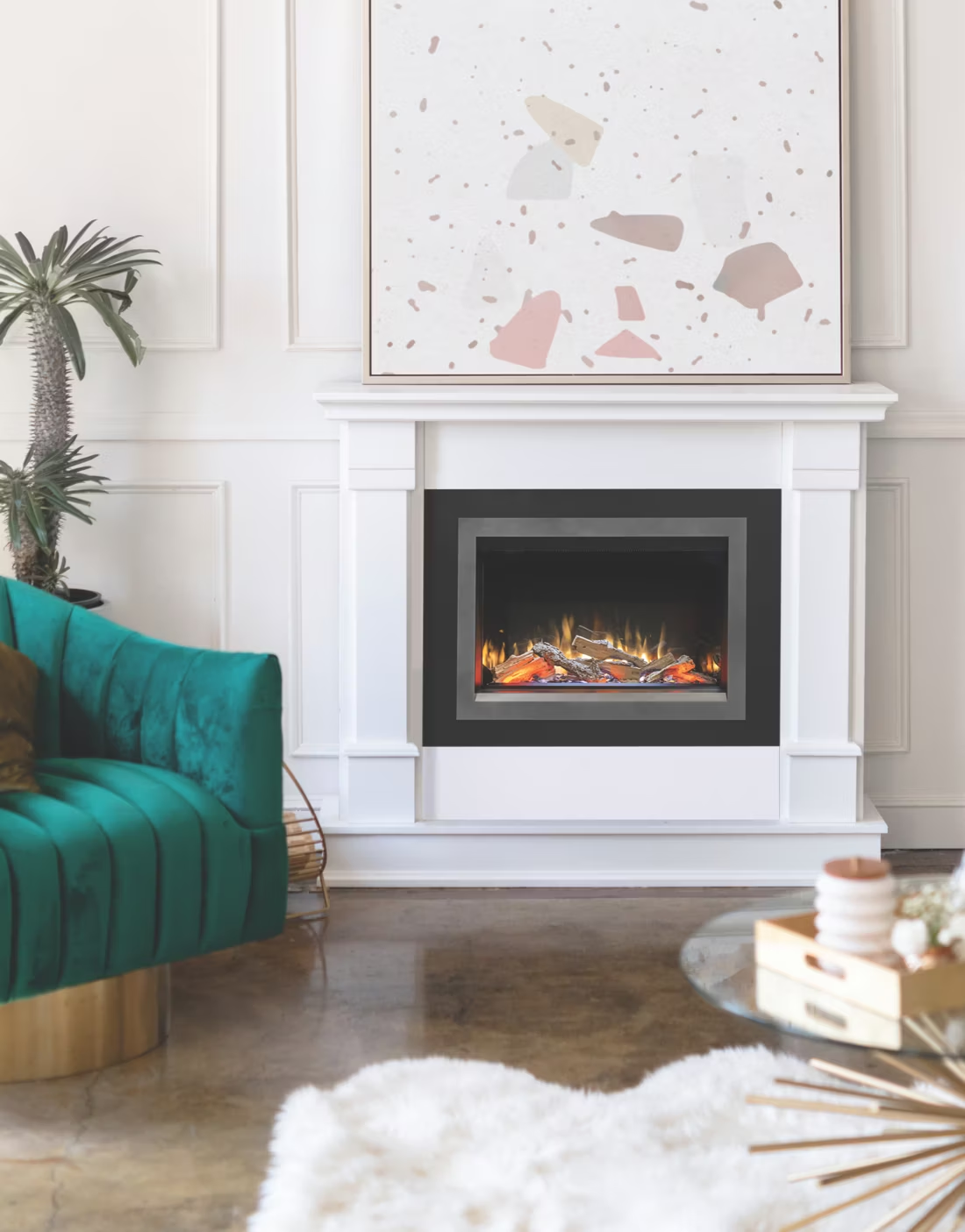
Four fuels. One honest answer for Carbon County.
Three steps. No salesperson until you're ready.
Tell us about your project
Your zip code, your situation, and the fuel you're leaning toward—or let the answers point you to one.
See what's actually available
The brands dealers within 100 miles genuinely carry—real options, never a catalog mirage.
Get your dealer & Project Guide
A trusted local dealer, plus the free Project Guide & Parts List that names every component of the job.
Frequently Asked Questions
Which fuel works best for a Carbon County home?
It depends on the property. Wood remains the backbone fuel in rural Carbon County—lodgepole pine, ponderosa pine, Douglas fir, and aspen are all locally abundant, and many homeowners cut their own under Shoshone National Forest or BLM Montana permits. A catalytic stove sized for the cold—this county sees a long, demanding heating season similar to Bozeman—can hold an overnight burn through a 14°F low. Propane is the common convenience fuel here since natural gas mains don't reach most of the county; propane fireplaces and inserts give instant heat without hauling wood. Pellet stoves are a solid middle ground for homeowners who want wood-style heat without splitting and stacking—Bear Mountain and Lignetics pellets are both available regionally. Electric fireplaces work well as supplemental heat in a bedroom or den but shouldn't be the only heat source through a Beartooth-foothills winter. Many households run wood or pellet as primary and propane or electric as backup.
Do I need a permit to install a fireplace in Carbon County?
Generally yes. New wood stoves, inserts, gas or propane appliances, and pellet stoves typically require a building permit through Carbon County's building department, and any gas or propane line work needs a licensed installer and separate gas permit. Wood-burning appliances need to meet current EPA emissions standards to be installed new. Electric fireplaces are usually permit-free unless you're hardwiring a built-in unit into a new circuit. Most local hearth retailers pull the permit as part of the installation, so you're not navigating county paperwork solo.
Does wildfire smoke affect wood burning in Carbon County?
It affects the summer and fall more than the winter heating season. Carbon County sits close to the Beartooth and Absaroka ranges, and regional wildfire smoke can settle into the valleys during dry summer months—it's a real air quality factor here, distinct from the winter wood-smoke inversions you see in some western basins. For your heating stove, the practical takeaway is the same either way: an EPA-certified wood or pellet stove burns cleaner and more efficiently than an old uncertified unit, which matters both for your own indoor air and for the county's air quality during fire season. Defensible space around your woodpile and property is also worth planning for, given the fire risk in the surrounding national forest.
Can one local retailer handle all four fuel types in a county this small?
Not always, and that's normal given Carbon County's population of about 5,540. Retailers based in Red Lodge or nearby Billings tend to carry two or three fuel types rather than all four, and dealers willing to drive out to Bridger, Fromberg, Joliet, Roberts, or Belfry for installation are worth prioritizing over a big-box option that won't service rural addresses. If you're comparing wood, gas, pellet, and electric side by side, the county + fuel pages above break out which dealers stock and install each fuel.
How does installation and service work for the more remote parts of the county?
Technicians generally base out of Red Lodge and drive out along Highway 212 and the smaller county roads to reach Bridger, Fromberg, Joliet, and Belfry. The Beartooth Highway itself closes seasonally (typically mid-October through late May) due to snow, so if you're up in that corridor, schedule wood or pellet stove service before the pass closes for winter rather than waiting for a mid-season emergency. Expect a modest trip fee for the more remote ranch addresses, and book pre-season appointments (August–September) if you can—winter slots fill quickly once temperatures drop toward that 14°F average low.
What does fireplace installation typically cost across fuel types in Carbon County?
Wood stove or insert: roughly $4,500–$9,500 for a standard install, more if new chimney construction is involved. Propane fireplace, insert, or stove: about $4,000–$10,000 depending on whether an existing propane line and tank are already in place. Pellet stove or insert: typically $4,500–$7,500. Electric fireplace: $200–$3,000 for the unit itself, plus $400–$1,200 in labor for anything beyond a plug-and-play install. The county + fuel pages above have more detail tied to specific local dealer pricing.
Wood, gas, pellet, or electric—how do I choose?
Match the fuel to your life, not the other way around. Wood: lowest fuel cost and total power-outage independence, but you're hauling and stacking. Gas: press a button, set a thermostat, no maintenance to speak of. Pellet: wood economics with automatic feeding, in exchange for weekly cleaning and a need for electricity. Electric: plugs in anywhere with honest supplemental heat. Nobody regrets the fuel that fits how they actually live.
Does a fireplace add value to my home?
On average, a fireplace adds back to the home about the same amount you spent installing it. Add the monthly savings from heating the rooms you actually use instead of the whole house—often hundreds of dollars a year—and the value case is strong before you even count what a fire does for how your family uses the room.
What is an in-home preview and do I need one?
It's a visit where a hearth professional measures your space, confirms the model you picked actually works in your home, and walks the specs—framing, gas line, venting, finish work—before anything is ordered. Some details you just can't know until you see the house. Never make a down payment without one; it's the single most-skipped step that burns buyers.
How much should I budget for a fireplace?
For an average home—covering the fireplace, the vent pipe, and basic installation—a budget between $3,900 and $5,500 gives you a lot of options across wood, gas, and pellet. By the time you add finish work, gas line, and electrical, the average complete installation lands between $5,000 and $12,000 all-in. In a remodel or new build, a good rule is to put about 2.5% of the total project cost toward the fireplace.
Stove and Fireplace Dealers in Carbon County
Listings include WhyFire partner dealers, dealers we have verified as authorized for the brands we recommend, and established local businesses that carry hearth products. Every listing shows which one it is. The ones marked Preferred run on WhyFire's software, so they can show you real pricing and book your appointment right here. No manufacturer pays for placement. How we verify dealers →
Finest Flames Stove & Hearth
Get matched with a Carbon County hearth dealer.
Tell us about your home and fuel preference and we'll match you with a trusted local dealer and send a free Project Guide & Parts List—the exact parts, vent kit included, and the dealer we recommend for your Carbon County project.
Find Your Fireplace →