
Real Heat, No Chimney Required.
For Oakville homes along the Mississippi bluffs, an electric fireplace delivers real ambiance and supplemental warmth without a flue, a gas line, or a wood permit. Find the right unit and get matched with a trusted local installer.
Every Project Starts From One of These Five Situations
The easiest upgrade for St. Louis County homes.
Oakville sits low along the Mississippi River bluffs in south St. Louis County, at just 577 feet of elevation with a climate zone 4A profile. Winters here average a 22°F low and a real Midwest winter season, but nowhere near the extended deep-freeze stretches you'd see in a place like Duluth, MN. That milder heating load is a big part of why electric fireplaces have become such a common choice in the subdivisions around Mehlville and Baumgartner: homeowners want the look and feel of a fire without committing to a full wood-burning or gas system for what's often a shoulder-season or zone-heating need.
An electric unit skips the venting, the chimney, and the annual sweep entirely—a real advantage in Oakville's ranch homes and walk-out basements, where running new gas line or masonry work isn't always practical. Most plug directly into a standard 120V outlet or connect to a dedicated 240V circuit for larger built-ins, and Ameren Missouri's residential rate of roughly $0.1256 per kWh keeps day-to-day operating costs modest. Any electrical work beyond a simple plug-in typically needs a permit through the St. Louis County Building Department, but there's no combustion appliance inspection or annual chimney certification to keep up with.
Three steps. No salesperson until you're ready.
Tell us about your project
Your zip code, your situation, and the fuel you're leaning toward—or let the answers point you to one.
See what's actually available
The brands dealers within 100 miles genuinely carry—real options, never a catalog mirage.
Get your dealer & Project Guide
A trusted local dealer, plus the free Project Guide & Parts List that names every component of the job.
Frequently Asked Questions
How much does an electric fireplace installation cost in Oakville?
A plug-in electric insert or freestanding unit that uses an existing 120V outlet typically runs $300 to $1,000 installed, since there's no new wiring involved. A built-in wall unit or a linear electric fireplace that requires a dedicated 240V circuit run by a licensed electrician generally lands between $1,500 and $4,000 in the Oakville area, depending on wall framing, finish work, and whether the circuit has to be run from the panel through a finished basement or bonus room. Retrofitting an existing masonry wood fireplace with an electric insert is usually on the lower end of that range since the surround is already built.
Do I need a permit to install an electric fireplace in Oakville?
If you're plugging a unit into an existing outlet, no permit is required. If your installer needs to add a new dedicated circuit—common for larger built-in or linear models—that electrical work requires a permit through the St. Louis County Building Department, since Oakville falls under county jurisdiction rather than its own municipal building department. There's no venting, gas line, or chimney inspection to coordinate, which is one of the reasons electric installs move faster than wood or gas projects here.
How much does it cost to run an electric fireplace in Oakville?
At Ameren Missouri's residential rate of about $0.1256 per kWh, a typical electric fireplace drawing 1,500 watts on its heat setting costs roughly $0.19 an hour to run. Most units let you run the flame effect with the heater off, which draws only 30 to 100 watts—pennies per hour—making it easy to enjoy the ambiance year-round without the heating cost, then switch on supplemental heat during Oakville's colder January and February stretches.
Electric vs. gas—which is right for my Oakville home?
Gas fireplaces are a standard, well-established option in Oakville and typically deliver more consistent, higher-output heat for larger rooms, but they require a gas line, venting for most models, and periodic professional service. Electric fireplaces skip all of that: no gas line, no venting, and installation that's often a fraction of the cost and time. For a finished basement, a bedroom, or a room where you mainly want ambiance with some supplemental warmth on mild winter days, electric is usually the simpler and more budget-friendly fit. For a primary living space where you want a gas fireplace as a real heat source during sustained cold snaps, gas still has the edge.
What type of electric fireplace works best in an Oakville home?
It depends on the room. For finished walk-out basements—common throughout Oakville's ranch and split-level homes—a linear wall-mount unit or an electric insert set into a framed surround looks clean and doesn't eat into floor space. For homes with an existing wood-burning masonry fireplace that's rarely used, an electric insert that slides into the existing firebox is a popular, low-cost retrofit that keeps the mantel and surround intact while eliminating the maintenance of an open hearth. Freestanding electric stoves are a good fit for smaller rooms or as a secondary heat source in a home office or sunroom addition.
Will an electric fireplace actually heat my room, or is it just for looks?
Most residential electric fireplaces put out the equivalent of 5,000 to 9,000 BTUs, enough to comfortably supplement heat in a single room of 300 to 400 square feet—a den, a basement family room, or a bedroom. Given Oakville's moderate winter heating load, that's usually sufficient to take the chill off during most of the season without running the furnace as hard. Electric units aren't designed to replace central heat on the coldest nights of the year, but as a zone-heating supplement in a specific room, they perform well here.
Are electric fireplaces safe for homes with kids or pets?
Yes—this is one of the strongest arguments for electric in family-heavy neighborhoods like the ones around Oakville's subdivisions near Blades and Mehlville schools. There's no open flame, no glass hot enough to burn on contact (most units stay cool or barely warm to the touch), and no ash, soot, or combustion byproducts to worry about. Many models also have a heater-off ambiance mode, so you can run the flame effect for a bedroom or playroom without generating any heat at all.
Can I convert my existing wood-burning fireplace to electric?
Yes, and it's a common project for older Oakville homes built with a traditional masonry fireplace that rarely gets used. An electric insert slides into the existing firebox opening, uses the surround and mantel you already have, and typically just needs a nearby outlet or a short electrical run. It's a much simpler retrofit than a gas conversion since there's no flue liner or gas line to install—the existing chimney can simply be capped or left as-is for aesthetics.
Electric vs. wood—is wood heat an option in Oakville?
New wood-burning stove installations are uncommon in Oakville—it's a densely built suburban section of St. Louis County with smaller lots, and most newer homes were never plumbed or framed for a wood-burning appliance the way a rural property might be. Where wood shows up locally, it's almost always an older existing masonry fireplace rather than a new installation. For homeowners with one of those older fireplaces who want lower maintenance without giving up the look, converting to an electric insert is by far the more common path than adding a new wood-burning setup.
Can I put a TV above my fireplace?
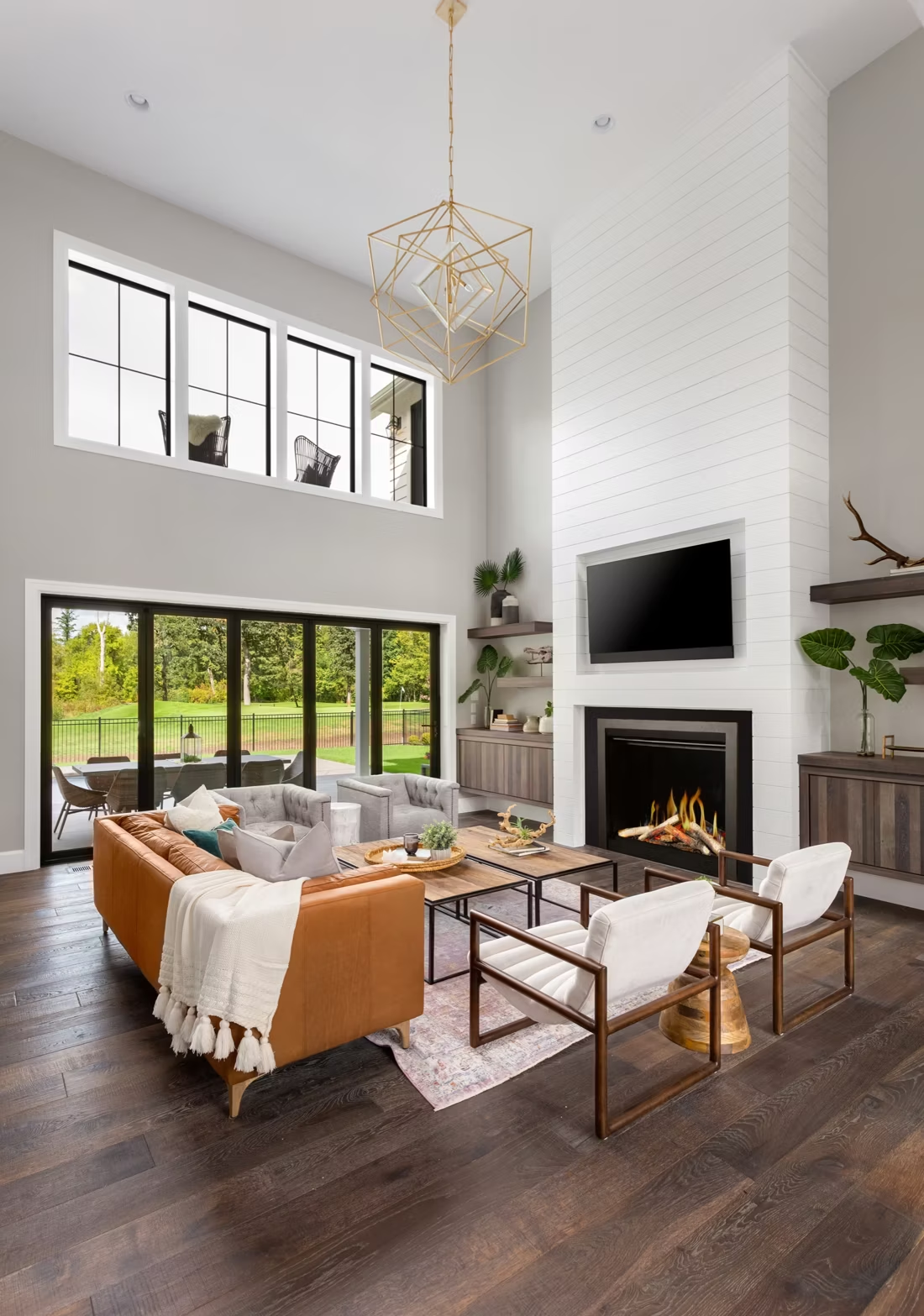
Yes—with an asterisk. Fireplaces are hot and TVs don't like heat. Either put a mantel between them to deflect rising warmth, or choose a fireplace with heat-management technology that creates a cool zone on the wall above—the wall stays around 125 degrees, barely warm, while the room still gets full heat. If you like clean lines and don't want a mantel, heat management is the answer.
How much does an electric fireplace cost to run?
With the heater on, a typical unit draws about 1,500 watts—at average electric rates that's roughly 20 cents an hour. Run the flame effect alone and it costs pennies; the flames are LED-driven and use about as much power as a light bulb. There's no pilot light, no fuel delivery, and essentially no maintenance.
Does a fireplace add value to my home?
On average, a fireplace adds back to the home about the same amount you spent installing it. Add the monthly savings from heating the rooms you actually use instead of the whole house—often hundreds of dollars a year—and the value case is strong before you even count what a fire does for how your family uses the room.
What is an in-home preview and do I need one?
It's a visit where a hearth professional measures your space, confirms the model you picked actually works in your home, and walks the specs—framing, gas line, venting, finish work—before anything is ordered. Some details you just can't know until you see the house. Never make a down payment without one; it's the single most-skipped step that burns buyers.
Nearby Dealers
Hearth shops serving Oakville and the surrounding area. Every listing shows whether it is a WhyFire partner, a dealer we have verified as authorized for the brands we recommend, or a local business carrying hearth products. No manufacturer pays for placement. How we verify dealers →
Arnold Stove & Fireplace Center
English Sweep
Villa Lighting Supply
Savvy Surroundings
Fireplace And Grill Center
Fireside Hearth & Grill Center
Forshaws
Summer Classics By Forshaw
Hearthside Grill & Fireplace
Gas Appliance Service LLC
Hearth & Home Service & Construction
Brighthouse Living
Bel-O Fireplaces & More
Electric Service in Oakville
An electric fireplace's heater draws about 1,500 watts—pennies per hour at local rates.
Union Electric Co - (Mo)
Find your electric fireplace in Oakville.
Tell us a bit about your home and we'll match you with the right electric fireplace or insert, plus a free Project Guide & Parts List—your exact parts list and a trusted local Oakville-area dealer to install it.
Find Your Fireplace →