
Plug-In Warmth for Northwoods Homes.
No chimney, no gas line, no permit hassle—just real flame-look heat for this St. Louis County community. Find the right unit and connect with a trusted local dealer.
Every Project Starts From One of These Five Situations
The easiest heat upgrade in St. Louis County.
Northwoods is a small, tightly built city of about 3,700 people tucked into St. Louis County (zip 63121), with winters that are cold but not extreme—average winter lows sit around 25°F and the area sees a moderate heating season each year, putting it in climate zone 4A. That's a meaningfully milder profile than the deep-freeze winters of places like Duluth, MN or Madison, WI, which matters for how a homeowner here should think about electric heat: it doesn't need to be a whole-home survival system, it needs to be a smart, low-hassle way to add real warmth to a living room, den, or bedroom without touching gas lines or venting.
Wood-burning stoves and pellet appliances aren't really part of the picture in Northwoods—the compact lot sizes typical of this older St. Louis suburb, and the lack of any local firewood cutting or permitting infrastructure, mean most homeowners here have never seriously considered them. Gas is available and works well for primary heat, but electric fireplaces have a distinct advantage in a city like this: they drop into an existing fireplace opening, a wall, or a mantel package with nothing more than a standard outlet or a single dedicated circuit. Union Electric—the utility that actually serves Northwoods, doing business locally as Ameren Missouri—bills residential customers around $0.1256 per kWh, which keeps the cost of running a supplemental electric unit modest even through a full Missouri winter.
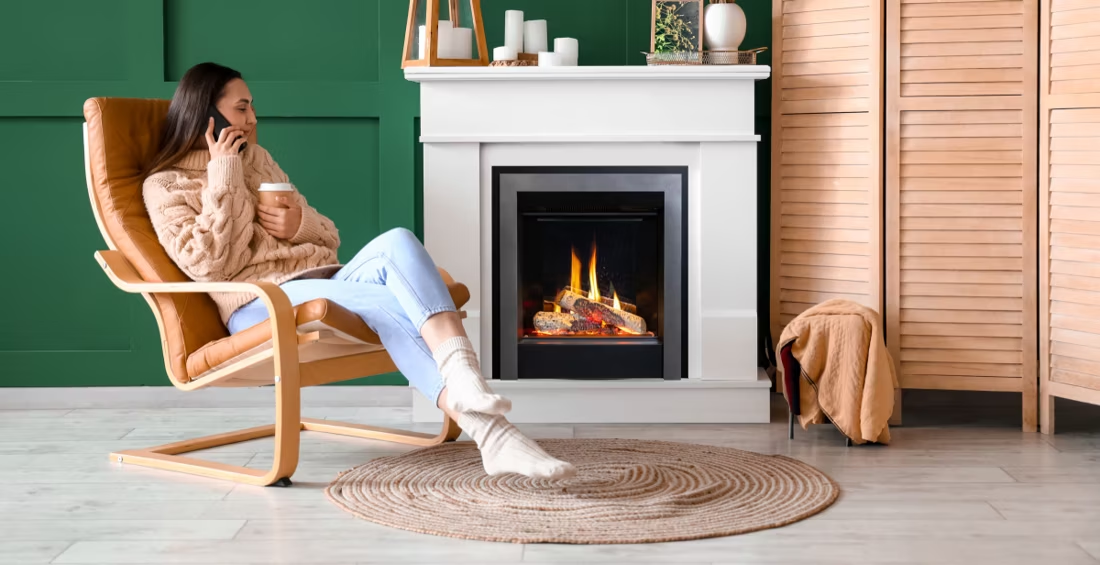
Three steps. No salesperson until you're ready.
Tell us about your project
Your zip code, your situation, and the fuel you're leaning toward—or let the answers point you to one.
See what's actually available
The brands dealers within 100 miles genuinely carry—real options, never a catalog mirage.
Get your dealer & Project Guide
A trusted local dealer, plus the free Project Guide & Parts List that names every component of the job.
Frequently Asked Questions
How much does an electric fireplace installation cost in Northwoods?
On the low end, a freestanding or mantel-style electric fireplace that plugs into a standard 120V outlet runs $150 to $600 for the unit itself, with no real installation cost beyond setting it in place. A built-in wall unit or a fireplace insert that requires a dedicated 20-amp circuit typically runs $1,500 to $4,000 once you factor in the unit, any surround or mantel carpentry, and an electrician to run new wiring. Because Northwoods' housing stock is mostly older post-war ranches and bungalows, the electrician's time is usually the biggest variable—panels with limited open capacity sometimes need a subpanel or circuit upgrade before a built-in unit can go in.
Do I need a permit to install an electric fireplace in Northwoods?
If you're plugging a freestanding unit into an existing outlet, no permit is required—there's no venting, no gas line, and no structural change involved. If your installer needs to run a new dedicated circuit or do any panel work for a built-in unit, that electrical work requires a permit, which in Northwoods is handled through St. Louis County's building and electrical inspection process. A licensed electrician working with your hearth dealer will typically pull that permit and schedule the inspection as part of the job, so it's rarely something you have to manage yourself.
Will an electric fireplace actually heat my home in a Northwoods winter?
It depends on what you're asking it to do. A typical 1,500-watt electric fireplace puts out around 5,100 BTU—enough to comfortably warm a single room or open living area, especially given that Northwoods winters average around 25°F and don't carry the sustained sub-zero stretches you'd see in a place like Duluth, MN. Used as supplemental, zone-based heat, it can meaningfully cut how hard your furnace works on an average January day. It's not designed to replace central heat for the whole house, and it won't function as backup heat during a power outage the way a wood stove would—but for the moderate winters typical of St. Louis County, that's rarely a dealbreaker.
What's the difference between an electric fireplace, insert, and stove?
An electric fireplace is usually a built-in or wall-mounted unit designed to look like a framed fireplace, often with a mantel package around it. An electric insert is sized to slide into an existing masonry or factory-built fireplace opening—a common option for older Northwoods homes that have a fireplace box they no longer use for wood burning. An electric stove is a freestanding cabinet-style unit made to look like a traditional wood or gas stove, which works well as a standalone piece of furniture rather than requiring an existing opening. All three use the same basic heating element and flame-effect technology; the choice mostly comes down to what opening (if any) you already have and the look you want.
I have an old, unused fireplace opening—can I put an electric insert in it?
Yes, and it's one of the more common projects for a city like Northwoods, where a lot of the housing stock is older and many fireplaces haven't been used for actual wood burning in years. An electric insert slides into that existing opening, typically plugs into a nearby outlet or a new dedicated circuit run behind the surround, and needs no chimney liner, no damper work, and no clearance-to-combustibles calculations the way a wood or gas unit would. It's usually the fastest and least invasive way to bring a dead fireplace back to life.
How much does it cost to run an electric fireplace with Union Electric rates?
At Union Electric's residential rate of roughly $0.1256 per kWh, a 1,500-watt electric fireplace running on high for 6 hours a day costs about $1.13 per day, or roughly $34 over a 30-day month. Most units also have a lower heat setting and a flame-only mode that draws under 100 watts, so running it for ambiance without heat costs pennies a day. That makes electric heat one of the more predictable line items on a Northwoods winter utility bill compared to fluctuating gas or propane pricing.
Can my home's electrical panel handle a built-in electric fireplace?
Most freestanding units run fine on a standard outlet, but a built-in electric fireplace or larger insert usually calls for its own dedicated 20-amp circuit to avoid tripping breakers when it's running alongside other appliances. In a lot of Northwoods' older homes, panels were built decades ago with less spare capacity than a modern build would have, so it's worth having an electrician check available breaker space before you commit to a built-in unit. This is a quick check most local dealers will do as part of an in-home estimate.
Are electric fireplaces safer than portable space heaters?
Generally, yes. UL-listed electric fireplaces are built with tip-over switches, overheat protection, and cool-touch housings, and because they're either wall-mounted, built into a surround, or installed as a fixed insert, they're far less likely to be knocked over or left running unattended against furniture the way a portable space heater can be. They also don't have an open flame or combustion byproducts to worry about—no carbon monoxide, no venting requirement, and nothing to inspect annually the way a gas or wood appliance needs. That combination of low fuss and solid safety margin is a big part of why electric units are a popular retrofit choice in older Northwoods homes.
Should I get an electric fireplace or a gas fireplace instead?
Gas fireplaces put out far more heat—often 20,000 to 40,000 BTU compared to an electric unit's roughly 5,000 to 9,000 BTU—and can realistically serve as a primary or near-primary heat source for a room or even a whole floor. But gas requires a gas line, proper venting, and periodic professional service. Electric skips all of that: no gas plumbing, no venting, no annual inspection, and a far lower upfront cost, at the tradeoff of lower heat output. For a Northwoods homeowner who wants ambiance plus modest supplemental warmth without touching gas infrastructure, electric is usually the simpler answer. For someone who wants to meaningfully offset furnace use in a specific room, it's worth having a local dealer walk through both options side by side.
Do electric fireplaces actually produce heat?
Yes—most put out around 4,800–5,000 BTUs from a standard outlet, which comfortably warms a bedroom, office, or den as a comfort-zone heater. What they won't do is carry a whole house the way wood, gas, or pellet can. Think of electric as ambiance-first with honest supplemental heat: flames on with no heat in July, flames plus warmth in January.
Does an electric fireplace need a vent or chimney?
No—that's its superpower. An electric fireplace needs a wall and an outlet, period. No vent pipe, no gas line, no clearances to design around, which is why it works in bedrooms, offices, apartments, and walls where venting a gas or wood unit would be impractical or impossible. Installation is typically the simplest and least expensive of any fireplace type.
Should the dealer who sells my fireplace also install it?
Ideally, yes. A fireplace project involves vent pipe, gas line, electrical, and often tile or stone. Hire three or four separate trades and you own the liability and the game of telephone between them. One company selling and installing means one accountable party, start to finish—ask about factory training, on-time completion records, and what happens if an inspection fails.
Can I install a fireplace myself?
If you're putting a fire in your house on purpose, it's best to work with an expert. Unless you're genuinely experienced in framing, gas line, vent pipe, and the national code on clearances to combustibles, have a professional do it—and ideally the same company that sells you the fireplace, so warranty, service, and liability all live under one roof.
Nearby Dealers
Hearth shops serving Northwoods and the surrounding area. Every listing shows whether it is a WhyFire partner, a dealer we have verified as authorized for the brands we recommend, or a local business carrying hearth products. No manufacturer pays for placement. How we verify dealers →
Villa Lighting Supply
Savvy Surroundings
Forshaws
Gas Appliance Service LLC
Fireside Hearth & Grill Center
Fireplace And Grill Center
English Sweep
Summer Classics By Forshaw
Arnold Stove & Fireplace Center
Brighthouse Living
Hearthside Grill & Fireplace
Bel-O Fireplaces & More
Electric Service in Northwoods
An electric fireplace's heater draws about 1,500 watts—pennies per hour at local rates.
Union Electric Co - (Mo)
Find your electric fireplace in Northwoods.
Tell us a bit about your home and we'll put together a free Project Guide & Parts List for your electric fireplace project—matched with a trusted local dealer who knows what actually fits your space.
Find Your Fireplace →