
Steady, thermostat-controlled heat for McDonald County homes.
From Pineville to Noel and Southwest City, McDonald County's Ozark winters call for reliable, low-fuss heat. Find the right pellet stove or insert and connect with a trusted local dealer.
Every Project Starts From One of These Five Situations
A moderate climate, without wasted effort.
McDonald County sits tucked into the far southwest corner of Missouri, bordering both Arkansas and Oklahoma in the rolling hills and hollows of the Ozark Plateau. With about 8,800 residents spread across small communities like Pineville, Anderson, Noel, Southwest City, and Lanagan, this is oak-hickory-walnut-maple country—the same hardwoods that have fueled wood stoves here for generations. But the climate itself is mild by national standards: average winter lows sit around 25°F and the county racks up roughly 4,100 heating degree days a season, a fraction of what a place like Duluth, Minnesota logs in a typical winter.
That milder profile is exactly why pellet stoves make sense here. You don't need a 24-hour catalytic burn to get through a McDonald County cold snap—you need dependable, thermostat-controlled heat that doesn't require splitting and stacking cordwood every fall. Regional pellet brands like Lignetics and Indeck Energy Services are available through hearth and farm supply dealers across southwest Missouri, and with no air quality non-attainment designations or winter burn curtailment periods in the county, running a pellet stove here comes down to comfort and convenience rather than regulation. For many homeowners, it's less a replacement for the wood-burning tradition than a lower-maintenance complement to it.
Three steps. No salesperson until you're ready.
Tell us about your project
Your zip code, your situation, and the fuel you're leaning toward—or let the answers point you to one.
See what's actually available
The brands dealers within 100 miles genuinely carry—real options, never a catalog mirage.
Get your dealer & Project Guide
A trusted local dealer, plus the free Project Guide & Parts List that names every component of the job.
Frequently Asked Questions
How much does a pellet stove installation cost in McDonald County?
Pellet stove installations in McDonald County typically run in the $3,000 to $6,000 range once you factor in the stove, the direct-vent kit, and any hearth pad work required for clearance. Because pellet stoves vent through a small-diameter PL vent pipe rather than a full masonry chimney, installs are usually simpler and less expensive than a comparable wood stove—most jobs in the county are handled in a single day. Homes without an existing hearth or fireplace opening may need extra work for the vent run through an exterior wall, which can push costs toward the higher end. A trusted local dealer will give you a firm number after walking your specific setup.
Where can I buy wood pellets in McDonald County?
Wood pellets aren't stocked at every gas station out here, but regional hearth dealers and farm supply stores across southwest Missouri carry bagged pellets from brands like Lignetics and Indeck Energy Services—both common in this part of the Ozarks. Expect to pay somewhere in the neighborhood of $250 to $300 per ton, or roughly $5 to $6 per 40-pound bag, though it's worth calling ahead in late summer when supply is freshest and prices are often lower before the winter rush. Buying a season's worth—usually 2 to 3 tons for a primary-heat home—in one trip saves multiple runs once cold weather sets in.
What size pellet stove do I need for my McDonald County home?
McDonald County's winters are moderate by national standards—average lows around 25°F and roughly 4,100 heating degree days a season, nowhere near the sustained cold of somewhere like Duluth, Minnesota. That means most homes here do fine with a small to mid-size pellet stove: units rated for 1,000 to 1,800 square feet cover a typical living area or den, while larger, more open floor plans or homes using pellet as primary heat may want something rated closer to 2,000+ square feet. Older, less-insulated farmhouses on larger acreage around Pineville, Anderson, or Noel should size up slightly rather than down. A local dealer can size your specific home with a quick walkthrough.
What's the difference between a pellet stove and a pellet insert?
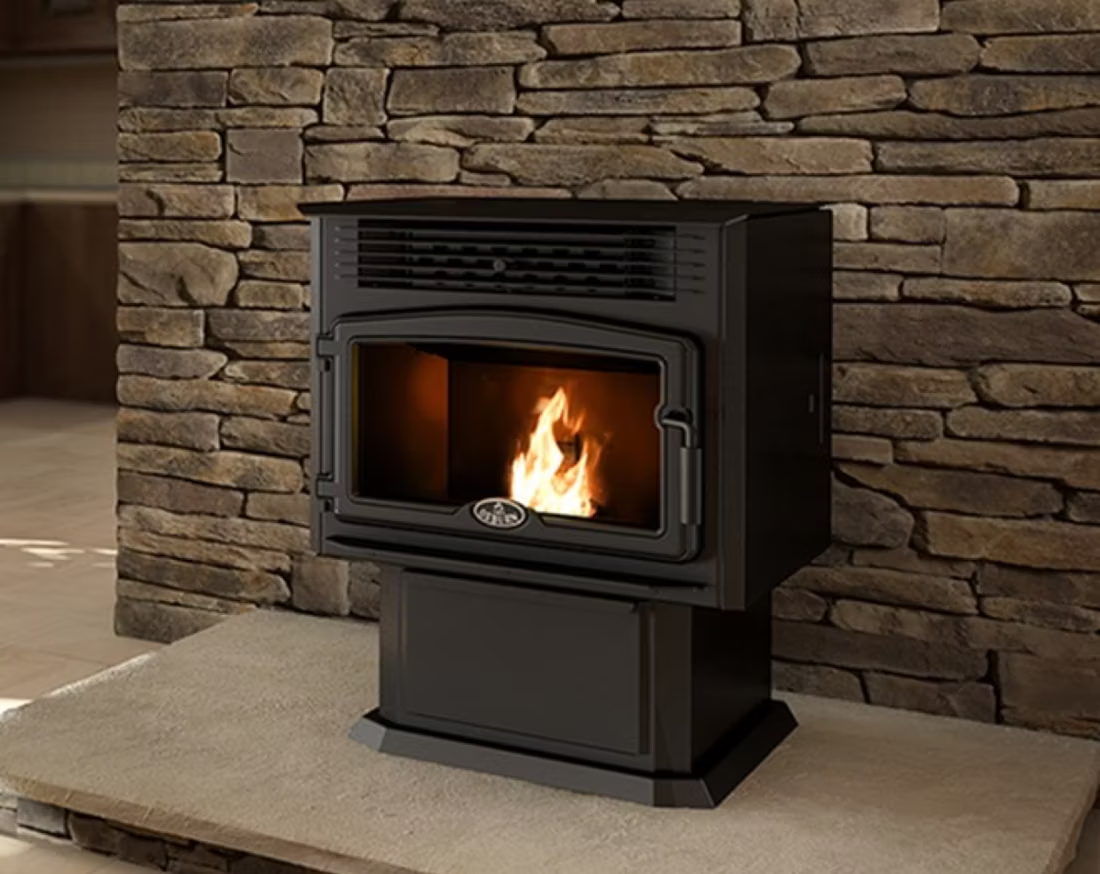
A pellet stove is a freestanding unit that sits on its own hearth pad and vents out through a wall—it can go almost anywhere in a room. A pellet insert is built to slide into an existing masonry fireplace opening, which is a common upgrade for older McDonald County farmhouses that still have a wood-burning fireplace but want the convenience of an automated pellet feed instead of splitting oak or hickory rounds. If you already have a masonry fireplace, an insert usually makes more sense and reuses the existing chimney chase. If you're starting from scratch or want more placement flexibility, a freestanding stove is the simpler install.
Do I need a permit to install a pellet stove in McDonald County?
Most pellet stove installations require a building permit, whether through the relevant city building department if you're inside Pineville, Anderson, Noel, or Southwest City, or through the county if you're in unincorporated McDonald County. A local dealer typically handles this paperwork as part of the install. One advantage here: there are no air quality non-attainment designations or winter burn curtailment periods to track, unlike some Western states—once your stove is permitted and installed, you can run it whenever you like without checking a daily burn advisory.
What's the best pellet stove for McDonald County's climate?
Because winter lows in McDonald County average around 25°F rather than the deep sub-zero stretches seen further north, you don't need an oversized, industrial-capacity hopper to stay warm here. Mid-size, non-catalytic pellet stoves with a 40- to 60-pound hopper hit the sweet spot for most homes—enough for an overnight burn without constant refilling, but not so large you're paying for capacity you'll rarely use. If backup heat during a storm-related outage matters to you, ask a local dealer about models with a battery-backup option, since pellet stoves rely on electricity to run the auger and blower.
How often does a pellet stove need to be serviced?
Pellet stoves need more frequent light upkeep than wood stoves but far less heavy lifting. Plan to empty the ash pan every few days during regular use, clean the burn pot weekly, and have the venting and hopper mechanism professionally serviced once a year, typically in late summer before heating season starts. That's worth staying on top of in McDonald County's humid Ozark summers, since pellets exposed to moisture can swell and jam the auger if bags are stored improperly.
Will my pellet stove work during a power outage?
Not without a backup power source—pellet stoves depend on electricity to run the auger, igniter, and blower fan, so a standard unit goes cold the moment the power does. That's worth thinking through in rural McDonald County, where ice storms and summer thunderstorms can knock out power for hours at a stretch. Some pellet stove models offer optional battery-backup packs, and a small home generator can keep a pellet stove (and the rest of the house) running through a longer outage. Plenty of McDonald County homes that rely on pellet as primary heat also keep a wood-burning fireplace or stove on hand as a no-electricity fallback, given how common oak and hickory firewood is in this part of the Ozarks.
Pellet vs. wood—which is right for my McDonald County home?
Wood is deeply practical here—McDonald County sits in oak-hickory-walnut-maple Ozark forest, plenty of homeowners split or buy their own firewood cheaply, and a wood stove keeps working even when the power's out. Pellet stoves trade some of that self-sufficiency for convenience: load the hopper, set the thermostat, and get a consistent, low-maintenance burn without splitting or stacking cordwood—a real advantage for smaller households, older homeowners, or anyone who doesn't want to manage a woodpile. Given the county's moderate winters, either fuel comfortably covers a typical heating season, so the decision usually comes down to how much manual firewood work you want versus how much you value automated, thermostat-controlled heat. Several local dealers carry both, so it's worth discussing your specific home before deciding.
What does it take to replace an existing fireplace?
Fireplaces are like icebergs—bigger behind the wall than in front of it. Replacement means removing the surrounding tile or stone (the finish material laps onto the fireplace face), pulling the old unit, setting the new one in the same enclosure, and re-finishing the wall. A hearth professional can determine what's behind your wall without demolition during an in-home preview.
Why is a fireplace insert so efficient?
An insert does two things: it seals the chimney completely, so you stop losing air you already paid to heat, and it radiates warmth into the room through the firebox and glass. Most add a heat-exchange fan that pulls cool room air underneath, wraps it around the hot firebox, and pushes it back out warm. Your home is more efficient before you've even lit the first fire.
How much should I budget for a fireplace?
For an average home—covering the fireplace, the vent pipe, and basic installation—a budget between $3,900 and $5,500 gives you a lot of options across wood, gas, and pellet. By the time you add finish work, gas line, and electrical, the average complete installation lands between $5,000 and $12,000 all-in. In a remodel or new build, a good rule is to put about 2.5% of the total project cost toward the fireplace.
What is an in-home preview and do I need one?
It's a visit where a hearth professional measures your space, confirms the model you picked actually works in your home, and walks the specs—framing, gas line, venting, finish work—before anything is ordered. Some details you just can't know until you see the house. Never make a down payment without one; it's the single most-skipped step that burns buyers.
Pellet Brands Stocked Around McDonald County
Manufacturers will point you to the nearest stocking dealer.
Find your pellet stove in McDonald County.
Tell us about your home and we'll match you with a trusted local dealer and send over your free Project Guide & Parts List—a plan for your pellet project in McDonald County, MO, with the exact parts you'll need, including the vent kit, and our recommended local dealer.
Find Your Fireplace →