
Instant heat for McDonald County homes, from Pineville to Noel.
Clean, on-demand gas heat for the Ozark hills of McDonald County—propane-fed in most of the county, natural gas where it reaches. Find the right unit and get matched with a trusted local dealer.
Every Project Starts From One of These Five Situations
Convenient heat without cutting or hauling wood.
McDonald County sits in the far southwest corner of Missouri, where the Ozark hills fold into Arkansas and Oklahoma near the Elk River. With about 8,800 residents spread across Pineville, Anderson, Noel, and Southwest City, this is rural country—winters here are moderate by Midwest standards, with an average winter low around 25°F and roughly 4,138 heating degree days a year. That's a climate zone 4A profile, far milder than places like Duluth, MN or Fargo, ND, which run well above 8,000 HDD. There's no listed air quality concern in the county, so unlike parts of the West or Pacific Northwest, gas fireplace demand here is driven by convenience and comfort rather than smoke restrictions.
Because much of McDonald County is unincorporated and rural, natural gas mains don't reach most homes—propane is the standard fuel for gas fireplaces, inserts, and stoves outside the handful of small towns. Local propane suppliers deliver throughout the county, and most gas hearth installs here run on a propane tank rather than a piped natural gas line. For homeowners with an existing wood-burning fireplace built for the region's abundant oak, hickory, walnut, or maple, converting to a propane gas insert is one of the more common upgrades local dealers handle—trading the wood-splitting routine for a flip-of-a-switch flame without losing the existing masonry chimney.
Three steps. No salesperson until you're ready.
Tell us about your project
Your zip code, your situation, and the fuel you're leaning toward—or let the answers point you to one.
See what's actually available
The brands dealers within 100 miles genuinely carry—real options, never a catalog mirage.
Get your dealer & Project Guide
A trusted local dealer, plus the free Project Guide & Parts List that names every component of the job.
Frequently Asked Questions
How much does a gas fireplace installation cost in McDonald County?
Most gas fireplace and insert installations in McDonald County run in the $3,500 to $9,000 range, with the spread driven by whether you're converting an existing masonry fireplace, installing a new direct-vent unit in a room without one, and whether a propane tank needs to be set or upgraded. Because most of the county relies on propane rather than piped natural gas, tank placement and gas line runs from the tank to the unit are a bigger cost factor here than in areas with municipal gas service. A local dealer will give you a firm number after seeing your home and your existing chimney or venting situation.
Can I convert my existing wood fireplace to gas?
Yes—it's a common project for the older masonry fireplaces found throughout McDonald County, many originally built to burn local oak or hickory. A gas insert typically slides into the existing firebox and uses a stainless liner run up the current chimney, so you keep the look of the fireplace while gaining instant, thermostat-controlled heat. Since natural gas isn't available to most of the county, this conversion is almost always set up to run on propane, either from an existing tank or a new one placed by a local propane supplier.
Do I need natural gas, or can I run a gas fireplace on propane?
Propane is the standard fuel for gas fireplaces across most of McDonald County. Natural gas service is limited to small pockets near the incorporated towns, and even there, coverage isn't guaranteed on every street. The good news is that nearly every gas fireplace, insert, and stove on the market can be configured for propane just as easily as natural gas—your dealer sets the correct orifice and regulator for the fuel you have. If you don't already have a propane tank, your local dealer can coordinate the tank installation with a regional propane supplier as part of the project.
Will my gas fireplace still work if the power goes out?
Most modern gas fireplaces will, but the ignition system matters. Units with an intermittent pilot (IPI) run on a battery backup that kicks in automatically when the power drops—the fireplace lights and operates normally, just on battery power instead of household electricity. Valor fireplaces go a step further: their pilot assembly generates its own electricity through the thermocouple, so there's no battery to maintain at all. For rural stretches of McDonald County where an ice storm or downed line can mean a longer wait for power to come back, that distinction is worth asking about when you're comparing units with a local dealer.
What's the difference between a gas fireplace, gas insert, and gas stove?
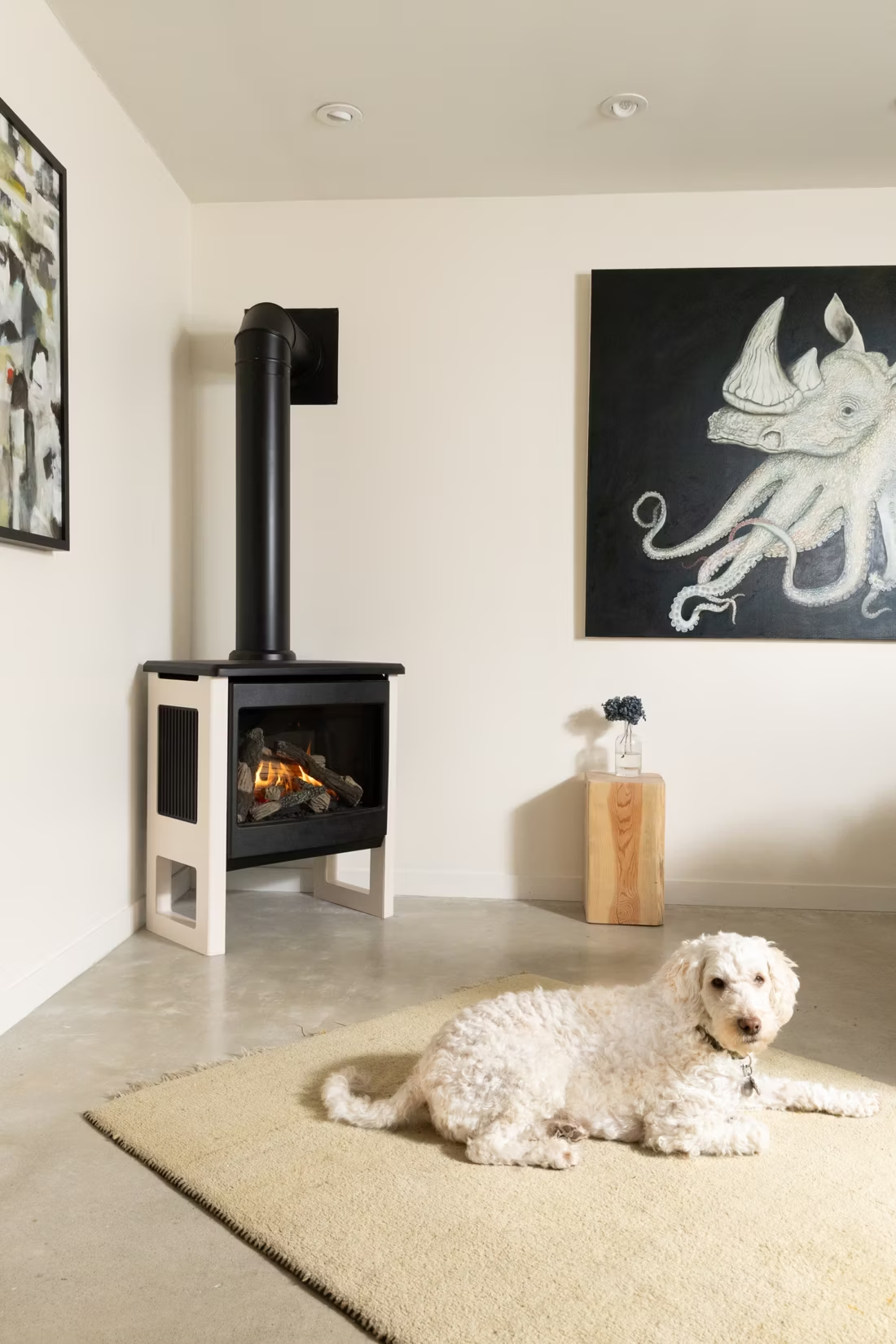
A gas fireplace is a fully built-in, framed unit—the right choice for new construction or a remodel where there's no existing fireplace. A gas insert is sized to slide into an existing masonry firebox, which fits a lot of the older homes scattered through Pineville, Anderson, and the surrounding county. A gas stove is a freestanding, floor-mounted unit that vents like a wood stove but burns gas or propane—a good option for a room with no chimney and no interest in a full built-in install. Most McDonald County homeowners with an existing fireplace go with an insert; those building new or adding heat to a room without one usually look at a stove or built-in unit.
Do I need a permit to install a gas fireplace in McDonald County?
Requirements vary by whether you're inside town limits or in the unincorporated county, but any gas line work—including running a line from a propane tank to a new fireplace or insert—should be done by a licensed gas-fitter and typically requires a permit and inspection. Propane tank placement also has to meet setback rules from your propane supplier and the State Fire Marshal's office. A reputable local hearth dealer handles this coordination as part of the installation rather than leaving you to sort out multiple trades and permits on your own.
What's the difference between vented and vent-free gas fireplaces?
Vented (direct-vent) gas fireplaces draw combustion air from outside and exhaust the byproducts back outside through a sealed pipe—they're the cleaner, safer, code-compliant choice in every state, including Missouri. Vent-free units burn gas directly into the room with no outside venting; they're legal in Missouri but come with strict room-sizing rules and require an oxygen depletion sensor, and some states restrict them outright. For most McDonald County homes, especially those running on propane, a direct-vent unit is the more common and more broadly recommended option—it delivers real heat without any tradeoff on indoor air quality. Ask a local dealer to walk you through both if you're weighing the choice.
How often should a gas fireplace be serviced?
Plan on an annual inspection, ideally before the coldest stretch of winter sets in. A technician will check the burner, pilot assembly, gas connections, and venting, and clean the glass and interior. This matters as much for propane units as for natural gas—propane systems in particular benefit from a yearly check of the regulator and connections given the outdoor tank setup common throughout the county. Expect to pay somewhere in the $150 to $250 range for a standard annual service call from a local provider.
Gas vs. wood—which makes more sense in McDonald County?
Wood has deep roots here—the county's oak, hickory, walnut, and maple make for some of the best firewood in the Ozarks, and a lot of longtime residents already have a source lined up. Wood also keeps working without electricity, which matters during a winter power outage. Gas trades that self-sufficiency for convenience: instant on-off operation, no splitting or hauling, and consistent heat with the turn of a knob or flip of a switch. Given the county's relatively mild winters—a 25°F average low and around 4,138 heating degree days—many households here use gas as the primary heat source in main living areas and keep a wood-burning fireplace or stove as backup and ambiance. A local dealer can walk you through both, including how each performs in your specific home.
Is my gas fireplace wasting gas?
If it was installed more than 15 years ago, probably. Older gas fireplaces keep a standing pilot light burning all the time, and that little flame can cost a couple hundred dollars a year. Newer models use pilot-on-demand ignition—the pilot lights only when you use the fireplace and goes out when you turn it off.
Can I put a TV above my fireplace?
Yes—with an asterisk. Fireplaces are hot and TVs don't like heat. Either put a mantel between them to deflect rising warmth, or choose a fireplace with heat-management technology that creates a cool zone on the wall above—the wall stays around 125 degrees, barely warm, while the room still gets full heat. If you like clean lines and don't want a mantel, heat management is the answer.
How much should I budget for a fireplace?
For an average home—covering the fireplace, the vent pipe, and basic installation—a budget between $3,900 and $5,500 gives you a lot of options across wood, gas, and pellet. By the time you add finish work, gas line, and electrical, the average complete installation lands between $5,000 and $12,000 all-in. In a remodel or new build, a good rule is to put about 2.5% of the total project cost toward the fireplace.
What is an in-home preview and do I need one?
It's a visit where a hearth professional measures your space, confirms the model you picked actually works in your home, and walks the specs—framing, gas line, venting, finish work—before anything is ordered. Some details you just can't know until you see the house. Never make a down payment without one; it's the single most-skipped step that burns buyers.
Find your gas fireplace in McDonald County.
Tell us a bit about your home and we'll match you with the right gas fireplace, insert, or stove, plus a free Project Guide & Parts List—the exact parts, including the vent kit, and a trusted local dealer to install it.
Find Your Fireplace →