
Real heat, no chimney required, across McDonald County.
From Pineville to Noel to the cabins along the Elk River, electric fireplaces bring instant zone heat and ambiance to homes without a masonry chimney—no venting, no gas line, no wood to split. Find the right unit and connect with a trusted local dealer.
Every Project Starts From One of These Five Situations
The simplest heat upgrade in the Ozark hills.
McDonald County sits tucked into the southwest corner of Missouri, where the Ozark hills fold into Arkansas and Oklahoma and the Elk River carves its valley through Pineville, Noel, and Anderson. With about 8,800 residents spread across small towns and hollows, this is a county of manufactured homes, older farmhouses, and—increasingly—cabins and vacation rentals along the Elk River corridor. Winters here average a low around 25°F with roughly 4,138 heating degree days, which puts McDonald County in a genuinely moderate cold-climate zone (4A)—nowhere near the design loads of a place like Bismarck, ND, but cold enough that a room without good heat gets uncomfortable by December.
That combination of housing stock and climate is exactly where electric fireplaces earn their keep. A lot of homes in McDonald County—mobile homes, additions, rental cabins on the Elk River—were never built with a masonry chimney or a gas line, and running one for a single fireplace rarely makes financial sense. Electric units plug into an existing outlet or a single dedicated circuit, install in an afternoon, and produce zero combustion byproducts, which matters in tightly built manufactured housing. Rural electric cooperative service covers much of the county outside the incorporated towns, so most homeowners are already on a residential rate that makes running a 1,500-watt heater for a few hours in the evening genuinely cheap. Wood remains common here too—oak, hickory, walnut, and maple are all locally abundant—and plenty of McDonald County homes use electric as the easy supplemental or ambiance option alongside a wood stove that does the heavy lifting in a cold snap.
Three steps. No salesperson until you're ready.
Tell us about your project
Your zip code, your situation, and the fuel you're leaning toward—or let the answers point you to one.
See what's actually available
The brands dealers within 100 miles genuinely carry—real options, never a catalog mirage.
Get your dealer & Project Guide
A trusted local dealer, plus the free Project Guide & Parts List that names every component of the job.
Frequently Asked Questions
How much does an electric fireplace installation cost in McDonald County?
Plug-in electric inserts and freestanding units are the cheapest hearth upgrade available—most run $300 to $900 including the unit itself, since they use a standard 120V outlet and need no venting, no gas line, and no chimney work. Built-in wall-mount units or electric fireplaces that require a dedicated 20-amp circuit run higher, typically $800 to $2,000, once an electrician is involved to run new wiring—a common need in older McDonald County farmhouses with limited outlet capacity. Local dealers can tell you within a few minutes of looking at your wall and outlet layout which category your project falls into.
How much heat will an electric fireplace actually put out?
Most residential electric fireplaces top out around 1,500 watts, which translates to roughly 5,000 BTU—enough to comfortably heat a 300 to 500 square foot room as supplemental heat, less if the room has poor insulation or high ceilings. That's realistic for a bedroom, a den, a cabin living room along the Elk River, or a mobile home addition, but it's not a replacement for central heat or a wood stove in a whole-house sense. In McDonald County's climate—averaging 25°F winter lows—electric fireplaces work best as zone heat for the room you're actually sitting in, letting you turn the thermostat down elsewhere.
Where can I find electric fireplace dealers near McDonald County?
Given the county's rural footprint and population under 9,000, dedicated hearth retailers are thin on the ground directly in Pineville or Noel—most homeowners end up working with dealers based in Joplin or reaching across the state line into the Bentonville-Rogers area of northwest Arkansas, both a reasonable drive for McDonald County residents. These dealers carry electric lines from major manufacturers and can size a unit correctly for your room before you buy, which matters more than it sounds—an undersized unit in a drafty older home just runs constantly without ever feeling warm.
What's the difference between an electric fireplace, insert, and stove?
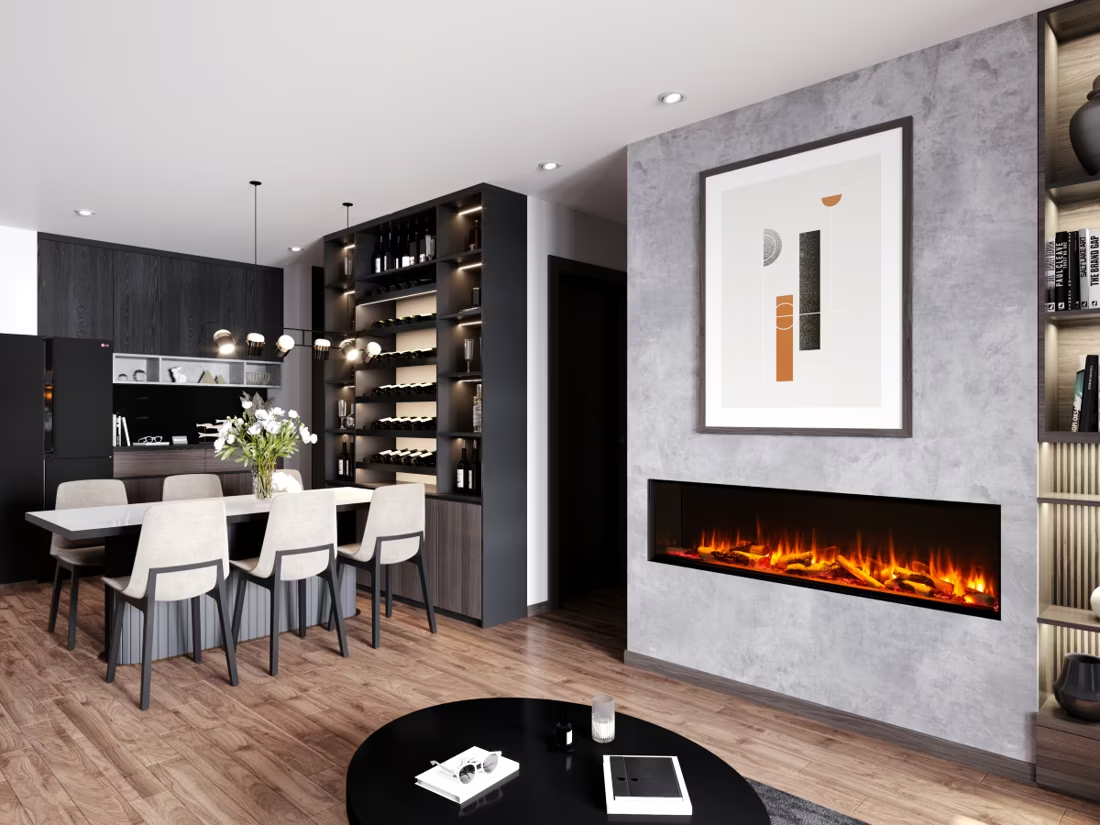
An electric fireplace is typically a wall-mounted or built-in unit designed to look flush with a wall, often used in a media wall or new construction. An electric insert is sized to slide into an existing masonry fireplace opening, giving an old, unused fireplace a functioning heat source and flame effect without touching the chimney. An electric stove is a freestanding cabinet-style unit that mimics a wood stove's look and can go almost anywhere near an outlet. For McDonald County homes with an old, non-functioning masonry fireplace, an insert is usually the simplest way to bring that space back into daily use.
Do I need a permit to install an electric fireplace in McDonald County?
A simple plug-in electric fireplace or insert generally doesn't require a building permit anywhere in McDonald County, since there's no venting, gas line, or structural chimney work involved. If your installation requires a licensed electrician to add a new dedicated circuit or outlet, that electrical work may need a permit through the county, and most electricians handle that paperwork as a matter of course. This is one of the real advantages of electric over wood or gas here—there's rarely a permitting hurdle standing between buying the unit and using it.
What's the best electric fireplace for McDonald County homes?
For most McDonald County living rooms and additions, a mid-size wall-mount or insert unit with a built-in thermostat and a 1,500-watt heater is the practical choice—it covers a typical bedroom or den and cycles on and off to hold a set temperature rather than running full blast constantly. For Elk River cabins or vacation rentals used mainly on weekends, a lower-cost model without a heater—flame effect only, or a smaller wattage option—is often enough, since the goal there is ambiance rather than a heating load. A local dealer can walk through your specific room dimensions and insulation before recommending wattage.
How much does it cost to run an electric fireplace?
A 1,500-watt electric fireplace running on high for one hour uses 1.5 kilowatt-hours. On a typical rural electric cooperative residential rate common across McDonald County, that works out to somewhere around 15 to 25 cents an hour of full-heat operation—considerably less than most homeowners expect. Running it purely for the flame effect without the heater engaged costs only a few cents an hour, since the light and flame mechanism draws very little power on its own.
Will my electric fireplace work during a power outage?
No—and this is worth being direct about. Unlike a wood stove, an electric fireplace has no function at all without grid power, so it won't help during an ice storm outage, which McDonald County sees more often than most people expect given the Ozark terrain and overhead rural line runs. If backup heat during outages matters to you, plan on a wood stove or a battery/generator-backed setup as your primary cold-weather insurance, and treat the electric unit as the everyday convenience option rather than the emergency one.
Electric vs. wood—which is right for my McDonald County home?
Wood—burning oak, hickory, walnut, or maple, all common locally—delivers real heat output, works during power outages, and has long been the practical backup across the county's rural stretches. Electric offers instant on-off convenience, zero mess, no venting, and near-zero maintenance, but it's entirely dependent on grid power and best suited to supplemental zone heat rather than whole-home warmth. Many McDonald County households run both: a wood stove or fireplace as the serious cold-weather heat source, and an electric unit in a bedroom, den, or cabin for everyday ambiance and easy backup warmth in a single room.
Can I put a TV above my fireplace?
Yes—with an asterisk. Fireplaces are hot and TVs don't like heat. Either put a mantel between them to deflect rising warmth, or choose a fireplace with heat-management technology that creates a cool zone on the wall above—the wall stays around 125 degrees, barely warm, while the room still gets full heat. If you like clean lines and don't want a mantel, heat management is the answer.
Do electric fireplaces actually produce heat?
Yes—most put out around 4,800–5,000 BTUs from a standard outlet, which comfortably warms a bedroom, office, or den as a comfort-zone heater. What they won't do is carry a whole house the way wood, gas, or pellet can. Think of electric as ambiance-first with honest supplemental heat: flames on with no heat in July, flames plus warmth in January.
Can a fireplace actually lower my heating bill?
Yes—by creating a comfort zone. A furnace heats every square foot of the house just to warm the one room you're in; a gas fireplace on low burns roughly a sixth of the gas a typical furnace does. Set the furnace around 55–60 degrees as a baseline, then heat the rooms your family actually uses. Families who heat this way commonly save $20–$60 a month.
Can I install a fireplace myself?
If you're putting a fire in your house on purpose, it's best to work with an expert. Unless you're genuinely experienced in framing, gas line, vent pipe, and the national code on clearances to combustibles, have a professional do it—and ideally the same company that sells you the fireplace, so warranty, service, and liability all live under one roof.
Find your electric fireplace in McDonald County.
Tell us a bit about your home and we'll match you with the right electric fireplace, insert, or stove—plus a free Project Guide & Parts List with your local dealer's recommended setup.
Find Your Fireplace →