
Steady heat for Harrison County's long, hardwood-country winters.
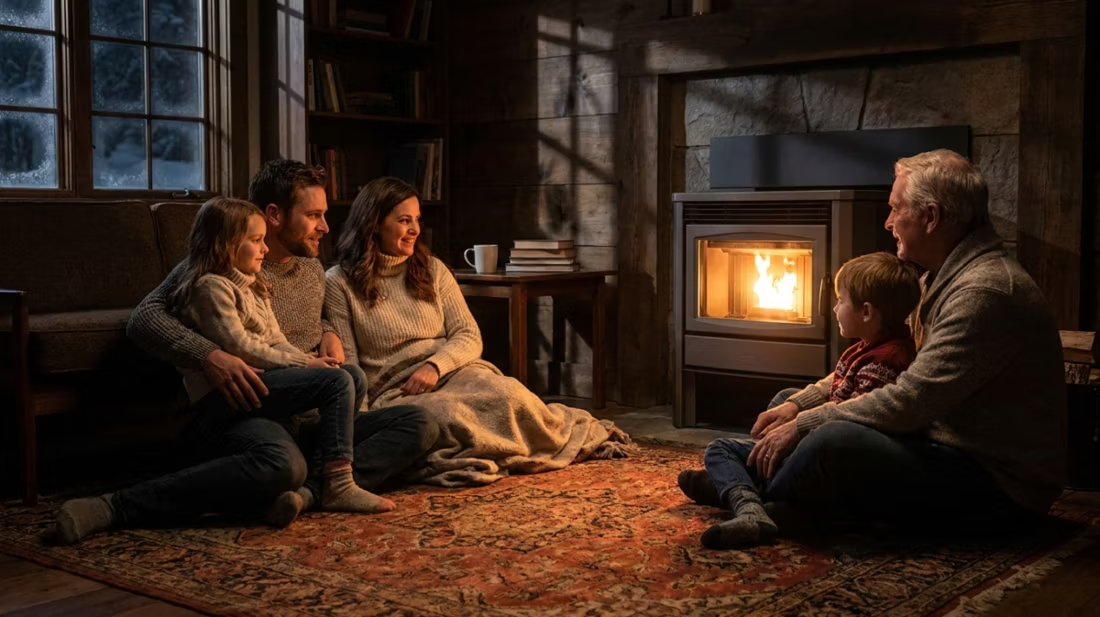
A long, demanding heating season and winter lows that average around 16°F mean Harrison County homes need heat that doesn't quit. A pellet stove delivers thermostat-like consistency without a woodpile—find the right unit and connect with a trusted local dealer.
Every Project Starts From One of These Five Situations
Consistent warmth without the woodpile.
Harrison County is farm country—about 5,439 people spread across roughly 720 square miles around Bethany, with smaller communities like Ridgeway, Eagleville, Cainsville, and Gilman City scattered across the townships. Climate zone 5A puts the county solidly in cold-winter territory, with average lows around 16°F and a long, demanding heating season—not quite the brutal stretch of a Duluth or Fargo winter, but enough that a home here needs real, sustained heat from November through March, not just ambiance.
Oak, hickory, walnut, and maple are the hardwoods that dominate the county's timber, and plenty of Harrison County households still burn cordwood. But a pellet stove is a genuine alternative for anyone who wants the radiant heat of a fire without the felling, splitting, stacking, and daily tending that cordwood demands. Bagged pellets from regional suppliers like Lignetics and Indeck Energy Services show up on shelves at farm and hardware stores across north Missouri, and with no air-quality non-attainment issues or winter burn curtailments in the county, there's nothing standing between you and a stove running whenever you want it.
Three steps. No salesperson until you're ready.
Tell us about your project
Your zip code, your situation, and the fuel you're leaning toward—or let the answers point you to one.
See what's actually available
The brands dealers within 100 miles genuinely carry—real options, never a catalog mirage.
Get your dealer & Project Guide
A trusted local dealer, plus the free Project Guide & Parts List that names every component of the job.
Frequently Asked Questions
How much does a pellet stove installation cost in Harrison County?
Most pellet stove installations run in the $3,000 to $6,000 range once you factor in the unit, the vent kit, and labor—pellet stoves vent through a simple side-wall or roof pipe rather than a full masonry chimney, which keeps installation costs well below a wood stove in most cases. Converting an existing masonry fireplace into a pellet insert typically lands toward the middle of that range. Because Harrison County is rural, expect a modest travel charge if your dealer is based out of Bethany and you're out toward Cainsville, Ridgeway, or Eagleville—worth asking about up front.
What size pellet stove do I need for a Harrison County home?
With average winter lows near 16°F and a long, demanding heating season, most farmhouses and older homes in the county need a stove rated for whole-house or near-whole-house heating rather than a small supplemental unit. As a rough guide: smaller pellet stoves (up to roughly 1,000 sq ft) suit a single large room or a well-insulated cabin, mid-size units (1,000–2,000 sq ft) cover most main living areas, and larger stoves handle open-concept or older, less-insulated farmhouses common on Harrison County's rural lots. Ceiling height, insulation age, and how open your floor plan is all shift that number—a local dealer will size it based on an actual walkthrough rather than square footage alone.
Where can I find a certified pellet stove dealer near Harrison County?
Because Harrison County's population is under 6,000 and spread across small towns, dealers who carry and install pellet equipment are more likely based in a larger north Missouri hub and travel into the county for installs. Look for a dealer who specifically installs pellet appliances—not just sells them—since proper venting placement and clearance-to-combustibles work matters for both performance and warranty coverage. A dealer who's installed in similar rural, older-home stock around Bethany, Ridgeway, or Gilman City will already know the quirks of balloon-frame farmhouses and older masonry chimneys common in the county.
What's the difference between a pellet stove and a pellet insert?
A pellet stove is a freestanding unit that sits on its own hearth pad and vents out a side wall or through the roof—it can go almost anywhere in a room with the right clearances, which makes it a good fit for homes without an existing fireplace. A pellet insert is built to slide into an existing masonry fireplace opening, using a vent liner run up through the existing chimney. For Harrison County's older farmhouses that already have a wood-burning fireplace sitting mostly unused, an insert is often the more straightforward retrofit. For a new build or a room with no chimney at all, a freestanding stove is the simpler install.
Do I need a permit to install a pellet stove in Harrison County?
Most rural Missouri counties, Harrison County included, don't require a separate burning permit for a pellet stove the way some western states do for wood stoves—pellet appliances are exempt from air-curtailment restrictions in states that have them, and Harrison County has no listed air-quality non-attainment concerns. Building permit requirements for the installation itself vary by whether you're inside city limits (Bethany, for instance) or in the unincorporated county, so it's worth a quick call to confirm before work starts. Most established dealers handle any required permitting as part of the installation quote.
What's the best pellet stove for Harrison County's climate?
With winter lows averaging 16°F and a heating season that runs several months, a mid-to-large hopper capacity matters—a bigger hopper means fewer overnight refills during the coldest stretches. Look for models with a high BTU output rating and a hopper that holds at least 40 pounds if you want to run the stove as a primary heat source rather than supplemental. Since pellets from suppliers like Lignetics are widely available through regional farm and hardware retailers, availability of fuel isn't a concern here the way it can be in more remote parts of the country—the bigger decision is matching hopper size and BTU output to your square footage and how hands-off you want the stove to be.
How often does a pellet stove need to be cleaned and serviced?
Pellet stoves need more frequent attention than gas but far less than wood—plan on emptying the ash pan every few days during regular use, a deeper clean of the burn pot and glass weekly, and a full professional service once a year, ideally before the season kicks off in the fall. Because pellet stoves rely on an electric auger, igniter, and blower motor, an annual service also checks those mechanical components, which is the piece homeowners are most likely to overlook until something stops working mid-winter.
Where can I buy pellets in or near Harrison County?
Bagged pellets from brands like Lignetics and Indeck Energy Services are the two regional names most likely to turn up at farm stores, co-ops, and hardware retailers serving north Missouri. Buying by the ton (roughly 50 forty-pound bags) ahead of the season is the standard approach for anyone using a pellet stove as a primary heat source, since it locks in supply before cold weather drives demand up. Given the county's rural spread, it's worth confirming with a supplier out of Bethany or a neighboring county seat whether they deliver to Ridgeway, Cainsville, or Eagleville, or whether pickup is required.
Pellet stove vs. wood stove—which is right for my Harrison County home?
Wood stoves run on split cordwood—plentiful here given the county's oak, hickory, walnut, and maple timber—and they keep working during a power outage, which matters on rural lines that can take a while to restore after an ice storm. Pellet stoves trade that off-grid resilience for real convenience: load the hopper, set the thermostat, and walk away, with less ash and a cleaner burn, but they need electricity to run the auger and blower. For a primary residence on a farm where backup heat during outages is a real concern, wood is often the safer bet. For a home in Bethany or another in-town setting with steady power and a preference for low daily maintenance, a pellet stove is usually the easier day-to-day choice.
What's the difference between an insert and a zero-clearance fireplace?
An insert is a fireplace that slides into a pre-existing wood-burning fireplace—if you don't have one, there's nothing to insert it into. A zero-clearance fireplace is built into a framed wall, which makes it the answer for remodels and new construction. Simple test: existing masonry fireplace means insert; blank or framed wall means zero-clearance.
Why is my open fireplace making my house colder?
Open fireplaces suck—literally. As the fire burns, it consumes air your furnace already paid to heat and pulls it out through the chimney, so the house is actually colder after the fire goes out than before you lit it. An insert fixes this: it seals the chimney, puts fixed glass across the front, and turns that hole in your house into a real heat source.
Can I install a fireplace myself?
If you're putting a fire in your house on purpose, it's best to work with an expert. Unless you're genuinely experienced in framing, gas line, vent pipe, and the national code on clearances to combustibles, have a professional do it—and ideally the same company that sells you the fireplace, so warranty, service, and liability all live under one roof.
Does a fireplace add value to my home?
On average, a fireplace adds back to the home about the same amount you spent installing it. Add the monthly savings from heating the rooms you actually use instead of the whole house—often hundreds of dollars a year—and the value case is strong before you even count what a fire does for how your family uses the room.
Pellet Brands Stocked Around Harrison County
Manufacturers will point you to the nearest stocking dealer.
Find your pellet stove in Harrison County.
Tell us about your home and we'll match you with a trusted local dealer and send over a free Project Guide & Parts List—sized for your space, with the vent kit and parts spelled out, so there's no guesswork before install day.
Find Your Fireplace →