
Find the right electric fireplace for your Harrison County home.
Zero-clearance, no-vent heat for Bethany, Ridgeway, Cainsville, and every farmhouse and ranch in between. Find the right unit and connect with a trusted local dealer.
Every Project Starts From One of These Five Situations
Simple heat for a county built on farmhouses and older homes.
Harrison County sits in north Missouri's rolling farm country, with roughly 5,800 heating degree days a year and winter lows that regularly dip into the teens—colder than most of the state, closer to what a town like Bismarck ND sees than to St. Louis. With just over 5,400 residents spread across small towns like Bethany, Ridgeway, and Cainsville and a lot of open county road in between, many homes here are older farmhouses without existing gas lines or masonry chimneys, and a good number are manufactured or modular homes where venting a wood or gas appliance isn't practical.
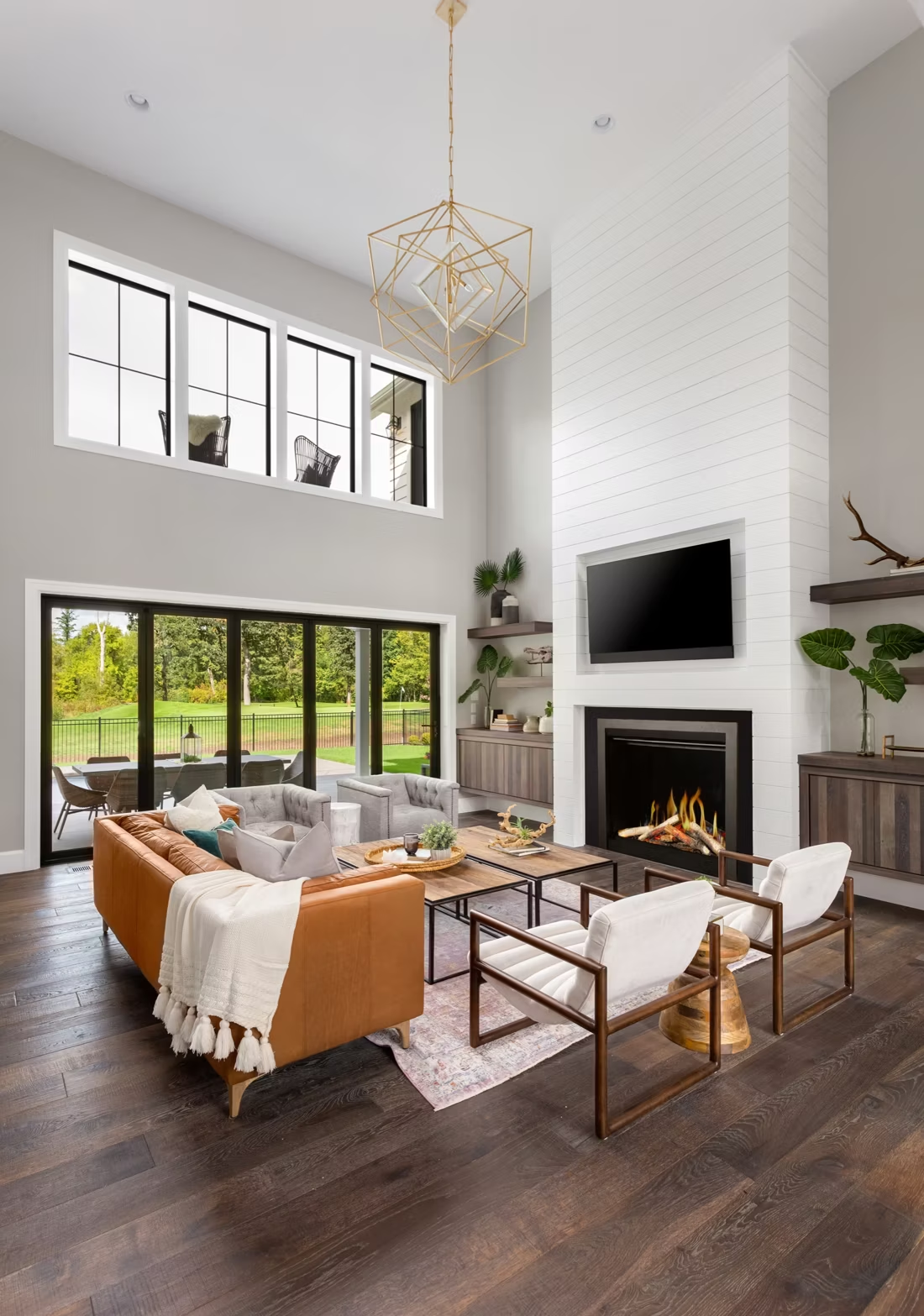
That's exactly the situation electric fireplaces solve well. There's no chimney to build, no gas line to run, and no permit fight with the county—you plug it in, mount it or set it in a mantel surround, and it heats a room. For a lot of Harrison County homeowners, that means adding supplemental warmth to a drafty bedroom, a converted porch, or a living room with a woodstove they no longer want to feed, without touching the structure of the house or the electrical panel in most cases.
Three steps. No salesperson until you're ready.
Tell us about your project
Your zip code, your situation, and the fuel you're leaning toward—or let the answers point you to one.
See what's actually available
The brands dealers within 100 miles genuinely carry—real options, never a catalog mirage.
Get your dealer & Project Guide
A trusted local dealer, plus the free Project Guide & Parts List that names every component of the job.
Frequently Asked Questions
How much does an electric fireplace installation cost in Harrison County?
Most electric fireplace projects in Harrison County run $400 to $1,200 installed. A plug-in insert or wall-mount unit on a standard 15-amp circuit is on the low end—often just the cost of the unit itself plus mounting. Built-in units set into a wall cavity or custom mantel surround, or units requiring a dedicated 20-amp circuit run by an electrician, land at the higher end. Because there's no venting, chimney, or gas line involved, electric installs are consistently the least expensive fireplace project available to Harrison County homeowners.
Do I need a permit to install an electric fireplace in Harrison County?
In most cases, no. A plug-in or built-in electric fireplace that doesn't require new wiring typically doesn't trigger a building permit in Harrison County. If your installer needs to add a new dedicated circuit or run wiring to a different wall, that electrical work should be done by a licensed electrician and may require an electrical permit depending on the jurisdiction—Bethany and the unincorporated county handle this a bit differently, so it's worth a quick call before work starts. Either way, it's a far simpler permitting picture than a wood stove or gas line installation.
Will an electric fireplace actually heat a room, or is it just for looks?
Most electric fireplaces sold today include a real heating element—typically 1,500 watts, which is enough to noticeably warm a 300 to 400 square foot room, comparable to a good space heater but built into a mantel or wall unit. In a Harrison County winter with lows in the teens, that's usually enough for supplemental heat in a bedroom, den, or finished porch, but it's not sized to replace a furnace in a whole farmhouse. Some units let you run the flame visual without the heater, which is handy for county residents who want ambiance in shoulder-season months without running the heat strip.
What's the difference between a built-in electric fireplace and an insert?
A built-in electric fireplace is designed to be recessed into a wall or a custom-built mantel surround, giving a flush, finished look similar to a gas or wood fireplace. An electric insert is sized to slot into an existing masonry fireplace opening, which is a common retrofit for older Harrison County farmhouses that have an unused wood-burning fireplace they want to convert to something maintenance-free. Both plug into a standard outlet in most cases; the difference is really about fitting your existing structure versus building new.
Can an electric fireplace run during a power outage?
No—electric fireplaces require power to operate, both the heater and the flame effect. For Harrison County, where winter storms can knock out rural electric co-op service for a stretch, that's an important limitation if you're relying on the fireplace as backup heat. Homeowners who want heat that works through an outage typically pair an electric fireplace for daily convenience with a wood stove or a propane appliance for the nights when the power actually goes down. Ask a local dealer about that combination if outage resilience matters to you.
How does an electric fireplace compare to wood heat in Harrison County?
Wood remains common in Harrison County, where oak, hickory, walnut, and maple are all readily available locally, and it keeps working when the power doesn't. Electric is the lower-cost, lower-maintenance option—no wood to split and stack, no chimney to sweep, no ash to haul, and installation costs a fraction of a wood stove's $4,500 to $9,000 range. For a lot of homeowners here, wood serves as the primary or backup heat source for a main living space, while electric handles a bedroom, a home office, or a room a woodstove doesn't reach.
Are electric fireplaces expensive to run?
A typical 1,500-watt electric fireplace running on high costs somewhere in the range of 15 to 25 cents per hour at typical Missouri electric rates, depending on your co-op or utility's rate structure. Most Harrison County homes are served by rural electric cooperatives rather than an investor-owned utility, and rates can vary by provider—it's worth checking your own rate to estimate real running costs. Used as supplemental heat in one room rather than as a whole-house solution, most owners find the running cost modest compared to heating the whole farmhouse with a furnace.
What size electric fireplace do I need for my room?
Sizing electric fireplaces is more about the heater output than the visual size of the unit. A standard 1,500-watt unit handles a 300 to 400 square foot room adequately as supplemental heat; larger, drafty rooms common in older Harrison County farmhouses may need a second heat source or realistic expectations about how much of the room it can warm. Width matters mostly for fit—measure your mantel opening or wall space before choosing between a 50-inch, 60-inch, or larger model. A local dealer can walk through both dimensions with you.
Electric vs. pellet stove—which is right for my Harrison County home?
Pellet stoves burn compressed wood pellets (regional brands like Lignetics and Indeck Energy Services are available through area dealers) and put out real, substantial heat—enough for a main living area—but they need pellets stored and loaded, ash cleaned out, and electricity to run the auger and blower, so they're not backup heat during an outage either. Electric fireplaces need no fuel storage, no maintenance, and cost far less to install, but the heat output is lower and more room-limited. For a Harrison County homeowner who wants serious heat with some fuel handling, pellet is the better fit; for supplemental warmth with none of the upkeep, electric wins.
Can I put a TV above my fireplace?
Yes—with an asterisk. Fireplaces are hot and TVs don't like heat. Either put a mantel between them to deflect rising warmth, or choose a fireplace with heat-management technology that creates a cool zone on the wall above—the wall stays around 125 degrees, barely warm, while the room still gets full heat. If you like clean lines and don't want a mantel, heat management is the answer.
How much does an electric fireplace cost to run?
With the heater on, a typical unit draws about 1,500 watts—at average electric rates that's roughly 20 cents an hour. Run the flame effect alone and it costs pennies; the flames are LED-driven and use about as much power as a light bulb. There's no pilot light, no fuel delivery, and essentially no maintenance.
Can a fireplace actually lower my heating bill?
Yes—by creating a comfort zone. A furnace heats every square foot of the house just to warm the one room you're in; a gas fireplace on low burns roughly a sixth of the gas a typical furnace does. Set the furnace around 55–60 degrees as a baseline, then heat the rooms your family actually uses. Families who heat this way commonly save $20–$60 a month.
Can I install a fireplace myself?
If you're putting a fire in your house on purpose, it's best to work with an expert. Unless you're genuinely experienced in framing, gas line, vent pipe, and the national code on clearances to combustibles, have a professional do it—and ideally the same company that sells you the fireplace, so warranty, service, and liability all live under one roof.
Get matched with your Harrison County electric fireplace dealer.
Tell us about your home and we'll send you a free Project Guide & Parts List—the right unit, the parts you need, and a trusted local dealer to install it.
Find Your Fireplace →